
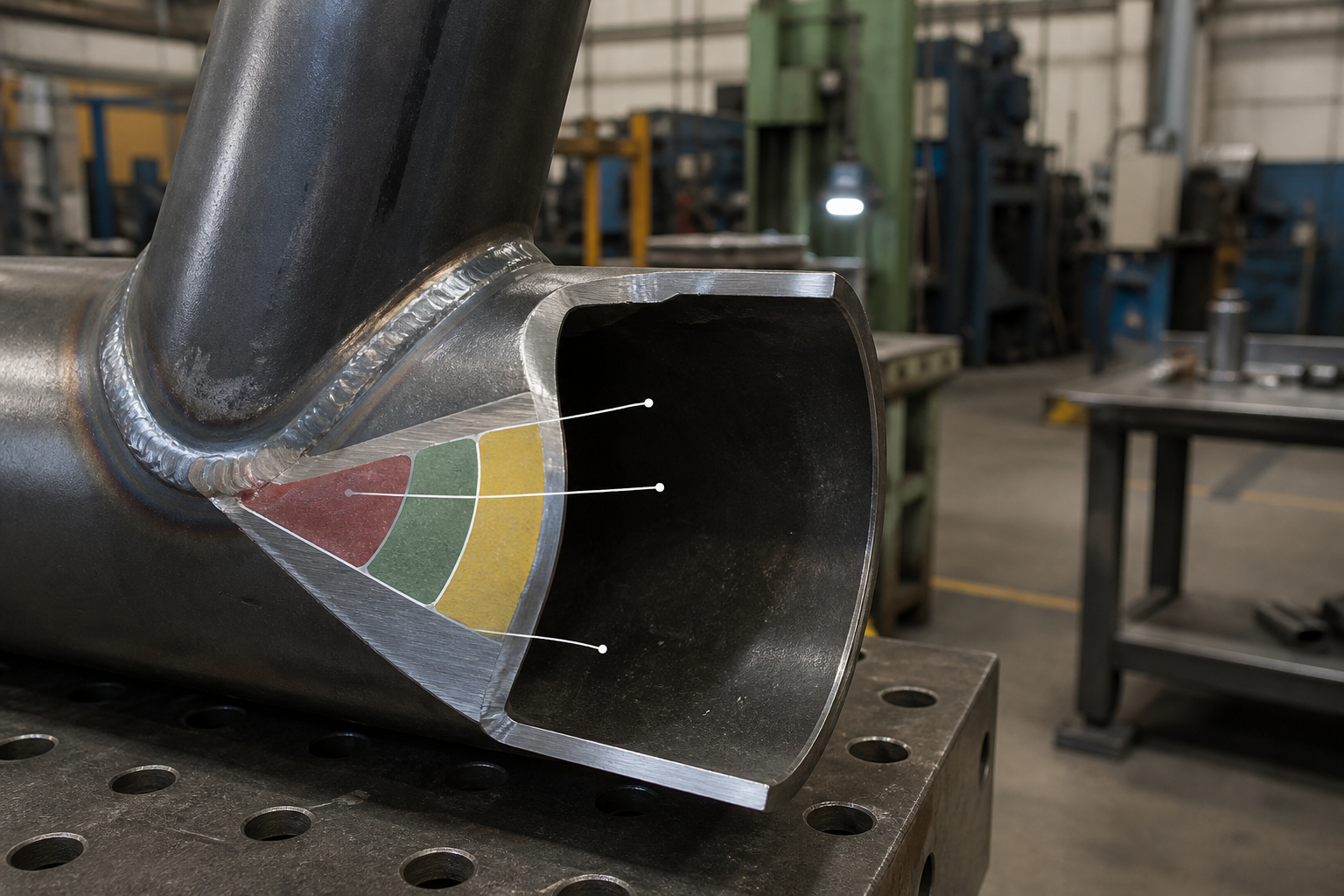
4130 chromoly steel is weldable, but its material condition and cooling behavior determine whether the completed weld region remains suitable for service. Normalized 4130 and quenched-and-tempered 4130 should not be assigned the same welding parameters without engineering review because welding can affect their strength, hardness, and microstructure differently.
Section thickness, joint restraint, heat input, base-metal dilution, hydrogen control, and cooling rate all influence cracking risk. Exact preheat, interpass, filler-metal, and post-weld requirements therefore belong in an applicable qualified welding procedure, not a universal recipe.
How Material Condition Changes 4130 Weldability
AISI 4130 is a low-alloy chromium-molybdenum steel, not stainless steel. Its nominal carbon level is around three-tenths of a percent, while chromium and molybdenum increase hardenability. This chemistry provides useful strength and heat-treatment response, but it also means that rapidly cooled weld regions can become considerably harder than the original material.
The first design question is not simply, “Is this 4130?” It is, “What condition is this 4130 in, and what properties must remain after welding?” A material certificate, drawing note, or purchase specification should identify whether the supplied product is normalized, annealed, or quenched and tempered. If that information is missing, assumptions based only on the alloy designation can lead to the wrong filler or thermal cycle.
| Material condition | Main welding concern | Procedure question |
|---|---|---|
| Normalized 4130 | Rapid cooling may harden the heat-affected zone, particularly as thickness and restraint increase. | What heat input, preheat, interpass control, and cooling practice will limit harmful hardening and cracking? |
| Quenched-and-tempered 4130 | The weld thermal cycle can soften, overtemper, or reharden different parts of the heat-affected zone. The original base-metal strength may not remain locally intact. | Must the joint retain the specified heat-treated properties, and can those properties be demonstrated after welding? |
| Condition unknown | Neither base-metal response nor required joint strength can be established confidently. | Can traceability, hardness information, or material documentation be obtained before procedure approval? |
Thin tubing is not automatically free from risk. It may lose heat quickly, while a thick connection can create a different cooling pattern. Joint mass, nearby fixtures, ambient conditions, weld sequence, and the ability of the assembly to contract all matter. Highly restrained joints also carry greater residual stress, which can combine with hydrogen and a hard microstructure to promote delayed cracking.
What Happens in the Weld Metal and Heat-Affected Zone?
Welding creates several metallurgically different regions. Treating them as one uniform “weld” hides important failure mechanisms.
The weld metal consists of deposited filler mixed with melted base metal. Even when the selected filler has lower carbon or lower nominal strength than 4130, dilution introduces alloying elements from the joint edges. The resulting weld-metal chemistry is therefore not identical to the undiluted filler specification. Dilution varies with joint geometry, penetration, process, bead placement, and welding parameters.
The heat-affected zone, or HAZ, does not melt. It experiences temperatures high enough to change grain structure, hardness, and mechanical properties. Where austenitized 4130 cools rapidly, martensitic or otherwise hard transformation products can form. A hard region is not proof that a crack will occur, but susceptibility increases when that microstructure is combined with tensile stress and sufficient diffusible hydrogen.
Heat input and cooling rate must also be interpreted together. A low heat input may reduce the width of the HAZ but can permit fast cooling. Excessive heat input can enlarge affected regions, increase distortion, or alter properties in other ways. Thick sections and heat-sinking fixtures may extract heat rapidly; closely spaced passes may accumulate heat. This is why amperage or travel speed cannot be judged independently of geometry and the rest of the procedure.
In quenched-and-tempered material, the HAZ can contain more than one response. Areas near the fusion boundary may be rehardened after reaching high temperatures, while regions farther away may be softened or overtempered. A visually sound bead therefore does not establish that the joint has retained the required strength, toughness, fatigue resistance, or hardness profile.
Filler Selection Is a Strength-versus-Ductility Decision
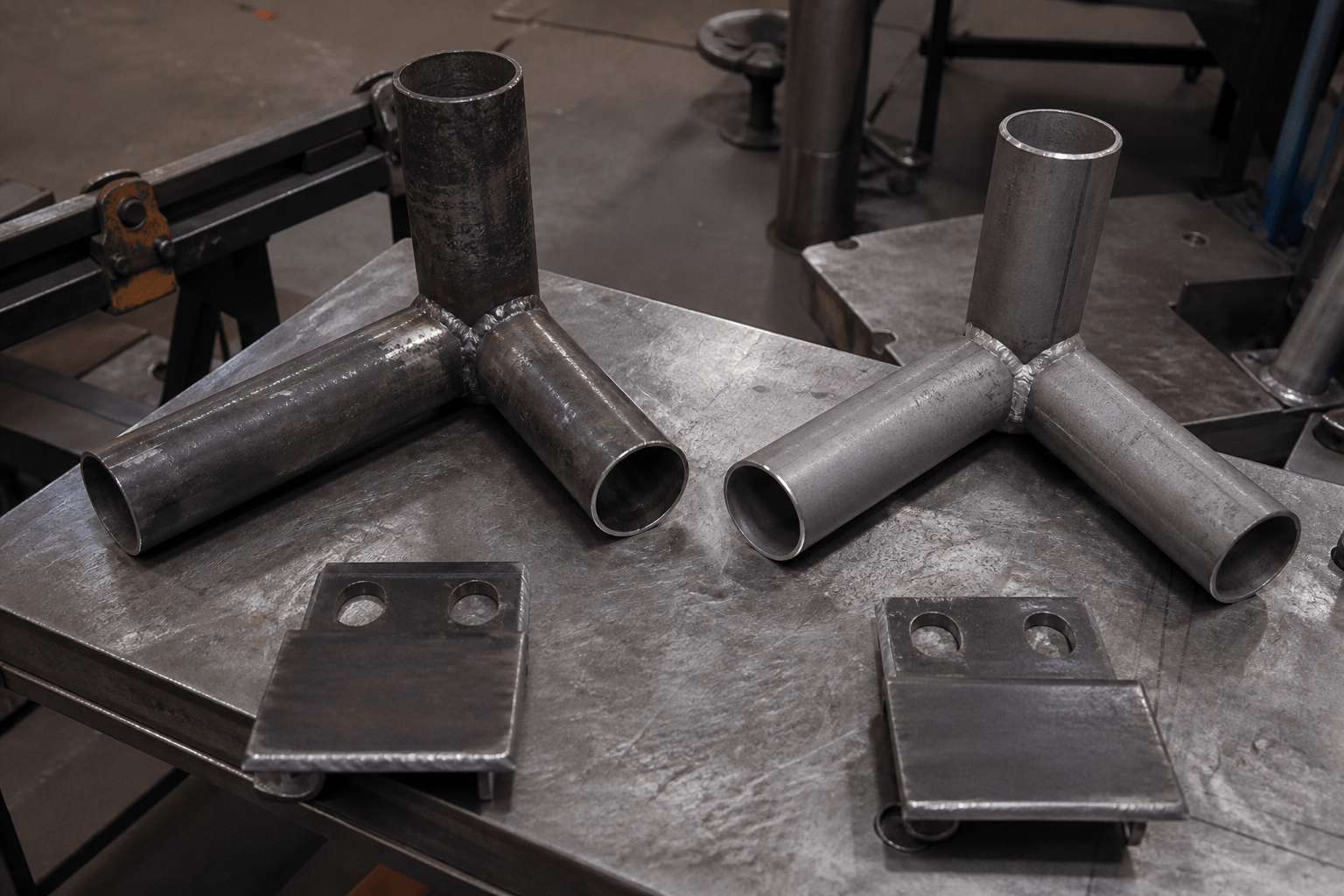
A filler does not have to match the nominal strength of the base metal in every application. A lower-strength filler may offer useful ductility and lower cracking sensitivity, particularly when welding normalized material or when the joint is designed so that the weld is not the critical highly stressed section. ER70S-2, for example, may be evaluated for some gas tungsten arc welding applications involving 4130, but its classification alone does not prove the properties of the completed joint.
| Selection objective | Potential benefit | Engineering check still required |
|---|---|---|
| Lower-strength or undermatching filler | May provide a more ductile deposit and reduce sensitivity to cracking. | Verify joint capacity using actual weld geometry, load path, filler data, dilution, and base-metal condition. |
| Higher-strength or closer-matching filler | May support a higher static-strength target. | Evaluate hardenability, hydrogen controls, required thermal treatment, and whether adequate toughness can be qualified. |
| Joint redesign rather than filler matching | A larger effective throat, lug, sleeve, or altered load path may compensate for an undermatched deposit. | Check fatigue, stress concentration, access, added restraint, weight, and inspectability—not static area alone. |
For heat-treated 4130, a lower-strength weld deposit can become the governing section even when the surrounding tube or plate is much stronger. Increasing fillet size may help in some statically loaded joints, but it is not a universal correction. Larger welds add heat and restraint and may relocate stresses into the HAZ. Cyclic, impact, bending, and safety-critical loads require analysis beyond a simple comparison of nominal tensile strengths.
Filler manufacturer data should be reviewed for the intended process, shielding system, polarity, and applicable deposit condition. Procedure qualification and representative testing are what connect that consumable data to an actual joint.
Preheat, Cooling, and Post-Weld Treatment Serve Different Purposes
Several thermal controls are often grouped together even though they solve different problems. None should be specified only because it appeared in a procedure for another 4130 component.
| Control | Primary purpose | What it does not automatically establish |
|---|---|---|
| Preheat | Reduces the initial temperature gradient, can slow cooling, and may allow more time for hydrogen to diffuse. | It does not guarantee the required HAZ hardness or completed-joint properties. |
| Interpass-temperature control | Keeps multipass welding within a qualified thermal window. | It is not simply a minimum temperature; excessive heat accumulation can also matter. |
| Controlled cooling | Manages heat loss after welding to avoid an excessively rapid or uneven thermal cycle. | It is not the same as tempering or stress relief. |
| Stress relief | Uses a specified thermal cycle to reduce residual stress where the design and material permit it. | It does not necessarily restore quenched-and-tempered base-metal properties. |
| Tempering | Modifies a hardened microstructure through controlled time and temperature. | It is not interchangeable with generic stress relief. |
| Full re-heat-treatment | Re-establishes properties through a defined sequence that may include austenitizing, quenching, and tempering. | It cannot be assumed practical for a completed assembly or dimensionally neutral. |
Numerical limits for these operations depend on the alloy condition, thickness, joint configuration, consumables, process, hydrogen level, and required final properties. They must come from the governing engineering requirements and an applicable qualified procedure.
Large frames introduce an additional problem: a thermal treatment suitable for a small test coupon may cause movement in a long, asymmetric assembly. Fixturing may resist some distortion, but it can also add restraint during heating or cooling. Weld sequence, datum strategy, machining allowance, and the feasibility of inspecting dimensions after treatment should be planned together. These considerations are especially relevant to custom metal frames requiring controlled squareness and assembly alignment.
Before Choosing a 4130 Welding Approach, Identify These Conditions
The following matrix turns material and design information into procedure-development questions. It is not a substitute for a welding procedure specification or qualification record.
| Input to establish | Why it changes the decision | Question the procedure must resolve |
|---|---|---|
| Material condition, product form, hardness, and traceability | Normalized and quenched-and-tempered products respond differently to the weld thermal cycle. | What final local properties must be retained or restored? |
| Thickness and joint geometry | They influence heat flow, dilution, penetration, effective weld size, and inspection access. | What joint preparation and heat-input range can produce an acceptable weld? |
| Restraint and assembly sequence | They affect residual stress, cracking susceptibility, and distortion. | What fixturing, tack sequence, bead sequence, and dimensional checks are required? |
| Service loading and consequence of failure | Static strength alone may not address fatigue, impact, or stress concentration. | Can an undermatching filler be accepted, or must joint geometry and validation be revised? |
| Process and consumable system | GTAW, GMAW, and other processes create different deposition, penetration, and heat-input conditions. | Which filler classification, polarity, shielding gas, technique, and hydrogen controls are qualified? |
| Available thermal treatment | Some final properties may require controlled treatment that a complete assembly cannot tolerate dimensionally. | Is local control sufficient, or is a validated post-weld or full-part treatment required and feasible? |
| Inspection and acceptance requirements | Visual quality alone cannot confirm internal soundness or mechanical properties. | Which nondestructive examinations, hardness surveys, or mechanical tests are required by the applicable specification? |
For a technical manufacturability review, provide the drawing and joint details, specified 4130 condition and thickness, required service loads or joint properties, governing welding and inspection requirements, and dimensional limits that could restrict thermal treatment. Yishang supports B2B OEM and ODM metal-product projects and can use these inputs to identify fabrication constraints and unresolved procedure questions before production planning. For relevant structural context, see its work in custom metal fabrication for automotive and transportation equipment; this does not imply that every component in those applications uses 4130.
Frequently Asked Questions
Can normalized 4130 and heat-treated 4130 use the same welding procedure?
They should not be assumed to use the same procedure. Normalized material presents hardening and cracking questions, but quenched-and-tempered material adds the need to assess local softening, rehardened zones, and possible loss of specified strength. A procedure may apply to both only when its qualification range and engineering requirements explicitly support both conditions.
Can 4130 be welded to mild steel, and which material governs the precautions?
4130 can be joined to mild steel, but it is a dissimilar-material procedure question. The more hardenable 4130 side often drives preheat and cooling concerns, while dilution from both base metals affects weld-metal chemistry. Filler compatibility, joint strength, restraint, service environment, and any heat treatment must be evaluated together.
Can 4130 chromoly be MIG welded, or is TIG inherently better?
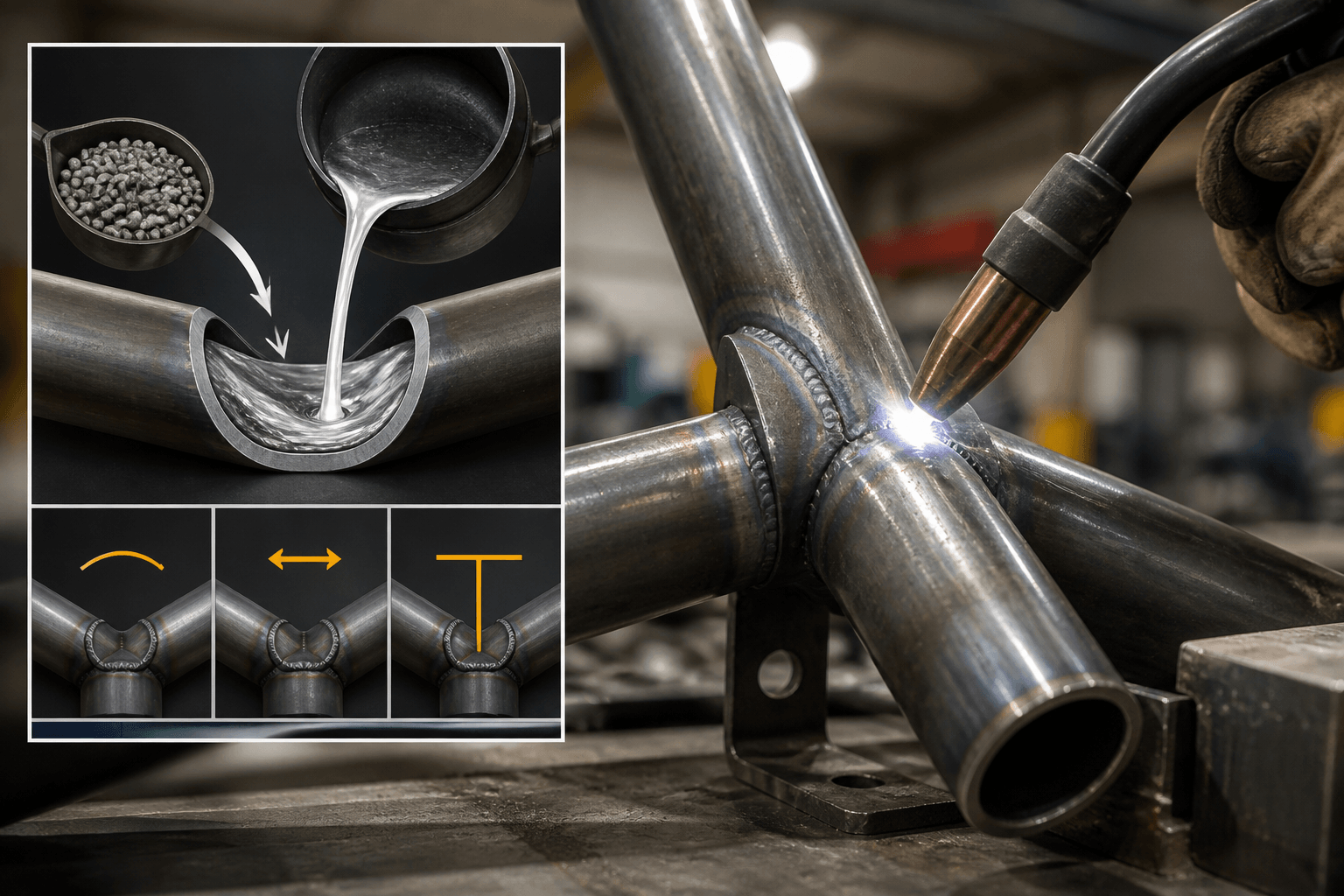
Both GMAW, commonly called MIG, and GTAW, commonly called TIG, can be considered. Neither process inherently guarantees acceptable properties. Process selection depends on thickness, access, deposition needs, control of heat input and shielding, production consistency, and the ability to qualify and inspect the joint. The approved parameters must be documented in the applicable procedure.
How does 4130 weldability differ from 4140 weldability?
4140 generally has a higher carbon level and greater hardenability than 4130, so comparable welding conditions can produce a stronger tendency toward hard transformation products and cracking. That does not make every 4130 weld easy or every 4140 weld unacceptable. Material condition, section size, restraint, hydrogen control, cooling rate, and required properties remain decisive for both alloys.