
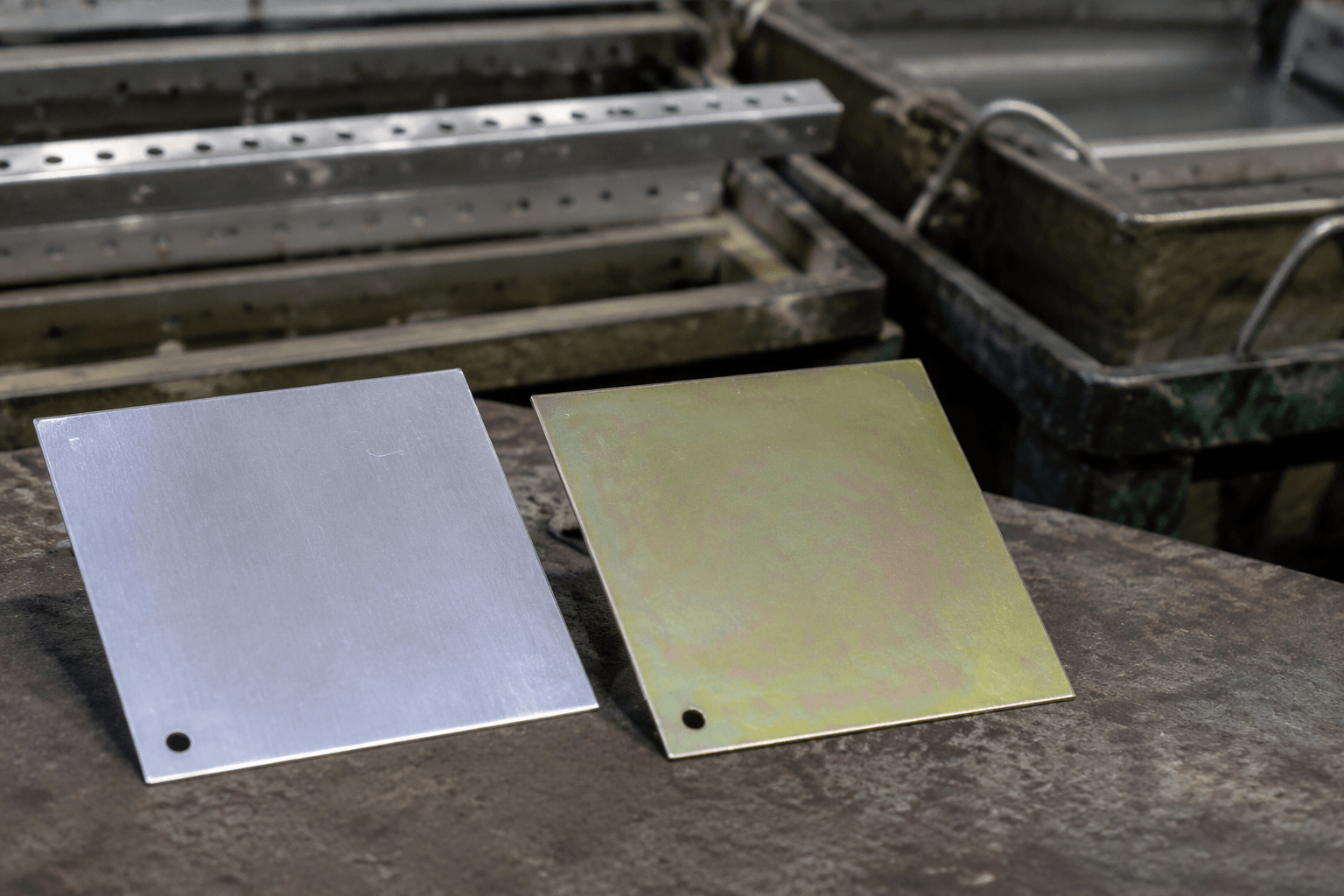
Alodine coating is a chemical conversion treatment commonly discussed for aluminum corrosion protection, electrical contact areas, and paint preparation. “Alodine” is a trademark, not the generic name for every conversion coating; broader terms include chromate conversion coating, chemical film, and chem film.
The treatment reacts with a properly prepared aluminum surface to form a thin conversion film without using electrical current. Its appearance, treatment time, conductivity, corrosion performance, and environmental requirements depend on the selected chemistry, substrate, preparation, process control, and applicable product specification.
Alodine, Chemical Film, and Chromate Conversion Coating
In everyday manufacturing discussions, buyers may use “Alodine,” “chem film,” and “chemical film” as if they mean exactly the same thing. This language is convenient, but it can conceal an important technical difference: Alodine identifies a trademarked product family, while chemical conversion coating describes the general surface-treatment category.
Conversion coatings are also not chemically identical. Traditional and alternative formulations may produce different colors, electrical characteristics, corrosion performance, handling requirements, and environmental considerations. A drawing that says only “Alodine coating” may therefore be incomplete if the required product, chemistry, appearance, inspection criteria, or downstream function is not defined.
The substrate scope must also be confirmed. This article addresses conversion coating on aluminum. It should not be assumed that the same product or procedure is suitable for steel, stainless steel, zinc, magnesium, or another metal unless the selected chemistry specifically identifies that substrate.
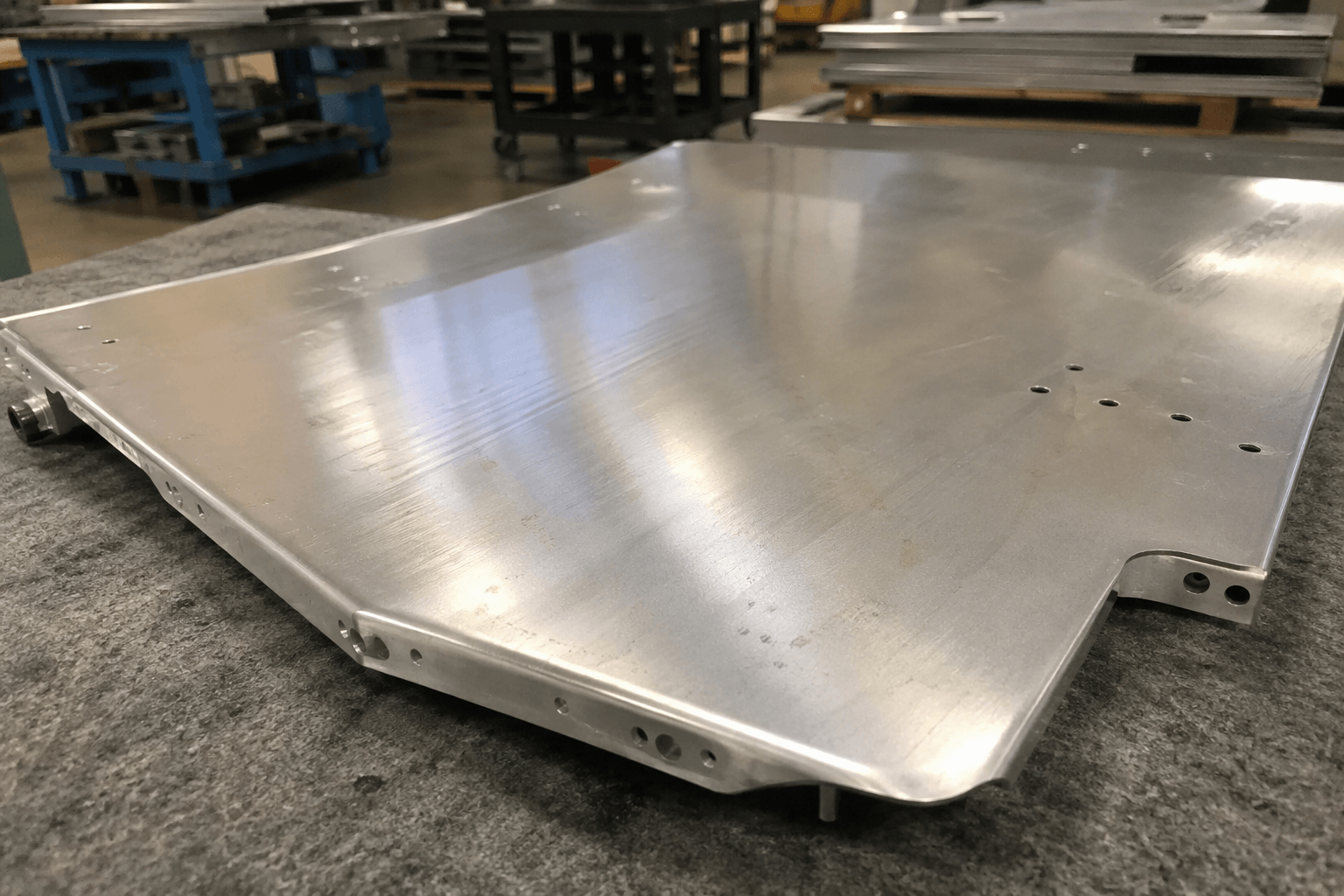
Unlike paint, the film is created by a reaction with the aluminum surface. It is not an opaque layer that conceals the metal below. Scratches, grain, machining lines, oxidation patterns, handling marks, and uneven surface preparation can remain visible after treatment.
How the Alodine Coating Process Works
A controlled alodine coating process is more than applying a chemical and waiting for the aluminum to change color. Preparation and rinsing can be as important as the treatment stage itself, and the product instructions must control the actual operating conditions.
- Cleaning: Oil, forming lubricant, polishing residue, fingerprints, dirt, and other contaminants are removed. A surface that appears visually clean may still contain residue that interferes with a uniform reaction.
- Initial rinsing: Cleaning chemicals and loosened contamination are rinsed away. Water quality, drainage, part orientation, and contamination between tanks or work areas can influence consistency.
- Deoxidizing or etching when required: Some substrates and surface conditions need an additional preparation step to remove oxides, smut, or other reaction barriers. This is not a universal instruction; the requirement depends on the alloy, condition, selected chemistry, and approved process.
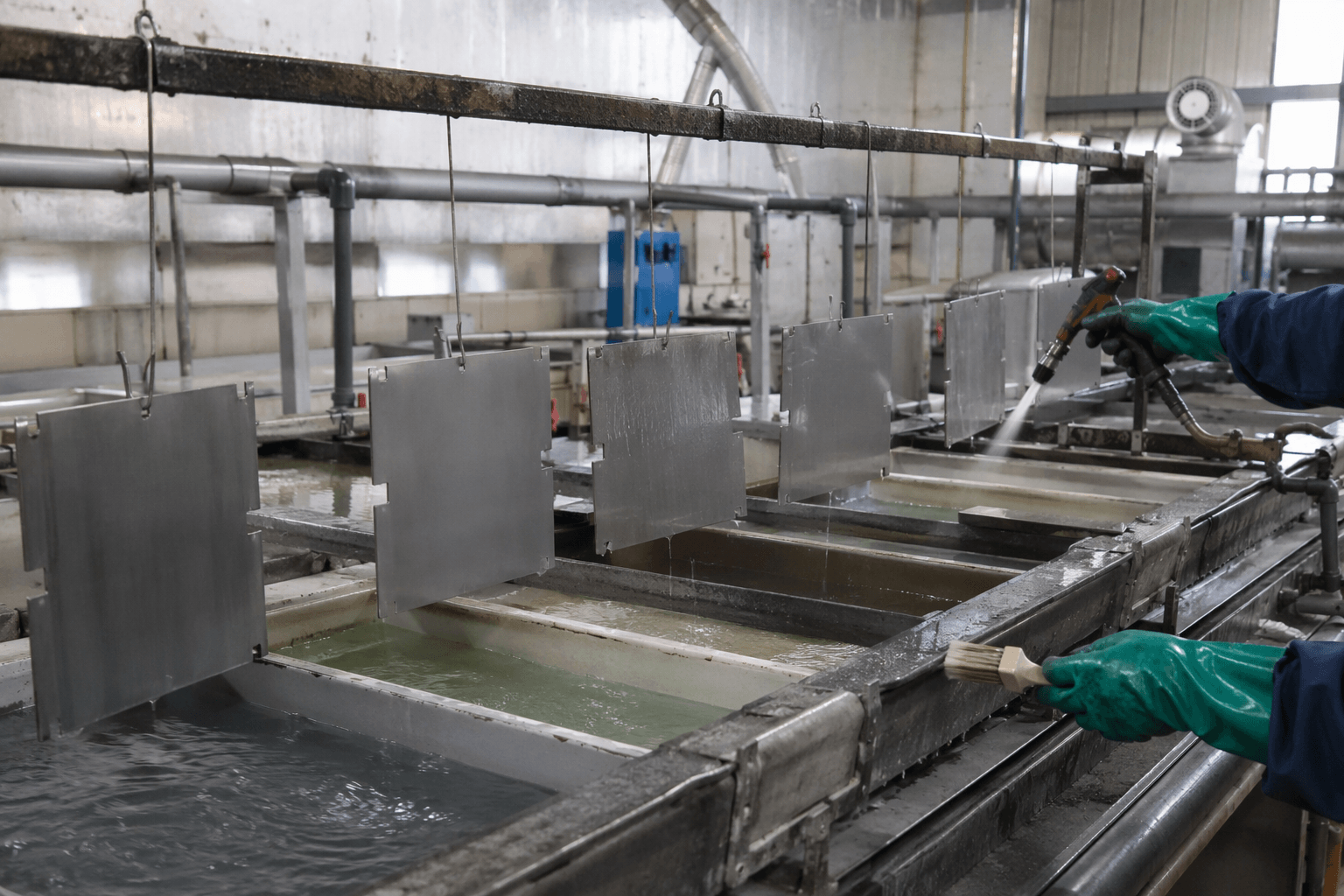
- Chemical treatment: The prepared aluminum is exposed to the conversion solution. The reaction modifies the surface and forms the functional film. Concentration, temperature, solution condition, contact time, alloy, and part geometry can affect the result.
- Final rinsing: Residual treatment chemistry is removed using the rinsing method required for the selected product. Aggressive rinsing or poor water control may disturb a newly formed film or leave deposits.
- Controlled drying and handling: The surface is allowed to dry under suitable conditions. Freshly treated parts require careful handling because the film may be more vulnerable before it has dried and stabilized.
Immersion, spray, and brush application are all possible for certain formulations. Immersion can help reach multiple surfaces and complex features, while spraying may suit larger components or controlled production lines. Brush application can be useful for localized work, repair, or parts that cannot be immersed. None of these methods is universally correct: product approval, coverage, drainage, access, masking, volume, and inspection requirements determine the appropriate route.
There is also no universal dwell time. Leaving the solution on longer does not automatically improve protection and may produce an unacceptable surface. The technical instructions for the chosen formulation must define the treatment window, rinsing sequence, and drying conditions.
How Alodine Coating Affects the Aluminum Surface
The practical value of a conversion coating comes from its combination of corrosion support, low dimensional impact, paint compatibility, and potential use around conductive contact areas. Each outcome still requires verification against the actual formulation and component requirements.
| Surface requirement | General expectation | What must be verified |
|---|---|---|
| Corrosion protection | The conversion film can reduce the tendency of properly treated aluminum to continue oxidizing and can provide useful protection in suitable environments. | Alloy, preparation, coating chemistry, coverage, exposure, handling, test method, and acceptance criteria. |
| Electrical contact | Certain conversion coatings are selected where electrical continuity or grounding contact must be retained. | Approved chemistry, contact resistance requirement, contact pressure, fasteners, mating surfaces, contamination, and long-term exposure. |
| Paint or primer preparation | A correctly processed film can provide a suitable conversion surface beneath compatible coating systems. | Primer and paint compatibility, time before painting, cleanliness, drying, handling, and adhesion testing. |
| Dimensional impact | The film is normally considered a low-build surface treatment and may suit components where substantial finish buildup is undesirable. | Drawing tolerances, fits, threads, electrical interfaces, masking requirements, and the selected process specification. |
| Appearance | The finish may be colorless, colored, or iridescent depending on chemistry and process conditions. The underlying metal texture usually remains visible. | Cosmetic standard, allowable color variation, surface preparation, alloy variation, and inspection lighting. |
| Abrasion resistance | The film should be handled as a thin functional conversion surface rather than a heavy wear coating. | Assembly contact, rubbing, repeated maintenance, packaging, transport, and whether a more wear-resistant finish is needed. |
Color alone should not be treated as proof of coating quality. A darker or more visible film is not automatically more protective, and some approved chemistries may produce little obvious color. Inspection should follow the defined requirement rather than relying only on visual intensity.
For components such as custom aluminum sheet metal enclosures, the coating requirement may combine painted exterior surfaces with masked grounding points, threaded connections, or internal conductive areas. Those functions should be marked clearly on the drawing instead of being left to the finisher’s interpretation.
Durability, Handling, and Service-Life Expectations
There is no single answer to how long alodine coating lasts. Service life depends on the aluminum alloy, surface preparation, selected formulation, film integrity, environment, frequency of handling, chemical exposure, moisture, temperature cycles, and whether the surface is painted or left exposed.
A part stored indoors in clean, dry conditions faces a different exposure from an unpainted outdoor housing, a frequently handled electrical panel, or an assembly exposed to salt, cleaners, condensation, or rubbing contact. Published corrosion results are meaningful only when the formulation, substrate, preparation, test conditions, and acceptance criteria correspond to the intended application.
Common causes of weak or inconsistent performance include residual oil, incomplete oxide removal, contaminated rinses, uncontrolled treatment conditions, poor drainage, fingerprints before painting, and contact with packaging materials before the film is ready for handling. Scratching or abrasion during assembly can also remove or damage the functional surface.
Inspection should look for missed areas, powdery deposits, stains, nonuniform reaction, contamination, scratches, and handling damage according to the approved criteria. A visually inconsistent area does not always prove functional failure, but it should be investigated rather than automatically accepted or hidden beneath paint.
When Alodine Is a Practical Finish Choice
Conversion coating is worth evaluating when an aluminum part needs basic corrosion support, a paint-preparation surface, electrically functional contact areas, or minimal change to critical dimensions. Typical candidates include fabricated panels, brackets, chassis, covers, aluminum extrusion components, and cast housings, provided the selected chemistry is compatible with the alloy and surface condition.
Part geometry and surface condition can materially affect processing and appearance. The review should consider cut edges, machined faces, threaded holes, areas that may trap solution, cosmetic surfaces, mating interfaces, porosity, residues, oxidation, and other surface variation relevant to the actual component.
A different finish should be evaluated when the component requires substantial abrasion resistance, a thick decorative surface, strong color uniformity, or repeated sliding and rubbing. Anodizing, for example, forms an oxide layer through an electrochemical process and generally offers a different balance of wear resistance, appearance, dimensional effect, and electrical behavior. It should not be treated as an automatic substitute because conductive contact areas, masking, tolerances, and cosmetic requirements may lead to different decisions.
Cost comparisons are also application-specific. Chemical conversion may involve different equipment and processing demands from anodizing, but final pricing depends on preparation, formulation, part size, geometry, masking, handling, volume, inspection, environmental controls, and documentation. A lower-cost finish is not economical if it fails the actual service requirement.
Frequently Asked Questions
How do you apply alodine to aluminum?
The general sequence is cleaning, rinsing, optional deoxidizing or etching when required, chemical treatment, final rinsing, controlled drying, and careful handling. Immersion, spray, or brush application may be used when supported by the selected product. The product technical instructions and applicable drawing requirements must determine the actual concentration, temperature, contact time, rinsing, and drying process.
How long should alodine remain on aluminum?
There is no universal treatment time. The correct duration depends on the formulation, solution condition, temperature, aluminum alloy, surface preparation, application method, and required result. Extending the time without technical guidance may cause an unacceptable film rather than better protection, so the selected product instructions must control the answer.
How long does alodine coating last?
Its service life cannot be stated as one number. A painted indoor component, an unpainted outdoor part, and a frequently handled grounding surface experience very different conditions. Moisture, chemicals, abrasion, contamination, film damage, substrate preparation, and maintenance all affect durability. Any performance expectation should be tied to defined exposure and inspection criteria.
Can alodine coating be painted, used at grounding points, or applied over damaged aluminum?
Compatible conversion coatings can support primer adhesion and may be selected for grounding or electrical-contact areas, but both functions require formulation-specific verification. The treatment should not be expected to repair damaged metal or hide visible defects. Loose oxidation, contamination, deep scratches, and other damage must be assessed and prepared appropriately before coating.