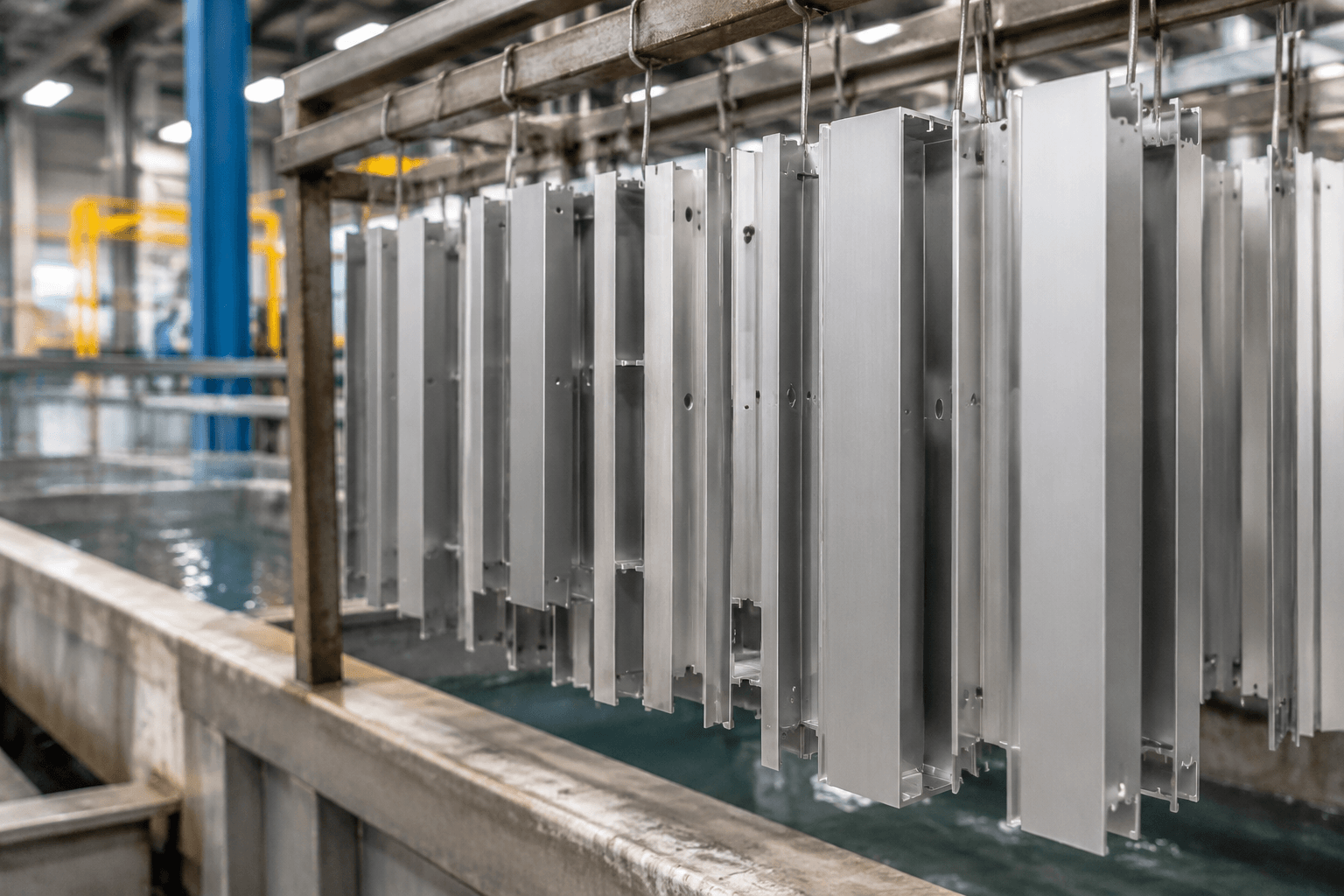
Alum-A-Coat is a company or brand name associated with aluminum anodizing—not the technical name of a special coating, a coating product, or a generic anodizing process. Aluminum anodizing is an electrochemical process that converts the metal surface into a controlled aluminum oxide layer for corrosion protection, wear performance, coloring, or preparation for subsequent finishes. ([members.anodizing.org](https://members.anodizing.org/members/?id=35326986&utm_source=openai))
People searching for “alum-a-coat – aluminum anodizing” may be looking for that specific business, but they often also need to understand anodizing itself. There is no implied ownership, representation, or affiliation between Alum-A-Coat and Yishang. The practical purchasing question is which anodizing specification suits the part’s alloy, geometry, appearance, dimensions, and service environment.
What Anodizing Changes in the Aluminum Surface
Untreated aluminum naturally develops a thin oxide film when exposed to air. Anodizing deliberately develops a more controlled oxide structure. The aluminum component is connected as the anode in an electrolytic system, and electrical current drives a reaction that forms aluminum oxide from the surface metal. Unlike paint, the resulting layer is not simply deposited on top of the part; it grows from and into the aluminum surface. ([members.anodizing.org](https://members.anodizing.org/general/custom.asp?page=what-is-anodizing&utm_source=openai))
A simplified industrial sequence is:
- Cleaning: Oils, handling contamination, and manufacturing residues are removed.
- Surface preparation: Etching, brightening, blasting, brushing, or another specified treatment establishes the required texture.
- Anodizing: The controlled electrochemical reaction creates the oxide layer.
- Coloring, when required: The porous structure may accept dye or other coloring treatments.
- Sealing or specified post-treatment: Sealing closes or modifies the pores to improve corrosion behavior and finish stability.
The porous condition before sealing is useful for coloring and certain paint or adhesive systems. Sealing is commonly selected for corrosion resistance and cleanliness, but a surface intended for another coating may need a specific sealing method or may be left unsealed under a qualified finish specification. The complete coating system—not anodizing in isolation—must be reviewed. ([members.anodizing.org](https://members.anodizing.org/page/anodizing-definitions-methods?utm_source=openai))
Anodizing should also be distinguished from chromate conversion treatments such as Alodine. Both change the surface rather than acting like conventional paint, but they use different chemistries and are specified for different performance, electrical, bonding, and dimensional requirements.
Type I vs. Type II vs. Type III Anodizing: How to Choose
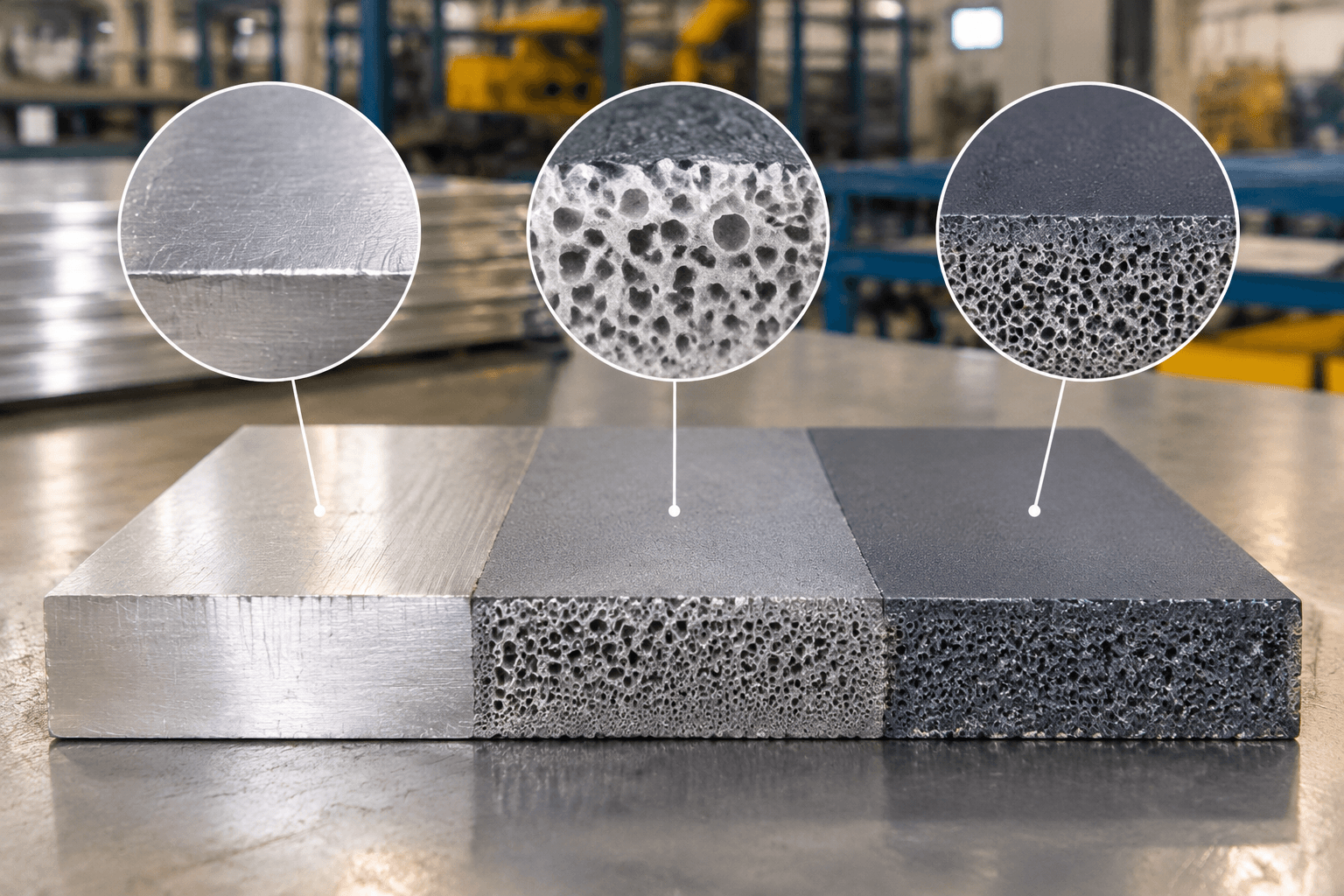
In North American engineering drawings, Type I, Type II, and Type III commonly refer to classifications in MIL-PRF-8625. Type I is conventional chromic acid anodizing, Type II is conventional sulfuric acid anodizing, and Type III is hard anodizing. The standard also contains additional types and classes, so the drawing should identify the applicable revision, type, class, color, testing, and any project-specific requirements. ([quicksearch.dla.mil](https://quicksearch.dla.mil/qaDocDetails.aspx?ident_number=7074&utm_source=openai))
| Anodizing type | Primary selection reasons | Typical finish considerations | Questions requiring confirmation |
|---|---|---|---|
| Type I Chromic acid |
Corrosion protection, paint adhesion, and applications where fatigue considerations or a relatively thin anodic finish influence the specification. | Usually less focused on broad decorative color choice than Type II. Environmental and regulatory requirements may lead an engineer to consider approved non-chromic alternatives. | Is the named process permitted by the governing specification? Will the part be painted, sealed, bonded, or electrically grounded? |
| Type II Sulfuric acid |
General corrosion protection, decorative appearance, color, and preparation for compatible secondary finishes. | Commonly available in clear or dyed finishes. The visible result remains sensitive to alloy, temper, pretreatment, surface texture, and batch controls. | What color range, gloss, sealing method, viewing standard, and corrosion requirement apply? |
| Type III Hard anodize |
Wear and abrasion resistance for sliding, handling, or mechanically demanding service. | Greater dimensional impact must be considered. Natural color can vary with alloy and process, while dyed colors may not behave like decorative Type II finishes. | Which surfaces are functional? What coating requirement, sealing condition, wear criterion, and post-anodize dimensions are needed? |
Type I and its recognized alternatives are often associated with corrosion resistance, paint adhesion, and fatigue-sensitive applications. Type II is the usual starting point for decorative or general-purpose requirements. Type III prioritizes hard, wear-resistant performance. Exact results still depend on alloy, process controls, oxide requirements, sealing, and the acceptance tests stated on the purchase documents. ([members.anodizing.org](https://members.anodizing.org/page/military-spec-anodic-coatings?utm_source=openai))
Heat exposure should be treated as a complete application requirement rather than a shortcut for choosing an anodizing type. State the operating temperature, duration, thermal cycling, mating materials, and required properties so the responsible engineers and finish processor can assess the system.
What Buyers Should Specify Before Anodizing
Alloy and temper: Identify the exact aluminum grade and temper instead of writing only “aluminum.” Alloy 6061-T6 can be anodized and is widely used for machined and structural components. However, it does not necessarily produce the same color or brightness as 6063 extrusion material, and a hard-anodized result may appear different from a decorative sulfuric-acid finish. ([members.anodizing.org](https://members.anodizing.org/page/specifying-anodized-aluminum?utm_source=openai))
Starting surface: Anodizing does not act like an opaque filler. Machining lines, scratches, extrusion streaks, sanding patterns, dents, and handling marks may remain visible. Buyers of custom aluminum extrusion components should agree on the acceptable extrusion surface and mechanical pretreatment before color samples are approved.
Fabrication history: Weld metal and heat-affected areas can respond differently because their metallurgy and temper differ from the parent material. Cast aluminum, mixed alloys, or components assembled from different material lots may also show variation after identical processing. Grinding a weld flush does not automatically remove the metallurgical color difference. ([members.anodizing.org](https://members.anodizing.org/page/anodized-aluminum-faq?utm_source=openai))
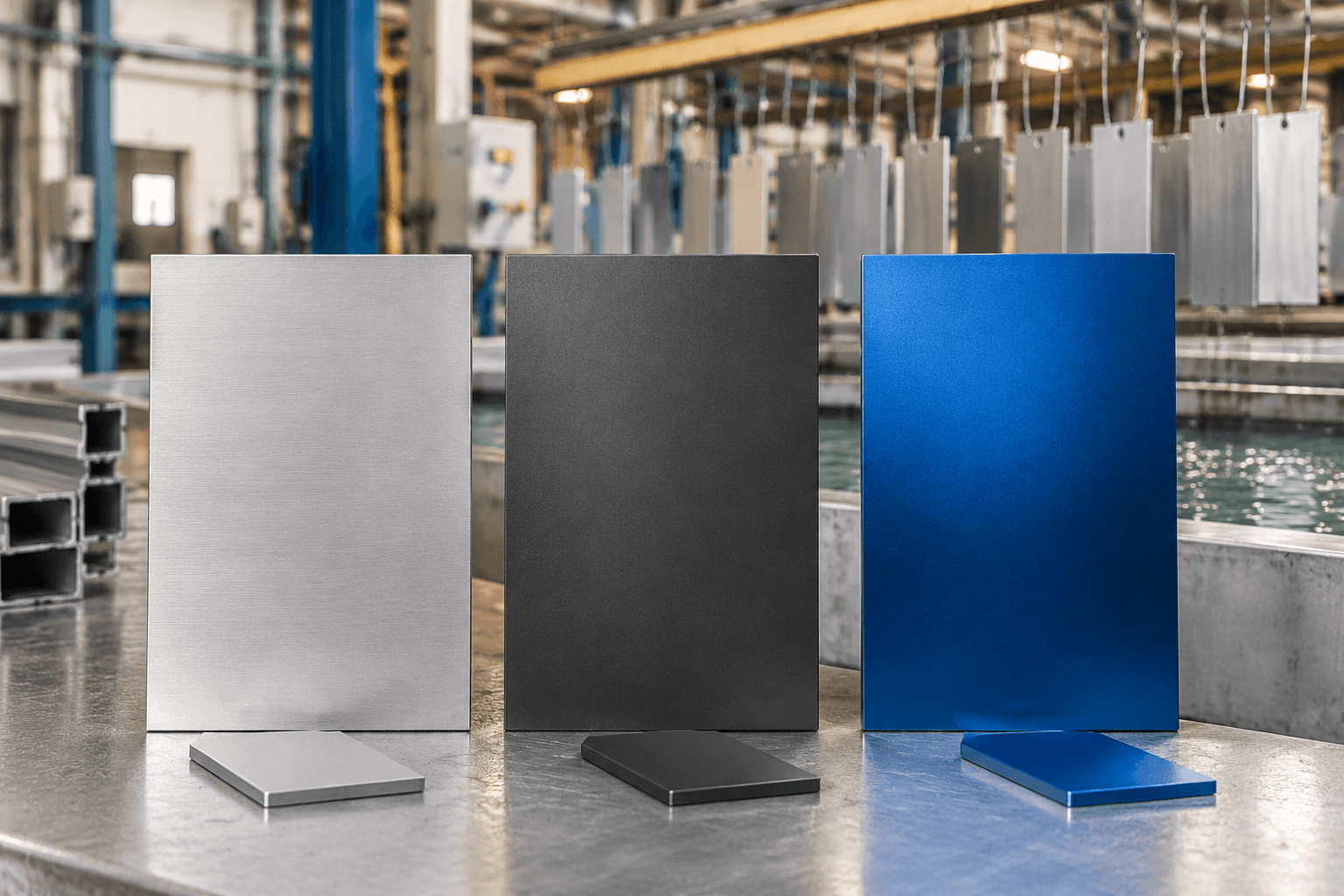
Appearance target: Specify the color, gloss or matte texture, cosmetic surfaces, permitted shade range, inspection lighting, and viewing distance. A simple instruction such as “black anodize” does not define an objective appearance. Industry guidance notes that alloy, temper, surface structure, gloss, and coloring method all influence the result, so identical color cannot be promised across different alloys, fabrication histories, batches, or textures. ([members.anodizing.org](https://members.anodizing.org/page/anodic-coating-specifications?utm_source=openai))
Dimensions and interfaces: Identify critical bores, threads, bearing fits, sealing faces, electrical contact areas, and assembly interfaces. Because anodizing converts surface metal and changes part dimensions, engineering drawings should distinguish pre-anodize machining dimensions from required final dimensions. This is particularly important for Type III parts and close-fitting assemblies. ([members.anodizing.org](https://members.anodizing.org/page/anodized-aluminum-faq?utm_source=openai))
Masking and racking: Mark areas that must remain free of anodic oxide and identify where electrical contact or rack marks are acceptable. Complex fabricated aluminum enclosures may need masking around grounding points, threaded inserts, hinges, latches, labels, or conductive assembly interfaces.
Sealing and secondary coatings: State whether the anodized surface will remain exposed, receive paint, use an adhesive, or require another finishing operation. Paint adhesion depends on the anodizing and sealing system as well as cleaning, primer selection, coating compatibility, and validation testing. Do not leave the paint supplier and anodizer to make conflicting assumptions after parts have been processed. ([anodizing.org](https://www.anodizing.org/anodized-aluminum-faq/?utm_source=openai))
Durability, Service Life, and Quotation Differences
How long can anodized aluminum last?
There is no responsible universal service-life figure. Indoor decorative trim, exterior transportation hardware, architectural parts, and abrasive machine components face different exposure conditions. Durability depends on anodizing type, alloy, sealing quality, oxide specification, cleaning, ultraviolet and chemical exposure, salt or industrial contaminants, impact, abrasion, and contact with incompatible materials.
Maintenance also matters. Mild cleaning can remove accumulated dirt, while strong acidic or alkaline chemicals may attack the finish. For automotive and transportation metal components, the specification should describe whether the main concern is road corrosion, appearance retention, repeated handling, sliding wear, cleaning chemicals, or a combination of these conditions. ([members.anodizing.org](https://members.anodizing.org/page/finish-architectural-aluminum?utm_source=openai))
Why can two anodizing quotations differ?
Quotations can reflect different interpretations of the same incomplete request. Important cost drivers include part size and total surface area, rack density, electrical contact requirements, masking complexity, pretreatment, finish color, sealing, inspection, documentation, handling risk, batch quantity, packaging, and protection of cosmetic surfaces. A processor may also need additional controls when a project demands a narrow visual range or close post-finish dimensions.
A meaningful quotation therefore requires a drawing and finish definition rather than a universal per-part price. Buyers should compare whether suppliers have quoted the same anodizing type, class, color, pretreatment, masking, inspection, packaging, and acceptance criteria.
Review fabrication and finishing requirements together before production. For a technical specification review, provide the part drawing or 3D model, aluminum alloy and temper, anodizing type or performance objective, critical dimensions, masked areas, expected environment, and annual quantity. This allows the team to assess whether the fabricated geometry, tolerances, surface condition, and finish requirements are mutually compatible before pricing or production.
Frequently Asked Questions
Can 6061-T6 aluminum be anodized?
Yes. 6061-T6 can receive Type I, Type II, or Type III anodizing when permitted by the applicable design and specification. It is commonly selected for structural and machined components and responds well to hard anodizing. Its final shade and brightness still depend on its composition, surface preparation, oxide requirement, coloring process, and sealing, so it should not be expected to match 6063 or another alloy automatically. ([members.anodizing.org](https://members.anodizing.org/page/specifying-anodized-aluminum?utm_source=openai))
Why anodize aluminum instead of leaving its natural oxide untreated?
The natural oxide offers limited passive protection but is not controlled for a defined engineering or cosmetic requirement. Anodizing develops a more controlled oxide layer with improved corrosion and abrasion behavior and can provide a porous structure for coloring or compatible secondary treatments. The required performance must still be established through the selected specification and acceptance criteria. ([members.anodizing.org](https://members.anodizing.org/page/anodized-aluminum-faq?utm_source=openai))
How should anodized aluminum be prepared when paint will be applied?
Plan the anodizing and paint system together. The anodizer needs to know that paint is the next operation so the pore condition, sealing method, rinsing, and contamination controls can be selected appropriately. The paint manufacturer’s cleaning, priming, application, curing, and adhesion-testing instructions should then govern the coating process. Avoid assuming that any sealed decorative anodize is automatically an ideal paint base. ([anodizing.org](https://www.anodizing.org/anodized-aluminum-faq/?utm_source=openai))
How long does anodized aluminum last?
Service life varies too widely for a single guarantee. An indoor decorative component may experience little chemical or abrasive exposure, while an outdoor, marine-adjacent, transportation, or sliding component may face moisture, contaminants, ultraviolet exposure, impact, and wear. Define the environment and maintenance conditions, then specify the anodizing type, sealing, inspections, and performance tests suitable for that application.