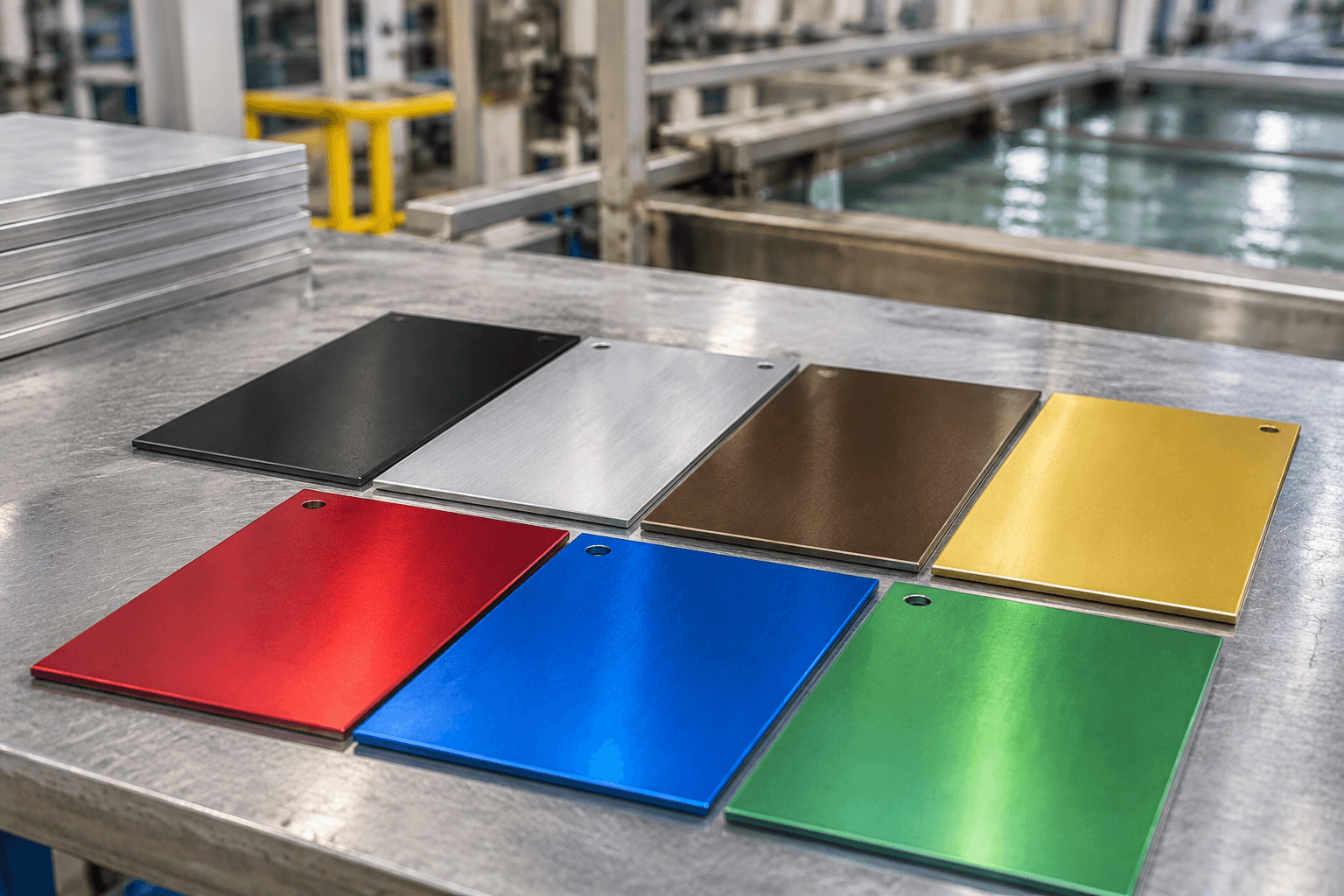
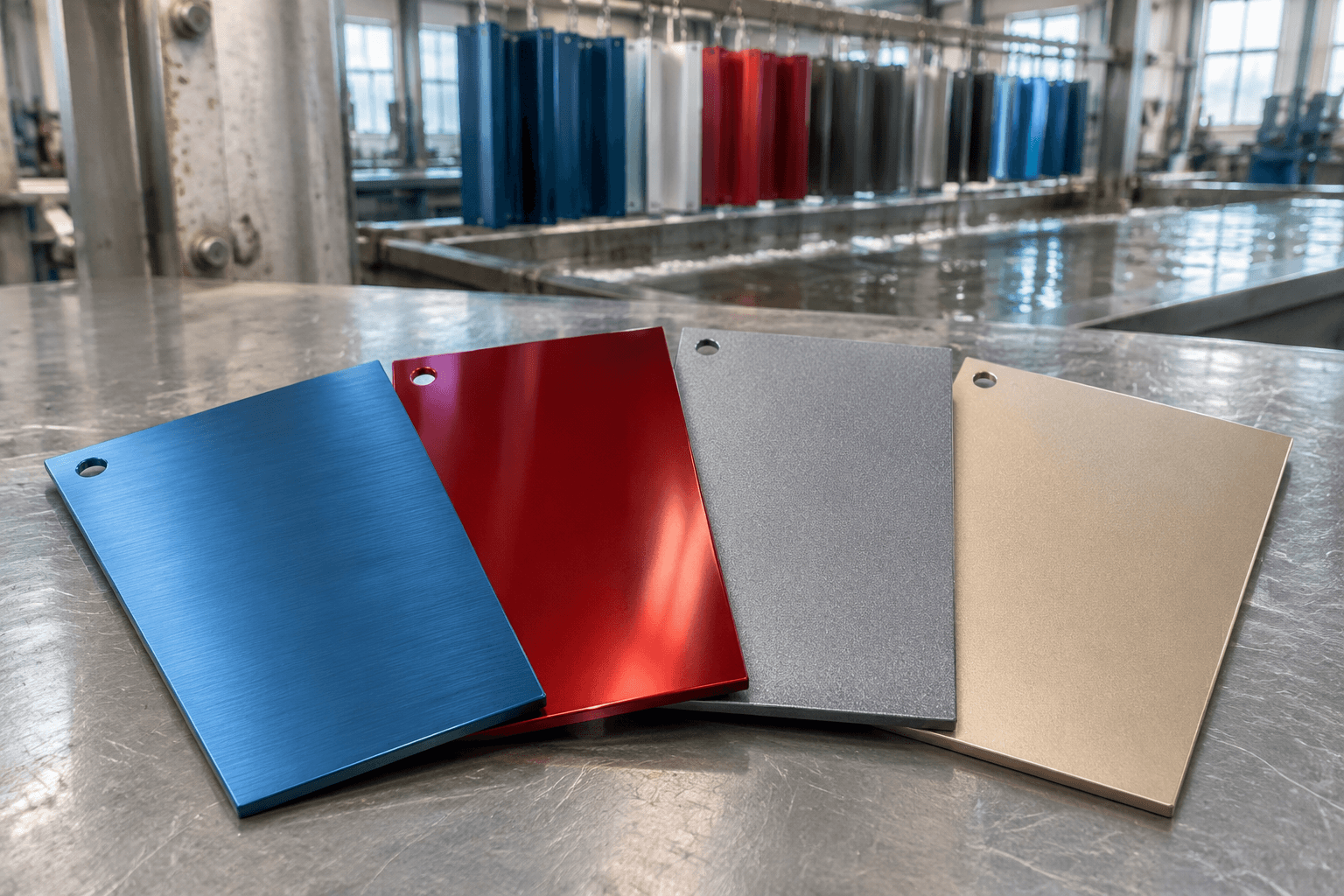
Aluminium can be anodized in clear, black, bronze, gold, red, blue, green, and many custom-dyed colors. However, names such as “black anodized” or “gold anodized” describe a color family, not a universal shade guaranteed across alloys, surface textures, suppliers, or production batches.
The final appearance depends on the aluminum alloy, pre-anodizing surface preparation, oxide formation, dye behavior, sealing, part geometry, and inspection conditions. For repeatable B2B production, use color swatches for initial selection, then approve a physical sample and document how production parts will be evaluated.
Available Aluminium Anodizing Colors—and What the Names Mean
Anodizing is an electrochemical process that grows an oxide layer from the aluminum surface. The layer is porous before sealing, allowing selected processes to introduce dye into microscopic pores. Sealing then closes the pores. Unlike paint or powder coating, anodizing changes the aluminum surface rather than placing a separate colored coating over it.
Common aluminium anodizing colors include the following families:
- Clear or natural: Retains a metallic appearance, although the result may look silver, gray, warm, or slightly muted depending on the alloy and surface preparation.
- Black: Can range from neutral black to blue-black, charcoal, or brown-black. Gloss and texture strongly affect how deep the black appears.
- Bronze: Covers light champagne, medium bronze, dark bronze, and near-black bronze appearances. The production method must be confirmed rather than assumed from the name.
- Gold: May include pale champagne-gold, yellow-gold, orange-gold, or darker decorative tones.
- Red, blue, and green: Usually selected as dyed decorative colors, with the achievable tone influenced by the complete material and finishing process.
- Custom-dyed colors: May be developed toward a reference, but feasibility, repeatability, exposure conditions, and approval criteria should be reviewed before production.
A web image or anodized aluminum colors chart is useful for discussing general direction. It is not a production standard because screens, photography, ambient light, and different aluminum surfaces alter the apparent color.
Buyers should distinguish three levels of definition. A named color, such as black or bronze, communicates an approximate family. A physical reference sample provides a more reliable visual target. A measurable requirement defines the instrument, measurement method, reference values, evaluation locations, and mutually accepted variation. These levels can be used together, but they are not interchangeable.
Why Parts With the Same Color Name Can Look Different
Nominally identical colors can vary because anodized appearance is created by the entire process chain, not by dye alone.
Alloy and material source. Different aluminum alloys contain different alloying elements and may develop different base tones after cleaning, etching, and anodizing. Even when two parts are ordered as “clear anodized,” their underlying materials can produce visibly different shades. Material consistency is therefore important when appearance must match across panels, profiles, or replacement parts. This is particularly relevant for custom aluminum extrusion components, where alloy, extrusion condition, and visible surface quality all influence the finished appearance.
Oxide-layer characteristics. The structure and thickness of the anodic oxide affect how light interacts with the surface and how a dye is absorbed. Requirements should be selected around the intended application, not adjusted only to chase a color. A finish specification must balance appearance with any necessary wear, corrosion-exposure, or dimensional considerations.
Dye behavior and process conditions. Dye type, concentration, bath condition, exposure time, solution control, and the condition of the oxide pores can influence color depth and tone. Some shades are more sensitive to process variation than others. This is why an approved coupon should be made using representative material and preparation rather than treated as a generic color chip.
Sealing. Sealing is part of the final result, not merely a step performed after color is complete. It can affect the visible tone and must be controlled consistently with the approved production route.
Lighting and viewing angle. A part may appear neutral under one light source but warmer, cooler, lighter, or darker under another. Directional surfaces also reflect light differently as the part or observer moves. This issue is especially important for metal components used in lighting fixtures, retail displays, and products viewed under mixed office, showroom, and daylight conditions.
Geometry and batch conditions. Flat panels, curved profiles, recessed features, and formed edges do not present light in the same way. Parts run in separate batches may also experience differences in material lots, loading, preparation, and process conditions. Batch control reduces variation, but a color name alone cannot eliminate it.
How Surface Preparation Changes the Visible Color
Anodizing follows the underlying metal surface; it does not hide scratches, grain changes, weld evidence, handling marks, or inconsistent texture. Two coupons processed with the same nominal color can look different if one is polished and the other is bead-blasted.
| Pre-anodizing surface | Typical visual character after anodizing | Specification points |
|---|---|---|
| Brushed | Directional grain, controlled linear reflection, and noticeable light-to-dark changes with viewing direction | Define grain direction, abrasive expectation, cosmetic faces, and acceptable interruptions around bends or features |
| Polished | Higher reflectivity and a brighter, more vivid apparent color; underlying defects may remain visible | Define the required polishing level and protect the surface during fabrication and handling |
| Bead-blasted | Diffuse, matte texture that may make the same color appear softer, lighter, or more uniform | Control media condition, blasting coverage, and texture consistency on visible areas |
| Chemically etched | Reduced reflectivity and a more uniform matte appearance, with results influenced by alloy response | Confirm the target using representative alloy and production preparation |
| As-fabricated | Natural mill or fabrication condition remains visible, including local texture and cosmetic variation | Suitable only when the resulting variation is understood and acceptable |
For assemblies, mark the cosmetic faces on the drawing and identify whether adjacent parts must be visually matched. On products such as custom sheet metal enclosures, front panels, side panels, doors, trim, and extruded details may reflect light differently even when they share a nominal color. Aligning grain direction and surface preparation often matters as much as selecting the dye.
How to Specify and Approve Anodized Color for Production
A useful specification begins before samples are made. Avoid sending only a digital color value, photograph, paint code, or instruction such as “standard black.” Instead, document the material, surface, color target, cosmetic zones, and approval method as one connected requirement.
- Identify the material. State the aluminum alloy and temper where applicable. If multiple alloys are used in one visible assembly, flag them for review rather than assuming they will match.
- Define the pre-anodizing finish. Specify brushed, polished, bead-blasted, etched, or another agreed condition. Include grain direction and the surfaces that must receive the treatment.
- Choose the color family. Use a name such as clear, black, dark bronze, gold, blue, or custom red to establish direction.
- Add a controlled reference. Identify a supplier swatch or approved physical master sample. Record its material and surface preparation so it is not mistaken for a universal anodized color code.
- Mark cosmetic zones. Distinguish primary appearance surfaces from hidden, mating, handled, or non-cosmetic areas. State where color comparisons should be made.
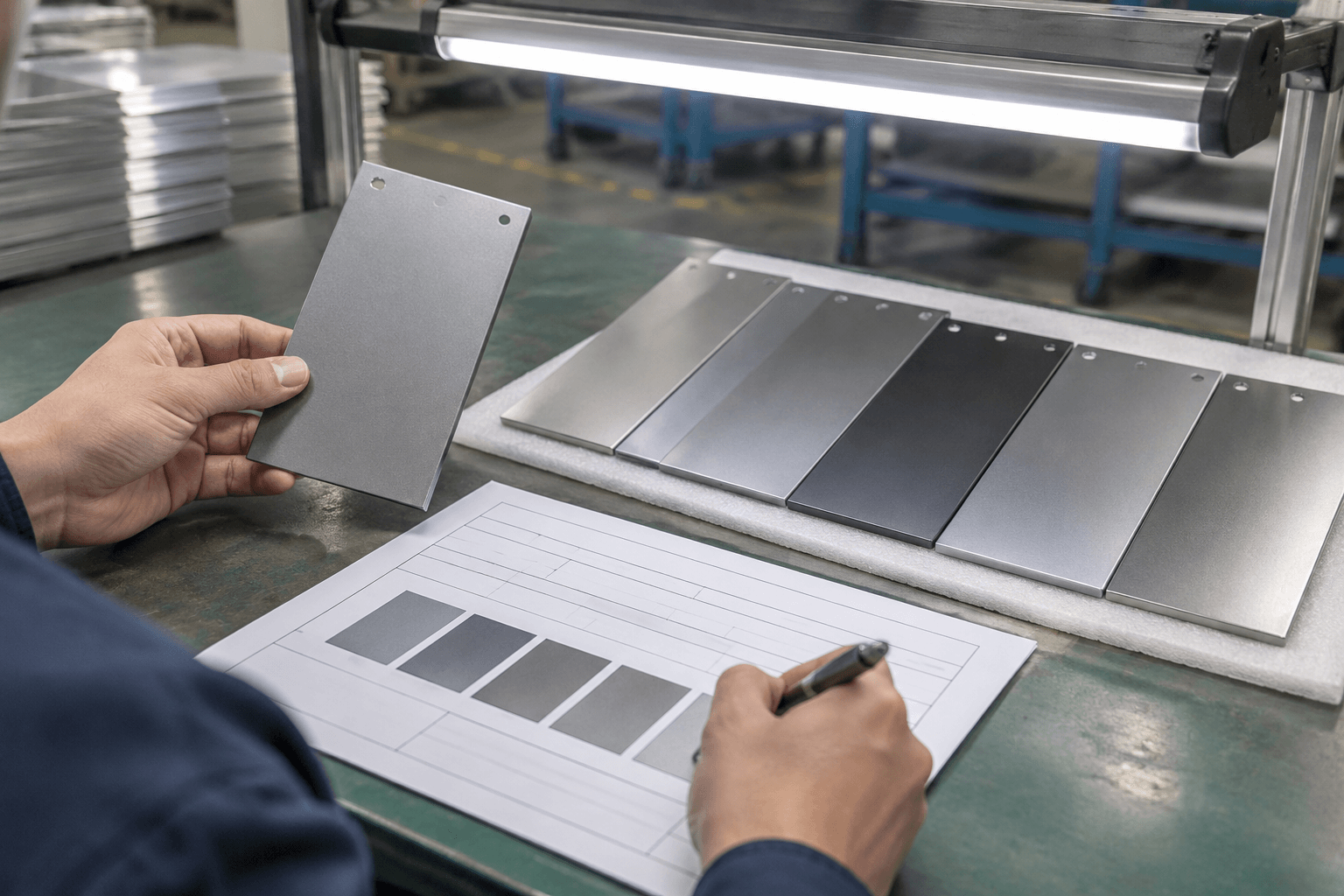
- Define viewing conditions. Agree on the light source or inspection area, viewing distance, orientation, and whether parts are compared individually or as an assembly.
- Establish the acceptance method. Visual approval may be suitable for some projects. Others may use agreed instrumental measurements, such as color coordinates and a defined color-difference calculation. Any instrument settings, locations, and acceptance limits must be project-specific.
- Approve representative samples. Samples should use the intended alloy, texture, geometry where practical, and proposed production route. Record approval before releasing the full batch.
- Maintain traceability. Link production batches to the approved sample, material lot, finish instruction, and inspection record. Keep retained samples when future replacement batches must match.
Anodized Color Approval Sheet: What to Lock Before Production
| Approval field | What to record | Status |
|---|---|---|
| Material | Alloy, temper if relevant, and whether visible parts use the same material source | Open / Approved |
| Surface preparation | Texture, grain direction, polishing or blasting instruction, and protected surfaces | Open / Approved |
| Color target | Named family plus controlled swatch or master sample identification | Open / Approved |
| Cosmetic zones | Primary faces, secondary faces, hidden areas, and comparison locations | Open / Approved |
| Viewing conditions | Light source, orientation, distance, background, and assembly condition | Open / Approved |
| Acceptable variation | Approved visual range or project-specific measurement method | Open / Approved |
| Production control | Sample approval date, batch identification, inspection record, and retained sample | Open / Approved |
Before production samples are made, a technical review should include the part drawing or 3D file, aluminum requirement, requested texture and color reference, cosmetic-surface designation, expected environment, and assembly context. Yishang supports B2B OEM and ODM custom manufacturing and can review whether these requirements are compatible with the proposed fabricated parts and assembly plan.
Balance Color With Functional and Assembly Requirements
The best aluminium anodizing colors are not selected by appearance alone. Color is one output of a wider finishing specification that may also address exposure, wear, electrical contact, masking, fits, threaded features, handling, cleaning, and assembly consistency.
Review mating parts early. A sheet metal panel, machined component, and extrusion may use different alloys or surface conditions, making a perfect visual match difficult even when processed together. Decide whether the goal is an exact-looking match, a controlled complementary contrast, or simply placement within an approved color family.
Also consider future service parts. If a replacement panel must match an older assembly, keep the approved master sample and manufacturing records. Digital photographs are useful for documentation, but they should not become the sole color authority.
Do not postpone color selection until geometry, material, and tooling decisions are complete. Early review leaves more options to align alloy, texture, visible grain, part orientation, and batch strategy with the intended brand appearance.
Frequently Asked Questions
Can aluminum be anodized in colors other than black and clear?
Yes. Common options include bronze, gold, red, blue, green, and custom-dyed colors. Availability and repeatability depend on the alloy, surface preparation, anodizing route, dye system, sealing, geometry, and intended environment. Approve a representative physical sample before production.
Is there a universal anodized aluminum color code or chart?
No universal chart defines exact anodized shades in the same way buyers may expect from standardized paint systems. Supplier charts are useful for choosing a direction, but the production reference should identify the actual material, surface finish, process route, and approved sample.
Why does bronze or black anodizing vary between production batches?
Variation may come from material lots, alloy chemistry, pre-treatment, oxide characteristics, dye conditions, sealing, batch loading, or inspection lighting. Consistent inputs, documented processing, controlled viewing conditions, traceability, and retained samples help manage batch-to-batch differences.
Can an anodized color be matched exactly to paint, powder coating, or a digital color value?
Anodized aluminum can be developed toward a target, but an exact visual match should not be assumed. Paint and powder coating form separate colored layers, while anodizing interacts with the metal surface and reflected light. Use the external color only as a target, then approve actual anodized samples under the product’s expected lighting.
For a color-focused technical review, provide the drawing, alloy, requested surface texture, physical color reference, cosmetic zones, and assembly environment. Confirming these items early gives production samples a clear and auditable approval basis.