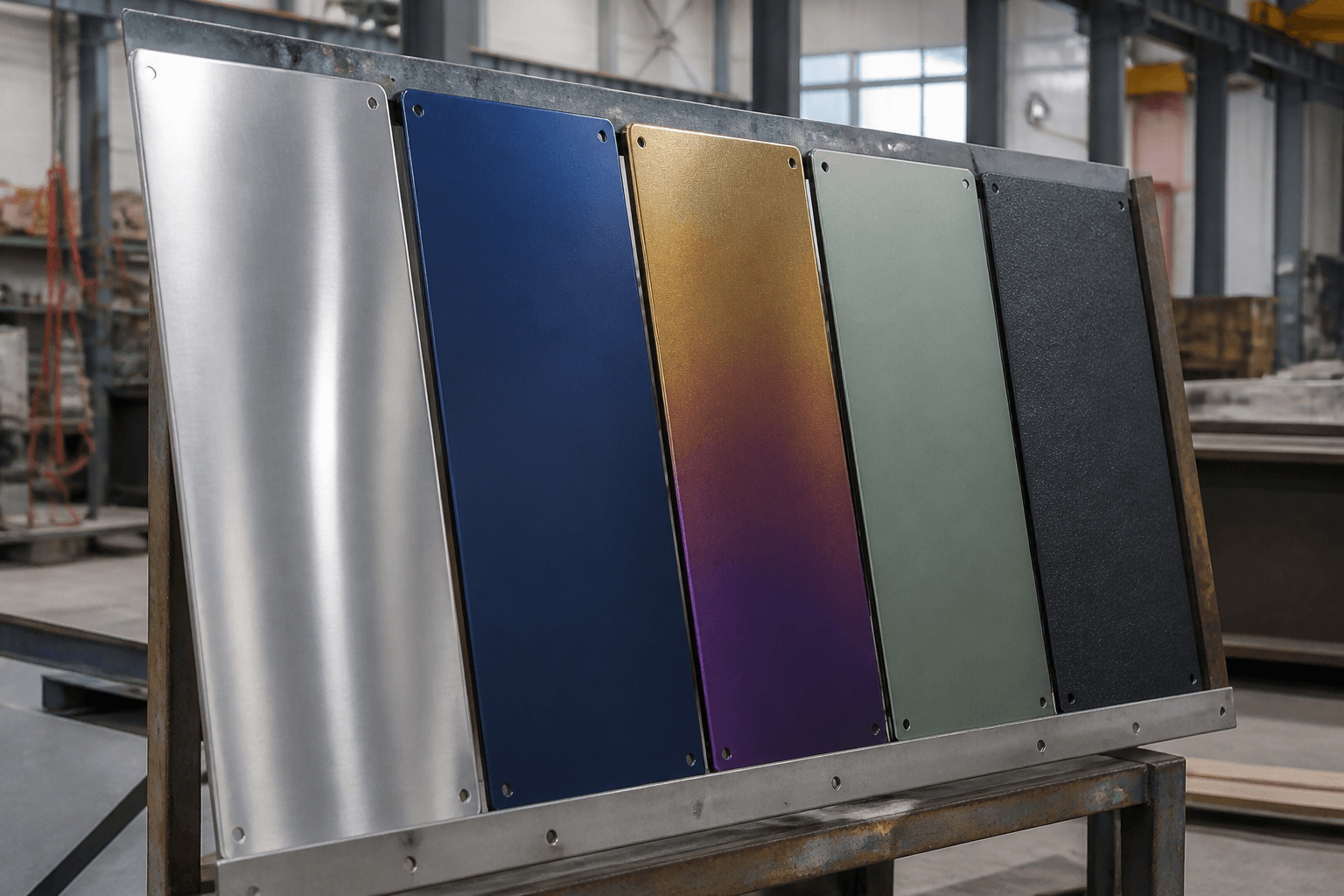
Aluminium can be colored, but the best method depends on whether you want a metallic anodized appearance, an optical anodic color, or an opaque applied coating. The principal options are dyed anodizing, interference-based anodic coloring, liquid paint, and powder coating.
These methods do not merely provide different palettes. They create different surface structures and affect gloss, texture, dimensions, wear behavior, electrical contact, repair options, and color consistency.
What Does Aluminium Coloring Mean?
Aluminium coloring is a broad term covering several ways to change or control a part’s visible surface. The color may be incorporated into a receptive anodic oxide layer, generated by an optical effect in a controlled anodic structure, or supplied by a separate coating applied over the metal.
- Dyed anodizing: An electrochemically formed porous oxide layer receives dye and is then sealed. The result usually retains some metallic character because the finish is integrated with the surface rather than sitting on it like an opaque paint film.
- Interference-based anodic color: Color comes from how light interacts with a controlled anodic film or structure. It is not necessarily produced by absorbed dye, and appearance can change with viewing angle, lighting, alloy, and process control.
- Liquid paint: A primer and/or colored liquid coating covers the substrate. Depending on the formulation and application, it can offer broad color and gloss choices, localized repair options, and compatibility with specialized performance requirements.
- Powder coating: Dry powder is electrostatically applied and cured into a continuous coating. It is commonly selected for opaque coverage, varied textures, and robust handling performance, subject to the powder chemistry and service conditions.
Directly applying a conventional dye to bare aluminium is generally not a dependable production method. The surface needs an appropriate receptive layer or a suitable coating system. Selection should therefore begin with the required appearance and service environment—not with a color name alone.
How the Main Aluminium Coloring Methods Compare
| Method | How color is created | Typical visual character | Production considerations |
|---|---|---|---|
| Dyed anodizing | Dye is absorbed into a porous anodic oxide before sealing | Metallic or translucent; underlying texture can remain visible | Highly sensitive to alloy, pretreatment, surface texture, dye control, and sealing |
| Interference anodic color | Controlled anodic structure produces optical color effects | Metallic, sometimes angle- or light-sensitive | Requires close control of substrate and process; available colors may be more constrained |
| Liquid paint | Pigmented coating covers the prepared surface | Usually opaque, with broad gloss and effect choices | Pretreatment and application control affect adhesion and appearance; repair may be possible but can remain visible |
| Powder coating | Applied powder is cured into a continuous film | Opaque; smooth, matte, gloss, or textured options are possible | Adds coating buildup and requires attention around threads, edges, holes, contacts, and mating areas |
Dyed anodizing is often shortlisted when a buyer wants the metal to remain visually identifiable. Brushing, polishing, machining lines, or blasting can still influence the final appearance because the anodized color is not an opaque layer hiding the substrate. The oxide is strongly adherent, but it is also relatively brittle. Forming after anodizing or exposing an unsuitable finish to thermal stress can cause cracking.
Interference color also preserves a distinctly metallic surface, but it should not be specified as though it were simply another anodizing dye. Its optical nature can make lighting and viewing geometry especially important during approval.
Paint and powder coating provide better hiding of substrate variation when an opaque finish is desired. Nevertheless, neither automatically eliminates dents, deep scratches, weld distortion, poor grinding transitions, or contamination. Paint and powder also add a separate layer, so their dimensional effect differs from that of anodizing. This matters on fitted covers, fastener seats, grounding points, threads, hinges, and assembly interfaces.
For visible products such as custom metal signs, the decisive criteria may include outdoor appearance, gloss, color contrast, and consistency across adjacent panels. An aluminium enclosure may place greater emphasis on masking, electrical contacts, abrasion during assembly, and uniformity between removable covers.
Why the Same Requested Color Can Look Different
A color label such as “black,” “silver,” or “bronze” does not define a reproducible finish by itself. Appearance is the result of a linked sequence involving the substrate, surface preparation, coloring process, and inspection conditions.
- Alloy and starting material: Alloying constituents and temper can affect anodizing response, brightness, undertone, and uniformity. Parts intended to match should use a controlled material specification where practical. Mixing cast, extruded, and sheet components can also produce visible differences even when they receive a nominally similar process.
- Initial surface condition: Scratches, rolling marks, weld zones, machining patterns, and handling damage can remain visible through translucent anodized finishes. An opaque coating hides color variation more effectively, but it may not conceal geometric defects.
- Pretreatment and texture: Cleaning removes contaminants, while etching, polishing, brushing, or blasting changes how the surface reflects light. A matte panel and a polished panel can appear to be different shades even if their measured color is close.
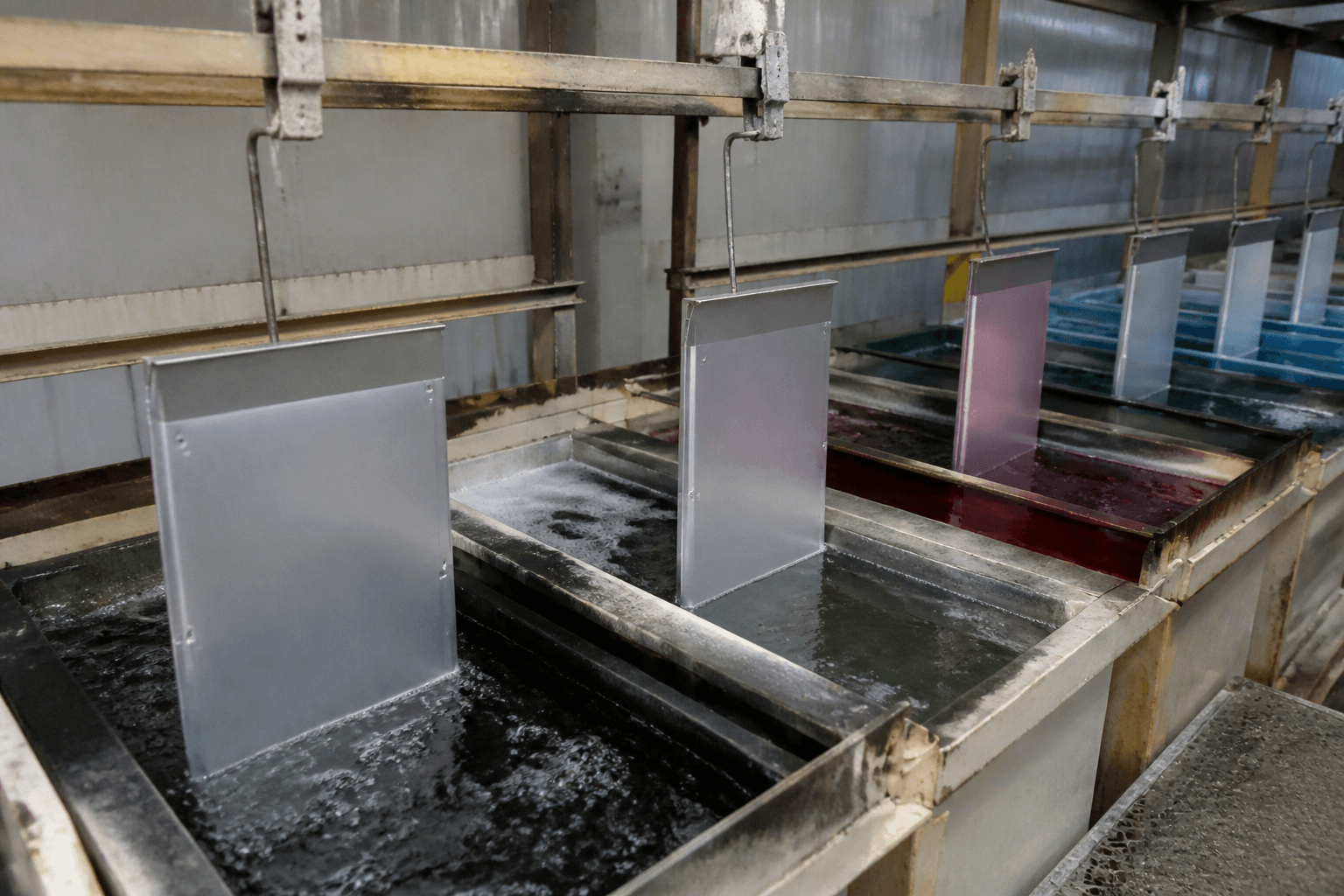
- Oxide formation: In anodizing, the aluminium component acts as the anode in an electrolytic process that grows a controlled oxide layer. Alloy, geometry, electrical contact, bath conditions, and process time can influence the resulting surface.
- Coloring: A porous anodic layer may absorb dye, while other anodic systems obtain color through optical interference. With paint or powder, pigment, film coverage, application technique, cure conditions, gloss, and texture determine the visible result.
- Rinsing and sealing: A typical dyed anodizing sequence is surface preparation, oxide formation, coloring, rinsing, and sealing. Sealing closes or stabilizes the porous structure and is important to the intended appearance and corrosion behavior. Poor control can affect shade or finish performance.
- Batch and inspection controls: Bath history, application settings, cure conditions, part orientation, and normal production variation can create differences between batches. Lighting type, viewing angle, background, and the observer also affect visual judgment.
This is particularly relevant to metal fabrication for lighting fixtures, where reflectivity, texture, visible color, and illumination interact. A finish approved under office lighting may look noticeably different when installed around warm or cool light sources.
Choose an Aluminium Coloring Method by Appearance and Service Need
No coloring method is universally best. The following decision matrix provides a starting point; the final specification should consider the selected alloy, part geometry, coating system, exposure, and applicable product requirements.
| Requirement | Methods to investigate | Design review notes |
|---|---|---|
| Visible metallic character | Dyed or interference-based anodic coloring | Substrate texture and alloy response remain important; approve the actual material and pretreatment |
| Opaque color and broad decorative choice | Liquid paint or powder coating | Define gloss, texture, coverage, edge appearance, and whether a standard color reference is sufficient |
| Corrosion exposure | Suitable sealed anodizing, paint system, or powder coating system | Match the complete finish system to environment, chemicals, cleaning methods, edges, and damaged-area risk |
| Abrasion or frequent handling | Evaluate anodic and applied-coating options | Wear depends on the specific system and contact conditions; avoid choosing by process name alone |
| Electrical insulation | Anodic oxide or suitable applied coating | Anodic oxide is electrically insulative, but contacts and grounding points may require controlled masking |
| Bonding, painting, lubrication, or later assembly | Process selected around downstream operation | Confirm adhesion, cleanliness, porosity or sealing, masking, and compatibility with adhesives or lubricants |
| Thermal cycling or forming | Finish-specific evaluation | Anodic films adhere strongly but can be brittle; post-finish forming or thermal stress may cause cracking |
| Localized repair in service | Liquid paint may be easier to touch up | A repair may protect the area without becoming cosmetically invisible; anodized appearance is difficult to recreate locally |
Environmental requirements also extend beyond outdoor exposure. Buyers may need to consider process chemistry, volatile emissions associated with a liquid coating system, powder recovery practices, restricted-substance requirements, and end-of-life expectations. These issues should be reviewed for the actual material and coating formulation rather than inferred from a generic process category.
For custom sheet metal enclosures, finish selection should also account for grounding points, gasket lands, hardware interfaces, internal versus external surfaces, and coating buildup around closely fitting parts. An attractive finish that prevents assembly or interferes with electrical contact is not a successful specification.
Specify the Color and Approve It Before Production
A useful aluminium coloring specification connects the visual target to the substrate and process. Buyers should provide the following information where it is relevant:
- Part drawing or product dimensions, including critical fits and coating-sensitive features.
- Aluminium alloy and material form, if already selected.
- Starting surface condition and required pretreatment, such as brushed, polished, blasted, etched, or as-fabricated.
- Finish family: dyed anodizing, interference anodic color, liquid paint, powder coating, or another defined system.
- Desired color, gloss, texture, and whether the appearance should be metallic, translucent, or opaque.
- Critical cosmetic zones, permitted rack or contact areas, masking locations, threads, mating faces, and electrical contacts.
- Service environment, wear exposure, cleaning chemicals, thermal conditions, insulation needs, and downstream bonding or assembly.
- Acceptable variation within a part, between adjacent parts, and between production batches.
- Packaging and handling requirements intended to prevent rubbing, staining, or surface-to-surface damage.
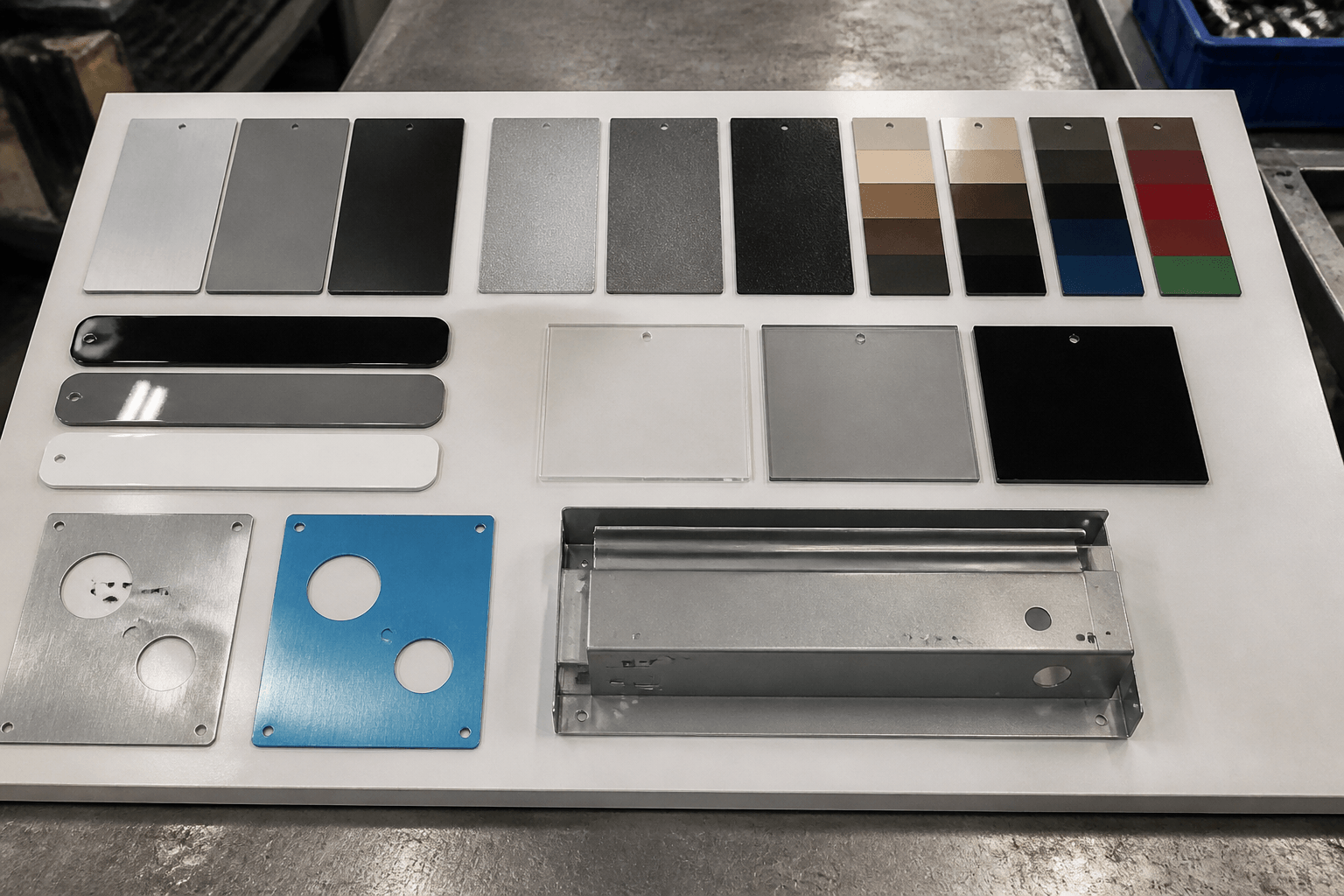
For example, a hypothetical specification stating “black anodized aluminium” leaves the alloy, surface texture, gloss, cosmetic zones, and acceptable shade range undefined. A more useful requirement identifies the alloy, pretreatment, anodizing family, desired visual character, masked features, approved sample, and inspection conditions. The drawing and sample should also state which requirement takes precedence if they appear inconsistent.
A physical reference sample is generally more reliable than a screen image because displays, cameras, compression, and lighting alter color. Even a physical sample must be identified carefully: is it an exact acceptance reference, a target for general appearance, or only inspiration? Review samples under agreed lighting, angle, distance, and background. If instruments will be used, the measurement method and acceptance limits must be defined rather than assumed.
Yishang supports B2B OEM and ODM custom manufacturing and has more than 26 years of experience producing custom sheet metal parts and metal products. Before production, buyers can request a specification review covering the proposed substrate, finish family, cosmetic zones, masking, service needs, and sample-approval method. Provide the part drawing, selected alloy, desired color and texture, service environment, and any reference sample or image; images should be identified as visual guidance unless they represent a controlled standard.
Frequently Asked Questions
What is the best way to color aluminium when appearance and corrosion resistance both matter?
There is no universal best method. Sealed anodizing may suit a metallic appearance, while an appropriately selected paint or powder system may suit opaque coverage and a broader decorative range. Compare the actual environment, alloy, wear, edges, cleaning chemicals, color target, and maintenance expectations before choosing.
Can aluminium be colored without anodizing?
Yes. Aluminium can be colored with liquid paint, powder coating, and other compatible applied systems after suitable cleaning and pretreatment. Bare aluminium should not be expected to accept an ordinary dye reliably without a receptive layer or coating system.
Why does anodized aluminium vary between alloys or production batches?
Anodized appearance is influenced by alloy composition, temper, material form, initial texture, pretreatment, oxide formation, coloring, rinsing, sealing, and batch conditions. Because the finish can remain translucent, underlying differences may remain visible rather than being hidden.
Can a colored aluminium finish be matched exactly from a digital image or color name?
Not reliably. A digital image is affected by lighting, camera settings, file processing, and display calibration, while a color name does not define gloss, texture, opacity, alloy, or viewing conditions. Use a controlled color reference or approved physical sample and define acceptable variation.