
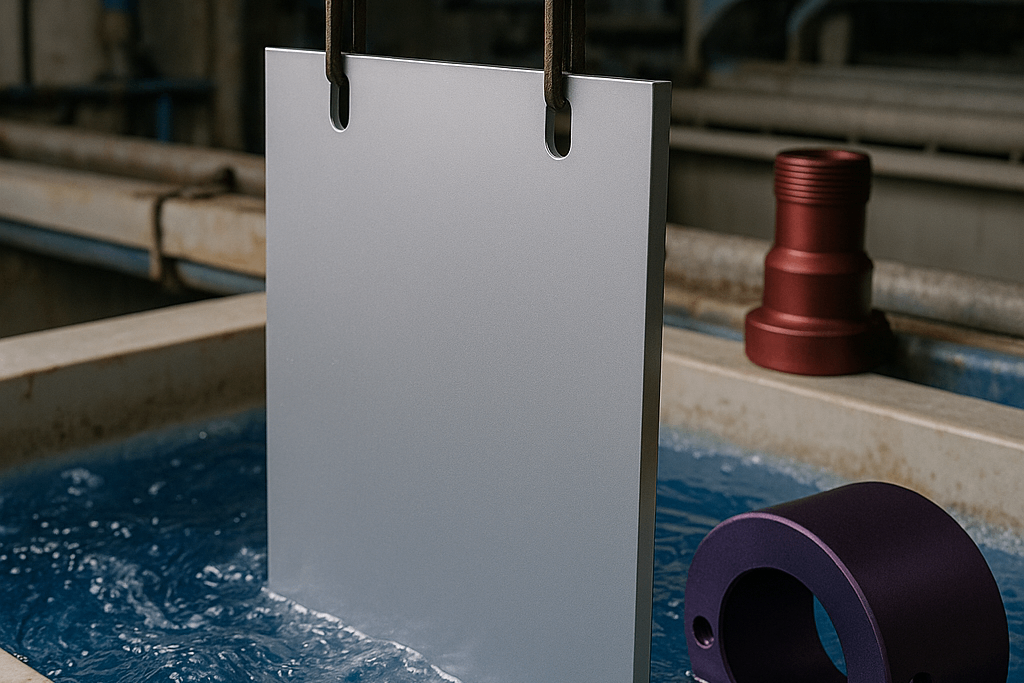
Anodizing is an electrochemical process that thickens the natural oxide layer on the surface of aluminum. In practical terms, it improves corrosion resistance, surface hardness, appearance stability, and in some cases color consistency.
For buyers, anodizing is not just a finishing detail. It is a surface treatment choice that can affect durability, product positioning, dimensional fit, and long-term maintenance performance.
Why Anodizing Matters in Industrial Products
Anodizing is widely used because it improves both performance and finish quality without applying a separate paint-like layer.
Main Advantages of Anodized Aluminum
| Benefit | Why It Matters in Practice |
| Corrosion resistance | Helps aluminum parts perform better in outdoor, humid, or chemically variable environments |
| Improved surface hardness | Makes the surface more resistant to wear and scratching |
| Appearance consistency | Supports cleaner visual finish across repeated batches |
| Color compatibility | Type II anodizing can be dyed for branded or decorative products |
| No peeling risk like coating layers | The oxide layer becomes part of the aluminum surface rather than sitting on top of it |
Typical Industrial Uses
Common anodized aluminum applications include:
electronic housings,
control panels,
trims and architectural parts,
brackets and light structural parts,
consumer-facing aluminum products requiring both durability and appearance control.
Type I vs Type II vs Type III: What Changes and Why It Matters
Different anodizing types are used for different performance and appearance priorities.
| Type | Typical Thickness | Main Characteristics | Common Use |
| Type I (Chromic Acid) | Thin | Good corrosion resistance, lower thickness impact | Aerospace and specialized lightweight applications |
| Type II (Sulfuric Acid) | Moderate | Best balance of protection, appearance, and color options | General industrial, electronics, architectural, branded products |
| Type III (Hard Anodizing / Hardcoat) | Thickest | Highest wear resistance and surface hardness | Machinery parts, industrial tools, heavy-use components |
Commercial Comparison: Type II vs Type III
| Feature | Type II | Type III |
| Decorative flexibility | High | Limited |
| Color options | Wide | Usually darker / more limited |
| Wear performance | Good | Excellent |
| Surface hardness | Moderate | High |
| Best fit | Visible parts and general industrial use | High-wear or high-contact industrial parts |
When Anodizing Is the Right Choice for Your Part
Anodizing is usually a good fit when the product needs:
a durable aluminum surface without paint-like peeling behavior;
better corrosion resistance than untreated aluminum;
a controlled decorative or branded finish;
improved wear resistance in a lightweight metal part.
When Buyers Should Be More Careful
Anodizing may need closer review when:
dimensional tolerance is extremely tight and coating buildup matters;
the alloy is not well suited to the intended finish appearance;
color consistency across large-volume runs is a major approval factor;
the part geometry includes deep recesses or areas where finish uniformity can vary.
What Buyers Should Confirm Before Ordering Anodized Parts
| Check Item | Why It Matters |
| Alloy grade | Different aluminum alloys can respond differently to anodizing in color, texture, and finish quality |
| Anodizing type | Type I, II, and III deliver different performance outcomes |
| Target thickness | Affects wear performance, corrosion behavior, and dimensional fit |
| Color requirement | Dyed anodizing needs tighter batch control if visual consistency is critical |
| Sealing method | Sealing influences corrosion resistance and finish durability |
| QC records | Thickness checks, appearance checks, and corrosion-related validation reduce sourcing risk |
FAQ
What does anodizing do to aluminum?
It thickens the aluminum’s natural oxide layer, improving corrosion resistance and surface durability.
Which anodizing type is best for general-purpose industrial products?
In many cases, Type II sulfuric acid anodizing offers the best balance of protection, appearance, and cost.
When is hard anodizing the better choice?
Type III hard anodizing is generally better when the part will face heavy wear, repeated contact, or higher mechanical stress.
Does anodizing change dimensions?
Yes. Because the oxide layer grows on and into the surface, anodizing can affect final dimensions, especially when thicker hardcoat finishes are specified.
Conclusion
Anodizing is more than a finish choice. It is a performance decision that affects corrosion behavior, wear resistance, appearance stability, and product consistency.
For buyers, the right anodizing choice depends on the alloy, the use environment, the required appearance, and how tightly the final part must be controlled in production.