
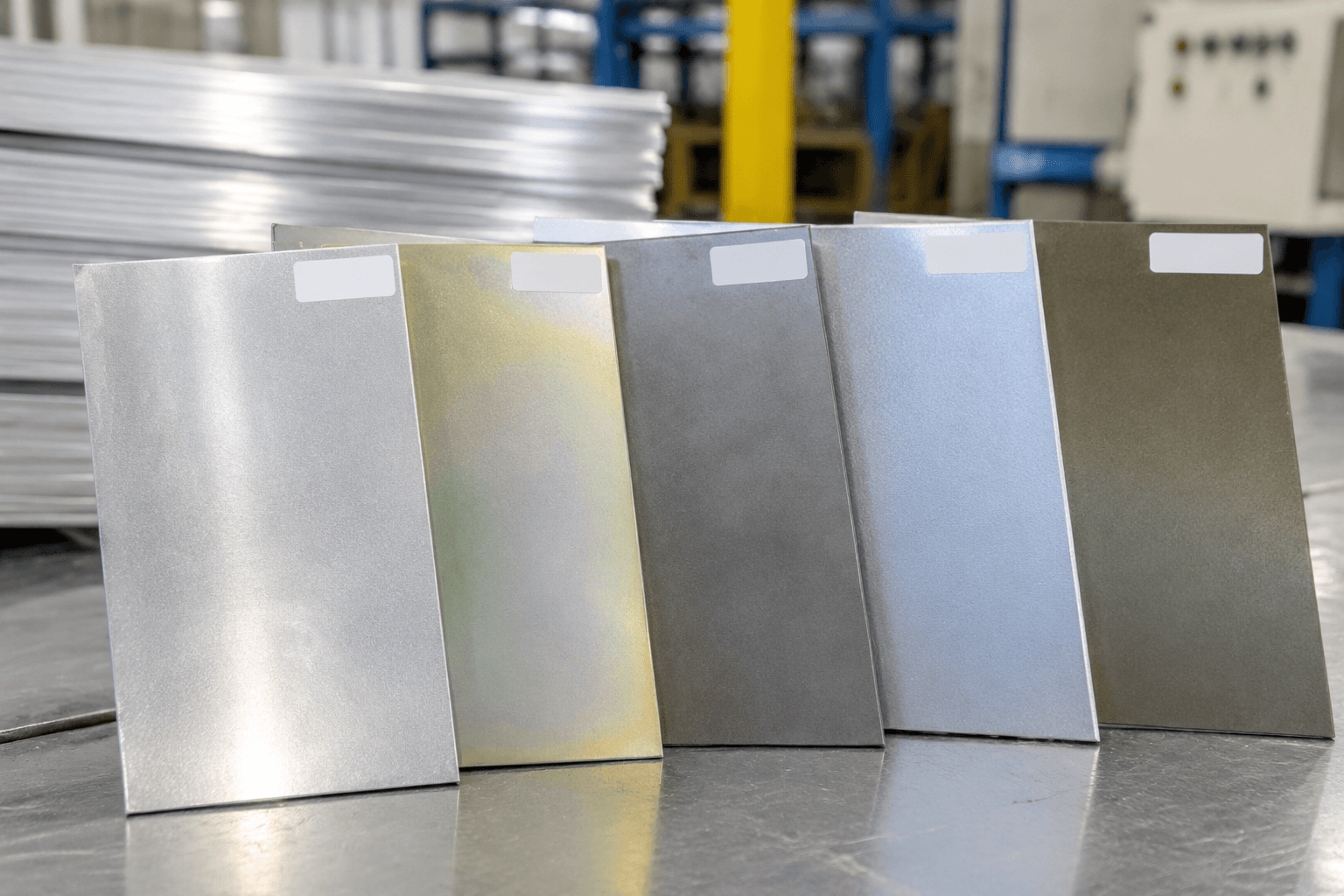
“Alodine 1200” may communicate an intended aluminum chemical conversion coating, but it is not a complete finish requirement. Confirm the full product designation, governing specification, finish class or type, and acceptance criteria rather than assuming that similarly named products are equivalent.
A buyer should therefore treat “Alodine 1200” as the beginning of a technical clarification, not as a complete drawing instruction. Confirm the manufacturer’s full product designation, the aluminum alloy and condition, the governing documentation, the functional purpose, and the evidence required for production acceptance.
This distinction matters because product names that look similar are not necessarily interchangeable. Henkel currently lists BONDERITE M-CR 1200 AERO and BONDERITE M-CR 1200S AERO as separate conversion-coating products. Its technical documentation identifies the latter as a product known as ALODINE 1200S, illustrating why the suffix and complete designation should be checked rather than assumed. ([next.henkel-adhesives.com](https://next.henkel-adhesives.com/be/en/products.html/producttype_2.3.5.4.12.1.html?utm_source=openai))
What the Finish Is Expected to Do
Chemical conversion coating is a surface treatment used on aluminum and aluminum alloys. Instead of applying a conventional paint-like layer, the treatment chemically modifies the prepared metal surface to produce a conversion layer. The result must be considered together with the alloy, surface preparation, product designation, process controls, and any subsequent paint or adhesive system.
Manufacturer information for BONDERITE M-CR 1200S AERO describes it as a conversion coating for aluminum surfaces, with intended functions that include providing a protective coating, supporting corrosion resistance, and improving the bond for paint. These are functional purposes, not automatic guarantees for every component or service environment. ([next.henkel-adhesives.com](https://next.henkel-adhesives.com/us/en/products/surface-treatments/central-pdp.html/bonderite-m-cr-1200s-aero/62183IB.html?utm_source=openai))
| Component requirement | Possible role of conversion coating | What must still be defined |
|---|---|---|
| Painted aluminum enclosure | Provide a prepared surface intended to support paint adhesion and corrosion protection | Paint system, pretreatment compatibility, masked areas, adhesion acceptance method, and appearance limits |
| Unpainted aluminum component | Provide a conversion-treated surface for the specified service condition | Product, governing specification, finish class or type, handling rules, and corrosion verification |
| Electrical grounding area | Allow the specified surface treatment while preserving the required interface | Contact location, electrical requirement, masking policy, coating class, and test method |
| Adhesively bonded assembly | Act as part of the defined surface-preparation system | Adhesive supplier requirements, pretreatment approval, cleaning limits, process sequence, and bond verification |
Conversion coating should not be treated as another name for anodizing. Both concern aluminum surfaces, but they are distinct treatment categories with different process definitions and specification systems. If a drawing says anodize in one location and Alodine 1200 in another, the difference should be preserved during technical review.
Product Identity and Drawing Compliance Are Separate Questions
A proposed chemical may be commercially available and suitable for aluminum without satisfying the buyer’s drawing. Compliance depends on the complete requirement hierarchy, not on a familiar word appearing in the product name.
- Read the drawing and purchase documents first. Identify the exact finish wording, referenced specification, revision, class, type, approved-product restriction, and any notes that govern appearance or testing.
- Confirm the full product identity. Record the manufacturer, complete commercial designation, product form, and current technical documentation. Do not shorten 1200S to 1200 or treat another number as equivalent without written technical confirmation.
- Check whether the buyer controls the product or the result. One drawing may require a named proprietary material. Another may permit an approved alternative that satisfies a stated specification and class. These are different purchasing conditions.
- Resolve conflicts through the document hierarchy. A drawing note, purchase specification, approved-process list, or customer instruction normally has more authority than an informal email description or legacy shop term.
- Define acceptance before production. The parties should know whether acceptance depends on documentation, visual workmanship, traceability, specified testing, or a combination of these controls.
The same discipline applies when someone proposes BONDERITE M-CR 1201 or another conversion coating. A similar application description does not prove equivalent chemistry, approval status, finish classification, process window, or performance under the buyer’s governing requirement.
Part Features That Change the Finishing Plan
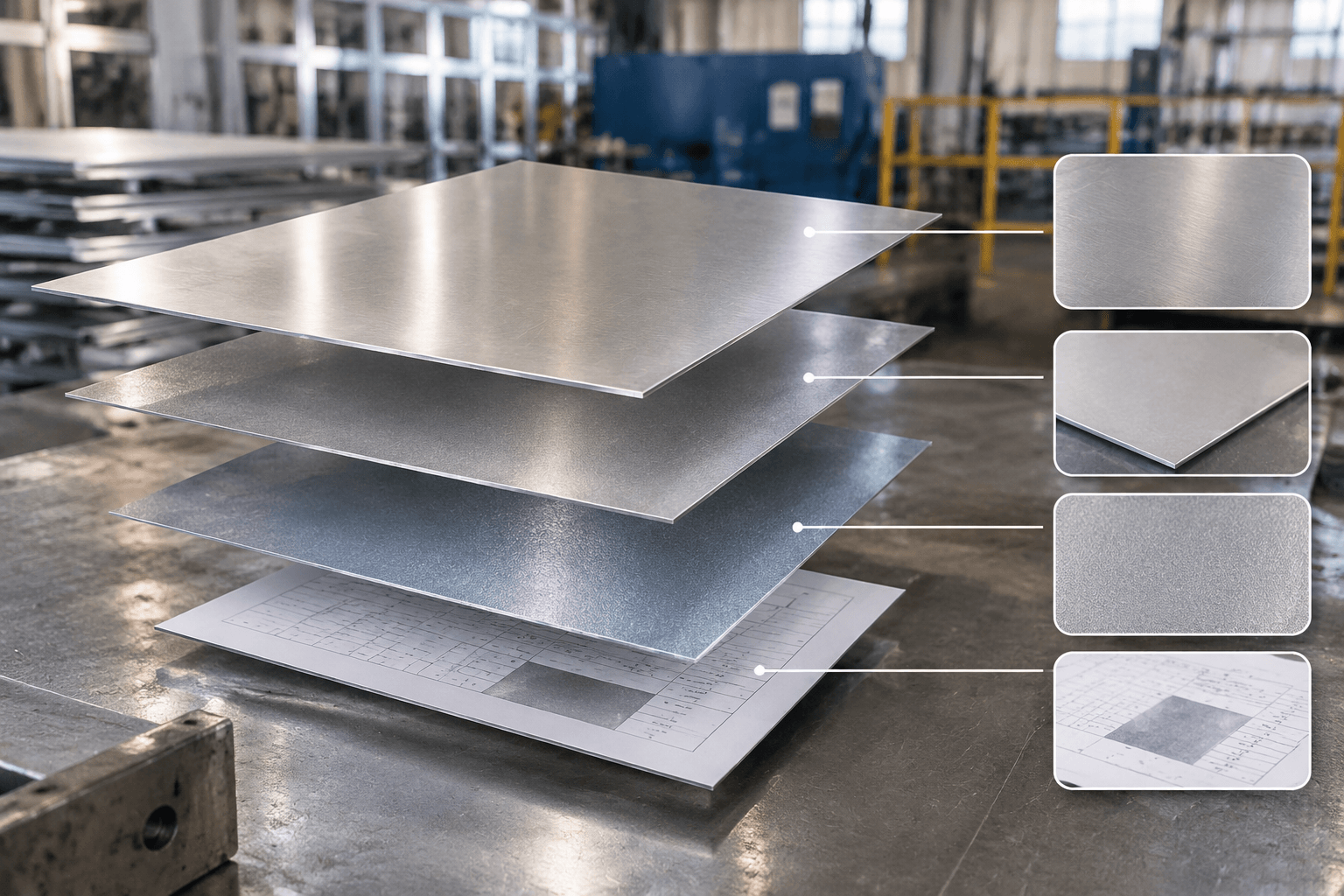
The finish callout must be interpreted at component level. A simple flat coupon does not represent every fabricated enclosure, casting, extrusion, threaded insert, welded corner, or machined interface.
| Feature or condition | Question for design and production review |
|---|---|
| Base material | What is the aluminum alloy, temper, casting grade, extrusion condition, or sheet condition? |
| Mixed surface conditions | Are there machined faces, cut edges, formed zones, welds, heat-affected areas, or repaired surfaces? |
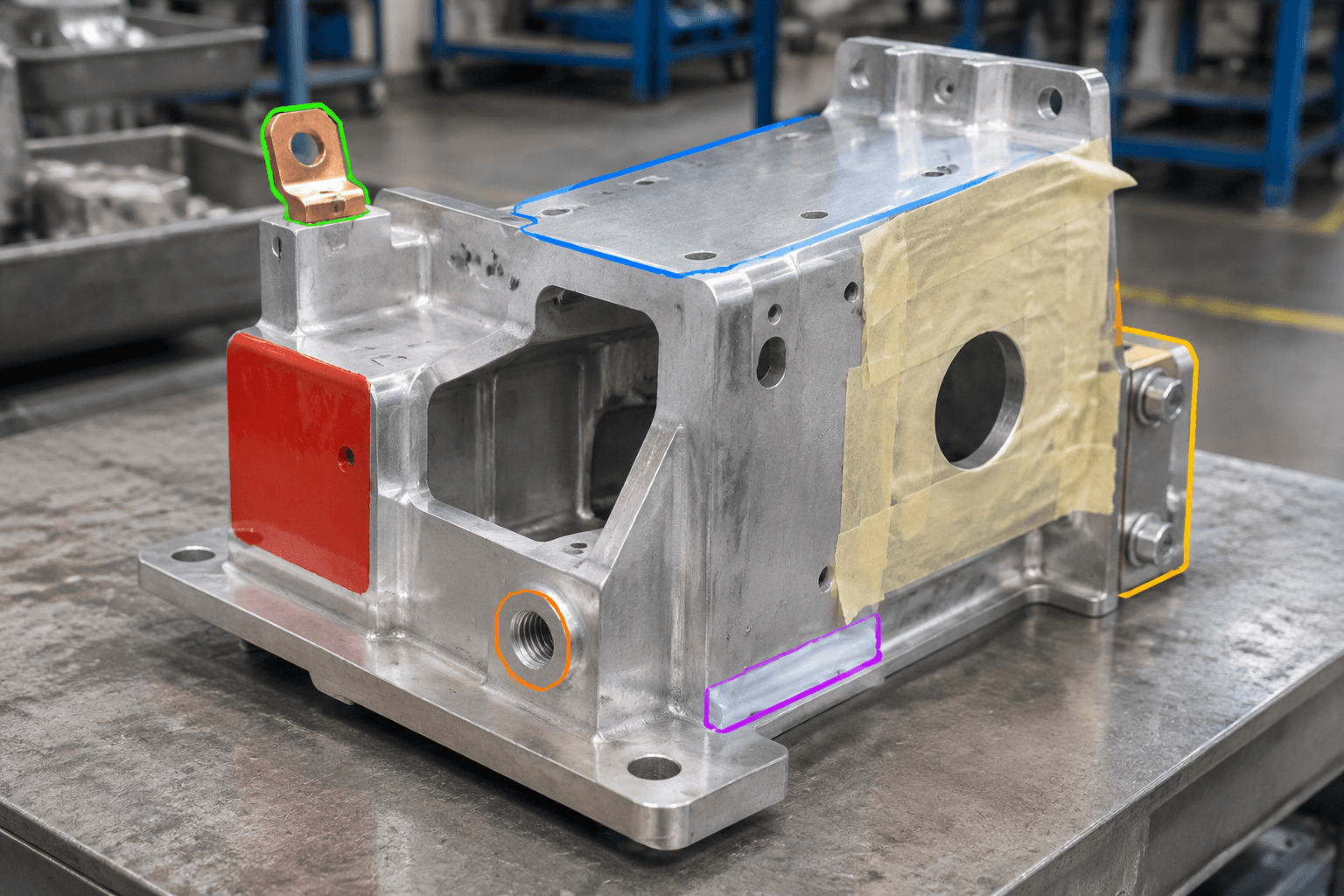
| Masking | Which areas must remain untreated, paint-free, adhesive-free, or dimensionally controlled? |
| Electrical contact | Where must grounding or continuity be maintained, and how will it be measured? |
| Threads and holes | Must threaded features be protected, treated, chased, plugged, or inspected after finishing? |
| Painting | Will conversion coating serve as pretreatment, and which paint system and cure sequence follow it? |
| Bonding | Does the adhesive manufacturer or buyer approve the proposed surface-preparation system? |
| Assembly timing | Does coating occur before inserting hardware, joining components, applying sealant, or completing final assembly? |
| Cosmetic surfaces | Has the buyer defined acceptable variation, stains, handling marks, rack or contact marks, and visible boundaries? |
These questions are especially important for custom sheet metal enclosures, where painted exterior panels, grounding points, inserted hardware, seams, and masked interfaces can coexist on one assembly. Similar review is needed for custom aluminum extrusion components with machined ends or contact faces, and for aluminum die-cast housings whose alloy and as-cast surface may differ from a wrought sheet surface.
Finish appearance can vary with the exact coating system, alloy, surface condition, preparation, geometry, and processing history. Official information for one 1200S product describes an appearance ranging from light iridescent gold to tan, but that description should not be applied automatically to every product called Alodine or to every aluminum component. ([gated.datasheets.tdx.henkel.com](https://gated.datasheets.tdx.henkel.com/gated/BONDERITE-M-CR-1200S-AERO-Technical-Process-Bulletin-en_US.pdf?utm_source=openai))
Color is therefore supporting inspection information, not complete proof of compliance. A part that looks golden may still lack the required identity, records, process approval, or test evidence. Conversely, a permitted finish variation should not be rejected solely because it differs from an uncontrolled reference photograph.
Turn an “Alodine 1200” Callout Into a Complete Requirement
The following clarification matrix converts the short callout into a manufacturing requirement that engineering, procurement, finishing, and quality teams can interpret consistently.
| Requirement area | What may be known | What is missing or ambiguous | What to confirm |
|---|---|---|---|
| Finish identity | The buyer intends an aluminum conversion coating | Full manufacturer and product designation | Exact current product name and whether alternatives are permitted |
| Substrate | The part is described as aluminum | Alloy, temper, casting grade, cladding, and surface condition | Material specification and any restrictions by alloy or part form |
| Functional purpose | Corrosion protection or paint pretreatment may be intended | Actual service requirement and downstream coating system | Whether the part is bare, painted, bonded, electrically functional, or used in a combined system |
| Classification | A conversion finish is requested | Governing specification, revision, class, or type | The exact document and classification controlling production |
| Coverage | The finish may apply to the complete part | Masking boundaries and special interfaces | Coated, uncoated, painted, bonded, threaded, and electrical-contact areas |
| Appearance | A reference color may be expected | Permitted variation and workmanship limits | Approved sample, documented visual criteria, or defined cosmetic zones |
| Evidence | A certificate may be expected | Record content, sampling, tests, and traceability level | Required certificate, product identity, batch records, lot links, inspection report, and test results |
This matrix should be completed before the finish is released for production. It reduces the risk of processing acceptable-looking parts that do not match the buyer’s controlled requirement.
Evidence for Production Acceptance
Verification should follow the governing drawing and purchase documents. The appropriate evidence depends on the industry, component, specification, production quantity, and risk level; it should not be invented after parts have been processed.
A practical evidence hierarchy may include:
- Requirement evidence: controlled drawing, purchase specification, approved deviation, specification revision, finish class, and acceptance criteria.
- Material and product identity: aluminum material records where required, coating product manufacturer, full product designation, and relevant batch or lot identification.
- Process records: production date, part or work-order reference, processor identification, defined control records, and links between the processed batch and shipment.
- Workmanship inspection: coverage, visible contamination, damage, stains, handling marks, masking boundaries, protected features, and appearance assessed against buyer-defined limits.
- Specified test evidence: adhesion, corrosion, electrical, coating, or other verification only when required by the governing documentation, using its stated method and sampling plan.
- Shipment documentation: certificate of conformance, inspection report, traceability records, or other documents specifically requested by the buyer.
A certificate stating only “Alodine applied” may be inadequate if the order controls the exact product, specification, classification, or test evidence. Documentation should identify what requirement was followed and connect that requirement to the shipped production batch.
Frequently Asked Questions
Is Alodine 1200 a product name, a process, or a complete finish specification?
It is commonly used as a product-related or informal process term for aluminum chemical conversion coating. By itself, it is not necessarily a complete finish specification. A production requirement should identify the exact product when controlled, plus the governing specification, class or type, substrate, coverage, and acceptance evidence.
Can BONDERITE M-CR 1201 or another conversion coating replace Alodine 1200?
Not automatically. Substitution is acceptable only when the drawing, buyer, or governing approval system permits it and the proposed product satisfies every applicable requirement. Similar names or general descriptions such as “for aluminum” do not establish equivalence.
Does the color of a conversion-coated aluminum part prove compliance?
No. Color may help assess coverage or appearance against defined workmanship criteria, but it does not prove the product identity, process approval, corrosion performance, paint adhesion, classification, or batch traceability. Appearance can also vary with alloy, preparation, geometry, and the specified coating system.
Should Alodine be applied before painting, bonding, or final assembly?
That depends on the approved manufacturing sequence. Conversion coating is often specified as pretreatment before painting, while adhesive bonding requires compatibility with the complete bonding procedure. Hardware, sealants, electrical contacts, masked threads, and joined components may change the sequence, so the drawing and process documentation should define when treatment occurs.