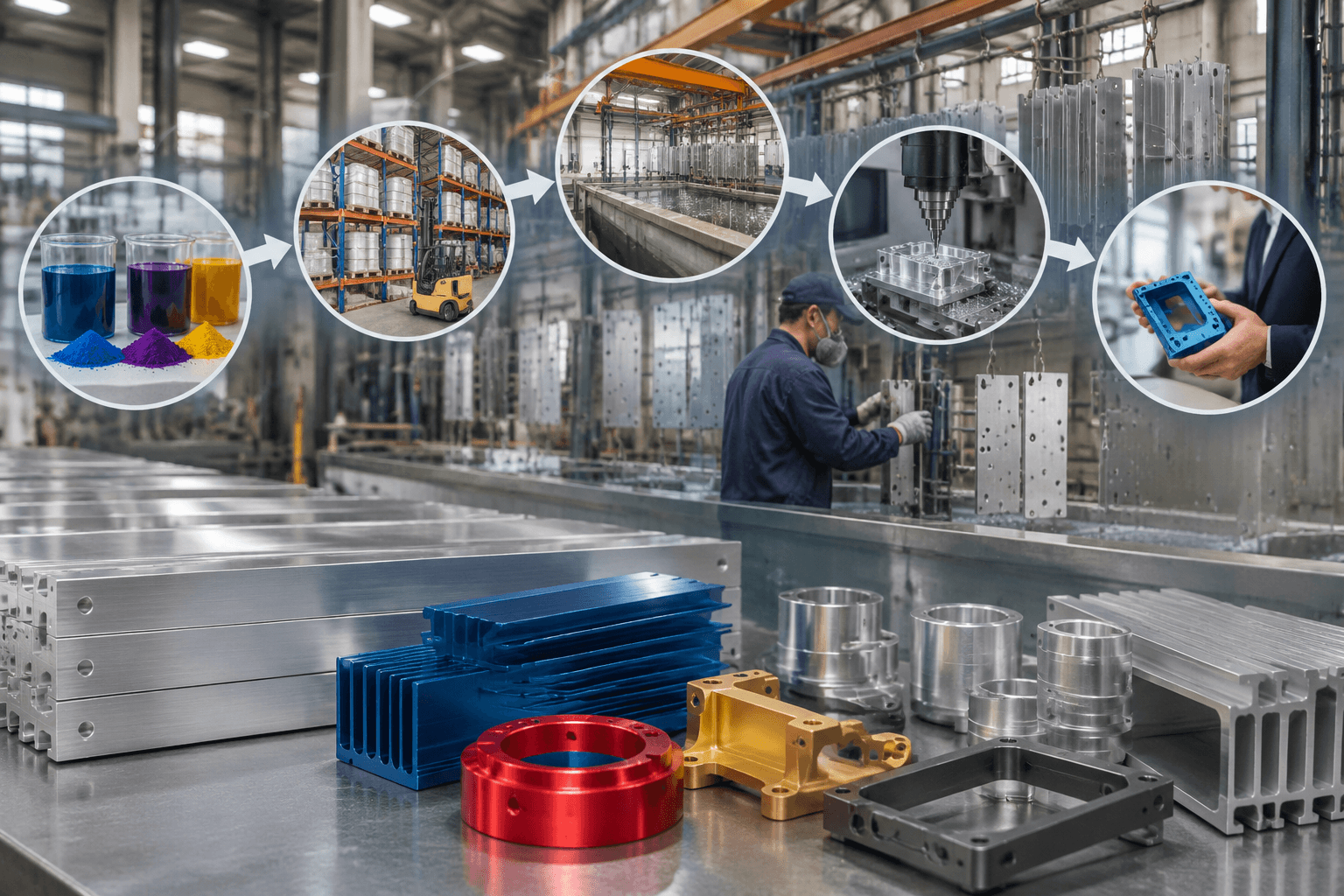
The aluminium anodizing dyes market covers colorants formulated for absorption into porous anodic oxide layers on aluminium before sealing. It is a specialized part of the aluminium-finishing supply chain—not the entire market for anodizing chemicals, anodizing services, or finished anodized products.
This overview explains the market boundary, commercial value chain, demand drivers, technical selection factors, and sourcing implications. It does not assign a market size or growth rate because publicly promoted figures often combine dyes with other chemicals, services, or finished aluminium products.
What the Aluminium Anodizing Dyes Market Includes
Anodizing creates an oxide layer that is integrated with the aluminium surface. In a dyed process, colorant is absorbed into the porous layer and the surface is subsequently sealed. Industry guidance describes colouring and sealing as distinct stages and recognizes organic dyestuff solutions as one established colouring route. ([next.henkel-adhesives.com](https://next.henkel-adhesives.com/us/en/articles/aluminum-anodizing.html?utm_source=openai))
The core product market includes industrial dyes developed for anodized aluminium and the commercial activity required to manufacture and distribute them. Technical support, bath analysis, shade development, and qualification work are important parts of the value chain, but market reports should state whether these services or dye-related auxiliaries are included in reported revenue. Buyers should check this scope before comparing estimates.
Several adjacent categories sit outside a dyes-only definition. These include cleaners, etchants, desmutting agents, anodizing electrolytes, sealing chemicals, contract anodizing revenue, and sales of finished anodized sheet or extrusions. Electrolytic coloring and integral coloring also belong to the broader coloring market but are not automatically dye demand. QUALANOD distinguishes organic-dyestuff coloring, electrolytic coloring, chemical coloring, and integral-color anodizing as separate approaches. ([qualanod.net](https://www.qualanod.net/current-edition.html?file=files%2Fqualanod%2Fdownloads%2F2026-01-01+QUALANOD+Specifications.pdf&utm_source=openai))
Not every anodized color is produced with a dye. Natural anodizing may remain uncolored, while other appearances can be produced through integral or electrolytic routes. Titanium anodizing is another separate category and should not be counted as aluminium anodizing dye consumption.
Where Anodizing Dyes Sit in the Aluminium Finishing Value Chain
The business relationships are easier to understand when dye purchasers are separated from buyers of finished components. An OEM may specify an appearance but never purchase dye directly; the commercial dye customer is more often an anodizing company or an integrated manufacturer operating an anodizing line.
Market Scope Map
| Value-chain participant | Primary role | Typical purchasing or specification responsibility |
|---|---|---|
| Dye manufacturer | Develops and manufactures industrial colorants for anodized aluminium | Controls product documentation, supply form, formulation continuity, and technical guidance |
| Distributor | Stocks products and provides regional commercial or laboratory support | Manages local availability, order quantities, documentation, and technical communication |
| Anodizing service provider | Prepares, anodizes, colors, seals, and inspects parts | Selects and controls the dye system needed to meet the approved finish |
| Component manufacturer | Produces sheet metal, machined, or extruded parts before finishing | Controls material, surface condition, dimensions, masking details, and finishing allowance |
| OEM or brand owner | Defines appearance, performance, assembly, and commercial requirements | Approves samples and establishes acceptance criteria for production parts |
Distribution can be regional rather than uniform. Supplier information identifies Reliant as a North American distribution channel for an anodizing-dye portfolio. This illustrates why nominal global availability does not guarantee identical local stock, package sizes, support, or lead times. ([reliantaluminumproducts.com](https://reliantaluminumproducts.com/?utm_source=openai))
Technical services also support dye use across the commercial value chain. Suppliers and distributors may provide application testing, bath analysis, troubleshooting, and process-development support. Such services matter because the purchased dye is only one input into the final appearance; alloy condition, pretreatment, anodizing, coloring, sealing, and process control remain interconnected. ([aluminum.org](https://www.aluminum.org/about-association/member-directory/reliant-aluminum-products-llc?utm_source=openai))
Which Applications Create Demand?
Demand is driven less by “colored aluminium” as a broad category than by products requiring controlled decorative appearance, identification, branding, or visual integration with an assembly.
- Consumer and decorative products: Bright trim, cosmetic containers, shower components, reflectors, and similar visible parts create demand for aesthetically consistent colors and surface textures. QUALANOD lists these among decorative anodizing applications. ([qualanod.net](https://www.qualanod.net/decorative-applications.html?utm_source=openai))
- Architecture and building products: Selected façades, frames, profiles, and interior elements may use colored anodized finishes, although electrolytic and other coloring routes also serve this segment.
- Industrial equipment and electronics: Enclosures, control panels, handles, nameplates, and equipment parts can use color for branding, product-family identification, or visual differentiation.
- Lighting products: Visible housings, trims, reflectors, and brackets may combine appearance requirements with light-management and assembly considerations. This is relevant when specifying components for custom lighting metal fabrication.
- Extruded components: Profiles for frames, housings, rails, and equipment structures may require repeatable color across cut lengths and production lots. Material and finish requirements should be aligned when sourcing custom aluminium extrusion components.
Demand can also change when OEMs reduce the number of approved colors, adopt product-specific branding, or require continuity over a long service life. Conversely, a wider color catalogue can increase qualification work, inventory complexity, and the number of controlled bath conditions needed by the anodizer.
Why Dye Selection Is Application-Specific
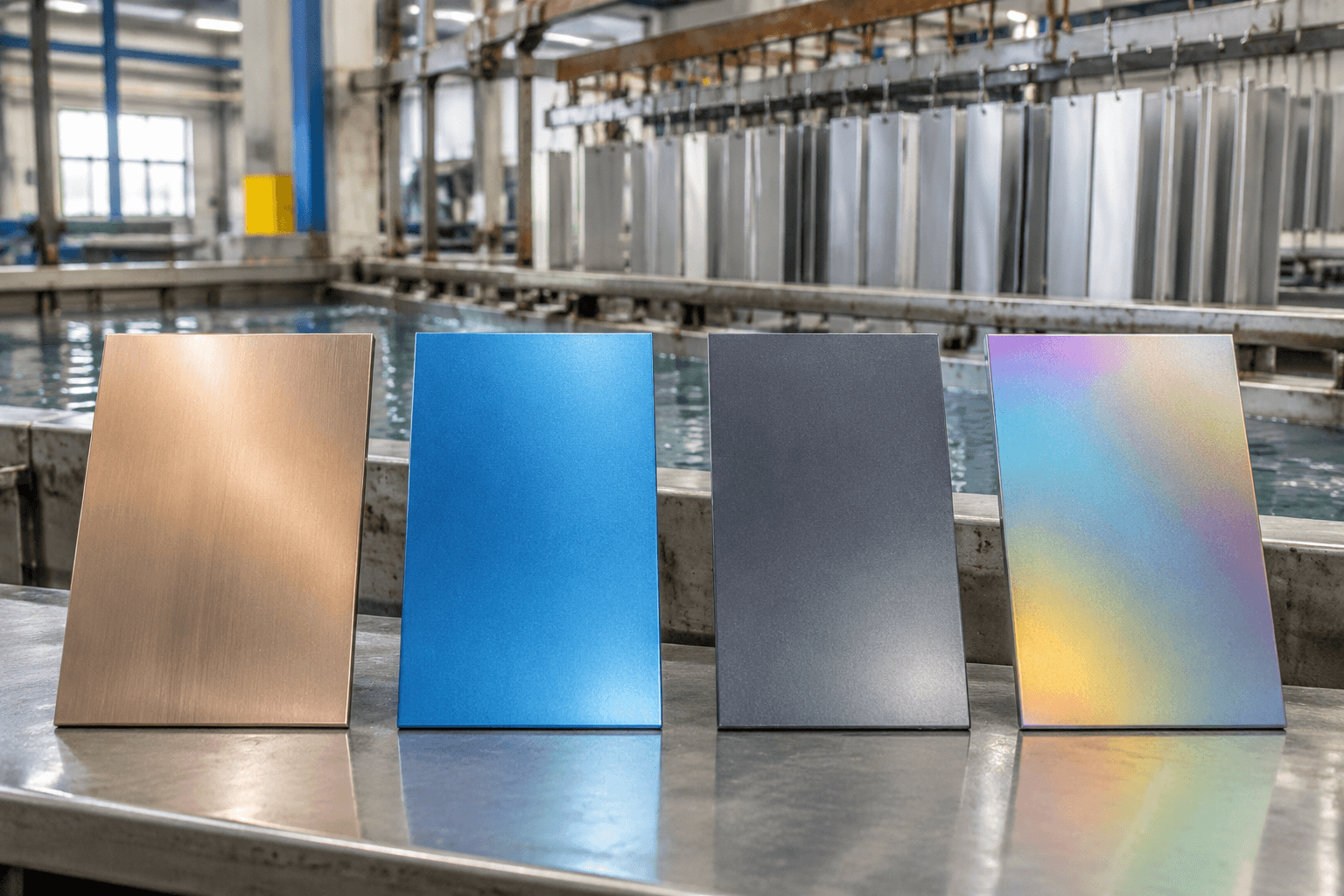
An anodizing dye cannot be selected reliably from a color name alone. “Black,” “blue,” or “bronze” describes a visual direction, not a complete technical requirement.
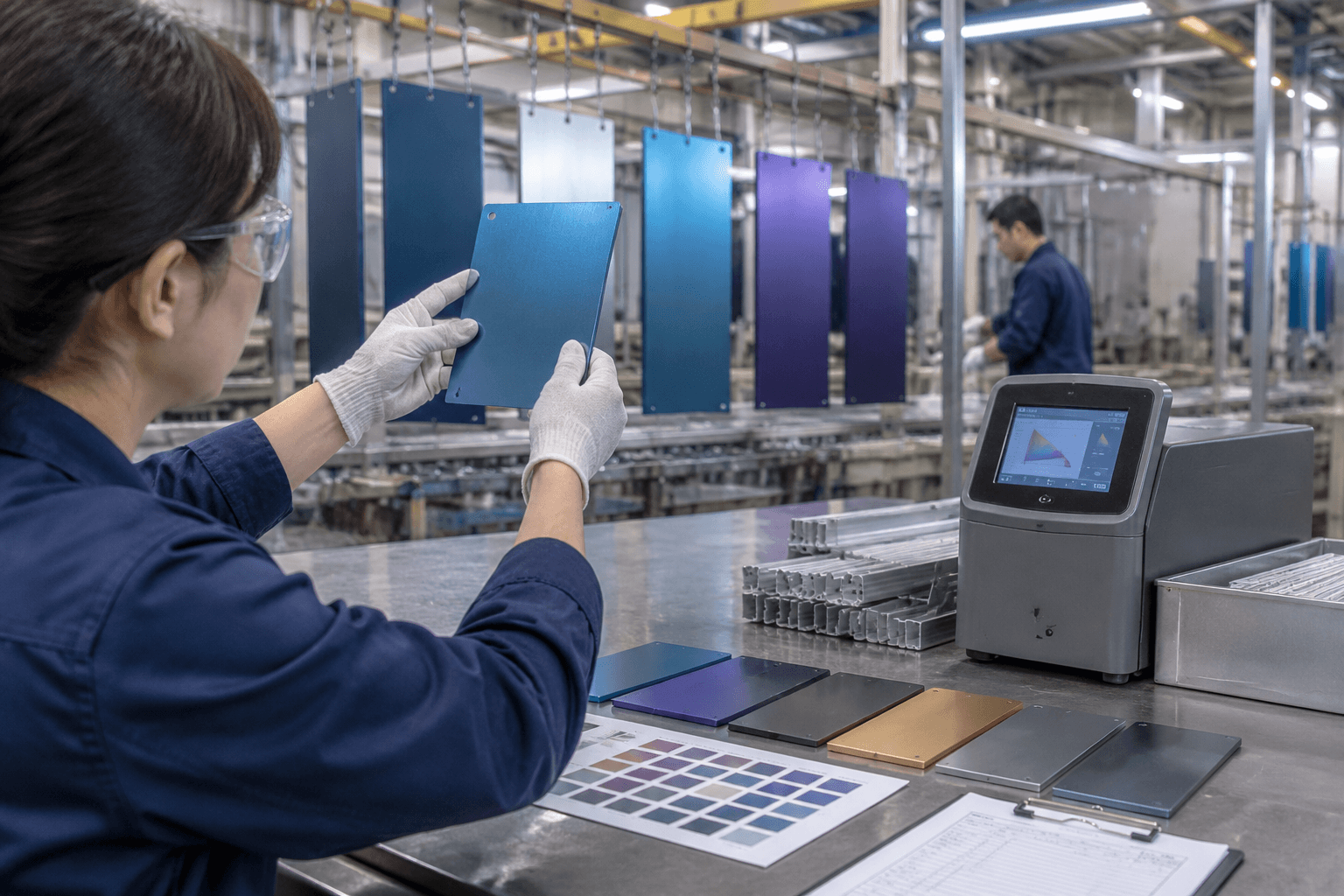
Color target: A digital value, printed chart, physical sample, and anodized metal reference can appear different because they involve different surfaces and viewing conditions. A buyer should identify whether acceptance is based on an approved metal sample, an agreed visual range, or an instrumental color method defined by the responsible parties.
Aluminium substrate: Alloy composition, temper, extrusion history, forming marks, machining, welding, and surface defects can influence the appearance after pretreatment and anodizing. QUALANOD’s defect guidance identifies alloy inconsistency and extrusion conditions among possible causes of color differences. ([defects.qualanod.net](https://defects.qualanod.net/9.html?utm_source=openai))
Surface preparation: Brushing, polishing, etching, brightening, and other pretreatments change how the finished surface reflects light. Two parts can use the same nominal dye while presenting visibly different shades because their underlying textures differ.
Anodic layer and process conditions: Dye uptake depends on the condition of the anodic layer and the control of the coloring stage. Industry defect guidance associates color variation with anodizing parameters, dye concentration, pH, contamination, coloring time, temperature, and racking conditions. ([defects.qualanod.net](https://defects.qualanod.net/9.html?utm_source=openai))
Exposure environment: Indoor decorative parts, outdoor architectural elements, products exposed to cleaning agents, and frequently handled components do not present identical requirements. Buyers should ask the anodizer to confirm that the selected dye, anodizing route, and sealing system are supported by current technical documentation for the intended exposure; a general supplier portfolio is not sufficient evidence of application-specific performance.
Sealing and inspection: Sealing closes the pores of the anodic layer and is part of the completed finishing system. It should not be treated as a minor step after color approval. Process guidance links finished quality to the combined control of coloring and sealing, while inspection programs evaluate attributes such as appearance, coating condition, and sealing quality. ([qualanod.net](https://www.qualanod.net/decorative-applications.html?utm_source=openai))
From Dye Availability to Production Planning
For an OEM, a change in dye availability can affect more than the finishing purchase order. A replacement product may require sampling, bath preparation, shade adjustment, process validation, and renewed approval. If a distributor does not stock the product locally, package quantity and transport restrictions may also affect the anodizer’s purchasing decision.
Prototype planning should therefore start with a stable material and finish definition. A useful drawing or finish note can identify the aluminium grade or material specification, surface preparation, anodizing and coloring route, target appearance, masking areas, critical dimensions after finishing, and the approved-sample reference. It should also state who approves color and how production lots will be judged.
Color continuity becomes more difficult when prototypes and production parts use different alloy sources, manufacturing routes, surface textures, anodizing lines, or batch sizes. The first sample should not merely answer, “Is this blue acceptable?” It should establish the agreed combination of material, texture, color range, gloss or reflectivity, and inspection conditions.
Dimensional planning remains important even when the commercial discussion focuses on appearance. Threads, electrical contact points, grounding locations, tight fits, adhesive areas, and mating surfaces may need masking or finishing allowances. For custom sheet metal enclosures, the finish specification should be reviewed together with bend condition, hardware installation, panel gaps, and assembly readiness.
Buyers should also allocate responsibilities explicitly. The component manufacturer controls the part entering the finishing process; the anodizer controls the anodizing, coloring, and sealing operation; and the OEM usually owns the final visual acceptance decision. Ambiguous responsibility increases the risk of rejected lots even when every supplier believes it followed the purchase order.
How to Evaluate Market Reports and Supplier Claims
Published estimates for the aluminium anodizing dyes market should be treated as comparable only after their definitions are checked. A credible report should disclose its publication date, base year, forecast period, geographic coverage, currency, and research method.
Most importantly, examine the product boundary. Does the figure cover dyes alone, all colorants, complete anodizing chemical packages, contract-finishing services, or finished anodized aluminium? A report that includes cleaners, sealants, equipment, and service revenue will naturally produce a much larger number than a dyes-only study.
Readers should also check which companies and channels were counted. Regional distributor sales may already include imported products, creating a risk of double counting if manufacturer shipments are added separately. Private-label products, integrated anodizing operations, and sales through general chemical distributors can further complicate estimation.
Useful market analysis compares multiple independent sources, reconciles scope differences, and explains assumptions instead of presenting a single CAGR as fact. Supplier portfolio pages and industry directories can help map active participants, but they do not by themselves establish total market value or market share.
The practical conclusion is that market conditions reach OEM buyers through color availability, qualification effort, technical support, inventory decisions, and production continuity. A clear component specification and approved physical reference remain more actionable than an unsupported global forecast. Yishang can help review the manufacturing and assembly implications before buyers finalize requirements with their selected finishing supplier.
Frequently Asked Questions
Can the color of an already anodized aluminium part be changed, and does this create replacement-dye demand?
A sealed anodized part generally cannot simply be placed into another dye bath to obtain a controlled new color. Rework may require stripping and reprocessing, which can alter the surface and dimensions and may not be suitable for every part. Any resulting replacement-dye demand occurs through anodizer requalification or reprocessing rather than a direct aftermarket for recoloring finished parts. Industry defect guidance lists stripping and reprocessing as a potential recovery route for affected extrusions, but feasibility should be assessed by the responsible anodizer. ([defects.qualanod.net](https://defects.qualanod.net/9.html?utm_source=openai))
What is the difference between anodizing dyes, integral coloring, and electrolytic coloring?
Dyed anodizing uses colorant absorbed into the porous anodic layer before sealing. Integral coloring develops color through the alloy and anodizing process, while electrolytic coloring deposits coloring material through an additional electrochemical stage. They are distinct routes and should not be combined automatically in a dyes-only market estimate. ([qualanod.net](https://www.qualanod.net/current-edition.html?file=files%2Fqualanod%2Fdownloads%2F2026-01-01+QUALANOD+Specifications.pdf&utm_source=openai))
Why do aluminium anodizing dyes market estimates vary so widely?
Reports may use different geographic boundaries, base years, supplier lists, currencies, and channel assumptions. The largest difference often comes from scope: some studies count dyes alone, while others include anodizing chemicals, coloring systems, services, or finished products.
How can buyers maintain color continuity from prototypes to production?
Use the same specified alloy, surface preparation, finishing route, and approval method whenever practical. Retain an approved metal sample, define acceptable variation, record the sample’s material and process details, and confirm whether changes in the dye product, anodizing line, or substrate require renewed approval.