
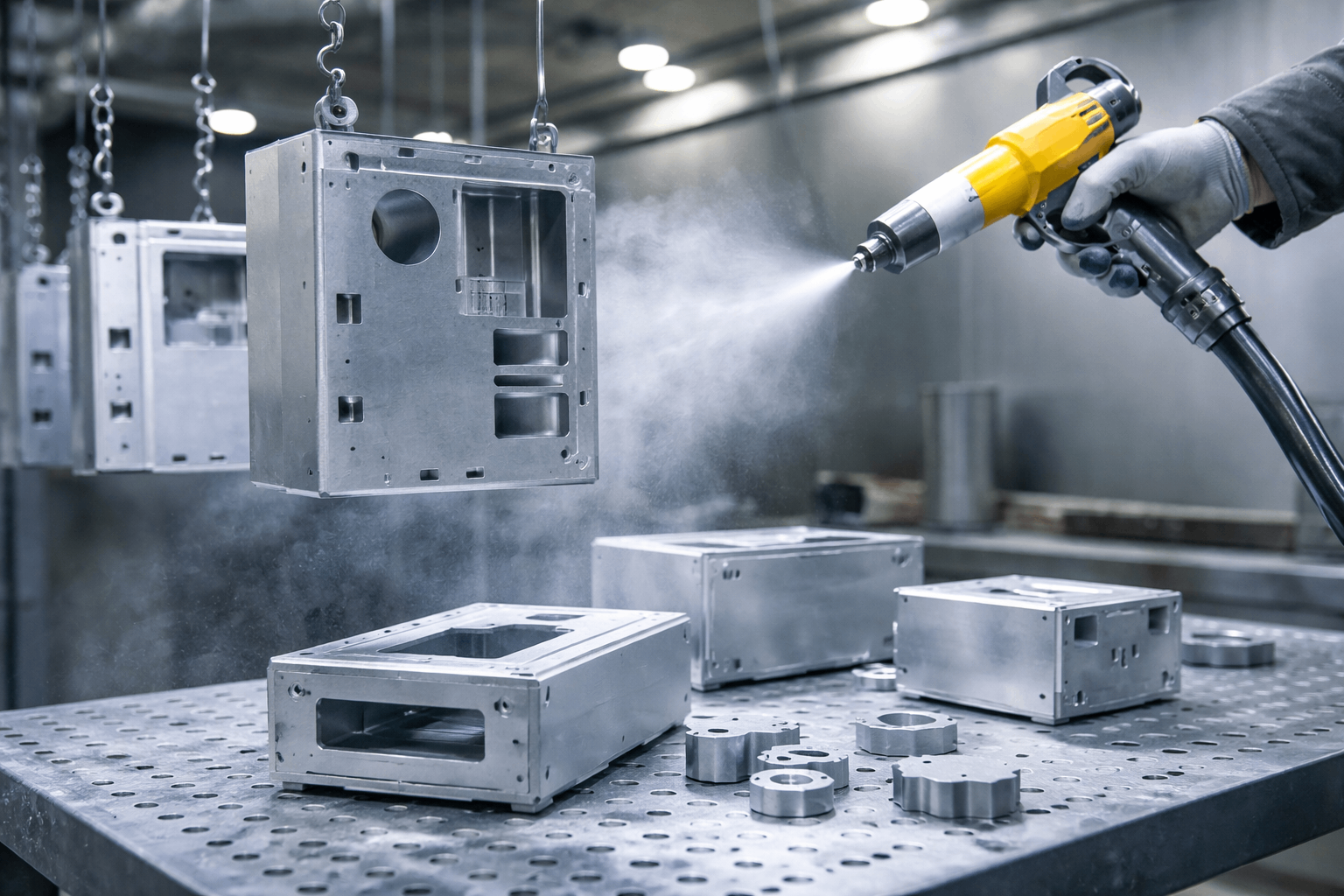
When overseas buyers search for aluminum coating, they rarely want a dictionary-style definition. In most cases, they are comparing suppliers, reviewing finish options for an active project, or trying to reduce sourcing risk before samples and volume production move forward. For aluminum enclosures, cabinets, brackets, frames, and other fabricated parts, the finish influences far more than appearance. It can affect corrosion resistance, wear performance, fit after assembly, batch consistency, and the long-term cost of the product once it reaches the field.
This guide stays close to the realities of purchasing instead of turning into a long inventory of processes. It explains how the main coating options behave, how buyers can compare them in day-to-day sourcing decisions, and what procurement teams should confirm before they approve an order. The goal is practical: help buyers choose a finish that supports product performance, supplier consistency, and commercial reliability.
Why Aluminum Coating Should Be Evaluated as Part of the Product
The Finish Changes More Than the Surface
At first glance, aluminum coating sounds like a finishing topic. In B2B purchasing, buyers get better results when they treat it as part of the product itself. A finish may look acceptable on a sample board yet still create trouble on a finished part when the geometry includes holes, threads, bend lines, or tight mating surfaces. A coating may also perform well in a mild indoor setting and then behave very differently in a humid warehouse, a coastal installation, or a distribution chain where products pass through repeated handling before anyone installs them.
For wholesale buyers, this is not a minor technical detail. It affects returns, replacement costs, assembly efficiency, and the consistency of the customer experience from one shipment to the next. Supplier content often becomes too broad to help at this point. Many articles explain what a finish is, yet stop short of showing how that finish changes the sourcing decision.
Buyers often prefer aluminum because it is lightweight, naturally corrosion resistant, and practical for export-oriented products where freight and handling matter. That is one reason an aluminum enclosure is frequently reviewed against carbon steel enclosure, galvanized steel enclosure, and stainless steel enclosure alternatives during quotation or product-development discussions. Aluminum can reduce shipping weight and support a clean commercial finish, but the base material does not answer every service requirement on its own.
Surface exposure, touch frequency, cleaning agents, end-market climate, and expected product life still shape the finishing decision. A junction box NEMA project may need corrosion resistance and outdoor stability first. A branded electrical meter box or push button enclosure may put more weight on color consistency, scratch visibility, and repeatability across batches. A solar battery enclosure may combine outdoor exposure, assembly requirements, and cost pressure in the same program.
What Buyers Need from a Supplier
That is why buyers value strong supplier guidance. A capable manufacturer goes beyond listing anodizing, powder coating, or paint. It explains pretreatment, expected coating thickness, masking approach, visual inspection points, and the limits of each finish. The topcoat alone does not create corrosion resistance and wear performance. Part geometry, pretreatment quality, cure control, and packaging discipline all shape the final result.
The Main Aluminum Finish Options and What They Mean for Buyers
Before looking at each option individually, it helps to keep one practical idea in mind: buyers are not really comparing finish names. They are comparing sourcing outcomes. The real question is not simply what a finish is, but what it is likely to change in production, assembly, shipment, and repeat orders.
Buyers often search types of coating on aluminum, types of aluminum surface finishes, or best coating for aluminum because they want a fast answer. The reality becomes much clearer once the finish options connect back to practical use. Fabricators usually rely on five main finish families for aluminum parts: anodizing, powder coating, liquid paint, conversion coating, and a smaller group of specialty systems such as PVDF and wood grain aluminum finishes.
The point is not to memorize the names. The point is to understand what each one helps solve and what it may complicate.
Anodizing
Anodizing changes the outer layer of the aluminum instead of covering it with a thick film. Buyers often choose it when they want a more metallic appearance, a harder surface, and better control over dimensional change. On machined components, visible accessories, or parts where heavy film buildup could interfere with fit, anodizing is often a logical option. It works especially well when the part should still feel like metal after finishing rather than like a coated shell.
At the same time, anodizing usually offers less design flexibility in color and texture than barrier coatings. It may not be the best fit where visual branding drives the project or where the buyer wants broad decorative options. In practice, anodizing tends to work best when wear resistance and dimensional control matter more than full visual coverage.
Powder Coating
Powder coating is one of the most common finishes on aluminum products because it combines broad color and texture options with useful protection against weather and general wear and tear. For cabinets, display structures, frames, and many commercial housings, it often gives buyers the balance they want between appearance and durability. It also supports lower dependence on wet-coating systems associated with higher levels of volatile organic compounds.
The trade-off is thickness. On threaded features, holes, edges, and fit-critical areas, excess build can affect assembly or appearance if the product was not designed with the finish in mind. That is why buyers treat questions such as does powder coating affect dimensions or powder coating vs anodizing aluminum as commercial issues, not just technical ones.
Liquid Paint
Liquid paint remains commercially relevant because it supports flexible color matching, easier touch-up, and practical low-to-medium volume customization. In private-label work or mixed-product programs, that flexibility can matter more than maximum film toughness. For buyers managing custom SKUs, market-specific color changes, or smaller repeat orders, this can be a real advantage.
Liquid paint is not automatically a lower-grade option. Its value sits in a different place. Instead of competing only on hardness, it often competes on repairability, visual adaptability, and sampling flexibility.
Conversion Coating
Conversion coating, including chromate conversion coating, is less decorative but highly useful when conductivity, grounding, bonding, or paint adhesion matters. In many electrical products, buyers often get better results from a finish that supports system function than from one that simply looks more refined.
That distinction matters for buyers sourcing electrical and control products. A finish that preserves functional surface properties can add more value than one that only improves cosmetic presentation.
Specialty Finishes
Buyers get better results when they specify specialty systems for a clear reason. PVDF can be attractive where long-term exterior appearance retention matters. Wood grain aluminum can make sense when the market wants a warmer decorative finish without the maintenance demands of real wood. These options can work very well, but they are most effective when the end market genuinely values what they add.
Different finishes are not better or worse in the abstract. They are simply more or less suitable depending on the product, the environment, and the buyer’s commercial priorities.
Anodizing vs. Powder Coating for Aluminum Parts
For many buyers, this is the comparison that matters most. Anodizing vs. powder coating is not really a question of which process is universally better. It is a question of which finish better fits the part. Anodizing is often the stronger choice when the part needs a metallic appearance, improved wear resistance, and better dimensional control after finishing. Powder coating is often the stronger choice when the product needs broad color choice, fuller visual coverage, and a more design-driven exterior finish.
The difference becomes clearer in enclosure sourcing. If a buyer is reviewing an aluminum electrical enclosure with fit-critical holes, mating covers, or threaded areas, anodizing may be easier to manage from a dimensional point of view. If the same buyer is sourcing a branded enclosure where color consistency, texture, and exterior presentation matter more than ultra-tight tolerance, powder coating may be the better fit. That is why powder coating vs anodizing aluminum only becomes useful when it is tied to the real part rather than treated as a generic ranking exercise.
| Buyer Priority | More Suitable Option | Main Reason |
|---|---|---|
| Tight tolerances and less coating buildup | Anodizing | More controlled surface growth and less risk of heavy film build |
| Broad color range and decorative consistency | Powder coating | Better visual coverage and wider finish flexibility |
| Metallic look and harder feel | Anodizing | Surface remains closer to the metal itself |
| Exterior presentation on branded housings | Powder coating | Strong commercial appearance with texture and color options |
| Fit-critical electrical enclosure parts | Depends on geometry | Supplier review should confirm thickness impact and masking approach |
How Buyers Should Compare Aluminum Against Other Enclosure Materials
Material Choice and Finish Choice Need to Work Together
In many RFQs, buyers do not only choose a finish. They also compare base materials. A buyer may weigh an aluminum enclosure against carbon steel, galvanized steel, and stainless steel before finalizing the finishing method. That comparison matters because material and finish must work together. When teams select them separately, avoidable cost or performance mismatches become much more likely.
Compared with other common enclosure materials, aluminum offers a useful mix of lower weight, natural corrosion resistance, and easier handling in many fabricated products. That is why buyers often consider it for junction boxes, electrical meter enclosures, push button stations, and solar battery enclosure programs where freight cost, outdoor exposure, or installation efficiency all matter. In export projects especially, lower weight can reduce freight cost and simplify handling through the supply chain.
Where Aluminum Makes Sense—and Where It Needs Support
Still, aluminum should not become a universal answer. Choosing aluminum because of its corrosion behavior does not remove the need for the right finish. If the product will be installed outdoors, cleaned regularly, exposed to handling damage, or expected to maintain a consistent branded appearance over time, the surface treatment still matters.
The native oxide film on aluminum offers baseline protection, but fabricated products also include cut edges, welded areas, formed surfaces, and customer-facing visual requirements that often justify a more controlled finish. This is one reason teams should review aluminum coating process decisions together with the product application instead of waiting until the design is already fixed.
The practical comparison should focus on total product performance. A steel-versus-aluminum decision is not only about raw material cost or strength. It is also about shipping efficiency, corrosion behavior, finishing options, visual presentation, maintenance expectations, and the buyer’s target market. Stainless steel may be justified in severe or hygienic environments, but it is often more expensive and heavier than necessary for standard commercial products. Galvanized steel may work in some protected or cost-sensitive applications, but it may not deliver the same finish flexibility or weight benefit as aluminum.
For many wholesale buyers, aluminum becomes the stronger option when the product needs both presentable appearance and practical handling across markets. That advantage becomes more meaningful when the selected finish supports the same commercial goal.
What Buyers Should Confirm Before Approving an Aluminum Coating Process
Process Control Matters More Than Finish Names
At this stage, a good supplier article often brings more value than a generic industry summary. Once the finish shortlist is clear, buyers stop focusing on theory. They want to know whether the supplier can control the process consistently enough for sampling, approval, and repeat production.
A good supplier article should go beyond explaining the benefits of using aluminum coating. It should also help buyers know what to verify before ordering. In practice, the most useful questions are simple but revealing. What pretreatment is used before coating? What coating thickness range is controlled? How are holes, threads, and mating surfaces protected when needed? How is appearance consistency checked from one lot to the next? What inspection or test methods support the finish claim?
This is where process discipline matters more than marketing language. A finish may look good on a single sample, but volume production still demands repeatability. Buyers need confidence that the supplier can maintain finish quality over multiple runs, especially on visible enclosures, branded housings, and custom parts where appearance and fit both matter.
Practical verification may include adhesion checks, salt-spray review, cure control, gloss or color checks, and incoming material control. In industrial coating discussions, references such as ASTM B117 for salt-spray exposure and ASTM D3359 for adhesion are commonly used as supporting benchmarks, although the right standard still depends on the project requirement. These references move the discussion from claims to verification.
What Buyers Should Ask Before Approval
Buyers also benefit from reviewing the limits of each option without turning the discussion into a list of negatives.
- Some finishes add cost that the application does not need. Some reduce repair flexibility.
- Some complicate tight assemblies.
- Some older wet-coating chemistries drew criticism because of toxicity or solvent-heavy processing, so many modern programs now prefer cleaner and more controllable alternatives when possible.
For procurement teams, the most valuable content shortens RFQ evaluation. It should help them understand why a finish is being recommended, what trade-offs to expect, and how to compare supplier responses on more than price alone. In practical terms, buyers often get the clearest picture by asking five simple questions: What pretreatment is used? What coating thickness is targeted? How are holes, threads, and mating surfaces handled? How is batch-to-batch color or appearance consistency checked? And how are finish problems handled if sample approval and production output do not match exactly?
Those questions are especially useful for enclosure buyers because the finish is rarely judged only on corrosion resistance. Buyers also judge whether repeated orders remain visually consistent, whether assembly stays smooth, and whether the product still looks acceptable after shipment and installation. That is often where brand trust begins. On a supplier website, useful and specific guidance does more to build credibility than a long promotional statement.
A Practical Way to Match Finish Choice to Product Risk
The easiest way to choose a finish is to start with the risk that matters most.
- If the main concern is wear resistance, metallic character, and better dimensional control, anodizing often makes sense.
- If the product needs broad color choice, durable visual coverage, and a finish that supports commercial presentation, powder coating is often the stronger option.
- If exact color matching, lower-volume flexibility, or easier touch-up matters more, liquid paint may be the better fit.
- If the part must support conductivity, grounding, or a later topcoat, conversion coating may add more value than a decorative system.
This way of thinking keeps finish selection connected to product performance instead of reducing it to habit. No coating stays “best” in isolation for long. The right choice depends on product geometry, service environment, target market, and sourcing objective. Once buyers evaluate the finish in that way, the decision becomes more stable and easier to communicate across engineering, purchasing, and supplier teams.
In practical sourcing terms, the right finish protects the product without creating unnecessary cost, avoidable assembly issues, or unrealistic quality expectations. If you are reviewing coating options for enclosures, cabinets, frames, or other fabricated aluminum parts, YISHANG can help evaluate the finish based on the actual use case and supply requirements. Send your inquiry and we can review the most suitable option for your project.
FAQ: Questions Buyers Commonly Ask Before Finalizing a Finish
Is anodizing better than powder coating for aluminum?
It depends on what the product needs most. Anodizing is often stronger when dimensional control, metallic appearance, and surface hardness matter. Powder coating is often stronger when broad color choice, decorative coverage, and exterior presentation matter.
Does powder coating affect dimensions?
Yes, it can. Because powder coating adds film thickness, it may affect threads, holes, edges, and fit-critical areas if those points are not considered during design and masking.
What is the best coating for outdoor aluminum?
There is no single answer for every project. The best option depends on the exposure level, appearance requirement, handling conditions, and on whether the product needs a decorative or more functional finish.
Which finish is better for outdoor aluminum electrical enclosures?
That depends on the enclosure design and the service environment. Buyers usually need to balance corrosion resistance, appearance retention, cleaning conditions, installation region, and whether the product includes fit-critical features that coating thickness may affect.
What finish is best for aluminum parts that need grounding?
When conductivity or grounding matters, conversion coating often proves more useful than a decorative topcoat alone. Buyers should review the finish together with the part’s electrical function and any later coating requirements.
Does powder coating affect holes or threads?
It can. That is why buyers should confirm coating thickness targets, masking methods, and any fit-critical dimensions before approving the process.
Is aluminum better than galvanized steel for electrical enclosures?
In many projects, buyers prefer aluminum because it is lighter and naturally corrosion resistant, which can help with freight, handling, and appearance. The better material still depends on the environment, structural need, finish requirement, and total product cost.
When is conversion coating more useful than a decorative finish?
Conversion coating often proves more useful when conductivity, bonding, grounding, or paint adhesion matters more than color or texture. That is common in many electrical and control-related products.