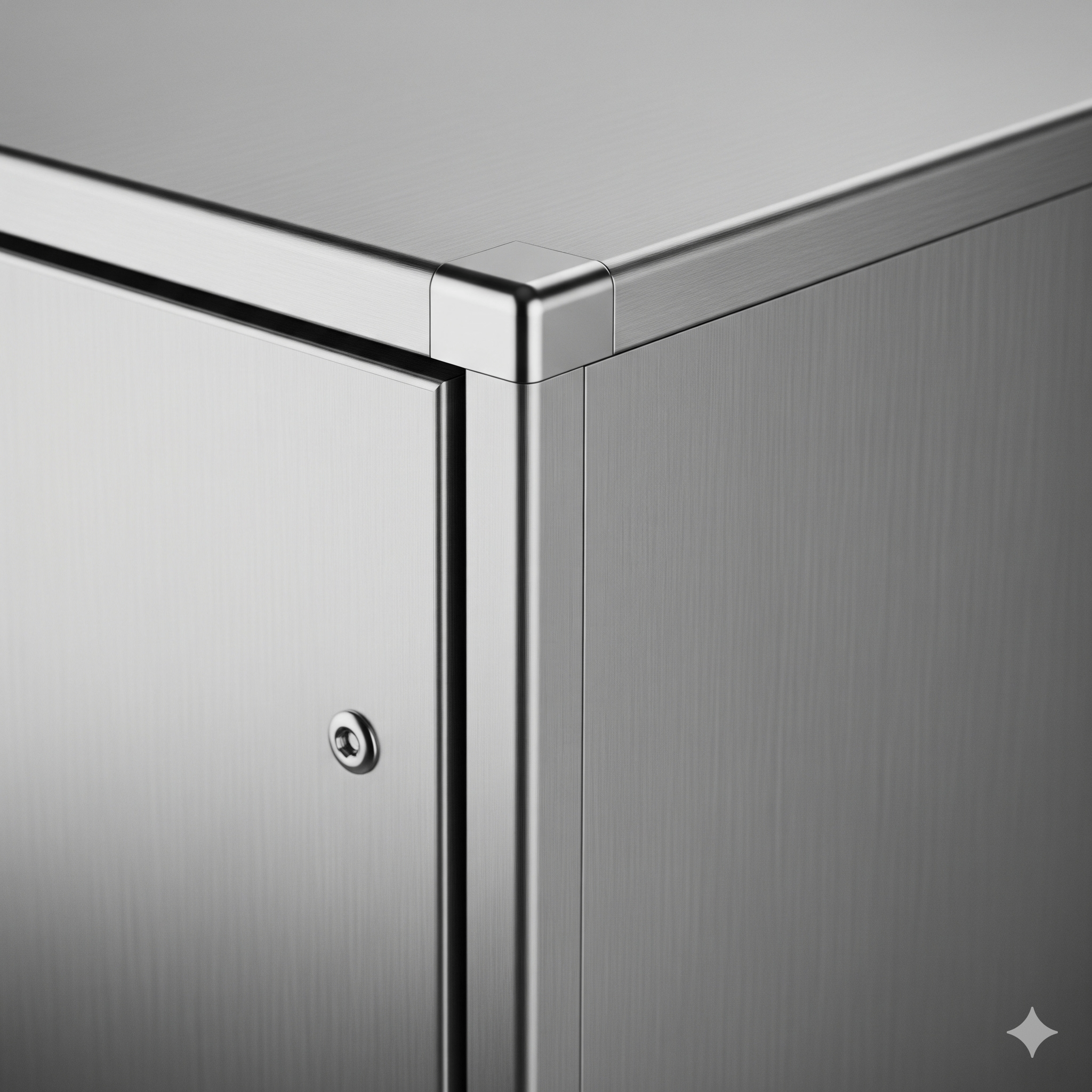
A perfect weld looks impressive on the factory floor, but the real test starts the moment that hardware hits the field. In custom metal fabrication, many procurement teams focus heavily on structural fusion, yet the difference between a durable industrial asset and a liability often comes down to what happens after the welding arc fades. Whether you are dealing with a
mount electrical enclosure or a complex heavy-duty frame, the finishing process is your primary defense against the invisible risks of the supply chain.
At
YISHANG, we’ve spent years observing how post-weld processing dictates the entire lifecycle of a component. For an international wholesale buyer, surface integrity isn’t just about aesthetics; it’s a strategic risk-management tool. This guide isn’t about the basics of metalwork—it’s about how metallurgical restoration and precision finishing build the reliability your
NEMA enclosures need to survive in the real world.
When you align your sourcing strategy with the
intended use of the product, the return on investment follows naturally. A
junction box nema or a set of
solar battery enclosures might look identical on a shipping pallet, but their
corrosion resistance and long-term performance are decided by the science applied to their surfaces. A poorly chosen finish isn’t just a cosmetic flaw—it’s a technical debt that eventually compromises your entire infrastructure.
Engineering for Reality: Beyond the Weld Bead
Once a weld is complete, the metal is at its most vulnerable, particularly within the heat-affected zone (HAZ). Even a
junction box with flawless penetration can harbor microscopic stress risers that invite trouble. For anyone managing wholesale orders, these tiny imperfections are where fatigue cracks start, often triggered by the vibrations of shipping or high-stress end-use. These are the details that separate a reliable partner from a one-time vendor.
We look at surface integrity as the ultimate gatekeeper for global distribution. It involves balancing the physical texture of the joint with the chemical stability of the metal itself. If you’re handling high-volume orders of
carbon steel enclosures or
electrical meter boxes, any shortcut taken during this phase leads straight to oxidation. Before you know it, the protective layers begin to delaminate, and your supply chain is suddenly hit with expensive, avoidable replacement cycles.
Stainless steel presents its own set of challenges, specifically around sensitization. During the welding process, chromium—the very element that prevents rust—can bind with carbon at the grain boundaries. This leaves the surrounding area “depleted” and ready to pit at the first sign of humidity. It’s a frustrating irony: you pay for high-grade
material stainless steel, but the welding process itself makes it vulnerable.
To solve this,
YISHANG integrates specialized
passivation and restoration protocols into our
ISO 9001 quality flow. We focus on removing free iron to return every
electrical enclosure raw material to its peak defensive state. It’s this level of scientific rigor that ensures your
NEMA standards hold up in the salt air of a coastal site, not just on a testing certificate in an office.
Finding the Balance: Performance and Scale
Choosing the right finish usually involves a trade-off between absolute performance and production efficiency. For wholesale procurement, you need a process that is both repeatable and scalable across thousands of units. You can’t afford a finish that varies from batch to batch; consistency is what keeps your
quality of the product reliable and your end-users satisfied.
The Power of Mechanical Refinement
Grinding is your first line of defense, but it’s the precision that follows that counts. For a
steel enclosure carbon or a custom
aluminum enclosure, we move from rough grinding into precision polishing (Grit 120-400). This isn’t just for looks—it’s about eliminating the microscopic “peaks and valleys” where moisture and corrosive particles love to hide.
For components like
push button enclosures,
bead blasting is often the better route. It creates a uniform matte texture that looks professional and feels premium, but more importantly, it induces “compressive stress” on the metal surface. This peening effect effectively closes surface pores, significantly extending the life of
galvanized steel enclosures used in high-vibration architectural or industrial settings.
Coatings That Actually Bond
When the environment demands a secondary barrier,
painting or powder coating is the go-to solution. However, we’ve found that the finish on an
enclosure electrical meter is only as good as the chemistry beneath it. We pay close attention to weld porosity—those tiny, nearly invisible holes that trap gas.
If these gases aren’t managed during the
quality control process, they will “outgas” during the heat of the curing oven, leaving behind pinholes or “fisheyes” in the paint. This is a common point of failure for a
enclosure push button seal. By using high-performance zinc-rich primers, we ensure an unbreakable bond for your
control station enclosures, even after thousands of hours of exposure.
Value Engineering: Making Sourcing Smarter
Finishing can easily swallow up 30% of your labor costs in
custom metal fabrication. Part of our job is to help you identify where a premium finish is mandatory and where a “functional clean” does the job. This isn’t about cutting corners; it’s about
Value Engineering—finding the sweet spot where wholesale pricing stays competitive while the
types of welding and finishing remain fit for the
intended use.
Not every weld on a
control station enclosure needs to be polished to a mirror shine. Interior welds can often stay in their “as-welded” state as long as they are properly cleaned and passivated. If we collaborate during the
3D design electrical phase, we can often move welds to less visible areas, reducing manual labor costs without touching the structural integrity of the unit.
Consistency in high-volume OEM production is what keeps a brand alive. By using automated
foaming electrical enclosure systems and standardized chemical baths, we make sure the first unit off the line is a perfect match for the ten-thousandth. This kind of
batch consistency is what minimizes the need for you to send an audit team to the factory for every single order.
| Deployment Scenario |
Recommended Finish |
Target IP/NEMA Rating |
Key Benefit |
| Indoor Industrial |
Powder Coating |
NEMA 12 / IP54 |
Impact Resistance |
| Outdoor Infrastructure |
Galvanized + Powder |
NEMA 4 / IP65 |
Weather Endurance |
| Marine/Corrosive |
Electropolishing |
NEMA 4X / IP66 |
Acid & Salt Defense |
| Medical/Food |
Mirror Polishing |
Ra < 0.4μm |
Maximum Hygiene |
Confidence Through Data: The B2B Audit
How do you sign off on a batch of
NEMA enclosures from thousands of miles away? You do it through data. Reliability in this industry is built on
material inspection certification and transparent reporting. We provide the documentation you need to bridge that geographical gap and build real trust.
Tests like the “Cross-Hatch” (ASTM D3359) tell the real story of how a
steel enclosure galvanized was treated. If the coating stays put when the metal is scored, the pre-treatment was done right. For anything headed to a corrosive site, a
Salt Spray Test (
ASTM B117) acts as a time machine, showing exactly how that component will look after years of rain and salt exposure.
Beyond the physical tests, we know that
RoHS and
REACH compliance are non-negotiable for international trade. These certificates ensure that the chemicals used in the
production of your finish won’t create legal or environmental headaches later. Our
inspection report resource is designed to give you that data-driven confidence, covering everything from the
drawing material inspection to the final
enclosure packaging inspection.
Looking Ahead: The Shift Toward Sustainable Surface Tech
The industry is changing, and so are the methods we use. “Green Fabrication” is becoming a standard, not a choice. We are seeing
laser cleaning replace old-school chemical pickling for many
carbon steel enclosure projects. It’s a cleaner, zero-waste way to handle oxidation that fits perfectly into a modern ESG-focused supply chain.
We’re also watching the rise of ultra-thin nano-coatings that offer incredible hardness without the environmental footprint of traditional plating. These advancements are a game-changer for
medical-grade enclosures and
high-traffic control stations. Staying at the forefront of these technologies is how we ensure our partners always have access to the most durable and responsible solutions.
The finish is the last thing we do to a product, but it’s the first thing your customers notice. It’s where the raw engineering finally meets the reality of the environment. By treating finishing as a science, we help you build products that aren’t just high-quality today, but are ready to perform for decades.
Have a project that needs a technical eye? Contact YISHANG today to talk through your enclosure requirements with our engineering team.