Why Aluminum Rod Ends Are Popular — But Often Misapplied
Aluminum rod ends are essential in lightweight systems like robotics, drones, and automation assemblies. They’re valued for their low mass, corrosion resistance, and affordability. But based on YISHANG‘s 26+ years of production and global OEM support, we’ve found that buyers often overestimate their versatility.
The assumption that aluminum is a “good enough” replacement for steel in all rod end applications is risky. Misjudging its fatigue resistance, surface hardness, or mating compatibility can lead to failures — especially in high-volume sourcing.
This article walks procurement professionals through when aluminum rod ends make sense, when they don’t, and how to avoid costly misapplications.
Common Misjudgments That Lead to Field Failures
Misalignment-Induced Fatigue
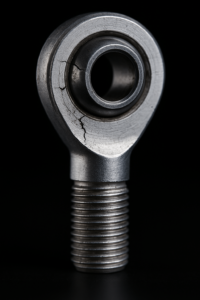
Even slight axial misalignments can accelerate fatigue cracking in aluminum rod ends. In a production line case we reviewed, rod ends failed within 10 days due to a 7° misalignment. The component was well below its static load limit, but repeated off-axis stress caused early cracking.
Aluminum is less forgiving to micro-flexing than steel. If your assemblies face dynamic loads from multiple axes — or inconsistent mounting geometry — aluminum may underperform.
Thread Galling and Pull-Out
When aluminum threads mate with stainless steel bolts without anti-seize treatment, galling is common. If thread engagement is shallow (under 1.5x diameter), failures occur even faster.
Procurement red flag: many vendors don’t specify thread tolerance class. Always confirm 2A/2B fit and post-anodizing thread prep — especially for large OEM orders.
Underestimating Torsional & Vibrational Fatigue
Even moderate vibration over long cycles can cause fractures. One solar tracking system used 7075-T6 aluminum rod ends, loaded at just 30% of their tensile limit. Still, they fractured after 2 months of mild torsional oscillation.
Procurement advice: Always request fatigue testing data or lifecycle estimates — not just yield strength.
Think System, Not Just Material
Load Path Complexity
In real-world use, few systems exert clean axial force. Many introduce twisting, bending, or lateral movement. Aluminum rod ends with sharp geometry transitions are more vulnerable to crack initiation under such conditions.
Best practice: check geometry continuity, chamfer depth, and surface transitions.
Mounting Tolerance & Assembly Fit
One OEM placed aluminum rod ends on brackets that induced a consistent 5° offset. This caused non-uniform bearing wear and endplay. The fix wasn’t stronger material — it was a longer rod end body with self-aligning features.
Ensure press fits follow H7/h6 specs and verify axial play tolerance after assembly.
Environmental Conditions
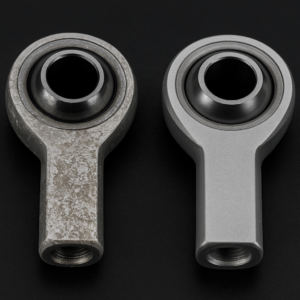
If components operate outdoors or in high-humidity/high-cycle environments, aluminum demands surface treatment. Uncoated aluminum corrodes rapidly in coastal or acidic settings.
When Aluminum Rod Ends Excel — And When They Don’t
Ideal Scenarios
- UAV flap actuators
- Camera gimbals with controlled articulation
- Medical test equipment (e.g., auto samplers)
- Lightweight automation tools with minimal torque
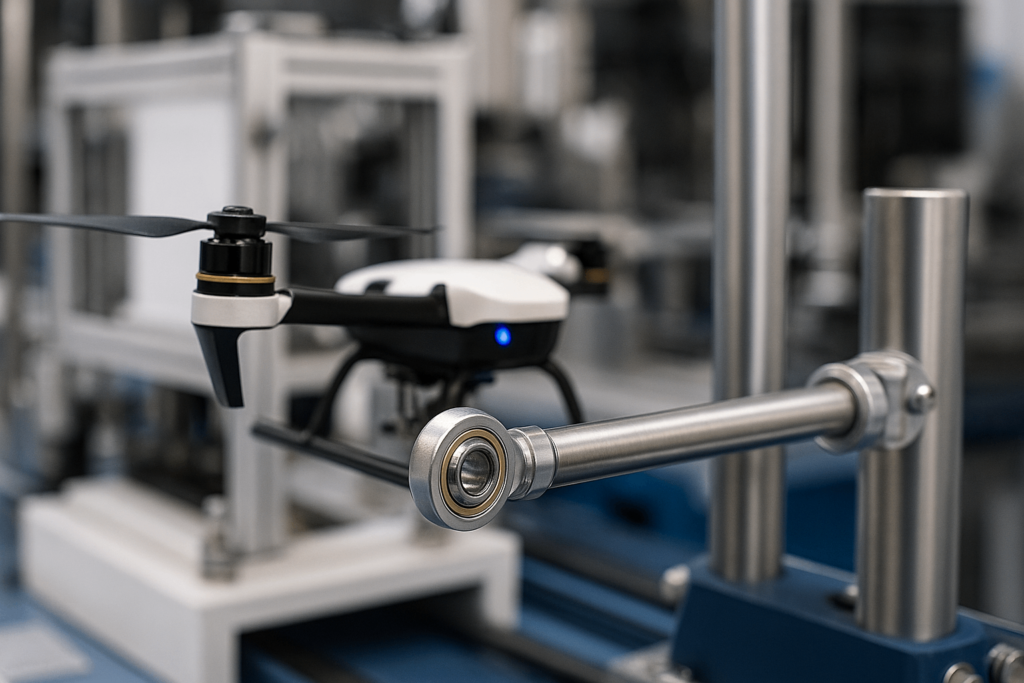
In these cases, weight savings justify the lower fatigue resistance. And the cycle life is typically short.
High-Risk Scenarios
- Heavy-duty robots with shock compensation
- Solar trackers in storm-prone areas
- Marine and coastal devices (even anodized)
- Off-road suspension joints
If torque variation, salt spray, or repeated misalignment exists, aluminum may not last a full warranty cycle.
For Bulk Orders, Tolerance Consistency > Material Grade
For high-volume sourcing, consistency is king. Here’s how to vet a rod end supplier beyond 6061 vs. 7075 grade:
Threading Quality
- Use of 2A/2B threads
- Post-anodizing surface finish maintained
- Cold welding prevention via pre-lube or coatings
Bearing Seat Precision
- Fit per H7/h6 chart (ISO standard)
- Avoid press-fit that causes aluminum micro-cracks
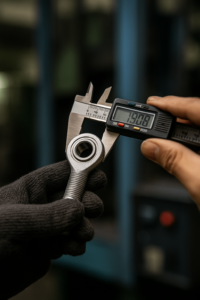
- Confirm runout and slop specs
Surface Treatment Uniformity
- ≥25μm hard anodizing for outdoor use
- Consistent color and finish for visible parts
- Avoid dye-only anodizing for structural parts
Buyer’s Technical RFQ Checklist
Before you hit send on your next inquiry, make sure your request includes these points:
| Category | Checkpoint | Details |
|---|---|---|
| Thread fit | Avoid pull-out | Specify thread class, depth, surface coating |
| Geometry | Crack resistance | Chamfer transitions, no sharp cuts |
| Bearing bore | Press fit validation | Use ISO tolerances, confirm runout |
| Surface finish | Weather & wear protection | Require ≥25μm hard anodizing |
| Cycle life | Match to actual use | Provide daily/weekly usage estimate |
YISHANG tip: Clear specs reduce miscommunication and rework.
Questions That Clarify — and Save Time
Give your vendor better inputs — and you’ll get better batches.
About the Application
- Is load static or dynamic?
- Operating temperature range?
- Exposure to dust, water, UV?
- Expected cycle count per day?
About the Specification
- Thread pitch, length, class
- Color requirements for anodizing?
- Packed pre-assembled or loose?
- Logo engraving or custom ID?
These questions are the difference between “delivered” and “delivered right.”
Final Take: Optimize Function, Not Just Form
Aluminum rod ends aren’t a universal solution. They’re ideal for speed-critical, low-torque, clean environments — but only if specified properly.
At YISHANG, our role isn’t to push aluminum. It’s to help you spec smarter. Sometimes, carbon steel or stainless rod ends are better. What matters is total lifecycle cost — fewer reorders, less downtime, and stronger end-user satisfaction.
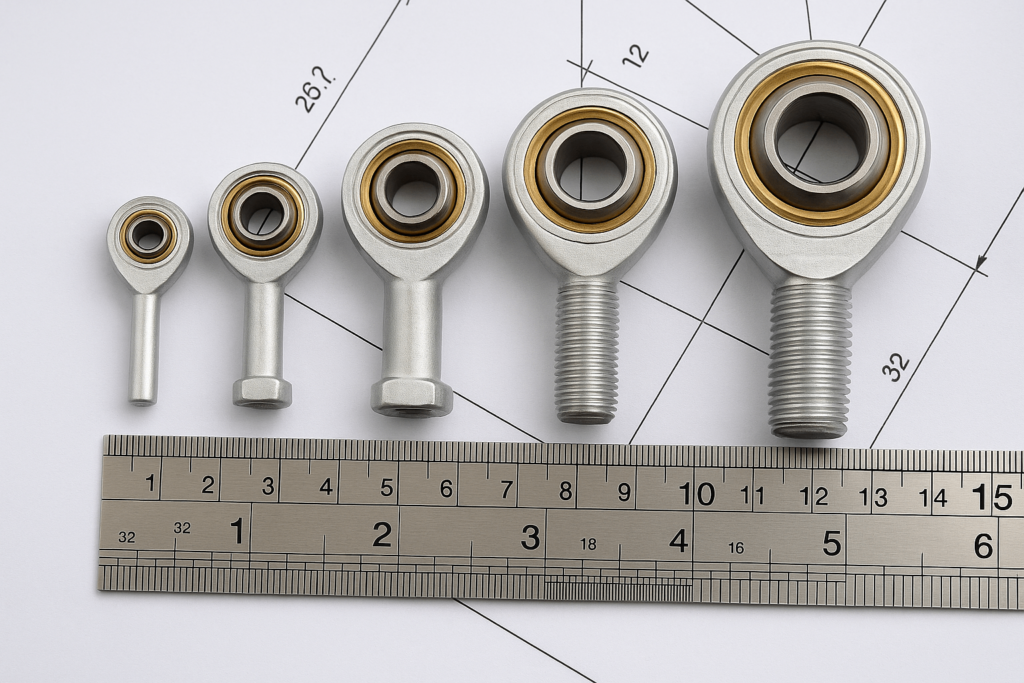
Typical Dimensions & Standards (Quick Ref Table)
| Type | Thread (in/mm) | Bore ID | Material | Anodizing | Fit Class |
|---|---|---|---|---|---|
| Male Right | M8 × 1.25 | 8.0mm | 6061-T6 | Black, 25μm | 2A / H7 |
| Male Left | 1/4″-28 UNF | 6.35mm | 7075-T6 | Red, 30μm | 2A / H7 |
| Female Right | M10 × 1.5 | 10mm | 6061-T6 | Silver, 20μm | 2B / H7 |
| Female Left | 3/8″-24 UNF | 9.52mm | 7075-T6 | Blue, 25μm | 2B / H7 |
📩 Get Expert Input Before You Commit
Looking to reduce rework, returns, and sourcing headaches?
Let YISHANG review your RFQ. We’ll highlight gaps, suggest improvements, and help you get aluminum rod ends right — or guide you to a better alternative.