
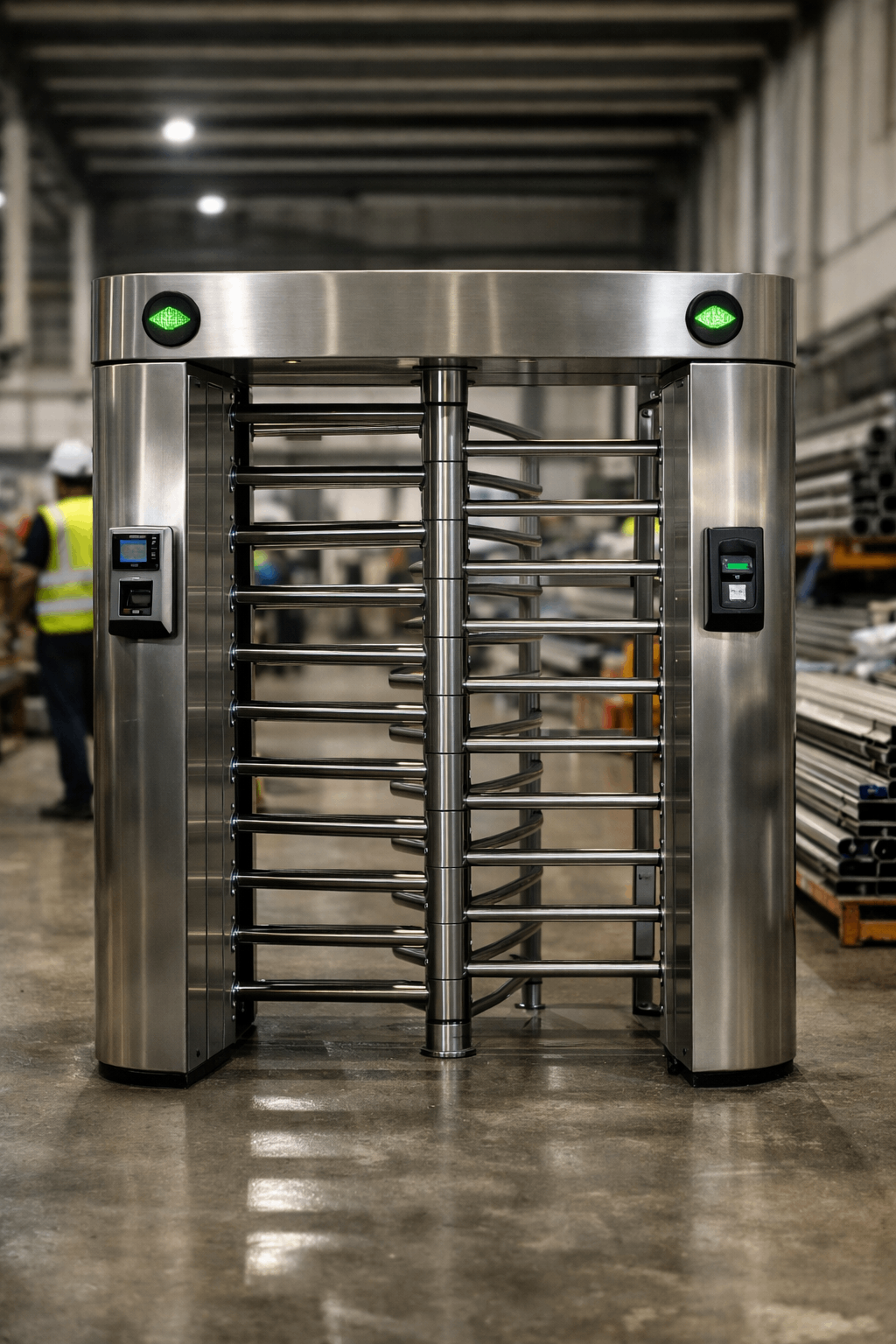
Even with modern access control systems, unauthorized entry can still happen during routine traffic. A badge, PIN, or biometric scan might confirm that someone is allowed to enter, but it doesn’t guarantee that only that person actually goes through.
Tailgating occurs when this gap is exploited. An anti-tailgating device ties credential verification to controlled passage, movement detection, and response mechanisms. For overseas wholesale buyers, the real concern is whether the system suits the site’s risk profile, flow of people, integration requirements, and long-term reliability. You can explore more about different access control solutions for industrial facilities to see how devices integrate in real projects.
Why Access Control Alone Isn’t Enough
Authentication is only one piece of the puzzle. A system may successfully check credentials, yet the opening itself might permit multiple individuals to pass in one cycle. Unauthorized access often appears harmless; a person simply follows another unnoticed, blending into normal traffic.
High-traffic settings make this problem more pronounced. During peak periods, shift changes, or heavy visitor flow, small lapses in attention can turn a secure entrance into a vulnerability. Even if the access logs indicate proper authorization, actual entry may go uncontrolled.
Understanding this distinction is crucial when evaluating solutions. Tailgating represents the mismatch between credential verification and physical passage. Recognizing it helps buyers identify the right device or system to maintain accurate control and accountability, without relying solely on technology that seems secure on paper. For further reading on best practices, check out this industry guideline for secure entry systems.
How Anti-Tailgating Devices Work
An anti-tailgating device does more than block a doorway. Its main function is to ensure that one credential corresponds to a single, controlled entry event, protecting access integrity. In sensitive environments such as data centers, industrial sites, and critical infrastructure, this precision is essential.
Systems may include defined lanes, enclosed passages, or sensor-enhanced entrances. By combining credential verification, controlled passage, detection, and responsive measures, the system reduces the chance of unauthorized entry. For procurement teams, evaluating a device means looking beyond its label and considering whether it consistently enforces one-person entry even under heavy traffic. More details on project-ready anti-tailgating gates show how design and manufacturing quality influence performance.
Consistency and feedback are key. A system that guides passage reliably, detects anomalies, and responds appropriately provides both transparency and accountability, which are highly valued in B2B purchasing decisions.
Key Components of an Anti-Tailgating System
| Function | Purpose | Typical Elements | Why It Matters |
|---|---|---|---|
| Authorization | Confirms user is approved | RFID, PIN, biometrics | Ensures integration with existing access control systems |
| Controlled Passage | Regulates movement | Gate lanes, barriers, enclosed entries | Maintains single-person entry control |
| Detection | Monitors actual vs. expected movement | Infrared sensors, optical sensors, occupancy logic | Reduces errors and maintains reliability |
| Response | Acts when entry deviates | Lock control, alarms, event logs | Prevents unauthorized access effectively |
This structure allows buyers to compare solutions based on functionality rather than superficial design, making procurement decisions more informed.
Considerations for Buyers
Understanding the consequences of unauthorized entry is essential. Even minor breaches can disrupt workflows, compromise equipment, or affect safety and compliance. The level of control required depends on these potential impacts.
Throughput must also be considered. A busy entrance demands a system that balances security with smooth operations. Too restrictive, and staff may find workarounds; too lenient, and the opening remains vulnerable. Integration with existing access control, retrofitting feasibility, and structural compatibility are critical factors.
Durability and long-term performance play a significant role. Components need to withstand repeated use, environmental conditions, and the rigors of daily operation. Factors like frame stability, barrier movement, sensor accuracy, and material resilience—including quality of industrial coating, CNC machining, and robotic welding—affect lifecycle performance.
| Evaluation Question | Why It Matters |
|---|---|
| What level of unauthorized access risk exists? | Determines how tightly the system should control entry |
| How much traffic passes during peak periods? | Influences lane design and user experience |
| Can the system integrate with current access control? | Impacts installation and retrofit complexity |
| Are material and finishing choices suitable? | Ensures longevity and environmental protection |
| Is the structure stable over time? | Maintains consistent performance |
Addressing these questions gives buyers practical insight into project suitability and vendor capability, without relying on generic claims.
The Role of Physical Design and Manufacturing Quality
Electronics and sensors are essential, yet physical design is what makes performance reliable. Gates must guide movement naturally, barriers operate smoothly, and frames maintain alignment. Sensors need to match intended passage for consistent operation.
Manufacturing details matter just as much. Techniques such as custom laser cutting, CNC machining, robotic welding, and industrial coating influence alignment, durability, and operational consistency. In B2B procurement, these factors help buyers anticipate installation efficiency, reliability, and environmental suitability.
Physical design also affects project fit. Entrances need to integrate seamlessly with surrounding structures, traffic flow, and operational patterns. Early collaboration on design drawings and coordination ensures practical installation, reducing risk and supporting long-term value.
For YISHANG, focusing on how access logic translates into fabrication and assembly decisions demonstrates expertise without turning the article into a promotional piece.
Closing Thoughts
Anti-tailgating devices protect entries by linking credential verification with controlled passage, detection, and responsive measures, preserving the integrity of access in real-world conditions.
Evaluating systems with an eye toward risk, traffic, integration, and reliability ensures the solution meets project demands. YISHANG can provide guidance on drawings, fabrication feasibility, and project fit, supporting informed decisions for sourcing secure metal entrance solutions.