
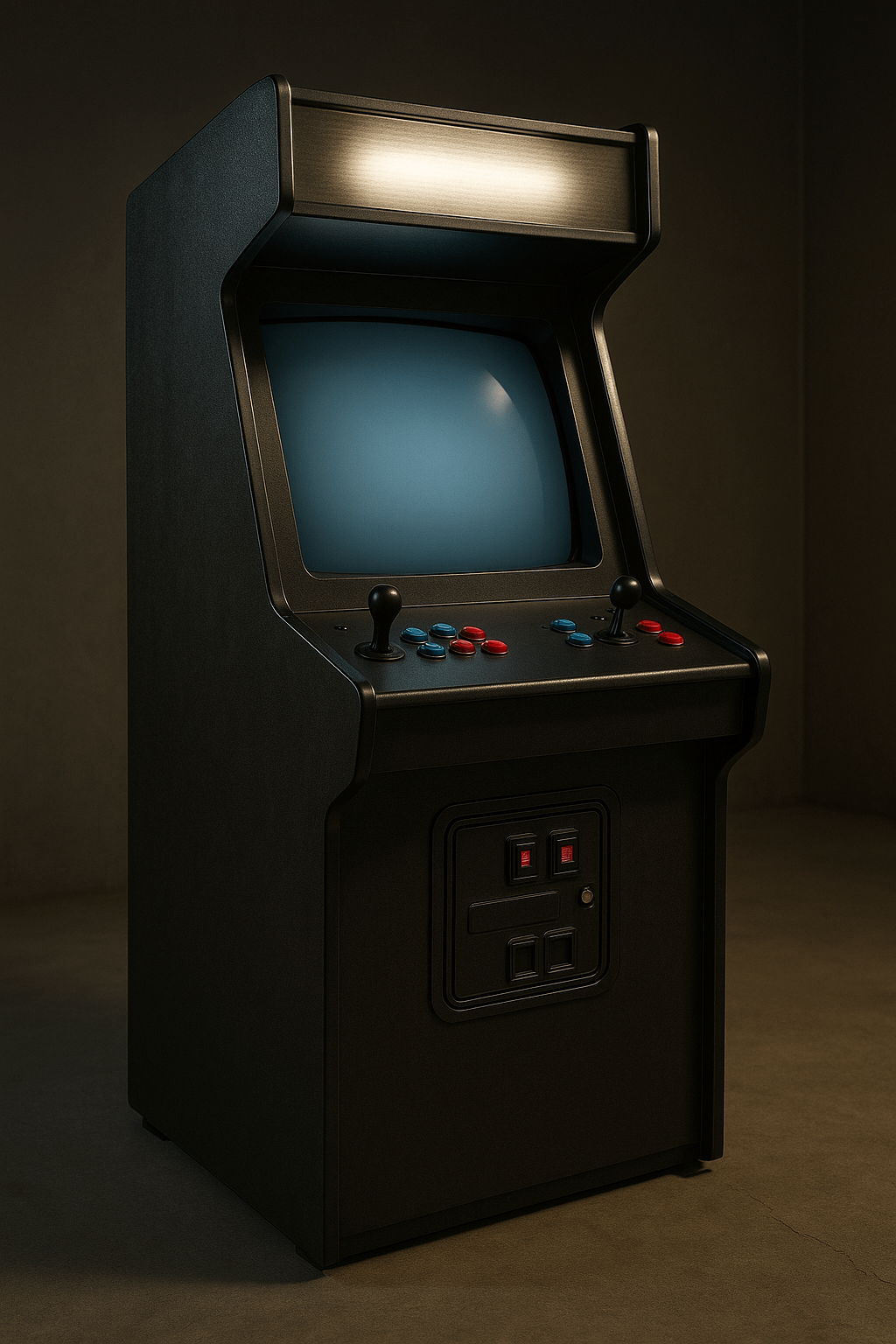
The Genesis of an Icon – A Story Forged in Steel and Silicon
Arcade cabinets did not begin as nostalgic collectibles. They began as commercial machines built to attract attention, survive constant use, and generate revenue in public venues.
Their evolution reflects more than gaming history. It is also a story of how industrial design, fabrication, electronics, and user interaction came together to create one of the most recognizable enclosure formats in entertainment equipment.
From Pinball Flippers to Pixelated Aliens: Mechanical Beginnings
Before video game cabinets became iconic, coin-operated entertainment had already developed a strong foundation in mechanical and electro-mechanical design. Early pinball and amusement machines proved that people would pay repeatedly for interactive public entertainment, but they also showed manufacturers that durability and serviceability mattered just as much as gameplay.
By the time electro-mechanical games appeared, the cabinet was already becoming more than a housing. It was a structured commercial product that combined controls, lighting, wiring, signage, and mechanical reliability in one revenue-generating unit.
The Golden Age (1978–1983): Engineering Meets Pop Culture
The arcade boom of the late 1970s and early 1980s transformed cabinets into high-visibility commercial assets. During this period, the enclosure itself became part of the product experience. Shape, lighting, graphics, control feel, and service access all mattered.
This is where arcade cabinets evolved into a mature equipment category. They had to be visually striking enough to attract players, mechanically durable enough for heavy traffic, and standardized enough for maintenance, board replacement, and repeat production.
The Social Hub: Cabinets as Community Anchors
Arcade cabinets also worked because they supported shared, public interaction. They were not private devices. They were physical gathering points.
That design logic still matters today. Whether used for gaming, branded interaction, ticketing, education, or kiosk deployment, the cabinet remains effective because it creates a visible, tactile, in-person experience that digital-only platforms often cannot replace.
Anatomy of a Cabinet – Engineering Elegance Behind the Marquee
An arcade cabinet is more than an enclosure with a screen and buttons. It is a multi-part structure designed to support user interaction, electronics protection, repeated maintenance, branding, and long service life.
For commercial buyers, understanding cabinet anatomy helps evaluate whether a supplier can deliver a machine that is not only attractive, but also structurally sound and practical to operate.
Structural Framework: Woods, Metals, and Reinforcement
The structural framework determines whether a cabinet will remain stable, square, and serviceable over time. Common enclosure materials include MDF, plywood, sheet metal, tubular reinforcement, and hybrid wood-metal assemblies.
For many B2B projects, the right structure depends on use case. A decorative indoor cabinet may prioritize appearance and cost control. A high-traffic commercial cabinet may need reinforced metal corners, welded brackets, thicker base support, or modular steel framing.
🔧 Engineering Insight: Buyers planning bulk orders should ask for reinforcement details, assembly method, and packaging format early—especially if the cabinets will be flat-packed for export.
Control Panel Construction
The control panel is one of the highest-wear zones in any arcade cabinet. Its strength, layout, and serviceability directly affect user experience and maintenance cost.
Commercial buyers often prefer modular control panel construction, because it allows faster replacement, easier design updates, and more flexible branding across multiple product lines.
✅ Buyer Tip: For projects that serve public venues or non-gaming interactive use, define button spacing, panel height, accessibility requirements, and replacement strategy before prototype approval.
Monitor Housing and Vibration Isolation
The monitor housing must do more than hold a screen. It must support visibility, safety, impact resistance, and long-term stability.
Whether the cabinet uses a CRT-style retrofit look or a modern LCD setup, the enclosure should account for mounting rigidity, bezel safety, vibration control, and easy replacement access.
✅ Buyer Tip: If cabinets will operate in high-vibration or high-traffic environments, ask about dampers, reinforced screen mounts, and lockable access design.
Internal Layout: Serviceability and Thermal Management
Internal cabinet design affects far more than assembly convenience. It influences cooling performance, wiring safety, troubleshooting speed, and total lifecycle maintenance cost.
Well-designed cabinets should allow clear routing for wiring, logical access to power and control components, and adequate airflow for displays, power supplies, and internal electronics.
🔧 Engineering Insight: Ask your supplier for internal layout drawings that show airflow path, grounding method, service doors, and access to replaceable components.
Electronics and Interfaces – The Pulse Beneath the Surface
The electronics package is what turns a cabinet shell into a working commercial unit. Stability, responsiveness, upgrade flexibility, and safety all depend on how these systems are selected and integrated.
Power Supply: The Core of System Stability
Stable power delivery is essential in any arcade or interactive cabinet. Poor power integration creates failures that show up as screen problems, control instability, audio issues, or shortened component life.
Modern commercial builds usually rely on more efficient power supply systems, but buyers should still verify protection features, service access, voltage compatibility, and cable organization.
🔧 Engineering Insight: For export projects, request power configurations that support the target voltage markets and simplify maintenance after deployment.
Game Boards and JAMMA: Standardizing for Speed
Standardized interfaces helped arcade cabinets become easier to repair and upgrade. JAMMA was important because it reduced custom wiring complexity and improved service speed across many cabinet types.
For modern buyers, the bigger lesson is the value of standardized internal interfaces and replaceable modules. These reduce downtime, simplify upgrades, and improve long-term asset value.
✅ Buyer Tip: Ask whether the cabinet uses standardized harnessing, modular electronics layout, and replaceable control or display interfaces.
Display Technologies: From CRT to Lag-Free LCD
Display selection now depends on use case. CRT-style authenticity matters for some retro projects, while most modern commercial cabinets use LCD solutions for availability, lower weight, and easier maintenance.
Important buyer considerations include viewing angle, latency, durability, anti-glare treatment, mount design, and long-term replacement availability.
🔧 Engineering Insight: For fast-response gaming or interactive commercial use, define acceptable latency and screen protection requirements at the RFQ stage.
Audio Architecture: Clarity Meets Atmosphere
Audio is part of the user experience, but it is also part of the cabinet’s engineering design. Speaker placement, enclosure shape, and protection against tampering all influence performance in public spaces.
✅ Buyer Tip: If the cabinet will operate in noisy venues, define sound direction, speaker protection, and volume control access during the design stage rather than after production begins.
A Buyer’s Guide to Arcade Cabinet Customization
For B2B buyers, customization is where an arcade cabinet becomes a real commercial product. The right configuration can turn the same cabinet concept into a gaming unit, branded activation device, self-service terminal, demo kiosk, or interactive enclosure.
Tailoring for Location: Let the Use Case Guide the Build
The build should always follow the actual deployment environment. Cabinets for high-traffic entertainment venues need different priorities than cabinets for exhibitions, museums, hotels, retail, or semi-outdoor use.
Factors such as tamper resistance, structural reinforcement, corrosion protection, service access, and shipping format should all be defined around the use case.
✅ Buyer Tip: For export projects, modular construction and knock-down packaging can reduce freight cost and simplify installation on arrival.
Branding the Experience: Custom Graphics and Lighting
Arcade cabinets often serve as brand carriers as much as functional hardware. Graphics, lighting, color matching, and illuminated signage all affect how the final unit performs in a commercial setting.
For branded projects, buyers should confirm artwork format, finish durability, panel replacement method, and lighting integration before mass production.
🔧 Engineering Insight: Ask for artwork templates tied to the actual production drawings so branding alignment issues do not appear during fabrication.
Component Selection: Choosing the Right Controls and Displays
The right component package depends on how the cabinet will actually be used. Controls, screens, lighting, payment modules, scanners, and touch interfaces should all be selected based on traffic level, expected lifespan, user behavior, and replacement strategy.
✅ Buyer Tip: If you are ordering multiple cabinet models, standardize as many core components as possible to reduce spare-parts complexity and simplify field service.
Budget vs. Durability: Where to Invest Smartly
Not every cabinet feature deserves the same budget priority. In most commercial projects, it is smarter to invest in structure, hardware durability, replaceable components, and assembly quality than to overspend on purely decorative details.
🔧 Engineering Insight: Discuss BOM strategy, upgrade options, and MOQ thresholds early so the final design matches both budget and realistic production scale.
Picking the Right Manufacturer: What Really Matters
The right manufacturer is not just a fabricator. For arcade cabinet projects, the best suppliers support engineering review, prototyping, metal fabrication, finishing, assembly, and export execution.
Buyers should look for suppliers with real enclosure experience, not just general woodworking or simple assembly capability.
✅ Buyer Tip: Ask for project examples, prototype photos, assembly methods, packaging details, and evidence of experience with export-oriented customization.
The Global Arcade Cabinet Renaissance – A Resurgence in Steel and Silicon
Arcade cabinets have returned to relevance not only because of nostalgia, but because commercial spaces increasingly value physical interaction, immersive hardware, and branded in-person experiences.
Retro Revival: Restoration Meets Modern Engineering
Retro-inspired cabinets remain popular, but modern buyers usually want a better balance between original appearance and current manufacturing practicality.
That often means using updated materials, modern displays, improved hardware, and more maintainable internal systems while preserving the visual language of classic cabinets.
✅ Buyer Tip: For retro-style projects, ask your supplier to separate aesthetic requirements from modernization choices so serviceability is not sacrificed for appearance.
Cabinets Beyond Gaming: A Tool for Interaction
Arcade-style enclosures are now widely used beyond traditional gaming. They can be adapted for interactive kiosks, educational stations, ticketing, retail engagement, self-service terminals, and promotional installations.
This broader use is important for buyers because it turns the arcade cabinet from a niche game product into a flexible enclosure platform.
🔧 Engineering Insight: For non-gaming or hybrid-use projects, define I/O access, screen integration, mounting flexibility, and future upgrade needs from the start.
Global Exports and Compliance Challenges
Export projects add another layer of complexity. Safety expectations, packaging requirements, local voltage, documentation, and compliance planning all affect final design and cost.
For global buyers, the enclosure itself is only part of the order. Packaging format, labeling, manuals, and installation support also influence whether deployment goes smoothly.
✅ Buyer Tip: Ask your manufacturer what export support they provide for packaging, labeling, manuals, and pre-shipment verification.
The DIY and Collector Market: Precision in Small Batches
Smaller-batch and collector-focused cabinet projects also require precision. Even when order quantities are lower, buyers in this segment usually expect a high level of detail, fit consistency, and design accuracy.
🔧 Engineering Insight: For small-batch or enthusiast-oriented projects, clear templates, modular parts, and accurate fabrication become even more important because there is less room for assembly error.
Final Reflections – Designing for the Next Generation
The next generation of arcade cabinets will be defined less by nostalgia alone and more by modularity, durability, serviceability, and multi-use commercial value.
Designing for Modularity and Longevity
Future-ready cabinets should be designed so they can be maintained, updated, re-skinned, repaired, and repurposed without starting over from scratch.
For B2B buyers, modularity is not a trend feature. It is a practical way to extend product life, reduce downtime, and keep the enclosure valuable across changing content or branding needs.
Sustainable Manufacturing: A New Pillar
Sustainability is becoming part of procurement evaluation in many markets. Material efficiency, recyclable packaging, responsible coatings, and better product lifespan all influence how future cabinet projects will be judged.
For manufacturers, this means sustainability is not only a compliance issue. It is increasingly a commercial requirement.
The Cabinet as Brand Medium and Platform
Modern cabinets are increasingly used as platforms for content, interaction, and brand presence. That shift expands the market well beyond game operators.
For OEM and ODM suppliers, the opportunity lies in building cabinet structures that can support both physical durability and evolving digital functions.
Closing Thought: A Machine that Endures
Arcade cabinets remain relevant because they offer something many digital products do not: a physical, visible, interactive presence that people notice and remember.
For buyers, investing in a custom cabinet is not only about nostalgia. It is often a strategic decision about how to create engagement, differentiate a space, and deploy a durable interactive platform.
Additional B2B FAQs (for SEO and Buyer Conversion)
Q1: What is the typical MOQ for a custom arcade cabinet from a China-based OEM?
MOQ depends on design complexity, material choice, finishing requirements, and whether the project starts from an existing platform or a new custom structure. For B2B buyers, pilot runs or sample-based development are often possible before larger bulk orders.
Q2: Can arcade cabinets be shipped flat-packed internationally?
Yes. Many cabinet projects can be designed for flat-pack or knock-down shipment, which helps reduce freight volume and container cost. This is especially useful for export-oriented OEM orders.
Q3: Are cabinets suitable for use as interactive kiosks or vending terminals?
Yes. Arcade-style enclosures are often adapted for interactive kiosks, ticketing terminals, payment-enabled stations, and brand activation equipment, not only for gaming.
Q4: What compliance standards are typically required for export?
Required standards depend on the destination market and project type. Buyers should confirm electrical, material, and documentation requirements early, especially for Europe and North America.
Q5: Can I request a custom logo or cabinet color?
Yes. Custom logos, cabinet colors, lighting details, and branded graphic systems are common requirements in OEM cabinet projects.
Q6: What materials are best for outdoor-use arcade cabinets?
For outdoor or semi-outdoor use, buyers should prioritize corrosion-resistant materials, sealed enclosure strategy, weather-aware finishing, and protected electronics layout.
Q7: How long does a typical OEM arcade cabinet project take?
Lead time depends on structure complexity, sample approval, finishing process, component sourcing, and order volume. Prototype and bulk-production timelines should be discussed separately during quotation.
Q8: Do arcade cabinet enclosures support non-gaming use cases?
Yes. Cabinet-style enclosures are widely used for self-service systems, education, retail interaction, brand display, and other non-gaming functions.
Q9: What industries use arcade-style kiosk enclosures?
These enclosures are used not only in entertainment, but also in retail, exhibitions, museums, education, training, events, and branded customer interaction projects.
🎯 Looking for a trusted arcade cabinet supplier in China for your next project?
At Yishang Metal Products Co., Ltd., we support OEM and wholesale buyers with custom metal fabrication for arcade cabinets, kiosk enclosures, branded interactive housings, and other custom display structures.
With 26+ years of manufacturing experience, we provide support across laser cutting, bending, stamping, welding, CNC machining, surface treatment, assembly, packaging, inspection, and shipment. We work with materials including stainless steel 304/316, low carbon steel, galvanized steel, aluminum, copper, and brass, and we focus on projects that require both customization and scalable production.
📩 If you are sourcing a custom arcade cabinet supplier in China, send us your drawings or requirements to discuss the right structure, material, and production solution.