Introduction: The Tale of Two Panels—One to Hide, One to Protect
Electrical panels exist in both homes and industrial facilities, but the purpose of the “cover” changes completely depending on the environment.
In residential settings, the goal is often to hide the panel safely without blocking access. In industrial and commercial settings, the panel cover is no longer decorative. It becomes part of a protective electrical enclosure system that must support safety, compliance, durability, and long-term performance.
That distinction matters for buyers, engineers, and project planners. The right solution depends on whether the priority is visual concealment or mission-critical protection.
Residential Solutions—Safely and Beautifully Hiding Your Breaker Box
The Golden Rule Before You Cover Anything: A Panel’s “Personal Space”
Before adding any decorative cover, the first requirement is access and clearance. Electrical panels must remain reachable for maintenance, emergency shutoff, and code compliance.
For residential buyers or home users, this means any cover idea has to respect working space, door swing, and visibility. A panel that looks hidden but is difficult to access is not a practical solution.
7 Clever & Code-Compliant Ways to Hide Your Breaker Box
Once safety and access are protected, decorative options become possible. Hinged artwork, shallow cabinets without a back, removable mirrors, wall-mounted message boards, painted camouflage, textiles, and small sliding covers can all work if they do not block required access.
The key point is simple: in homes, a cover can improve appearance, but it should never interfere with use, code clearance, or emergency access.
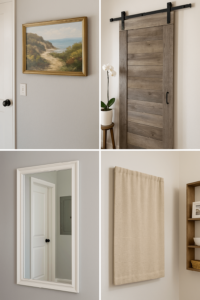
The Professional’s Guide—From Aesthetics to Engineering
When a “Cover” Becomes a Mission-Critical “Enclosure”
In industrial and commercial projects, the conversation changes completely. Here, the “cover” is no longer just a front panel or concealment feature. It is part of an engineered metal enclosure designed to protect electrical systems from impact, dust, moisture, corrosion, tampering, and environmental exposure.
For buyers, this changes the sourcing logic. The question is no longer how to hide the panel, but how to specify the right enclosure for real operating conditions.
Industrial Enclosure Design—Materials, Fabrication & Finish
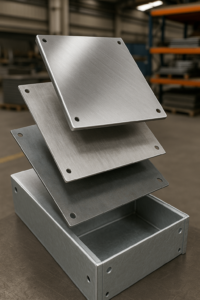
The quality of an industrial electrical enclosure depends on the full system: material choice, cutting precision, fabrication quality, sealing method, surface finish, and long-term corrosion resistance.
Carbon steel may be practical for indoor use where cost control matters. Aluminum may be preferred where lower weight and corrosion resistance are useful. Stainless steel, especially 316 in harsher environments, is often selected where buyers need stronger protection against moisture, chemicals, or chloride exposure.
Manufacturing method also matters. Precise cutting and well-controlled fabrication improve fit, sealing performance, and overall consistency. Finish selection matters as well, especially when buyers compare long-term coating durability and maintenance cost.
Decoding Protection Ratings: NEMA & IP for Procurement
For industrial procurement, enclosure ratings are critical. Buyers should not choose a cabinet based only on appearance or general product category. They need to match the enclosure’s protection level to the actual environment.
That is where NEMA and IP ratings become important. Washdown areas, dusty indoor spaces, outdoor installations, and corrosive environments do not require the same protection strategy. Correct rating selection helps prevent under-specification, over-spending, and field failure.
The Hidden Specs That Secure Your Business: Quality & Compliance
Beyond enclosure material and rating, buyers should also verify the hidden but essential requirements behind a dependable supply project. These include repeatable production control, certification status, documentation quality, and export compliance.
For many global buyers, ISO 9001 and RoHS are not optional details. They are basic indicators that the supplier can support consistent production and meet broader market requirements.
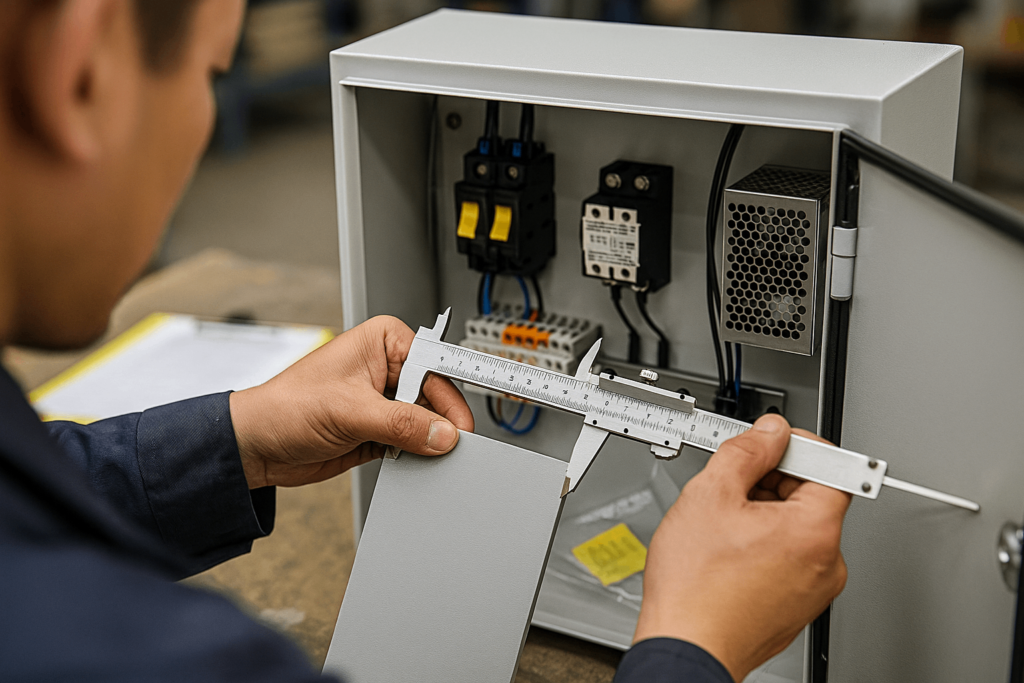
Conclusion: The Right Enclosure for the Right Application
The right panel solution depends entirely on the application.
In homes, the best answer is usually a safe and accessible decorative cover that improves appearance without interfering with code requirements. In industrial projects, the right answer is a properly specified metal enclosure that protects the electrical system under real operating conditions.
For buyers, choosing the right enclosure is not about finding the cheapest box. It is about matching environment, compliance, durability, and fabrication quality to the actual use case.
Call to Action
At Yishang Metal Products Co., Ltd., we support OEM and wholesale buyers with custom sheet metal enclosure solutions for electrical, industrial, and commercial applications. With 26+ years of manufacturing experience, we support processes including laser cutting, bending, stamping, welding, CNC machining, surface treatment, assembly, packaging, inspection, and shipment.
We work with materials such as stainless steel 304/316, low carbon steel, galvanized steel, aluminum, copper, and brass, and we help customers match enclosure design, finish, and protection level to real project conditions.
📩 If you are evaluating electrical panel enclosures or custom metal housing solutions for your next project, send us your drawings or requirements to discuss the most suitable manufacturing approach.