
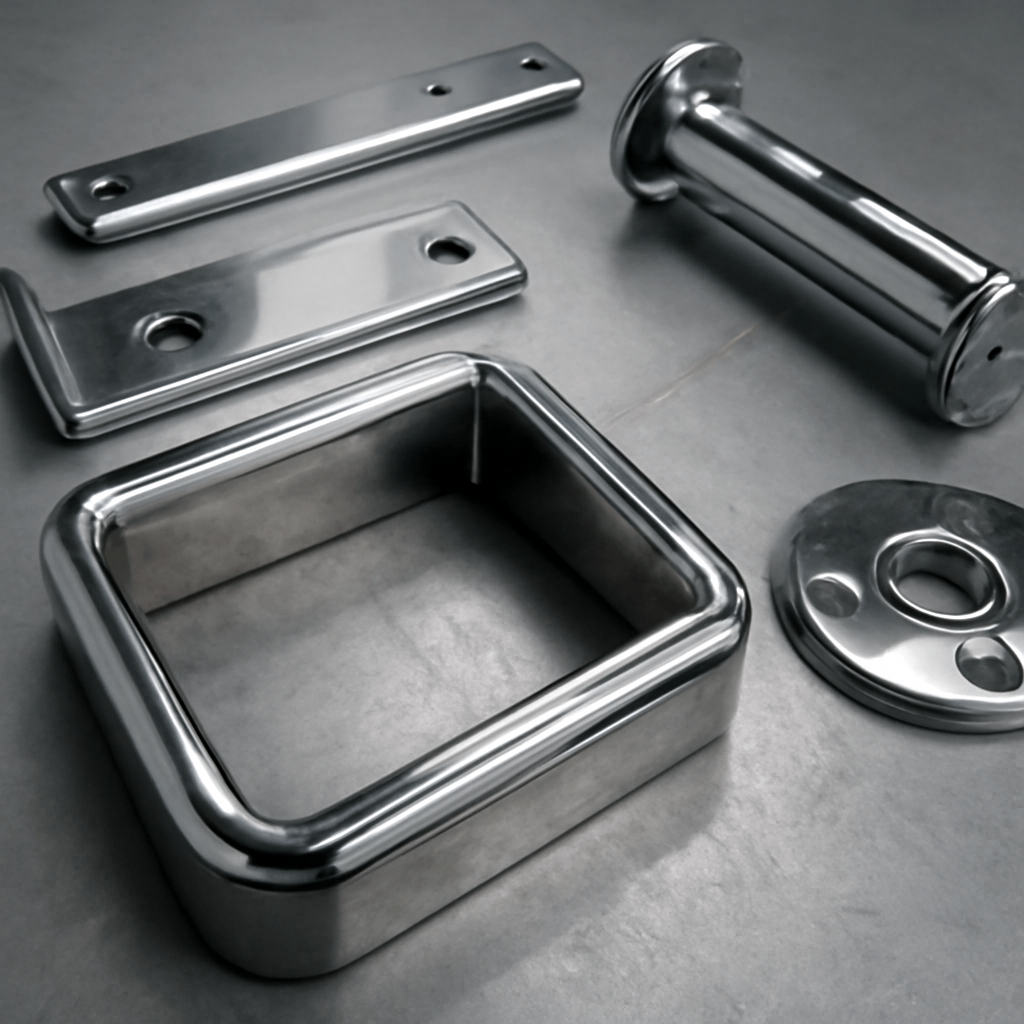
Introduction: A Professional’s Guide to Chrome Finishing
For engineers, product designers, and procurement teams, specifying “chrome plating” is not just a cosmetic choice. It affects corrosion resistance, wear life, dimensional control, compliance risk, and—quite often—the customer’s first impression of the finished product.
One point is worth clearing up early: the bright mirror appearance people associate with chrome usually comes from the nickel layer underneath, not from the chrome layer alone. The final chromium deposit is often very thin, acting more like a hard protective skin than the source of the shine itself.
For wholesale buyers, that distinction matters. A chrome-plated part is not simply “shiny metal.” It is a layered, process-sensitive finish where surface preparation, plating chemistry, current control, inspection, and compliance all influence whether the product performs consistently across hundreds or thousands of units.
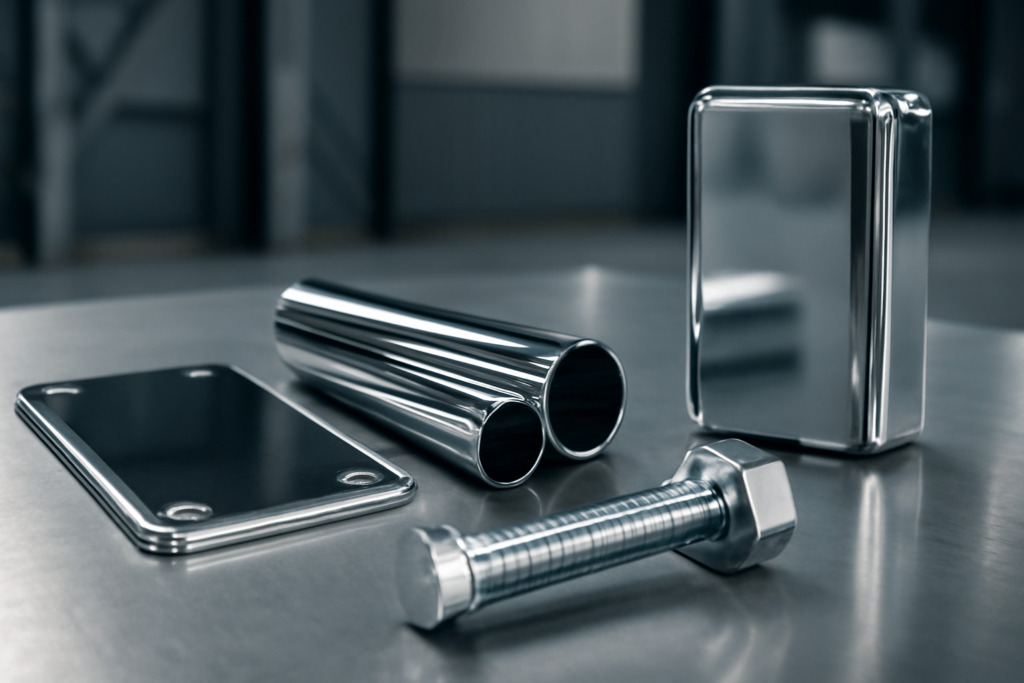
Part 1: Strategic Choice: Matching the Right Chrome Coating to Your Application
The first decision is simple in theory but often missed in practice: what is the chrome finish supposed to do?
Some products need a bright, corrosion-resistant appearance. Others need wear resistance, hardness, and low friction. A few require tight dimensional control where even a thick coating would create problems. These different goals require different chrome systems.
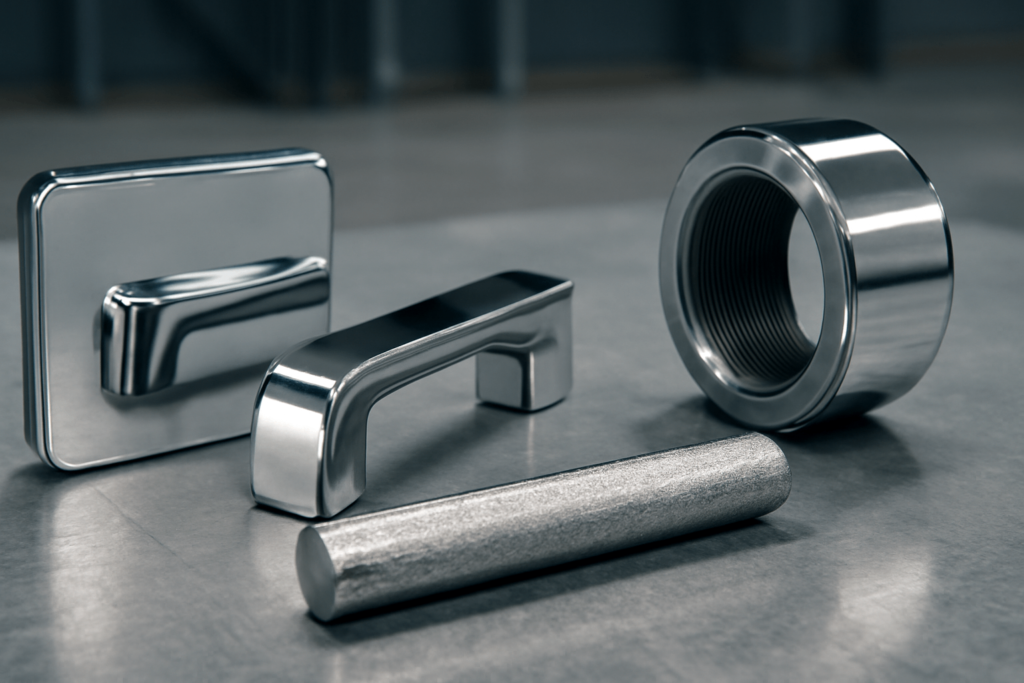
Decorative Chrome Plating: Appearance, Corrosion Resistance, and Brand Perception
Decorative chrome plating is often used when appearance and corrosion resistance both matter. In most cases, it is not a single-layer finish. It is a multi-layer system—typically copper, nickel, and a very thin chromium top layer.
Copper can help improve adhesion and level small surface imperfections. Nickel provides most of the brightness and much of the corrosion protection. The final chromium layer, although thin, adds hardness, tarnish resistance, and a stable surface feel.
This system is common in automotive trim, display hardware, fixtures, handles, consumer-facing metal parts, and products where the finish must look clean after repeated handling.
Hard Chrome Plating: Wear Resistance for Functional Surfaces
Hard chrome plating is different. Its purpose is not visual shine, although it can still look metallic and clean. Its real job is functional performance: hardness, wear resistance, low friction, and longer service life.
Unlike decorative chrome, hard chrome is usually applied as a thicker chromium layer directly onto the prepared substrate. Typical thickness may range from around 20 µm to well over 100 µm, depending on the application.
For buyers, one detail is especially important: hard chrome does not hide poor machining. It tends to follow the surface underneath. If the base part has scratches, waviness, poor roundness, or an unsuitable Ra value, plating will not magically correct it. In many cases, the machining quality before plating determines the result after plating.
Hard chrome is commonly used for hydraulic rods, molds, shafts, piston rings, tooling surfaces, and other industrial parts where wear resistance is more important than decoration.
Thin Dense Chrome: Precision Coating for Tight-Tolerance Parts
Thin dense chrome, often called TDC, is used when engineers need the functional benefits of chrome but cannot accept the dimensional build-up of conventional hard chrome.
It is usually deposited in a much thinner layer, often around 2–12 µm. Its dense, non-cracked structure can offer strong corrosion resistance while preserving tight tolerances. For precision components, that can be a major advantage because post-plating grinding may be reduced or avoided.
TDC is often considered for aerospace components, medical-related parts, precision tooling, and high-value mechanical surfaces where both reliability and dimensional control matter.
| Feature | Decorative Chrome | Hard Chrome | Thin Dense Chrome (TDC) |
| Primary Goal | Appearance and corrosion resistance | Wear resistance, hardness, low friction | Precision functionality and corrosion resistance |
| Typical Thickness | 0.05–0.5 µm | 20–100+ µm | 2–12 µm |
| Typical Hardness | Too thin to measure meaningfully | 65–72 HRC | 68–72 HRC |
| Structure | Multi-layer system, usually Cu/Ni/Cr | Thick chromium layer | Thin, dense chromium layer |
| Key Advantage | Bright finish and surface appeal | Extreme wear resistance | Tight dimensional control with strong corrosion resistance |
| Common Applications | Automotive trim, fixtures, tools, visible hardware | Hydraulic rods, molds, piston rings, shafts | Aerospace components, medical-related parts, precision tooling |
Part 2: The Chroming Process: Quality Begins Before the Plating Tank
Chrome plating quality is decided long before the part enters the plating tank. The tank may deposit the coating, but surface preparation determines whether that coating bonds well, looks clean, and performs reliably.
A polished decorative part, a hydraulic rod, and a precision medical component all need different preparation strategies. Still, the principle is the same: chrome is unforgiving. It reflects the quality of the surface beneath it.
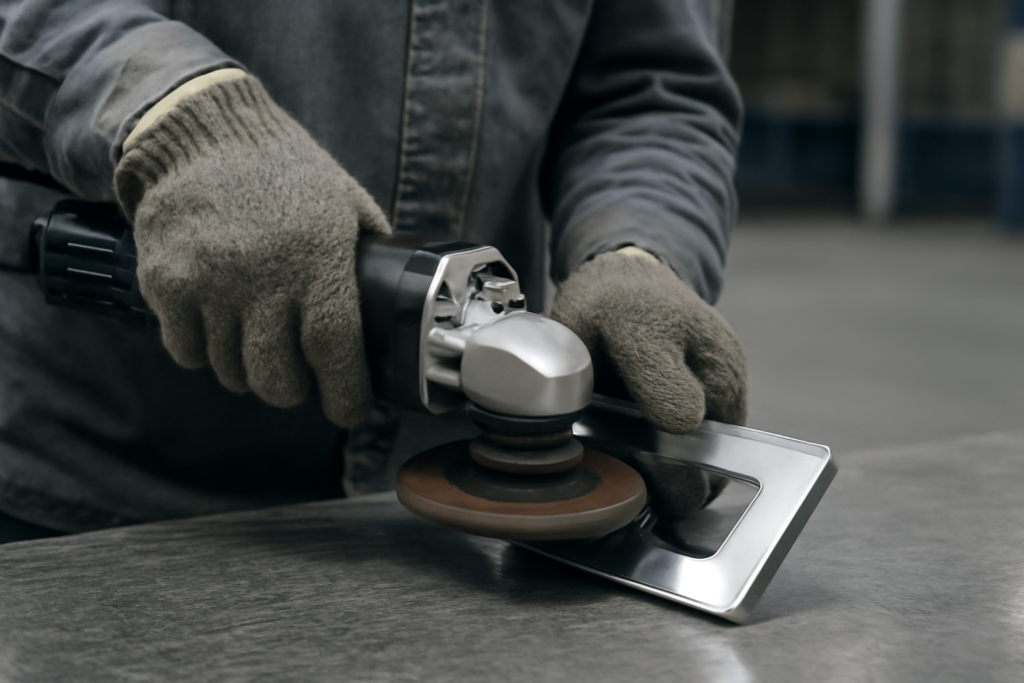
2.1 Surface Preparation: Precision Starts Here
Surface preparation usually includes degreasing, mechanical polishing or grinding, oxide removal, acid activation, rinsing, and careful handling before plating. Each step reduces the risk of poor adhesion, blistering, dull finish, pitting, or uneven deposits.
For decorative chrome, scratches and dents must be removed before plating because the final finish will make them more visible, not less. For hard chrome, the key concerns are surface roughness, geometry, cleanliness, and adhesion. A rushed preparation stage often shows up later as peeling, poor appearance, or premature wear.
2.2 Layered System or Single Function?
Decorative chrome is usually a layered system. Copper may be used for leveling, nickel for brightness and corrosion resistance, and chromium for hardness and surface stability.
Hard chrome is more direct. It is commonly deposited onto a machined surface where the coating must resist friction and wear. That means the inspection focus also changes. For decorative chrome, buyers should pay attention to brightness, color consistency, corrosion testing, and visible defects. For hard chrome, the substrate’s Ra value, dimensional tolerance, hardness, adhesion, and post-plating grinding allowance become more important.
Part 3: Control Variables: Where Engineering Meets Chemistry
Chrome plating is part chemistry, part electrical control, and part production discipline. Small changes in bath condition or current distribution can lead to visible defects, poor adhesion, inconsistent thickness, or weak corrosion performance.
For bulk buyers, this is where a mature supplier begins to separate from a low-cost finisher.

3.1 Current Density & Temperature: Invisible Engineers of Quality
Current density and bath temperature control how chromium deposits on the part. If current is too high, the surface may burn or become rough. If it is too low, the coating may appear dull, thin, or poorly bonded. Temperature variation can also affect hardness, deposit structure, and thickness uniformity.
In production, these variables should be controlled with rectifiers, bath monitoring, process records, and regular chemical analysis. Buyers do not need to run the plating bath themselves, of course—but they should ask whether the supplier controls these parameters consistently.
3.2 Auxiliary Anodes: Engineering Uniformity into Complex Shapes
Chrome does not deposit evenly on every shape by default. Edges, corners, holes, recesses, and complex geometry can create uneven current distribution. The result may be thick build-up in one area and insufficient coating in another.
Auxiliary anodes help guide current into difficult areas. They are especially important for custom parts, brackets, fittings, enclosures, molds, and components where thickness uniformity affects either appearance or function.
3.3 Agitation and Filtration: Ensuring Bath Consistency
Agitation and filtration are less visible than polishing or plating thickness, but they strongly influence finish quality. Good agitation supports even ion distribution. Good filtration removes particles that could cause pits, nodules, blistering, or rough deposits.
Professional chrome plating operations typically maintain:
- controlled agitation or air sparging;
- regular bath filtration;
- scheduled bath analysis;
- maintenance records;
- documented process windows for repeat orders.
These details may sound routine, but in high-volume production they often decide whether one batch matches the next.
Part 4: Compliance & Environmental Responsibility
Chrome plating also carries compliance responsibility, especially where hexavalent chromium is involved. For export buyers, this is not just an environmental topic. It can affect customs clearance, customer approval, market access, and supplier qualification.
4.1 RoHS, REACH & Global Compliance for Export Markets
For products entering the EU or other regulated markets, RoHS and REACH requirements must be considered early. Some applications may require restrictions on hexavalent chromium, chemical declarations, or third-party verification.
Trivalent chrome alternatives are now widely used in many decorative applications. They may differ slightly in color tone or performance profile, but they often provide a more practical compliance route for export products.
Buyers should request material declarations, compliance statements, and testing reports when the chrome finish is used on products intended for regulated markets.
4.2 US EPA, OSHA & Regional Regulations
For products connected to U.S. or other regulated supply chains, buyers should also consider emissions control, wastewater treatment, worker safety, and documentation practices at the supplier level.
A responsible plating partner should have suitable systems for fume control, wastewater handling, rinse management, and worker exposure control. Even when production is overseas, weak environmental control can become a business risk if the customer requires supplier audits or compliance documentation.
Part 5: Sourcing Considerations: What Professional Buyers Should Ask
A polished surface can hide a weak process. That is why professional buyers should evaluate chrome-plated parts by measurable criteria, not by shine alone.
5.1 Key Chrome Plating Quality Metrics
Useful quality metrics include:
- plating thickness range, measured in µm;
- surface roughness before and after plating;
- salt spray test performance, often using ASTM B117 as a reference;
- adhesion testing, such as cross-hatch or other approved methods;
- visual acceptance standard for pits, blisters, burns, stains, and color variation;
- dimensional checks for hard chrome or TDC parts.
For repeat orders, buyers should request inspection records by lot or shipment. This makes disputes easier to resolve and helps keep quality stable over time.
5.2 What to Expect from a Custom Chrome Plating Manufacturer
A capable chrome plating manufacturer should provide more than a plated sample. Buyers should look for process discipline, traceability, and the ability to repeat the same finish across production batches.
Important signs include:
- first-article inspection for new parts;
- process records for bath condition and rectifier settings;
- thickness measurement reports;
- batch traceability;
- clear packaging methods to protect the plated surface;
- communication between machining, polishing, plating, and final inspection teams.
For critical components, a plated sample or coupon processed alongside the production batch can help verify finish, thickness, and corrosion performance before full release.
Conclusion: From Shine to Specification
Chrome plating may look like a surface decision, but in manufacturing it reaches much deeper. It depends on base material quality, polishing, surface activation, plating chemistry, current control, inspection, and compliance discipline.
For buyers, the lesson is straightforward: do not specify chrome only by appearance. Specify the function. Is the part decorative? Wear-resistant? Corrosion-sensitive? Dimension-critical? Export-regulated? Each answer points to a different plating route and a different quality control plan.
At Yishang Metal Products Co., Ltd., we support OEM and wholesale customers with custom metal fabrication and surface finishing coordination for metal products, enclosures, brackets, display parts, equipment housings, and industrial components. With 26+ years of manufacturing experience, we support processes including laser cutting, bending, stamping, welding, CNC machining, surface treatment, assembly, inspection, packaging, and shipment.
For chrome-plated or surface-finished metal parts, we help customers review material selection, geometry, polishing requirements, coating expectations, inspection points, and export packaging.
📩 If you are evaluating chrome plating or other surface finishing options for your next metal product project, send us your drawings or requirements to discuss a practical manufacturing approach.
FAQ: Chrome Plating – Buyer’s Quick Reference
Q: Can aluminum be chrome plated?
Yes, but aluminum requires special pre-treatment, often including zincate and strike layers, to achieve reliable adhesion.
Q: Is trivalent chrome better than hexavalent chrome?
It depends on the application. Trivalent chrome is generally more compliance-friendly and safer to manage, while hexavalent chrome has traditionally been used for certain hard chrome and industrial applications. Buyers should confirm performance and regulatory requirements before selection.
Q: How do I inspect chrome plating quality?
Common checks include visual inspection, thickness measurement by XRF or coulometry, adhesion testing, salt spray testing, surface roughness measurement, and dimensional inspection for functional parts.
Q: What industries use hard chrome plating?
Hard chrome is common in hydraulic systems, molds, shafts, piston rings, industrial equipment, automotive components, oil and gas parts, and wear-resistant mechanical surfaces.
Q: Can chrome plating be reapplied over worn parts?
Yes, in many cases. The old coating is usually stripped, the surface is repaired or re-machined if needed, and the part is plated again. This is common in mold refurbishment, tool repair, and certain hydraulic components.