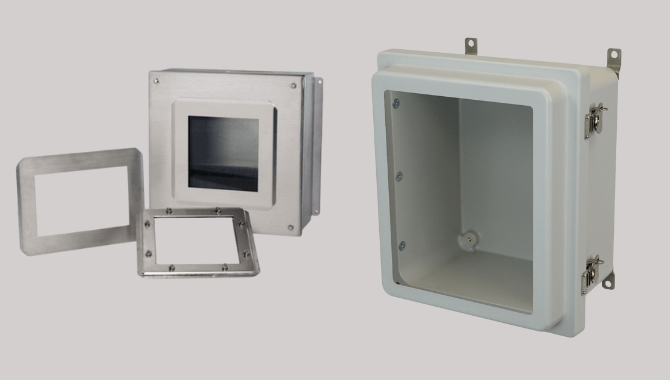
In the contemporary landscape of global industrial infrastructure, the “blind box” approach to electrical protection is no longer sufficient for high-stakes operations. Senior engineers and wholesale distributors are increasingly moving away from traditional closed systems in favor of visual accessibility. An
electrical enclosure with window is no longer just a metal box; it is a critical diagnostic interface for real-time monitoring. For a B2B procurement manager, selecting the right
enclosures with windows involves balancing the need for visual accessibility with the non-negotiable requirement for environmental integrity.
At
YISHANG, we recognize that for a wholesale buyer, a single failure in the field can result in massive recall costs and reputational damage. Therefore, integrating a viewing window into a protective chassis is approached as a rigorous mechanical engineering challenge. This guide explores the intersection of material physics, structural integrity, and the commercial logic behind high-performance
electrical enclosures with windows. Our 26 years of manufacturing experience across 50+ countries suggests that the most successful sourcing decisions are built on technical depth rather than just surface-level specifications.
Visual Monitoring and the ROI of Safety
The primary reason professional buyers prioritize
electrical enclosures with windows is the direct improvement of operational safety protocols. In high-voltage environments, the risk of an arc flash is a constant threat. Traditionally, checking a meter or a PLC status required an operator to open the door, potentially exposing them to hazardous energy. This manual intervention not only risks personnel safety but also disrupts the internal atmospheric stability of the enclosure.
By enabling non-invasive monitoring, these enclosures maintain the internal pressure and seal of the system during routine checks. This is a standard requirement for Tier-1 smart factories and highly regulated sectors. Whether you are sourcing a
hinged electrical enclosure or a complex modular electrical enclosures system, the goal is clear: ensuring that internal
electrical and electronic equipment remains visible yet perfectly isolated from external contaminants like dust, moisture, and corrosive vapors.
I. The “Transparency Paradox”: Engineering Structural Rigidity
The core engineering challenge for any
enclosure with window is maintaining structural rigidity once a significant portion of the metal is removed. Every cutout creates a “stress riser” in the frame that could lead to door warping or seal shearing under mechanical pressure. This is what we call the “Transparency Paradox”—the need to see through a structure without compromising the strength that makes it a “shield.”
For wholesale buyers managing large-scale infrastructure, understanding the solution to this paradox is vital for risk mitigation. A poorly designed
enclosure hinged electrical door might warp over a five-year period, leading to microscopic ingress leaks. At
YISHANG, we utilize 3D design to simulate these stress distributions before the first sheet of
material stainless steel is ever cut. Our simulations focus on the torsion resistance of the door frame when the window is mounted.
Managing Frame Deflection and Mechanical Stress
When a
stainless steel enclosure is subjected to high-pressure washdowns or high-velocity wind loads, the metal chassis and the window pane respond with different deflection rates. This differential flexing is the leading cause of seal failure in outdoor installations. If the metal bends more than the glass or polycarbonate, the bond between them will eventually shear, resulting in a breach of the
IP or NEMA rating.
Professional-grade
electrical enclosure modular designs utilize a “Bezel-and-Bridge” mounting system. This mechanical clamping ensures the window is evenly compressed against the gasket at every point of the perimeter. For high-volume procurement, the consistency of this structural reinforcement is the difference between a 25-year service life and a 5-year replacement liability. It ensures that the
enclosure enclosure by design remains a monolithic barrier, regardless of the aperture size.
Predictive Maintenance in the Industry 4.0 Era
Integrating
enclosure hinged electrical units with windows directly supports the global trend toward predictive maintenance. Being able to verify LED status codes or thermal sensor readouts without breaking the environmental seal is a key efficiency metric for modern facility managers. This allows for scheduled maintenance based on actual performance data rather than arbitrary timelines.
From a B2B perspective, this capability significantly lowers the Total Cost of Ownership (TCO). By reducing the frequency of physical gasket manipulation and hinge wear, you extend the life of the
electrical enclosure wire systems and internal connectors. This saves your clients substantial maintenance labor over the product’s lifespan, which is a powerful selling point for wholesale distributors looking to offer high-value solutions in the
electrical and electronic market.
II. Material Physics: Strategic Selection for Diverse Environments
Choosing the right
electrical enclosure raw materials is the most critical decision for any procurement manager. A material choice that performs in a dry indoor warehouse will fail catastrophically in a coastal marine environment or a chemical processing plant. For wholesale distributors catering to global markets, a tiered material strategy is necessary to meet various price points and performance requirements.
Comparative Analysis: Polycarbonate vs. Tempered Glass
| Technical Parameter |
Polycarbonate (PC) |
Tempered Glass |
Laminated Safety Glass |
| Impact Rating |
IK10 (Extremely High) |
IK07 (Moderate) |
IK09 (High) |
| Chemical Resistance |
Vulnerable to Oils/Solvents |
Excellent (Inert) |
Excellent |
| Optical Clarity |
High (Initial) |
Excellent (Lifetime) |
High |
| UV Stability |
Requires UV-inhibitors |
Inherently Stable |
High |
| Thermal Expansion |
6.5 x 10^-5 /°C (High) |
0.9 x 10^-5 /°C (Low) |
Moderate |
For a
lockable electrical enclosure installed in public areas, polycarbonate is the superior choice due to its shatterproof nature. However, for a
junction box nema 4X application in a petrochemical facility, tempered glass is the industry standard because it will not “craze” or cloud when exposed to aggressive industrial cleaners. The choice must be dictated by the specific “Failure Mode” the end-user is trying to avoid.
If your project involves
solar battery enclosure systems in high-UV regions, UV-stabilized grades are non-negotiable. Standard plastics will yellow and turn brittle within 24 months, compromising the
visibility for monitoring. At
YISHANG, we prioritize long-chain polymer stabilizers to ensure 15+ years of clarity, preventing the “blind window” effect that renders visual monitoring useless.
The Logic of Carbon and Galvanized Steel
While
stainless steel enclosure units offer the highest corrosion resistance,
galvanized steel enclosure and
carbon steel enclosure options are vital for cost-sensitive indoor infrastructure. A
steel enclosure galvanized with a high-quality powder coating can provide exceptional durability in controlled environments. The key is in the pre-treatment—proper phosphating and cleaning before the powder is applied to ensure adhesion.
For wholesale buyers, having a partner who can process all three materials under one roof—
stainless steel enclosure, aluminum, and carbon steel—is a major supply chain advantage. At
YISHANG, we assist in selecting the optimal
enclosure aluminum enclosure or steel variant based on the specific salinity and humidity profiles of the client’s end-use site. This consultancy-led approach reduces the procurement risk for the wholesale partner.
III. The Engineering of the Seal: Maintaining NEMA and IP Ratings
Achieving a NEMA enclosure rating for a windowed unit requires more than just a tight latch. The window-to-metal interface is the most likely failure point for moisture ingress, especially in
wall-mounted or
floor-mounted or installed systems where gravity drives water toward the seal. The integrity of this seal determines the classification of the entire unit.
For a professional buyer, a lab test “pass” certificate is the baseline. The real concern is “Seal Memory”—the ability of the gasket to return to its original shape after thousands of compression cycles. This is where
YISHANG‘s focus on material chemistry pays dividends. A seal that loses its elasticity in cold weather or becomes “sticky” in the heat will inevitably fail during field operation, leading to
electrical and electronic equipment damage.
FIPG Technology vs. Manual Gasketing
Professional
electrical enclosure foaming processes utilize Form-in-Place Gasket (FIPG) technology. This automated liquid application creates a seamless, continuous seal that conforms perfectly to the window aperture. Unlike manual “cut-and-paste” EPDM strips, FIPG has no corner seams where water can penetrate. It creates a monolithic barrier that is physically bonded to the metal chassis.
In a
disconnect enclosure hinged design, the gasket must also resist “Cold Flow”—the permanent deformation of the material under pressure. Our engineering team selects silicone-based FIPG with high Shore A hardness recovery. This ensures the
enclosures with windows protect the internal components even after years of use and repeated door openings. It is this microscopic attention to detail that prevents expensive site visits and emergency replacements.
Eliminating Crevice Corrosion via Flush-Mounting
In marine or pharmaceutical applications, the gap where the window meets the metal can trap moisture. This leads to “crevice corrosion,” which can destroy a
material stainless steel chassis from the inside out. For these environments, we recommend a “Flush-Mount” design where the window is integrated into the metal plane without external protrusions.
By eliminating the external lip where water can pool, we ensure the
electrical enclosures with windows are as hygienic as they are durable. This is a critical factor for wholesale buyers supplying the food processing and pharmaceutical sectors, where bacterial trap-points must be minimized. A flush design is easier to clean and reduces the risk of chemical buildup that could degrade the
visibility for monitoring.
IV. Thermal Management: Overcoming the Solar Gain Problem
One of the most frequent technical challenges reported by procurement managers is internal heat accumulation. A window acts as a thermal trap, allowing solar radiation in while restricting heat exit. If you are sourcing a
solar battery enclosure or
control station enclosures for outdoor use, thermal dynamics must be the primary focus of your technical review.
Calculating Solar Heat Gain (SHG) and Delta T
For outdoor installations, engineers must calculate the Solar Heat Gain (SHG). In high-irradiance regions, a windowed
enclosure carbon steel unit can reach internal temperatures 25% higher than a solid-door version. This heat is the primary killer of digital controllers and battery cells. Without mitigation, a windowed enclosure can act as a furnace, exceeding the operating limits of the
electrical and electronic components.
To solve this,
YISHANG integrates passive cooling solutions, such as internal baffles and heat sinks, into the
enclosure modular electrical design. We use a delta-T (temperature difference) calculation to determine the necessary airflow for each unit. This ensures that internal equipment operates within its designated temperature window without compromising the IP protection rating or NEMA certification.
Pressure Equalization and the “Breathing Effect”
Internal temperature swings create the “Breathing Effect.” As the air cools, it creates a vacuum that can pull moisture-laden air through the gaskets. This moisture condenses on the window, obscuring visibility. The solution is the integration of pressure compensation breathers or hydrophobic membranes that allow the enclosure to “exhale.”
These membranes allow air to pass but block liquid water and dust. For a
viewing window send inquiry now to learn how we integrate these smart venting solutions. For a wholesale buyer, this small technical detail can reduce field maintenance calls by 80%, significantly improving the lifetime value of the product. It is a simple fix for a complex, expensive problem.
V. Customization Workflow: From 3D CAD to Prototype and Mass Production
For a B2B wholesale buyer, the
manufacturing capacity electrical is only as good as the process that drives it. Customization is the norm in industrial housing, and having a transparent, repeatable workflow is essential for ensuring that modified enclosures meet the same standards as off-the-shelf units.
Phase 1: 3D Design and Functional Simulation
Every project at
YISHANG begins with a rigorous
3d design electrical phase. We don’t just place a window; we analyze its impact on the door’s center of gravity and hinge stress. By providing a
technical drawing material set and 3D models before production, we allow our wholesale partners to verify internal clearances and mounting points, reducing the R&D risk.
Phase 2: Precision Laser Cutting and HAZ Management
The
laster cutting electrical process for the window aperture must be perfectly calibrated. Excessive heat creates a “Heat-Affected Zone” (HAZ) that warps the metal. If the frame is warped by even half a millimeter, achieving a watertight seal becomes impossible. By using high-speed fiber lasers with automated cooling cycles, we ensure every
electrical enclosure laster cut is clean and perfectly flat.
Phase 3: Automated Foaming and Gasket Integration
Once the chassis is cut and bent, the
electrical enclosure foaming process begins. FIPG technology ensures that the gasket is applied with absolute precision. For high-volume
wholesale custom electrical enclosures, this automation ensures that the first unit off the line is identical to the 5,000th—a consistency level that is impossible to achieve with manual gasket application.
VI. Advanced Fabrication: Welding, Grounding, and Surface Integrity
The “finish” of an enclosure is often where the difference between a wholesale-ready product and a low-end substitute is most visible. At
YISHANG, we focus on the microscopic integrity of the metal-to-window joints.
Robotic Welding and Bezel Integration
In a
stainless steel enclosure, the welding around the window bezel must be seamless. We utilize automated TIG and robotic laser welding to ensure maximum structural integrity with minimal thermal distortion. Following the
electrical enclosure welding, all units undergo a multi-stage
electrical enclosure cleaning and passivation process.
Bonding and Grounding Protocols
A window creates a break in the metallic continuity of the door. To maintain EMI/RFI shielding and electrical safety, specialized
grounding electrical enclosure protocols must be followed. We ensure that the window frame and the main door are bonded using dedicated ground studs, providing a low-impedance path that meets global safety standards for
electrical and electronic equipment.
Surface Treatment and Passivation
Passivation restores the chromium oxide layer on the steel, ensuring your
material stainless steel purchase remains rust-free. For wholesale distributors, this means delivering a product that looks and performs like new, even after long sea voyages. Our
wire drawing electrical finish provides a professional look that resonates with high-end industrial end-users.
VII. Industry-Specific Engineering Challenges: Solving Niche Problems
Wholesale buyers must understand the niche requirements of their target sectors. A windowed enclosure for a solar field in Arizona has completely different requirements than one for a pharmaceutical cleanroom in Germany.
Renewable Energy and Solar Power Systems
In the renewable sector, enclosures for
solar battery enclosure systems must prioritize UV stability. The high ambient heat common in open fields requires specialized powder coatings with high solar reflectance. We often use IK10 polycarbonate windows that can withstand hail and flying debris without compromising the
electrical enclosures lockable security.
Medical, Pharmaceutical, and Food & Beverage
For these industries, the focus is on Hygienic Design. This means avoiding any horizontal surfaces where water can accumulate. Our
walk in electrical units and wall-mount boxes feature sloped tops and flush-mounted tempered glass. The gaskets used must be FDA-compliant and resistant to aggressive steam sterilization and caustic cleaning agents.
Automotive, CNC Machining, and Industrial Automation
In the factory floor environment, the primary threats are oil mist and heavy vibration. The
enclosure push button stations and larger control panels must feature vibration-dampening window mounts. If the window rattles, the seal will fatigue. We utilize internal stiffeners to isolate the window from mechanical resonances, ensuring the
visibility for monitoring remains clear.
VIII. Sourcing Intelligence: Total Cost of Ownership (TCO) and Supplier Audit
In the competitive world of
wholesale custom electrical enclosures, the lowest initial price is often a deceptive metric. Professional buyers look for the best TCO—balancing the purchase price against maintenance, longevity, and failure risks.
How to Audit a Metal Fabrication Supplier
When evaluating a manufacturer for windowed enclosures, ask these three questions:
- Do you use FIPG foaming or manual gaskets? (FIPG is superior for long-term IP66 integrity).
- How do you manage the HAZ (Heat-Affected Zone) during cutout? (Precision laser cutting is required for seal flatness).
- Do you provide 3D CAD simulation for thermal load? (Essential for preventing field failures in outdoor electronics).
Logistics and Supply Chain Reliability
Managing a global supply chain requires a partner who understands international shipping. Our
enclosure packaging inspection team ensures that every unit is crated with anti-vibration materials to prevent window breakage. We manage the entire value chain in-house, from
electrical enclosure raw material check to final
enclosure wire drawing inspection. This is why we are the preferred
enclosure enclosure by choice for distributors in over 50 countries.
IX. Technical FAQ: Common Engineering Queries for Procurement
Q: Can a windowed enclosure maintain a NEMA 4X rating in maritime environments? A: Yes. By using
material stainless steel 316 and silicone FIPG gaskets, we ensure a windowed unit meets the same 4X standards as a solid-door version.
Q: How do you handle custom window sizes for HMI screens in small batches? A: Our
laster cutting electrical capability allows us to cut any aperture size without expensive tooling. We update the
3d design electrical file, ensuring cost-effective customization for small batches, allowing you to serve niche markets profitably.
Q: Is there a risk of the window “yellowing” over time in outdoor solar projects? A: Not with our UV-stabilized polycarbonate or tempered glass options. For any
solar battery enclosure project, we prioritize materials that maintain 95% clarity for over 15 years, ensuring long-term
visibility for monitoring.
Q: What documentation do you provide for large-scale infrastructure bids? A: We provide a full
inspection report resource,
material inspection certification, and
technical drawing material sets. We are here to support your bid process with technical authority, helping you win more business with documented quality.
Q: Can you integrate EMI/RFI shielding into a windowed enclosure? A: Yes. We use windows with embedded fine-mesh conductors or ITO coatings. This allows for visual monitoring while maintaining the electromagnetic integrity of the
electrical and electronic equipment inside.
X. Conclusion: Securing Your Industrial Infrastructure
Choosing an
electrical enclosure with window is a strategic decision that impacts the safety and efficiency of your entire operation. It is about more than just visibility; it is about engineering a window into a fortress. For the wholesale buyer, it is about providing a product that guarantees uptime and minimizes risk in
larger systems.
At
YISHANG, we are dedicated to helping our wholesale partners succeed by providing high-quality
enclosures with windows kdmfab equivalents and beyond. With our 26 years of
ISO 9001 certified expertise, we turn complex engineering challenges into reliable, long-term assets for your business. We are your partner in professional protection.
Ready to optimize your next project with a professional
enclosure with viewing window?
Send inquiry now to receive a customized quote and a free
technical drawing material review from our engineering team. Let’s build a more transparent, safer industrial future together.
Summary of Global Technical Standards
- Ingress Protection (IEC 60529): IP65, IP66, IP67
- NEMA Ratings (NEMA 250): NEMA 4, 4X, 12, 13
- Impact Protection (IEC 62262): IK08, IK10
- Manufacturing Compliance: ISO 9001:2015, RoHS, REACH, CE