
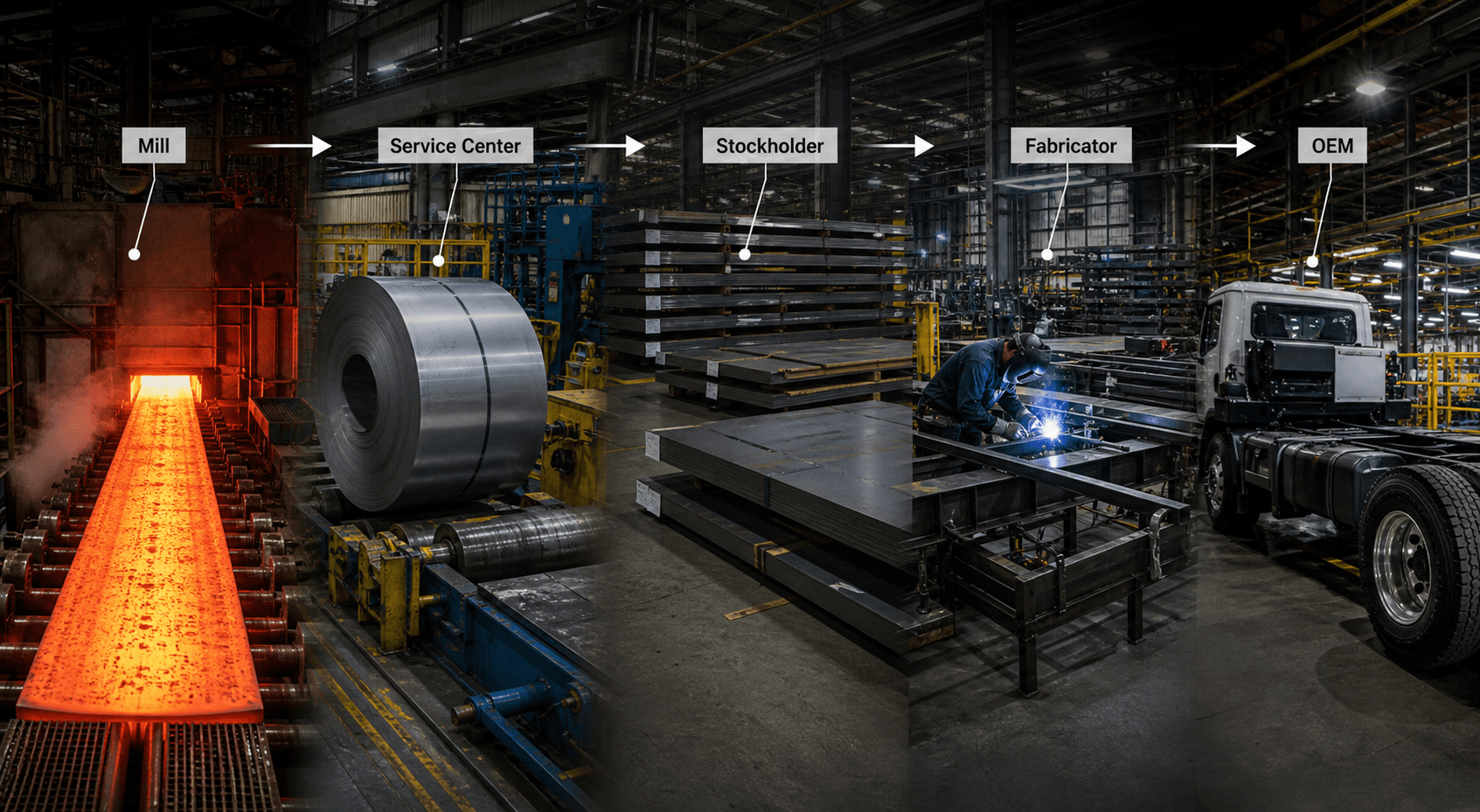
The right hot rolled steel provider depends on the deliverable you need: raw coil or plate, processed sheet or blanks, or finished OEM components. For an overseas OEM buyer, the decision is not simply which company sells steel; it is which party should own material conversion, fabrication, inspection, and delivery risk. A mill, stockholder, service center, and custom fabricator may quote related materials, but they do not quote the same responsibility.
Quick answer: Source raw steel when your organization controls material conversion, fabrication, finishing, inventory, and inspection. Use a service center for confirmed operations such as slitting, leveling, or cut-to-length processing. Use a custom fabricator when the deliverable is a laser-cut, punched, bent, welded, coated, or assembled part.
Provider types and where responsibility changes
When procurement is under pressure to compare quotes, the supply form can hide the main difference between providers. Verify what the supplier will deliver and inspect rather than assuming that every company using the term hot rolled steel provider offers the same route.
| Provider type | Typical supply form | Main point to verify |
|---|---|---|
| Steel mill | Mill-produced coil or plate | Grade and condition, production terms, quantity requirements, heat or lot records, and delivery basis |
| Distributor or stockholder | Coil, plate, or sheet held for resale | Current availability, storage condition, certificate transfer, identification, and responsibility for incoming or outgoing inspection |
| Processing service center | Slit coil, leveled material, cut-to-length sheet, or blanks where offered | Conversion tolerances, yield basis, marking, packaging, and responsibility for processed dimensions |
| Custom sheet metal fabricator | Cut, punched, formed, welded, finished, or assembled components | Drawing requirements, material control, fabrication tolerances, weld and finish scope, assembly interfaces, and final-part inspection |
Buying coil, plate, or sheet leaves downstream manufacturing with the OEM or its contractors. A cut blank adds profile, hole, edge, and flatness requirements, while a formed or welded component adds bend geometry, joint quality, distortion control, and finished-part dimensions. Coating and assembly introduce separate preparation, appearance, fit, and handling requirements.
The purchase order should identify who accepts the raw material, who controls each conversion step, and who inspects the final deliverable. A mill certificate links material to a heat or lot; it does not, by itself, prove that a service-center blank or fabricated assembly meets its finished dimensions.
Freeze the specification before comparing quotes
At the pre-RFQ stage, freeze the material identity, supply condition, dimensions, quantity, and evidence package before evaluating price or schedule. Quotes cannot be compared reliably if one is based on as-rolled coil, another on pickled and oiled sheet, and a third on finished parts.
| Specification field | What to define | Purchasing consequence |
|---|---|---|
| Grade and governing requirement | Use the designation and customer, drawing, project, or purchase standard confirmed for the application | Prevents providers from quoting different requirements under the general label hot rolled steel |
| Thickness and format | Thickness, width, length, and whether the requirement is coil, plate, sheet, or blanks | Affects handling, utilization, conversion work, packaging, and the suitable supply route |
| Surface condition | As-rolled, pickled and oiled, or another documented condition | Changes cleaning, storage, fabrication preparation, and finishing requirements |
| Edges, flatness, and dimensions | Edge condition, flatness basis, dimensional limits, and applicable tolerance source | Determines whether material can feed, locate, form, and fit as intended |
| Quantity pattern | Order quantity, forecast, release pattern, and prototype, pilot, or production status | Influences whether stock, service-center conversion, or production supply is commercially appropriate |
| Identification and documents | Heat or lot identification, material test documentation, inspection records, marking, and packaging | Supports receipt inspection, traceability, and claims handling |
Supplier-published product ranges are not a substitute for current confirmation of the required grade, condition, size, quantity, and documentation. The mild steel material category can support an initial material discussion, but the exact grade and condition must come from the project requirement.
Pickled and oiled hot rolled steel remains a hot rolled product: pickling removes scale, while oil provides temporary surface protection. It is not the same as cold rolled steel, which may be considered when the project places greater emphasis on surface condition, shape control, or cosmetic requirements. Galvanized steel is a separate option when its corrosion-protection route is required, and tube or pipe should not be specified as interchangeable with sheet or plate.
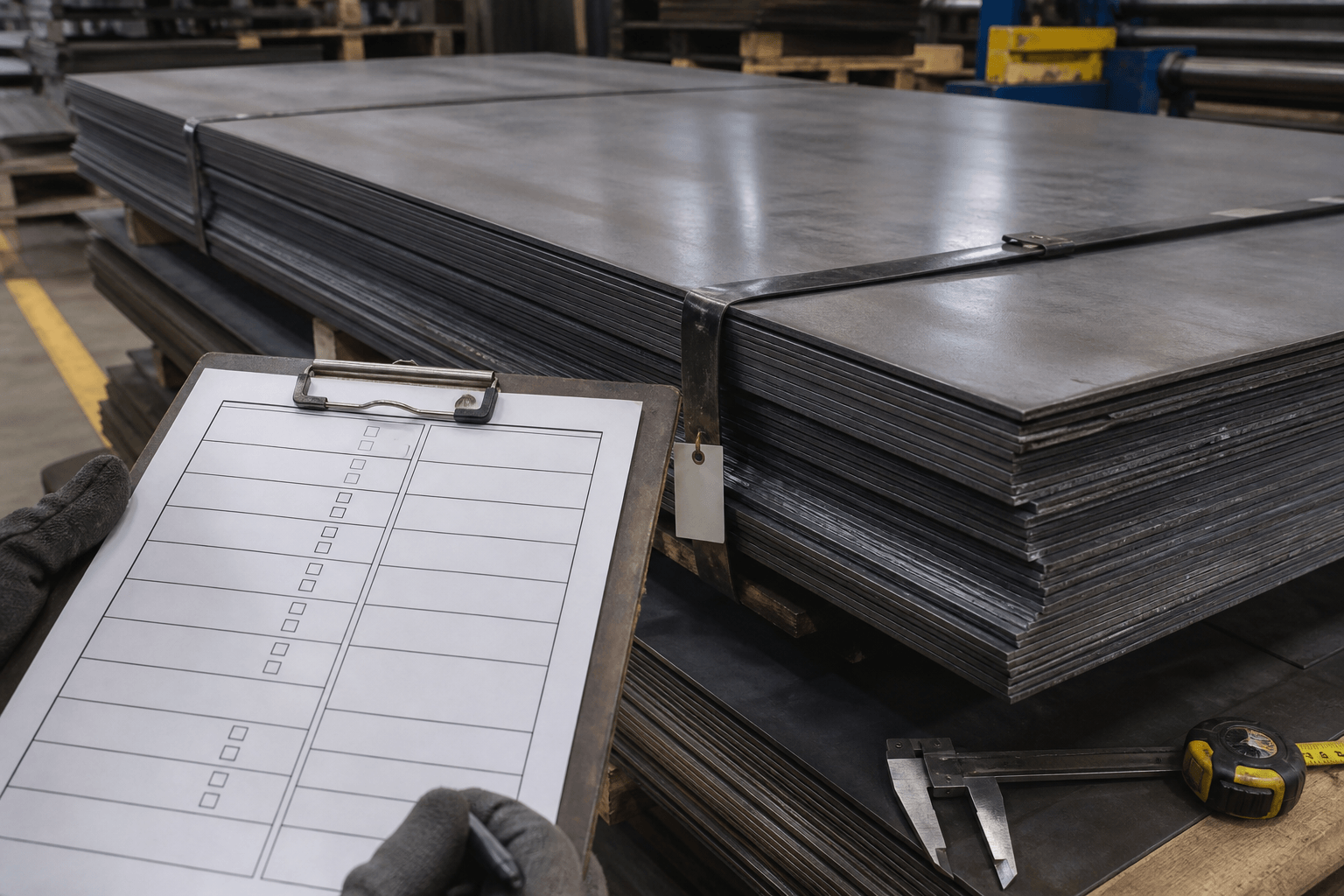
From hot rolled material to a finished OEM part
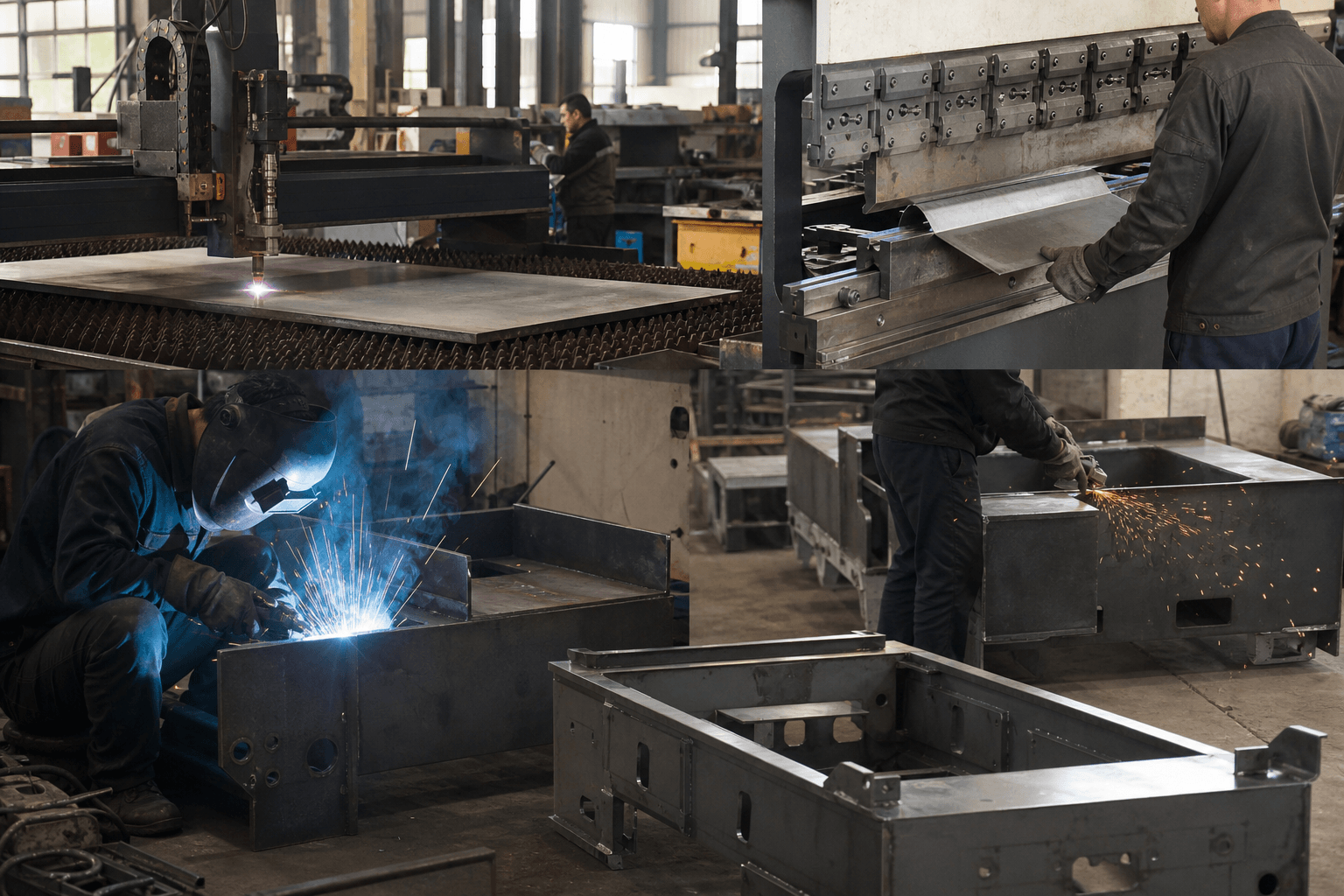
For an OEM moving from a steel quote to a part quote, the critical question is how the incoming material condition will affect each downstream operation. Hot rolling establishes the material condition; cutting, punching, bending, welding, finishing, and assembly are separate manufacturing stages with their own controls and acceptance criteria.
- Receiving and preparation: Match material identification to the required records. Check thickness, dimensions, flatness, edges, scale, oil, and visible surface condition before releasing material to production.
- Laser cutting: Grade, thickness, flatness, and surface condition can influence process setup and cut consistency. Define profile dimensions, hole geometry, burr condition, and any required edge preparation for the cut part.
- CNC punching: Punching creates sheet-metal features with tooling; it is not CNC milling. Material thickness, grade, flatness, tooling, and part layout can affect punching force, burr formation, feature position, and sheet handling.
- Bending: Bend results depend on the actual grade and thickness together with tooling, bend radius, geometry, and inspection method. Springback and bend allowance should be established for the specified material and part rather than assumed from a generic hot rolled description.
- Welding: Welding is a joining operation, not a material grade or cutting process. Review joint design, surface preparation, thickness, welding sequence, heat input, distortion control, and the required post-weld geometry.
- Finishing: Descaling, cleaning, pretreatment, polishing, and powder coating are distinct finishing steps. Residual scale, oil, scratches, spatter, and weld condition can affect preparation, coating appearance, and acceptance.
- Assembly: Fit depends on the accumulated results of cutting, forming, welding, finishing, and component inspection. If machined inserts or other machined parts are installed, their datums, hole patterns, and fits must be controlled at the assembly interface; machining remains a separate process.
Hot rolled steel may suit frames, equipment racks, cabinets, enclosures, and other fabricated components when its grade, condition, geometry, and finishing route fit the application. Visible surfaces, close-fitting interfaces, or corrosion requirements may justify additional preparation, tighter controls, or a different material route. Buyers seeking completed components can review custom sheet metal structures and assemblies rather than approaching the project as a raw-steel purchase.
Need a finished-part review? If the requirement includes formed panels, welded brackets, coating, or assembly, share the part geometry and material callout before selecting a raw-material route. This allows the fabrication scope and inspection basis to be considered together.
Commercial terms behind apparently similar quotes
Two quotes with the same nominal grade and thickness may cover different material sources, conversion work, packaging, freight, and claims obligations. Compare the complete supply basis rather than the material line alone.
| Factor | Points to confirm |
|---|---|
| Source and availability | Whether the offer depends on existing stock, a mill production schedule, or service-center conversion |
| Quantity and MOQ | Confirmed minimum quantity, release quantity, forecast treatment, and replenishment assumptions |
| Conversion scope | Whether slitting, leveling, cut-to-length work, blanking, edge work, testing, scrap, or yield is included in the quote basis |
| Schedule | Stock-release date, production lead time, sample or first-article timing where applicable, and expected replenishment timing |
| Delivery scope | Delivery point, supported region, inland transport, export freight, shipment terms, and required documents |
| Packaging and identification | Protection from handling and storage conditions, palletization, marking, lot separation, and package limits |
| Claims procedure | Treatment of shortages, damage, late delivery, dimensional nonconformance, surface defects, replacement, and credit |
Record the quote basis in writing, including material form, included processing, quantity basis, packaging, delivery point, and validity conditions. International buyers should review packaging and international delivery considerations alongside the material or part price rather than treating freight as a later detail.
Evidence for material and delivery acceptance
For overseas receipts, documentation is useful only when it can be tied to the delivered material and the agreed acceptance criteria. Define the evidence package before ordering so the provider can connect certificates, inspections, and identification to the relevant lot.
| Evidence | Acceptance purpose |
|---|---|
| Heat or lot identification | Links delivered material to the relevant production and certificate records |
| Material certificate or mill test documentation | Reports the agreed material identity and results for the applicable heat or lot |
| Chemical and mechanical results | Supports comparison with the grade and standard required by the contract |
| Dimensional inspection | Checks specified thickness, width, length, flatness, and edge condition against the agreed basis |
| Surface inspection | Records acceptance for relevant scale, pitting, scratches, oil, pickling condition, or visible appearance |
| Sampling and independent inspection | Defines sampling rules and any contractually required third-party involvement |
| Nonconformance procedure | Defines segregation, notification, review, disposition, replacement, credit, and corrective-action expectations |
At receipt, match package and material identification to the documents before separating the stock. For finished components, combine raw-material records with agreed in-process and final inspections for cut features, bends, weldments, coating, and assembly. A documented quality-control plan can allocate these responsibilities between the supplier and buyer.
Management-system or compliance certifications provide company-level context. They do not prove that a particular heat meets a specified steel grade, and they do not replace lot-specific material documentation.
Hot rolled steel provider comparison: which route fits your project?
The best-fit route depends on where your organization wants the supplier handoff to occur. Use the matrix to compare supply form, processing responsibility, documentation ownership, and the type of deliverable your project actually needs.
| Provider type | Usually supplies | Provider responsibility to confirm | Best fit when |
|---|---|---|---|
| Steel mill | Production coil or plate | Grade, condition, production quantity, heat or lot records, and delivery terms | Your organization manages conversion, fabrication, finishing, and final inspection |
| Distributor or stockholder | Available coil, plate, or sheet | Current stock, storage condition, identification, certificate transfer, and outgoing inspection | You need material from available inventory and can accept responsibility for downstream work |
| Processing service center | Slit coil, leveled material, cut-to-length sheet, or blanks where offered | Processing tolerances, yield, marking, packaging, and dimensions after conversion | You need a defined material conversion but will perform later fabrication yourself |
| Custom fabricator | Cut, punched, bent, welded, coated, polished, or assembled parts | Material control, drawing review, fabrication tolerances, finish, assembly, and final inspection | You need frames, cabinets, enclosures, racks, or other finished OEM components |
Direct raw-material sourcing is usually the better fit when the buyer controls cutting, forming, welding, finishing, inspection, and inventory internally. Custom fabrication is more appropriate when the required deliverable is a finished part or assembly and the buyer wants one supplier to coordinate several operations against drawings and acceptance criteria.
Example scenario: An OEM with its own forming and welding operations may purchase cut-to-length sheets or blanks from a service center. If the requirement changes to a powder-coated enclosure with formed panels, welded brackets, installed components, and final inspection, the quotation should cover a custom fabrication and assembly scope instead.
Yishang is presented here as an OEM and ODM custom manufacturer, not as a steel mill, stockholder, distributor, or verified holder of hot rolled steel inventory. For projects requiring finished metal parts, its review may cover prototype and batch-production requirements involving laser cutting, CNC punching, bending, welding, powder coating, polishing, and assembly. Yishang has more than 26 years of custom metal manufacturing experience, exports to more than 50 countries, and holds ISO and RoHS certifications; these credentials do not replace grade-specific material evidence.
Planning a conditional custom-manufacturing RFQ? Send part drawings, CAD files, or clear dimensions; the required hot rolled material grade and applicable standard; thickness, width, length or blank form; estimated quantity and prototype, pilot, or production status; required cutting, punching, bending, welding, coating, polishing, or assembly; tolerances, visible-face and corrosion requirements; packaging, inspection, and documentation needs; destination country; and target schedule. If the project needs finished custom metal parts rather than raw steel supply, Yishang can review the material and fabrication route before quotation.
Bottom line: Choose a mill, stockholder, or service center when you need controlled raw material or defined conversion work. Choose a custom fabricator when the purchasing requirement is a conforming OEM component, enclosure, frame, rack, or welded assembly.
Questions buyers ask about hot rolled steel providers
The answer often changes with the required supply form and the amount of fabrication the buyer wants to control internally. These distinctions should be settled before the RFQ is released.
Are hot rolled steel providers the same as custom sheet metal fabricators?
No. Mills produce steel, stockholders resell available material, and service centers convert coil or plate where those services are offered. A custom fabricator manufactures parts through operations such as cutting, punching, bending, welding, finishing, and assembly. Confirm the actual scope because some companies may perform more than one role.
Should I buy hot rolled steel as coil, plate, or cut-to-length sheet?
Choose the form that matches your handling equipment, production volume, nesting or conversion plan, and inventory controls. Coil requires suitable processing equipment. Plate or sheet provides discrete sizes, while cut-to-length material transfers a defined conversion step to the provider. Confirm availability, tolerances, MOQ, packaging, and documentation for the selected form.
Which quality documents should accompany a hot rolled steel lot?
Where required by the contract, request heat or lot identification, the agreed material certificate or mill test documentation, reported chemical and mechanical results, and relevant dimensional or surface inspection records. Also define sampling, traceability, third-party inspection requirements, and the nonconformance procedure.
Is pickled and oiled hot rolled steel the same as cold rolled steel?
No. Pickling and oiling alter the surface condition of a hot rolled product; they do not make it cold rolled. The distinction matters when surface cleanliness, flatness, appearance, fabrication behavior, storage, or coating preparation affects the finished part.