Aluminum pans are widely used in commercial kitchens, bakeries, foodservice operations, and institutional cooking environments because they heat quickly, distribute temperature evenly, and remain cost-effective in repeated use.
However, aluminum surfaces respond differently depending on whether the pan is natural, anodized, or coated. Brown film, dull gray oxidation, and black carbon buildup are not the same problem, and each requires a different cleaning method.
This guide explains how to identify common stains on aluminum pans, how different aluminum surfaces react to cleaning chemicals, and which maintenance practices help extend cookware life in real-world kitchen use.
The Foundation: Know Your Metal Before You Clean
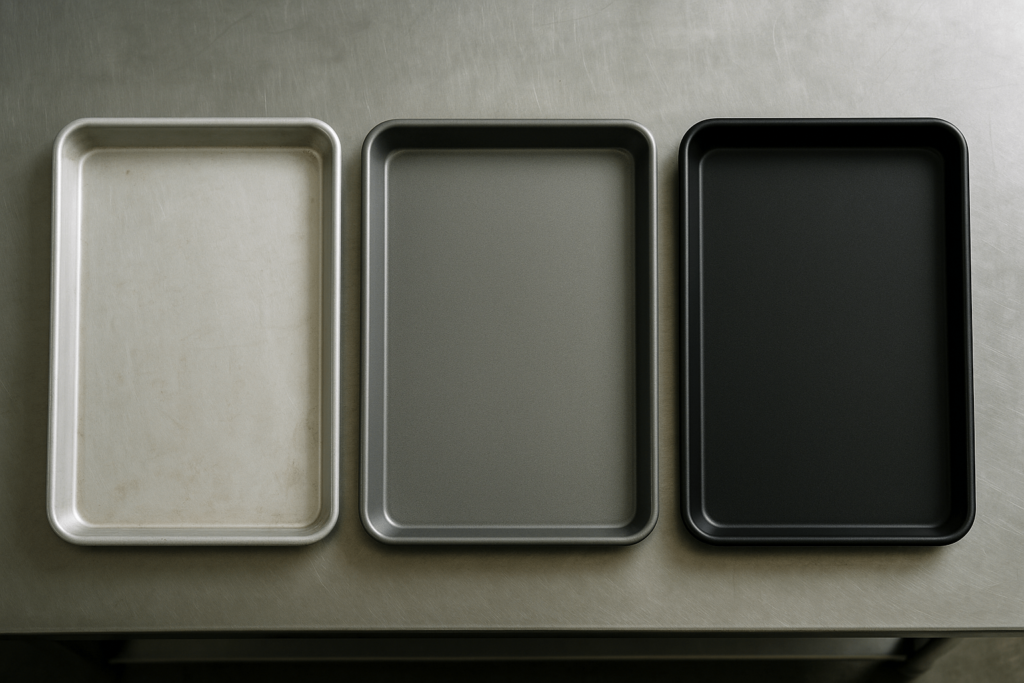
Before cleaning any aluminum pan, it is important to identify the surface type. “Aluminum bakeware” includes more than one material condition, and each reacts differently to heat, chemicals, abrasion, and dishwasher exposure.
Correct cleaning begins with understanding whether the pan is natural aluminum, anodized aluminum, or coated with a non-stick surface.
Natural Aluminum
Natural aluminum, often described as uncoated aluminum, is widely used in commercial bakeware because it offers strong thermal conductivity and good cost efficiency. Its high heat transfer helps support even baking and fast thermal response in repeated kitchen use.
However, natural aluminum is chemically reactive. Acidic foods, alkaline cleaners, and dishwasher detergents can attack the surface, causing discoloration, dulling, oxidation, or pitting. For this reason, handwashing is generally preferred when long-term durability and appearance matter.
Anodized Aluminum
Anodized aluminum has undergone an electrochemical treatment that thickens and stabilizes the natural oxide layer on the metal surface. Unlike a paint or polymer coating, this oxide layer becomes part of the aluminum itself.
This treatment makes the surface harder, more chemically stable, and more resistant to scratching than untreated aluminum. Anodized pans are therefore better suited to repeated commercial use, although they still require appropriate cleaning methods to avoid finish damage.
Non-Stick Coated Aluminum
Non-stick aluminum pans use a separate applied coating, commonly PTFE-based or ceramic-based, over the metal substrate. These coatings are the most sensitive surface type in routine cleaning.
Abrasive scrubbing, harsh chemicals, and overheating can shorten coating life significantly. Cleaning methods for these pans must focus on preserving the coating layer rather than aggressively removing surface residue.
| Property | Natural Aluminum | Anodized Aluminum | Non-Stick Coated |
|---|---|---|---|
| Thermal Conductivity | High (~237 W/mK) | High (Base Metal) | High (Base Metal) |
| Surface Hardness (HRC) | Low (~15 HRC) | Very High (up to 70 HRC) | Low (Coating is soft) |
| Reactivity | High | Lower / More Stable | Low (if coating remains intact) |
| Dishwasher Safe | No | Not Recommended | No |
The Diagnosis Lab: Identifying the Culprits
What Are the Common Stains Found on Aluminum Sheet Pans?
Effective cleaning starts with identifying what is actually on the pan surface. Aluminum bakeware can accumulate chemically different residues depending on heat level, detergent exposure, food type, and cooking frequency.
Brown sticky film, dull gray oxidation, and black carbonized crust are not the same contaminant. Treating them with the same cleaning method can either waste time or damage the pan unnecessarily.
Why Is There Sticky Brown Residue on My Aluminum Pans?
Sticky brown film is usually polymerized oil rather than simple grease. When cooking fats are repeatedly heated, they oxidize and form long-chain residues that bond tightly to the metal surface.
Because this residue behaves more like resin than loose oil, normal dish soap often removes only the surface layer. Over time, the buildup can darken the pan and affect both appearance and heat response.
Why Do Aluminum Pans Turn Gray After Dishwasher Use?
Gray or dark dulling after dishwasher use is typically the result of accelerated oxidation. Aluminum naturally forms a thin oxide layer, but strong alkaline detergents and repeated high-temperature dishwasher cycles make that layer thicken unevenly.
The result is a dull gray or darkened surface that is usually not hazardous, but it does change appearance, reduce surface brightness, and may signal ongoing chemical attack on natural aluminum pans.
What Causes Black Burnt Crust on Aluminum Pans?
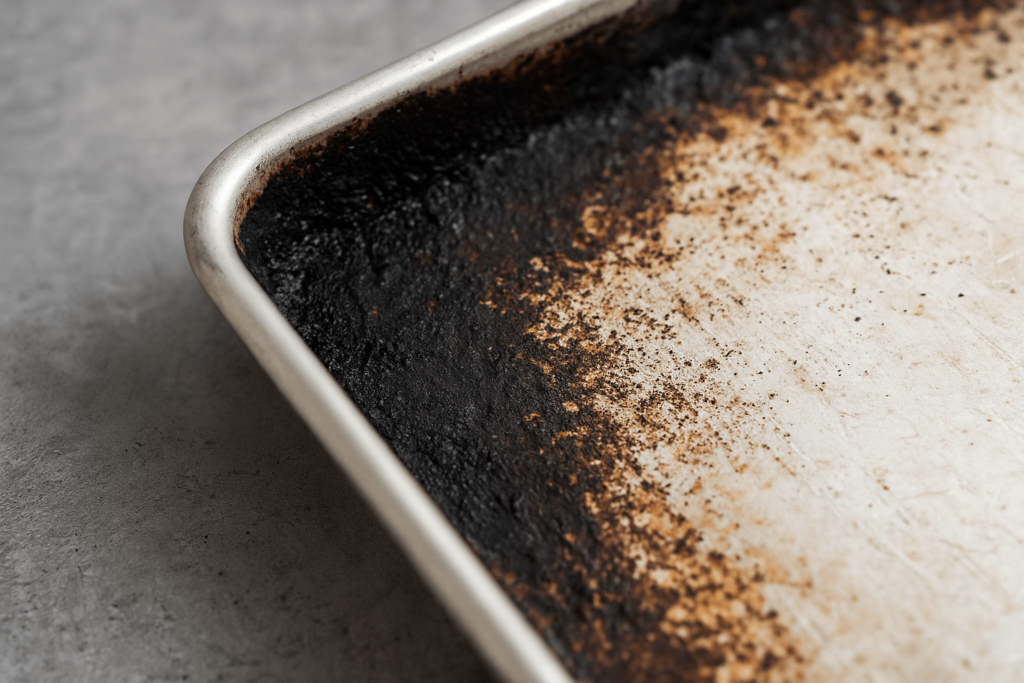
Black burnt crust is usually carbonized food residue or oil that has gone through repeated high-temperature decomposition. Once residue reaches this stage, it becomes chemically stable and much harder to remove than fresh grease.
This buildup is especially common in pans exposed to repeated baking cycles, high sugar loads, or conveyor-style commercial oven use. Because it bonds strongly to the surface, it usually requires a more targeted cleaning method than ordinary residue.
The Treatment Plan: Targeted Chemical Solutions
Once the stain type is identified, cleaning should match the residue rather than rely on aggressive scrubbing. The goal is to remove buildup while preserving the aluminum surface or coating.
For commercial kitchens and professional users, the best cleaning method is the one that restores usability without shortening pan life.
How to Remove Sticky Brown Film from Aluminum Bakeware
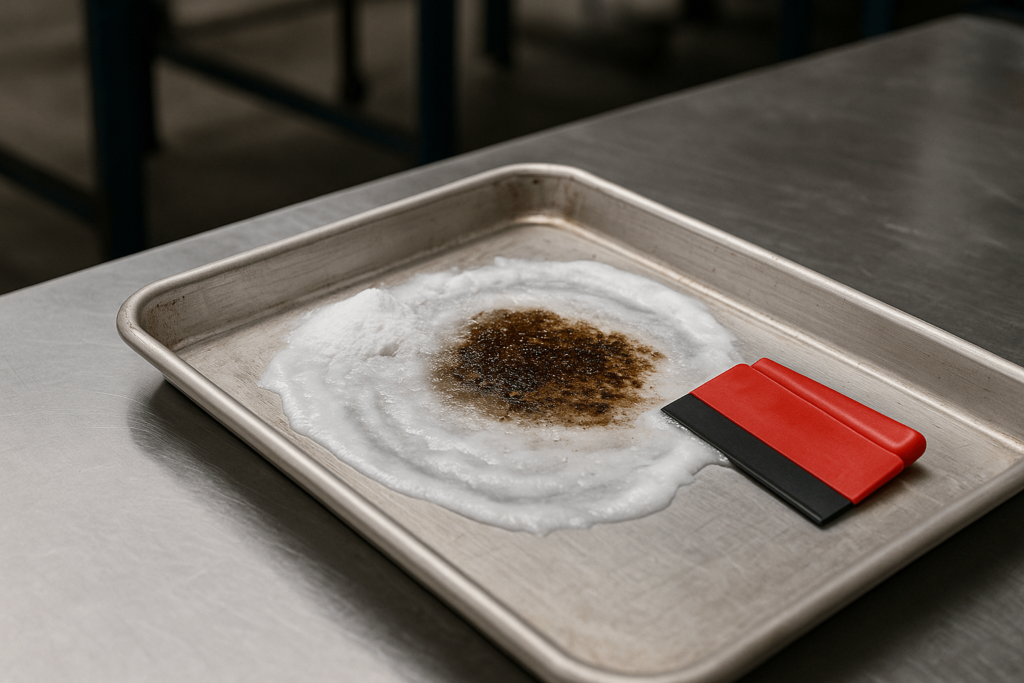
To remove polymerized oil safely, use a mild oxidizing and lifting method rather than metal scouring.
- Action: Hydrogen peroxide helps break down oxidized organic residue, while baking soda helps hold the mixture in place and adds light mechanical assistance.
- Procedure: Apply baking soda to the dry pan surface, add hydrogen peroxide to form a paste, and leave it in place for several hours. After soaking, remove softened residue with a plastic scraper or non-abrasive pad, then rinse thoroughly.
How to Restore Gray or Dull Aluminum Pans
When dulling is caused by oxidation, a mild acidic treatment can help dissolve the excess oxidized layer on natural aluminum.
- The Agent: Cream of tartar (potassium bitartrate).
- Action: The tartaric acid helps loosen and dissolve oxidation-related discoloration.
- Procedure: For uncoated aluminum only, add about 2 tablespoons of cream of tartar per quart of water and heat for 10–15 minutes. Let the pan cool, rinse thoroughly, and dry completely afterward.
How to Clean Burnt Black Aluminum Pans Safely
Heavy black carbon buildup often requires a stronger targeted cleaner than normal dishwashing.
- The Agent: Oxalic acid-based cleanser (for example, Bar Keepers Friend).
- Action: Oxalic acid helps loosen mineralized and carbonized residue that resists ordinary cleaners.
- Procedure: Apply the cleanser to a wet surface, leave it briefly, scrub gently with a non-abrasive pad, then rinse thoroughly.
- Warning 1: Do not use on non-stick surfaces.
- Warning 2: Test carefully on anodized aluminum, since finish changes are possible.
- Warning 3: Do not combine with steel wool or aggressive metal scrubbers.
Pro-Level Secrets: The Great Seasoning Debate
In some commercial kitchens, darkening on natural aluminum pans is not always treated as damage. In certain cases, it reflects a stable seasoned layer formed by repeated exposure to oil and heat.
This seasoning effect can reduce sticking and improve browning performance in some baking applications. However, it is only relevant to natural aluminum surfaces and should not be confused with uncontrolled carbon buildup, dishwasher oxidation, or coating damage.
For non-stick or anodized pans, this concept does not apply in the same way and should not be used as a justification for poor cleaning practice.
The Maintenance Bible: Protocols for Asset Longevity
Preventive care is more effective than heavy restoration. A small number of routine practices can significantly extend aluminum pan life and reduce replacement frequency.
The First Principle: Isolation is Key
Using parchment paper or silicone liners reduces direct food contact and slows residue buildup. This helps maintain surface condition and simplifies routine cleaning.
The Second Principle: Mitigate Thermal Shock
Rapid temperature changes can stress aluminum and contribute to warping. Avoid extreme transitions from very hot to very cold conditions whenever possible. Staff handling practices can have a major effect on pan lifespan.
The Third Principle: Eliminate Dishwasher Use
Dishwasher detergents and high temperatures accelerate oxidation and can damage both natural and coated aluminum surfaces. Handwashing remains the preferred maintenance method for preserving performance and appearance.
The Safety Bottom Line: When to Salvage, When to Scrap
Knowing when to restore a pan and when to retire it is important for hygiene, consistency, and operational safety.
- Gray or black oxidation on natural aluminum is usually cosmetic and not automatically unsafe.
- Surface scratching on natural or anodized aluminum is often manageable if sanitation is still possible.
- Damage to non-stick coatings is more serious because loss of coating integrity affects both function and food-contact reliability.
- Pitting is the clearest sign that a pan should be removed from service, because deep pits are difficult to sanitize and may continue to worsen over time.
FAQ: Answers to Common Aluminum Pan Care Questions
❓ Can I use vinegar to clean aluminum pans?
Vinegar is acidic and may etch natural aluminum if used repeatedly or at high concentration. Milder alternatives are generally preferred for controlled cleaning.
❓ How do I know if my aluminum pan is anodized?
Anodized pans usually have a harder, darker, and less reactive surface than untreated aluminum. They also tend to resist scratching better during normal use.
❓ What’s the best aluminum cleaner for burnt pans?
For heavy carbonized residue, oxalic acid-based cleaners are commonly used with caution. The correct choice depends on whether the pan is natural, anodized, or coated.
❓ Why shouldn’t I put aluminum pans in the dishwasher?
Dishwasher detergents and heat can accelerate oxidation, dull the surface, and shorten the usable life of aluminum pans.
❓ Is black discoloration on aluminum pans harmful?
Black or gray discoloration is often oxidation or carbonized residue rather than a direct safety problem. However, pitting or damaged coatings should be evaluated more carefully.
Conclusion: Partnering with a Metal Expert
Cleaning and maintaining aluminum pans is not just a matter of appearance. It depends on understanding surface type, stain chemistry, and how different cleaning agents interact with the metal.
A more effective care strategy begins with identifying whether the pan is natural, anodized, or coated, then choosing a cleaning method that removes residue without creating unnecessary surface damage.
For professional kitchens, bakeries, and foodservice buyers, this materials-based approach helps extend asset life, reduce replacement costs, and maintain more consistent cooking performance over time.