Cutting stainless steel isn’t about tools—it’s about consistency, material behavior, and downstream finish. Whether you’re sourcing 12,000 precision-cut vending machine panels or low-volume brackets for EV enclosures, the cutting method you specify affects tolerances, surface condition, and your entire QA pipeline.
This guide walks you through how industrial buyers should think about cutting stainless steel—beyond just “how to cut stainless steel sheet metal” or “how to cut stainless steel pipe”—from a supply chain and quality perspective.
For buyers comparing methods, the question often starts simply: how to cut stainless steel efficiently without defects.
Why Stainless Steel Is Different from “Steel”
Let’s address the search intent head-on: what is the difference between steel and stainless steel? Stainless steel isn’t just steel with shine. It’s alloyed (usually with chromium, sometimes molybdenum or nickel) to resist corrosion. That affects how it behaves when you cut it.
Harder, work-hardens faster: especially 300-series grades like 304 and 316.
Conducts heat poorly: heat builds up faster during mechanical or thermal cutting.
Has different edge oxidation behavior: especially critical for medical or visible parts.
Compared to mild steel, stainless dulls blades faster, is more prone to edge discoloration, and requires tighter thermal management. That’s why cutting stainless steel can’t be a generic process—it has to be tailored.
Step-by-Step: How to Cut Stainless Steel Properly — Ways to Cut Stainless Steel for Industry
Cutting stainless steel requires more than just the right tool—precision, heat control, and finishing prep are all part of the equation. Here’s a basic guide for manufacturers, OEM buyers, and engineers:
1. Identify the Grade and Thickness 304 is easier to cut than 316 or 430. Measure sheet or tube thickness before selecting a method.
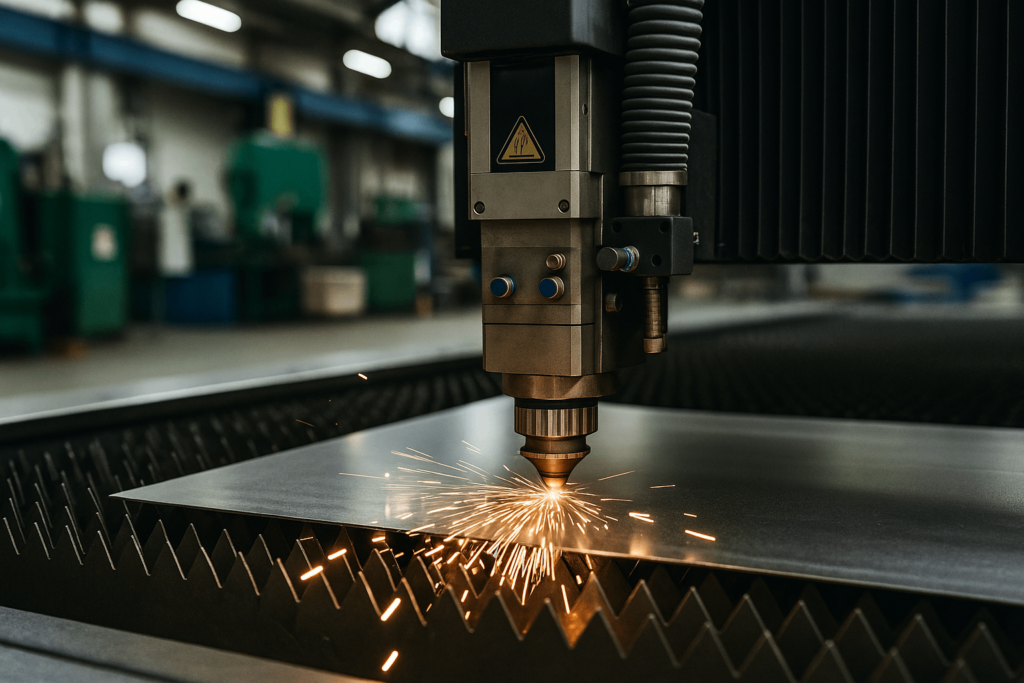
2. Choose the Right Cutting Method Laser cutting for clean edges, waterjet for heat-sensitive parts, mechanical shearing for fast batch cutting.
3. Secure the Material Use industrial clamps or fixtures to prevent vibration or warping during the cut.
4. Adjust Cutting Parameters Feed rate, assist gas (nitrogen for laser), water pressure (for jet), blade hardness—adjust based on material grade.
5. Perform the Cut Consistency matters. For bulk projects, automated CNC or fiber laser systems ensure repeatability.
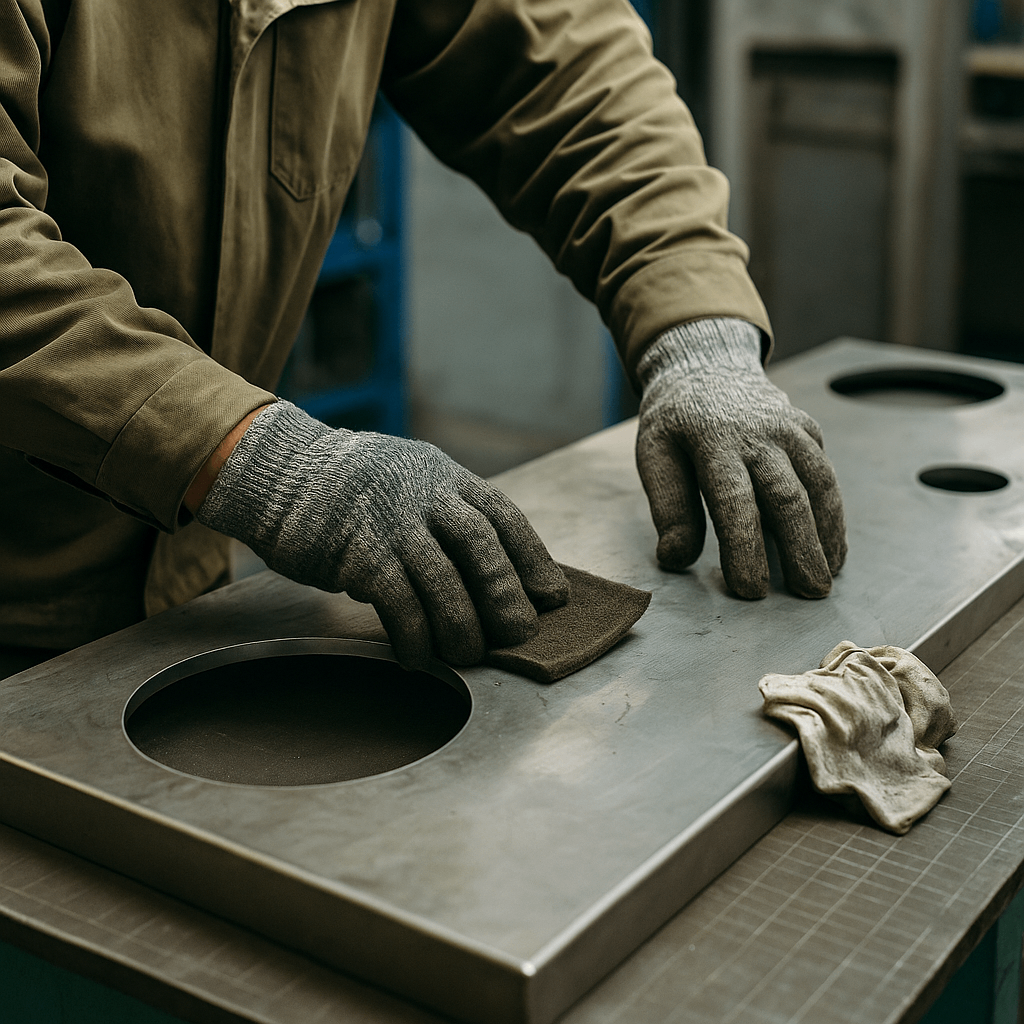
6. Finish the Cut Surface Deburr, clean, and (if needed) passivate to restore corrosion resistance. Surface prep is critical for powder coating or welding.
🔧 Pro Tip: Always cut along grain direction for easier forming post-cut.
Cutting Methods Comparison Table for Stainless Steel
Cutting Method
Best For
Advantages
Considerations
Fiber Laser
Thin to medium sheet (≤12mm)
Clean edges, fast, precise
May require assist gas (e.g. nitrogen)
Waterjet
Thick plate, heat-sensitive
No heat-affected zone, high precision
Slower, more costly for thin cuts
Mechanical Shear
Straight cuts in bulk
Fast, low cost per part
May warp thin stainless
Plasma (N₂)
Structural parts >10mm
Low cost, acceptable for coarse parts
Heat zone needs post-cleaning
EDM / Wire Cut
Precision components
Micron accuracy, no mechanical force
Slow, higher cost, used in aerospace
📌 Note: For tight tolerance projects (±0.05mm), fiber laser or EDM is highly recommended.
Not All Stainless Steel Is Equal
The cutting approach changes depending on grade, gauge, and surface finish requirements. Let’s break it down:
Stainless Steel Grade
Typical Application
Cutting Impact
304
General-purpose industrial
Easier to cut than 316, less corrosion resistant
316
Marine, food, medical
More corrosion-resistant, work-hardens quicker
430
Decorative, appliance
Ferritic; magnetic; can warp under heat
316L
Welded structures, medical
Lower carbon; slower feed rates to avoid warping
Cutting methods must be adjusted for each type. For example, 316 stainless steel requires better cooling during laser cutting due to its heat sensitivity.
✅ Bonus insight: Looking to powder coat stainless steel? You’ll need a cleaner cut edge and tight prep. Yes, stainless can be powder coated—but prep determines durability.
The Real Decision Tree for Cutting Stainless Steel
Most articles ask: “how do you cut stainless steel?” But that’s not the right question for industrial buyers.
Instead, ask:
What’s the part’s function? (Decorative vs. structural)
What’s the required tolerance? (±0.2mm? ±0.05mm?)
What’s the volume? (Prototypes? Batches of 10,000?)
What happens after cutting? (Bending? Welding? Anodizing?)
Each answer eliminates methods. If you’re cutting 1mm 304 for a welded medical cabinet, you probably need fiber laser with nitrogen assist—not plasma.
Best Way to Cut Stainless Steel: Pros & Cons of Each Cutting Method
Here’s how manufacturers choose cutting methods for stainless steel:
Fiber Laser Cutting
Best for: Thin to medium sheet metal (≤12mm)
Pros: Clean edges, low HAZ, high speed
Notes: Ideal for 304 and 316, especially where finish matters
Waterjet Cutting
Best for: Thick plate, heat-sensitive parts
Pros: No heat, no hardening, multi-layer cutting
Notes: Slower than laser, but precision is excellent
Shearing & Mechanical Cutting
Best for: Straight cuts on sheet/coil
Pros: Fast, low-cost per part
Notes: Can deform thin stainless without precise blade setup
EDM (Wire or Sink)
Best for: Precision cuts in hard or thick stainless
Pros: Micron-level accuracy
Notes: Slower, expensive, used for aerospace/medical
Plasma (with Nitrogen)
Best for: Structural stainless >10mm
Pros: Low cost
Notes: Heat-affected zone must be cleaned or passivated
What Happens After the Cut Matters More
Cutting stainless steel is only half the process. The post-cut condition affects welding, bending, powder coating, and even corrosion.
Post-Cut Operation
Why It Matters
Deburring
Sharp edges interfere with assembly and safety
Passivation
Removes heat tint & restores corrosion resistance
Forming / Bending
Requires consistent grain direction + clean edges
Welding
Edge prep affects fusion and contamination risk
✍️ Curious how to bend stainless steel tubing after cutting? Start with a clean edge and consistent radius. YISHANG forms thousands of stainless brackets monthly without microcracks.
Finish isn’t just cosmetic—it shapes product perception and determines compliance readiness.
Even with the right cutting tool, stainless steel can produce flawed results if common mistakes aren’t proactively avoided. From YISHANG’s experience supporting OEMs, here are cutting pitfalls that often compromise part integrity and production efficiency:
Wrong tooling material: Woodworking blades or low-grade cutters dull quickly and can discolor or warp stainless edges.
No lubrication/cooling: Dry cutting generates too much heat, hardens the edge, and causes microcracks. Always apply proper cutting fluid or mist cooling.
Excessive feed speed: Too-fast operation can cause blade chatter, poor edge quality, and burn marks—especially on thin gauge 304 or 316.
Improper clamping: Vibration during cutting leads to inconsistent tolerances and burrs. Sheet must be fixed evenly along both axes.
Cutting against the grain: Especially for parts that require post-cut bending, cutting across the grain weakens formability.
Neglecting edge prep for post-processes: A jagged or oxidized edge impairs welding, forming, and powder coating adhesion.
YISHANG includes cutting SOPs and QA documentation with every stainless fabrication project—so what you cut fits cleanly into your downstream workflow.
From experience with global OEMs, here are recurring problems:
Wrong blade or feed rate → chipping, edge hardening
Overlooking HAZ effects → bending or welding failure later
Specifying “cut only” without tolerances → inconsistent fit during assembly
Assuming all stainless behaves like 304 → 316L or 430 may need different cutting chemistry
📌 Need Ra < 1.6µm post-cut? Don’t just ask for “laser cutting”—specify a process path with finishing.
From Cutting to Supply Chain Asset
For stainless parts—whether 3in pipe or laser-cut control panels—what truly matters is repeatable quality at scale.
At YISHANG, cutting stainless steel means one thing: repeatable quality that meets compliance—batch after batch.
Our cutting solutions support your quality system with scalable, repeatable results. YISHANG ensures your stainless parts meet compliance, batch after batch. Whether you need to cut stainless steel sheet, pipe, or brackets, the method defines not only edge quality but also downstream performance.
FAQ
What is the difference between 304 and 316 stainless steel?
316 offers superior corrosion resistance; 304 is more machinable and budget-friendly. YISHANG guides your choice based on application lifecycle and environment.
Can stainless steel be powder coated?
Yes—but only if surface prep is exact. We use bead-blast and chemical pre-treatment to ensure bonding.
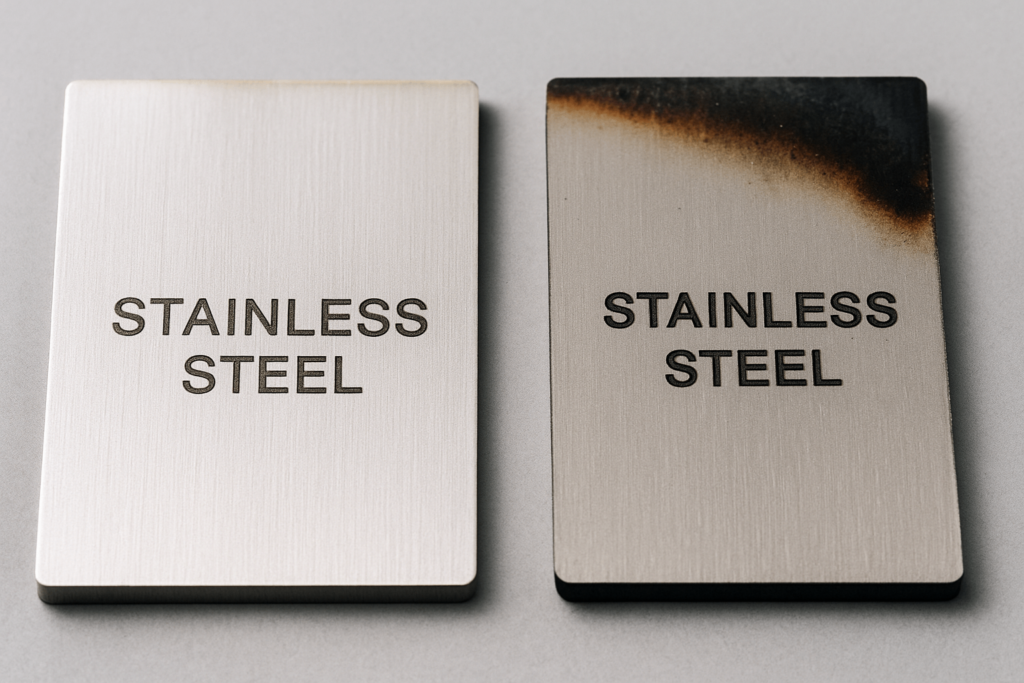
How do you cut stainless steel without discoloration?
To cut stainless steel without discoloration, the best method is use nitrogen-assist laser or waterjet. We maintain color-neutral edges even on mirror-finish parts.
What rod is used to weld stainless to mild steel?
Usually 309L filler. YISHANG also recommends MIG with tri-mix gas for dissimilar joints.
Can stainless steel be anodized?
Not in the conventional aluminum sense. But we use electrolytic tinting and PVD for color-tuning.
Have a more specific spec to discuss? YISHANG engineers can walk you through stainless solutions by use case.
If you have any questions or need a quote, please send us a message. One of our specialists will get back to you within 24 hours and help you select the correct valve for your needs.