Introduction: Why This Question Matters to Engineers and Procurement Teams
Magnetism in metals affects far more than just theoretical physics. For product engineers and bulk metal buyers, understanding whether a material like magnesium is magnetic can make or break design compliance, functionality, and safety. From medical imaging environments to precision electronics, the presence or absence of magnetism is a critical selection factor.
At YISHANG, a certified manufacturer of non-magnetic custom metal parts for global OEMs, we’ve supported thousands of projects requiring strict magnetic neutrality. In this article, we walk you through the science, the alloys, the testing methods, and the real-world purchasing implications of choosing magnesium in non-magnetic applications.
Is Magnesium Magnetic?
No, magnesium is not magnetic. It is a diamagnetic metal, meaning it slightly repels magnetic fields and does not attract magnets. This makes it safe for use in MRI machines, electronic housings, and EMI-sensitive designs.
Magnetism Explained: What Engineers and Buyers Need to Know
Before sourcing or specifying materials, it’s important to grasp basic magnetic behavior in metals. Magnetism arises from electron spin and atomic alignment.
Most metals fall into three magnetic categories:
Ferromagnetic: Strong attraction and magnetic retention (e.g., iron, cobalt, nickel)
Paramagnetic: Weak attraction, no magnetic retention (e.g., aluminum, lithium)
Diamagnetic: Weak repulsion from magnetic fields (e.g., magnesium, copper)
Magnesium is diamagnetic. Its atomic structure (no unpaired electrons) means it doesn’t support magnetic domain formation. The result: magnesium cannot be magnetized.
Takeaway: For OEMs designing EMI-sensitive systems, magnesium offers natural magnetic insulation.
Is Magnesium Magnetic? What the Data and Testing Say
From a technical standpoint, magnesium is not magnetic. It cannot retain or respond meaningfully to magnetic fields. Its magnetic susceptibility measures at −13.1 × 10⁻⁶, placing it firmly in the diamagnetic group.
Laboratory Validation
Using SQUID and VSM magnetometers, studies confirm magnesium’s non-magnetic nature across all tested temperatures and purities.
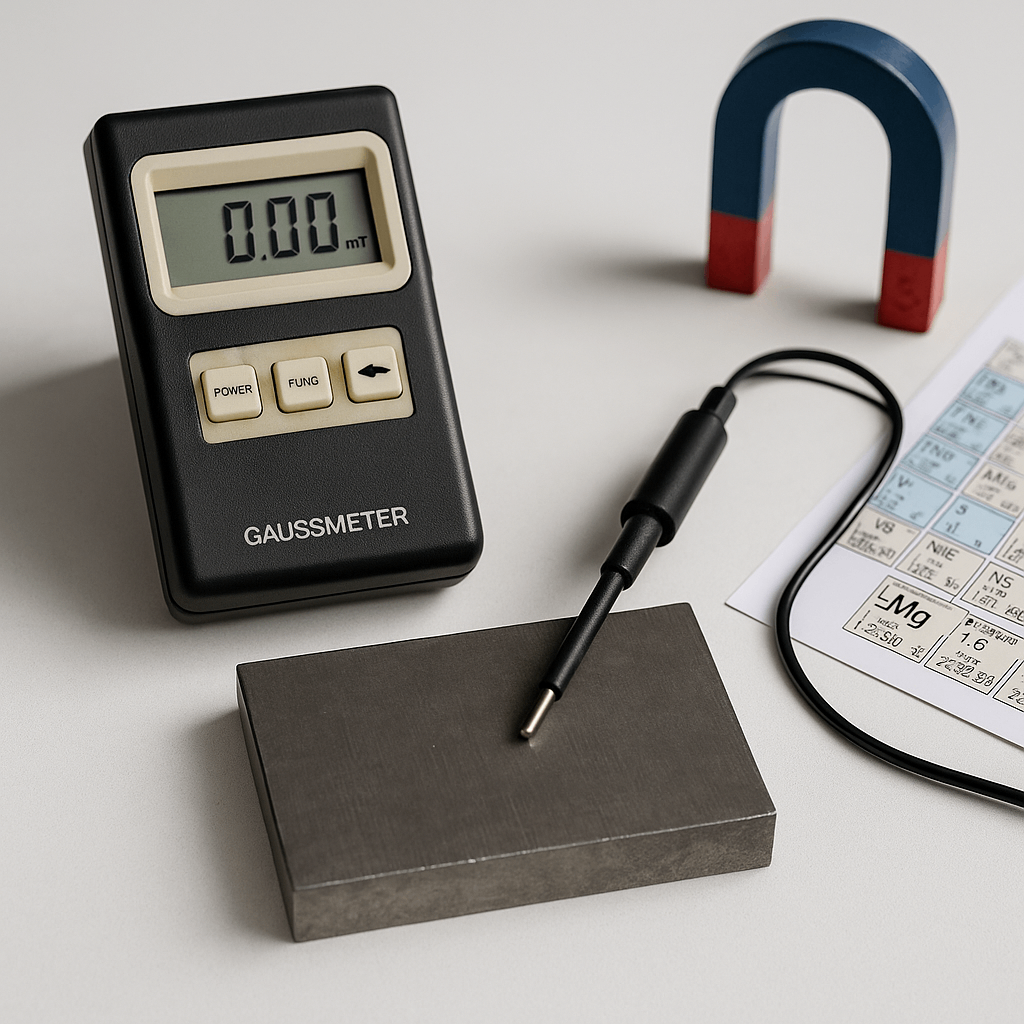
At YISHANG, we employ handheld magnetic permeability meters for on-site batch testing. For industries like aerospace and medical, even trace magnetism can compromise performance. We screen parts pre-assembly to ensure compliance.
Are Magnesium Alloys Magnetic? How Alloying Affects Magnetic Behavior
Most commercial magnesium components aren’t made from pure magnesium. They use alloys that improve formability or durability. However, certain alloying elements—especially iron and nickel—can introduce magnetic interference.
Even small additions (0.1%) of nickel or iron can significantly alter magnetic properties. For example, a Mg-Ni alloy used in battery frames could disrupt low-frequency shielding.
At YISHANG, we recommend AZ-series and rare earth alloys for all magnetic-sensitive enclosures. All alloy batches are tested via XRF and verified with 3rd-party labs.
Procurement Tip: Always request a magnetic compliance report before confirming large-quantity orders.
Magnetic Testing: What Fabricators Like YISHANG Actually Do
Specifications often mention “non-magnetic materials,” but verification is essential before mass production.
Common Testing Methods
Gaussmeter Field Mapping
ASTM A342 Magnetic Permeability Test
Batch Sorting + Visual/Tool-Based Spot Checks
YISHANG integrates magnetic evaluation into its pre-shipment inspection checklist. Especially for clients in energy storage, instrumentation housings, or MRI control arms, verifying every component’s magnetic status is standard protocol.
Where Magnesium’s Non-Magnetic Advantage Matters Most
Magnesium’s low weight and low reactivity are valuable. But what really differentiates it in procurement is its stable, predictable diamagnetic performance across industries.
Challenge: Steel and nickel-based metals distort magnetic fields
Solution: Magnesium AZ31 or ZE41 parts are routinely specified for systems near high-field imaging zones.
Aerospace & UAVs
Use-case: Sensor casing, drone navigation systems
Challenge: Embedded electronics are vulnerable to EM distortion
Solution: Non-magnetic magnesium alloys paired with shielding gaskets or EMI-rated finishes
Power Systems / EVs
Use-case: Battery housings, inverter cases
Challenge: Electrical noise needs to be minimized for system stability
Solution: Magnesium is used to help decouple electrical ground fields
Takeaway: In these sectors, selecting non-magnetic magnesium parts reduces regulatory risk and functional failure rates.
Factory Insight: What Buyers Overlook in Alloy Selection
At YISHANG, we’ve supported bulk procurement for clients in over 50 countries. A recurring issue? Clients selecting the right base metal but the wrong alloy variant.
Real-World Scenario
An EU medical device firm ordered generic magnesium sheets for robotic arms intended for MRI settings. Internal testing failed: mild magnetic behavior disrupted the control interface.
YISHANG re-evaluated the spec, switched to AZ31 alloy, and validated the new prototype via ASTM A342 and in-field simulated MRI scan. The result: full certification and 8% reduction in material cost due to correct sourcing.
B2B Tip: Don’t assume “magnesium” means “safe for MRI.” Always validate by alloy type and test certificate.
Quick Reference: FAQs on Magnesium’s Magnetism
Is magnesium attracted to magnets? No. It slightly repels magnetic fields (diamagnetic).
Can magnesium impact EMI design performance? If properly alloyed and tested, magnesium is EMI-friendly and safe.
What if my alloy contains trace nickel or iron? You may experience paramagnetic behavior. Use XRF or permeability testing to verify.
How do I confirm a batch is non-magnetic? Use ASTM A342, and ask your supplier to test pre-shipment using Gaussmeters or magnetic field probes.
Is magnesium better than aluminum for shielding? In low-frequency EMI zones, yes. Magnesium’s structure offers improved vibration damping and field absorption.
Magnesium is a reliable, light, and diamagnetic metal, ideal for EMI-critical industries. But when procured at scale, the specific alloy composition determines magnetic performance.
If you’re sourcing components for medical, defense, aerospace, or energy projects, validate every lot of magnesium parts for magnetic properties. Partner with fabricators like YISHANG, who embed testing into their workflows.
You’re not just sourcing a material—you’re investing in compliance, signal integrity, and long-term device reliability.
Need Certified Non-Magnetic Magnesium Parts?
YISHANG provides precision-fabricated magnesium and aluminum parts tested for EMI neutrality.
If you have any questions or need a quote, please send us a message. One of our specialists will get back to you within 24 hours and help you select the correct valve for your needs.