
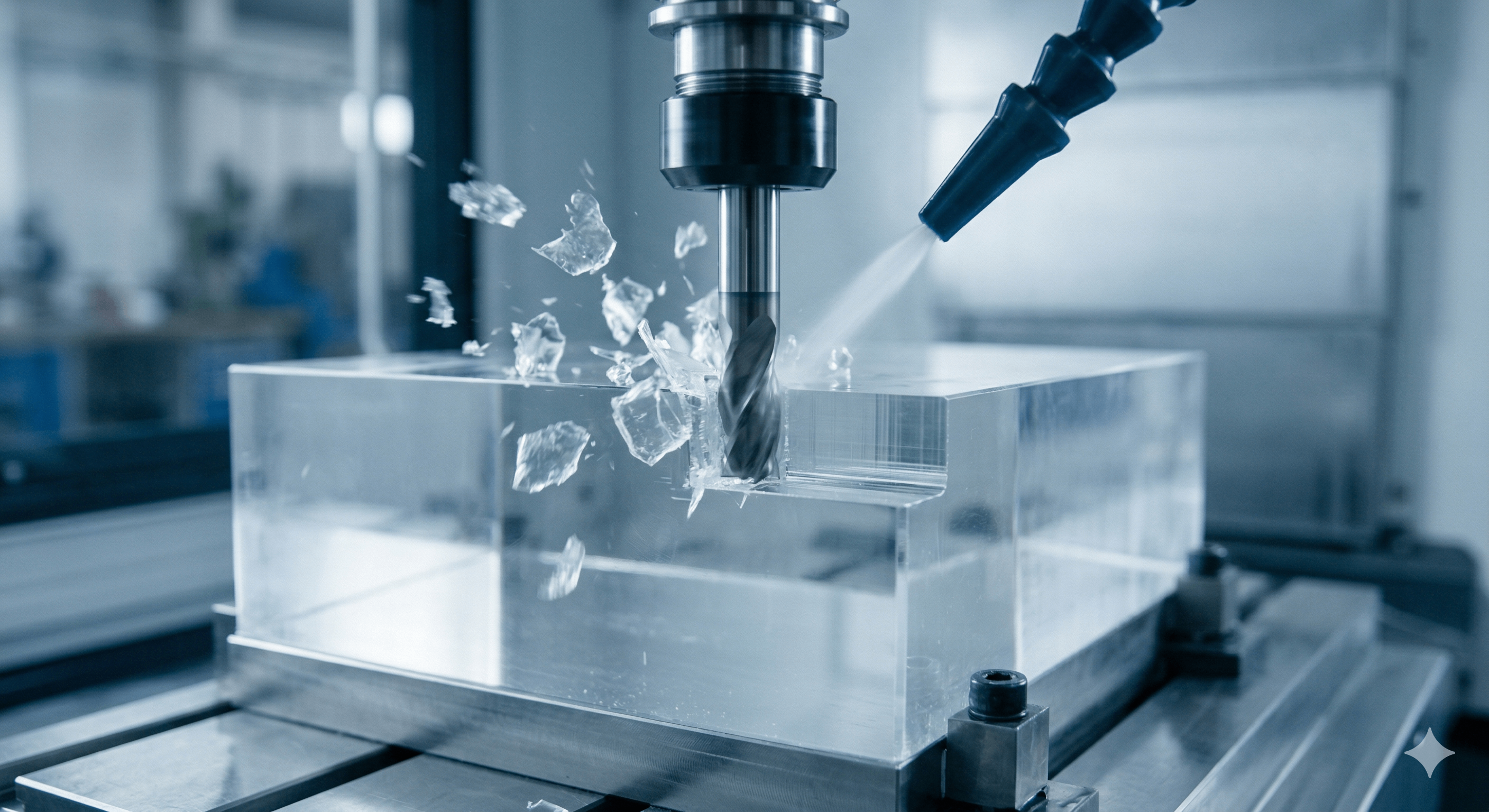
In the world of B2B manufacturing, Polymethyl Methacrylate (PMMA)—or simply acrylic—is often seen as a reliable stand-in for glass. It offers that coveted 92 percent light transmission and a weight that is easy to manage. But here is the reality we see at YISHANG: for our wholesale partners, procurement is never just about buying a plastic part. It is about a 5,000-piece order arriving on time, with every single unit matching the last. In the high-stakes world of junction box NEMA enclosures, a 1 percent failure rate is not just a minor hiccup; it is a full-blown supply chain crisis that no one wants to handle.
Whether you are looking for solar battery enclosures or custom push button housings, the fabrication process has to be grounded in something more than just basic cutting. Acrylic might be versatile, but it is notoriously sensitive to heat and unforgiving of a bad toolpath. After 26 years in the trenches of manufacturing, YISHANG has learned that consistent, industrial-grade results only come when you treat CNC machining as a science of balance rather than a brute-force operation.
I. The Science of Heat: Why Temperature is the Silent Deal-Breaker
Let’s be honest: the biggest fear for any procurement team is latent material failure. You get the parts, they look great, and then they fail in the field. The technical wall in acrylic machining often boils down to its Glass Transition Temperature (Tg), which sits at a surprisingly low 160 degrees Celsius. Unlike a stainless steel enclosure that pulls heat away through its atomic structure, acrylic is a thermal insulator. It holds onto that friction energy at the cutting edge, which, if you are not careful, creates a localized heat zone that can ruin an entire batch.
At YISHANG, our approach to avoiding this is what we call cold cutting. It is a philosophy of thermal displacement. We are constantly fine-tuning the balance between spindle speeds and feed rates to ensure that the heat generated by the cut is thrown out with the chips, not absorbed by the part. If the polymer reaches that gooey, viscous state, you get gumming on the tool. That is where tolerances go to die.
Managing this heat is perhaps the most vital step in ensuring the long-term life of an electrical meter box or junction box NEMA component. If the temperature swings too wildly during the cycle, the material develops internal tension. This tension might not show up immediately, but it often leads to cracking or chipping weeks after delivery. By using high-pressure air blasts and specialized cooling, we keep the work area stable. This proactive mindset is exactly what ensures your inquiry today results in a product that actually survives the harsh, high-temperature industrial environments it was built for.
II. Material Choice: Navigating the Gap Between Cast and Extruded
It is a common misconception in the industry that all acrylic is created equal. In reality, choosing the right raw material is a strategic decision that directly impacts your return rates. The differences between cast and extruded acrylic are profound, and understanding them is part of what we do at YISHANG. Cell cast acrylic, made by pouring monomer between glass plates, has a much higher molecular weight. It is stable, it machines beautifully, and it is our go-to recommendation for complex CNC drilling where optical clarity cannot be compromised.
Extruded acrylic is a different animal. It is great for large structural covers because its thickness is very consistent and the cost is lower. But, it carries a lot of residual stress from the way it was made. If you machine it without a deep understanding of its personality, you are going to see crazing—those tiny, annoying surface cracks—the moment it hits a cleaning agent. We look at your specific application, whether it is a light diffusing panel or an abrasion resistant shield, and we make sure the material actually fits the environment it will live in.
Our sourcing strategy for PMMA mirrors the rigor we apply to choosing carbon steel or galvanized steel for our enclosure aluminum projects. We only work with certified grades that meet RoHS and ISO 9001 standards. By understanding the molecular quirks of each variant, we help our clients avoid those invisible defects that often haunt low-cost suppliers. It is about making sure that every stainless steel enclosure with an acrylic window stays functional for its entire service life, even in solar battery systems exposed to the elements.
III. The DFM Guide: Thinking Ahead to Save Time and Money
In engineering-led procurement, a little bit of Design for Manufacturing (DFM) knowledge goes a long way. It is not just about reducing scrap; it is about optimizing the whole project. Unlike metals, acrylic has some very specific geometric rules that dictate its structural health. Our team at YISHANG prefers to get involved early, helping buyers refine their designs before a single chip is cut.
Corner Radii: Try to avoid sharp internal corners whenever possible. We generally recommend a minimum radius of 0.8mm (1/32 inch). Why? Because it spreads the stress. Sharp corners are where cracks like to start, and using a radius actually allows us to machine faster and smoother.
Wall Thickness: For things like junction box NEMA windows, you really want to maintain at least 1.5mm of wall thickness. Anything thinner, and you are inviting the material to warp or melt during high-speed passes. For those larger panels, you might even need a bit more thickness or some extra support just to keep things flat.
Achievable Tolerances: At YISHANG, we are comfortable hitting dimensional tolerances of plus or minus 0.125mm (0.005 inch) for standard milling. If we are talking about high-precision CNC turning, we can often get down to plus or minus 0.05mm (0.002 inch). These numbers are what make the difference when your acrylic part has to snap perfectly into a metal housing.
IV. The Physics of the Cut: Why Big Chips are Better
There is a bit of a counter-intuitive secret to cost-efficient acrylic machining: big chips are your friend. For wholesale buyers, efficiency is usually about the Material Removal Rate (MRR), but you can’t just crank up the speed. Our standard at YISHANG is built on the Big Chip theory. We use single-flute O-flute bits because they clear waste material almost instantly. Multi-flute bits—the kind you might use for a steel enclosure carbon project—just don’t have the evacuation space. They lead to bird-nesting, which stops production lines and ruins finishes.
We calculate our spindle speeds and feed rates to hit a very specific Chip Load. If your machine is throwing out fine dust, you are in trouble. It means the tool is rubbing, not cutting, and that creates friction melt. By keeping the feed rate high relative to the RPM, we produce thick, flake-like chips. These chips actually carry about 80 percent of the friction heat away with them. This is how we keep our pricing competitive on high-volume orders, like enclosure push button components, without losing that crystal-clear edge.
This logic extends to drilling as well. Acrylic is notoriously brittle when the drill bit exits the material. To stop that exit-hole chipping, we use peck drilling cycles and specialized bits with a 60-degree to 90-degree angle. It is a meticulous way of working, but it is why YISHANG is the preferred choice for complex control station enclosures. We take the time to calibrate these parameters for your specific material stainless steel or plastic hybrid needs, so you don’t have to worry about the details.
V. Beyond the Cut: Why Annealing is Non-Negotiable
Here is the thing about a freshly machined acrylic part: it can be deceptive. It looks perfect on the inspection table, but it might be a ticking time bomb of unreleased tension. Machining inevitably introduces mechanical stress. At YISHANG, we treat thermal annealing as a mandatory step for our high-precision wholesale work. By heating the parts and then cooling them slowly—at about 5 degrees Celsius per hour.
This is particularly important when you are comparing CNC machining to laser cutting. Lasers are fast, sure, but they leave a Heat Affected Zone (HAZ) that makes edges incredibly brittle. Our CNC process gives you perfectly vertical, square edges that are structurally sound. If you are building a junction box NEMA rated enclosure with a clear window, that square edge is going to give you a much more reliable seal than the tapered, stressed edge you get from a laser.
When it comes to the final look, we offer a few different paths. Vapor polishing is our top-tier solution, using solvent vapors to reflow the surface at a molecular level. It is the only way to go for medical-grade manifolds or high-end electrical meter box covers. For your standard industrial parts, flame polishing or mechanical buffing usually does the trick. By managing everything from the raw material to the final stress relief, YISHANG ensures your supply chain remains stable and predictable.
| Finish Type | Surface Roughness (Ra) | Primary Application |
|---|---|---|
| As-Machined | 1.6 to 3.2 micrometers | Industrial covers, hidden parts |
| Mechanical Buffing | 0.4 to 0.8 micrometers | Signage, external shields |
| Vapor Polishing | Less than 0.2 micrometers | Medical manifolds, meter boxes |
VI. The Assembly Advantage: Integrating Metal and Plastic
We are a metal fabrication house at heart, and that gives us a unique perspective on how acrylic fits into a larger system. We don’t just see the plastic; we see the whole assembly. For instance, in a solar battery enclosure, we know that steel and acrylic expand at different rates. If you don’t account for that coefficient of thermal expansion mismatch, that beautiful window is going to fail the moment it hits the sun.
Our clients in the aerospace, medical, and automotive sectors work with YISHANG because we manage those technical risks of integration. Whether it is choosing an abrasion resistant acrylic for high-traffic areas or implementing strict safety precautions for large-scale panels, we take an engineering-first approach. Our goal is simple: we want to deliver a finished assembly that fits perfectly, with no secondary adjustments needed on your end. It is about securing your supply chain so you can focus on the big picture.
Conclusion: Trust is Built on Precision
In B2B procurement, trust isn’t given; it is built through precision and consistency. By mastering the thermodynamics of the cut and prioritizing the long-term stability of the material, YISHANG provides a level of reliability that goes beyond simple shop work. 我们致力于用基于数据的流程和对批量一致性的承诺,来解决您最复杂的工程挑战。
If you are looking to optimize your supply chain with components that actually last, YISHANG is ready to help. Reach out to our team today for a technical consultation. Let’s talk about how we can make your next project a success, from the first chip to the final delivery.
Expert FAQ: A Quick Look at Acrylic Procurement
How does CNC machining compare to laser cutting for acrylic? CNC gives you perfectly square edges and avoids the brittle Heat Affected Zone that lasers create. It is generally the better choice for structural solar battery applications where durability matters.
What safety precautions are necessary during machining? Chip management is everything. We use high-pressure air and specialized workholding at YISHANG to keep the operator safe and the part intact. Static control is also a major factor we handle on the floor.
How do you stop acrylic from melting during the cut? It all comes down to the Chip Load. You want to aim for roughly 0.1mm to 0.25mm per tooth. If you are cutting large chips, the heat goes out with the waste. If you are rubbing the material, it melts. It is that simple.
What is the main difference between cast and extruded acrylic? Think of it as stability vs. cost. Cast acrylic is more stable and clear, perfect for high-precision work. Extruded is more affordable but requires very careful stress management to avoid cracking later on.