
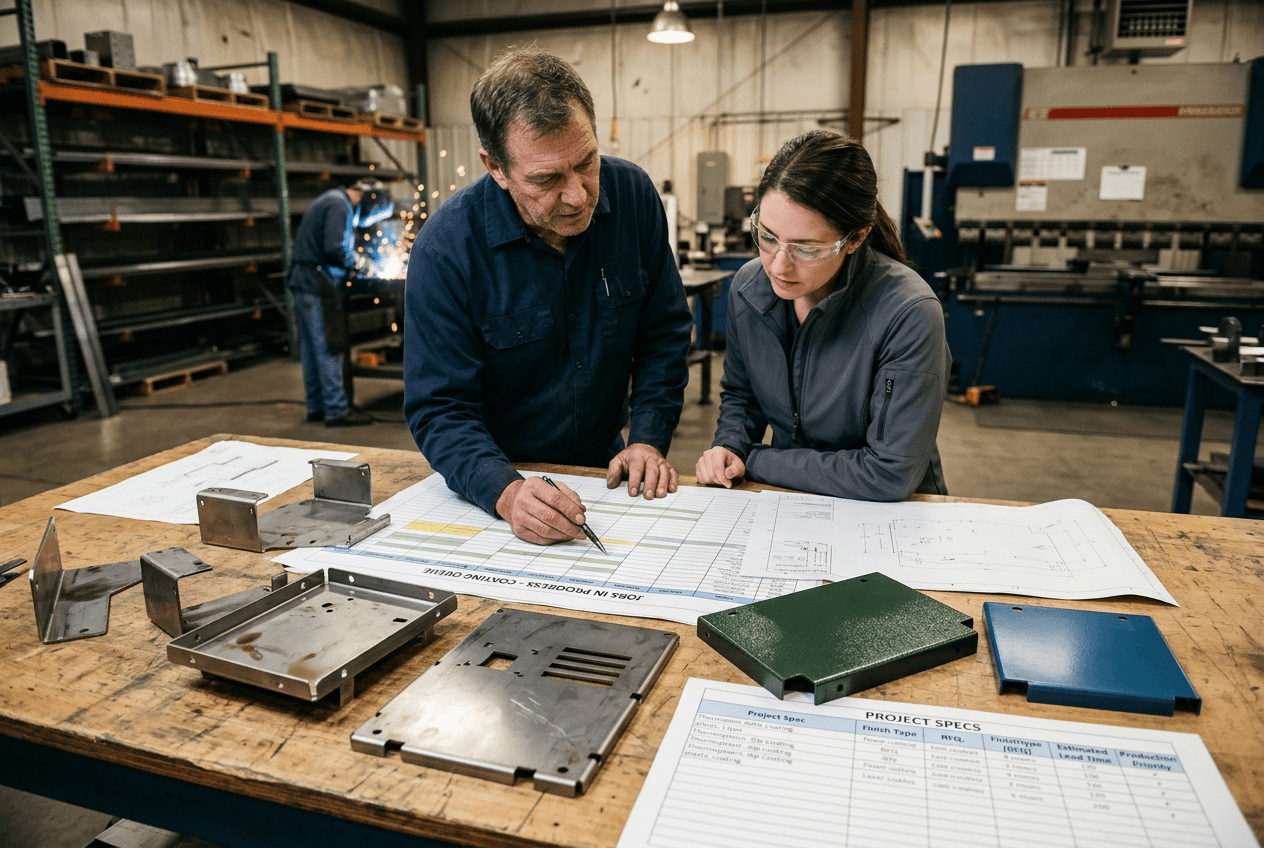
An OEM buyer requests 300 laser-cut and bent steel housings for outdoor equipment. The RFQ says “black plastic coating for metal, outdoor use.” The drawing shows hole locations, bends, and visible faces. It does not define the coating process, thickness range, masking areas, salt spray target, grounding points, approval samples, or final assembly clearances.
Three suppliers quote the project. One prices a standard polyester powder coating. Another assumes a thicker PVC-type coating. A third adds time for pretreatment, masking, and sample approval. The cheapest quote looks attractive, but the quotes do not describe the same product.
This is the procurement risk that drives most coated sheet metal problems. The buyer compares unit prices before the coating assumptions match. That gap then moves into fabrication, finishing, inspection, and assembly. Holes close up. Doors bind. Gloss does not match the approved product. The coating subcontractor asks for test panels after the PO. Shipment waits while teams decide what the RFQ should have said earlier.
For custom sheet metal fabrication, plastic coating affects more than appearance. It can change cutting allowances, bend and weld planning, pretreatment, fixtures, masking, inspection, packaging, and batch release. Buyers do not need to become coating engineers. They do need to remove the assumptions that make quotes non-comparable.
Ambiguous Coating Wording Makes Supplier Quotes Look Comparable When They Are Not
The phrase plastic coating for metal can mean different finishing routes. Many buyers use it to describe powder coating. Others mean PVC dipping, PE coating, PTFE coating, nylon coating, or a rubber-like protective layer. These processes do not carry the same thickness, cure temperature, edge behavior, cost, or schedule risk.
A supplier that reads the RFQ as decorative powder coating may quote a short lead time. Another supplier may include blasting, primer, thicker film build, sample panels, and outsourced coating capacity. Procurement sees a price difference, but the real difference sits in the hidden assumptions.
The risk starts before production. If the RFQ only says “black plastic coating,” the supplier must guess the function. Does the coating protect against corrosion? Does it provide electrical insulation? Does it need a soft touch? Will users see the surface every day? Should the finish match an existing enclosure line? Each answer changes the coating route and the inspection plan.
Process assumptions change the quoted scope
A small electronics enclosure may need a clean black textured powder coat with controlled cosmetic faces. A wet-area display rack may need a thicker coating to protect wire joints and exposed edges. A bracket near chemicals may need a coating system with better resistance than a standard decorative finish.
If procurement does not state the intended function, suppliers protect themselves in different ways. Some quote the minimum likely scope. Others add contingency for coating trials and rework. Neither approach gives the buyer a clean comparison.
The RFQ should name the coating process when engineering already knows it. If the process remains open, the RFQ should describe performance instead. Useful details include service environment, expected color, gloss or texture, coating thickness target, corrosion requirement, chemical exposure, cosmetic priority, and any reference sample.
Yishang often reviews drawings for coated enclosures, brackets, panels, and welded assemblies before quoting. That review matters because the finishing assumption can change the fabrication route. A quote for raw sheet metal plus simple color coating does not equal a quote for a controlled coating system with masking, testing, and assembly checks.
Missing Finish Details Can Shift Cost and Lead Time After the PO
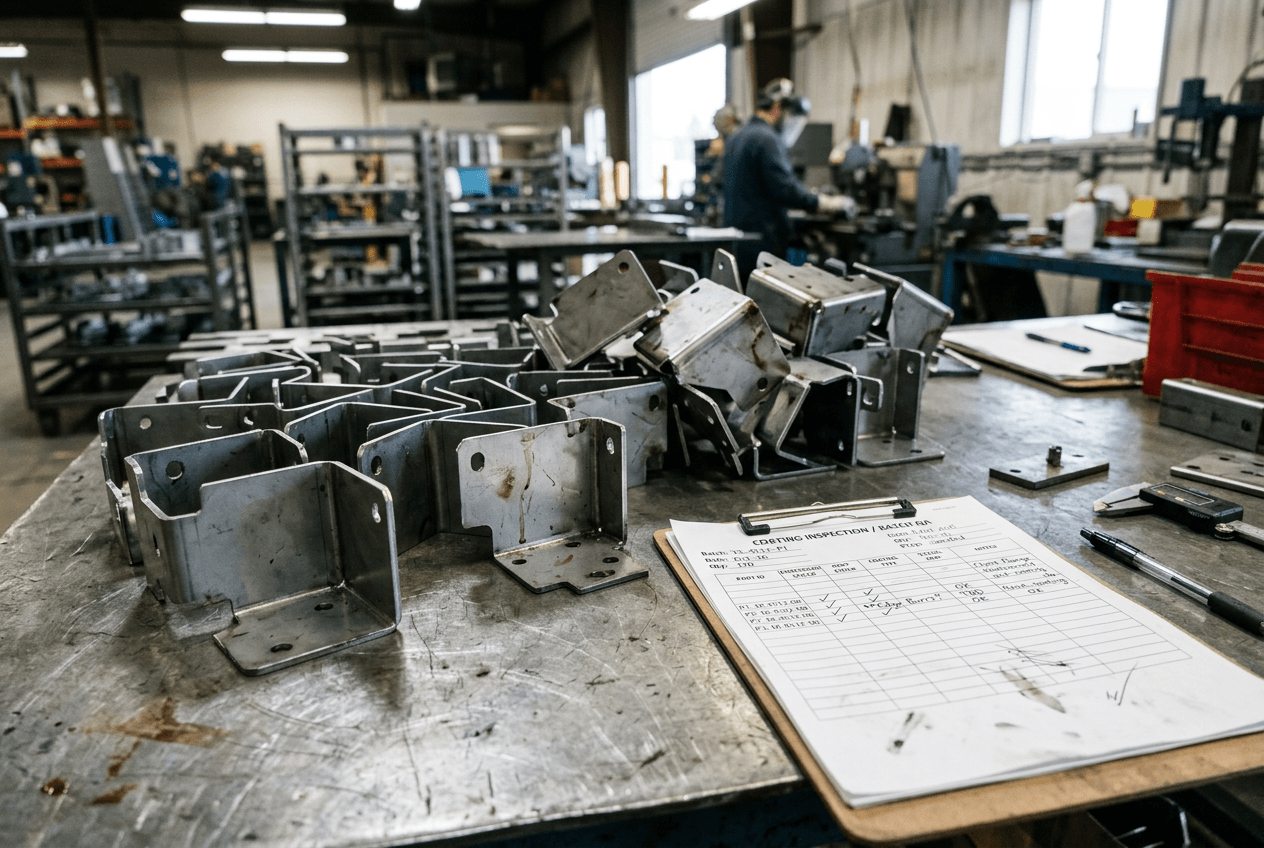
Late finish decisions create a costly chain reaction. The buyer releases drawings. The supplier cuts, bends, welds, and grinds parts. Then someone asks for higher outdoor resistance, a different gloss, a thicker coating, or a salt spray target. At that point, the team cannot treat coating as a simple last step.
Pretreatment may need to change. The parts may require degreasing, sanding, blasting, phosphating, conversion coating, primer, or tighter cleaning control. Welded parts may need extra grinding around corners and seams. Frames may need drainage or hanging points. Large cabinets may need fixtures that prevent marks on visible faces.
The unit price may rise, but schedule damage often hurts more. Coating material may not be available. The finishing line may require a different queue. A subcontracted coating process may need sample coupons before accepting the batch. Inspection may need gauges, coating thickness checks, adhesion tests, or salt spray testing.
Outdoor brackets show how a small omission grows
Consider a set of wall-mounted steel brackets for outdoor equipment. The RFQ requests black plastic coating and a delivery date in four weeks. The drawing shows hole positions and bend angles, but it does not mention the site environment. The supplier prices standard powder coating after normal cleaning.
After the PO, the buyer’s engineering team confirms coastal exposure. They now want stronger corrosion resistance and a documented test result. The supplier must add pretreatment, review primer options, prepare coated samples, and confirm the test method. Production may already be underway, but the finish plan no longer matches the quote.
This delay did not start in the coating booth. It started when the RFQ separated “finish” from “use condition.” Procurement can avoid the problem by asking one practical question: what must the coating survive? Indoor storage, outdoor rain, coastal air, frequent handling, chemicals, and abrasion all create different expectations.
Welded frames add another timing trap
A welded equipment frame may pass raw metal inspection. After coating, weak surface preparation becomes visible. Weld spatter, sharp edges, trapped oil, and uneven grinding can cause pinholes, bubbles, or poor coverage. If the buyer rejects the coated frame, the supplier may need to strip, regrind, recoat, or remake parts.
To prevent that chain, the RFQ should connect welding quality to coating quality. Buyers should mark cosmetic weld zones, exposed edges, and surfaces that cannot show grinding waves. They should also state whether coating approval happens before or after assembly trials.
Coating Buildup Turns Good Raw Parts Into Bad Assemblies
Many coated sheet metal disputes begin with one sentence: “The parts measured correctly before coating.” That may be true. It may also be irrelevant if the final assembly depends on after-coating dimensions.
Plastic coating adds thickness. The effect varies by process, geometry, and access. Powder coating often adds a moderate film. Dipped or thicker polymer coatings may add much more, especially at edges, corners, and hanging points. Small holes, slots, tabs, flanges, hinges, weld nuts, and mating faces can all behave differently after coating.
The RFQ risk appears when drawings define dimensions but do not state whether tolerances apply before or after coating. Suppliers then inspect raw parts, finish them, and discover that the coated condition no longer supports assembly.
Enclosure lids and door gaps expose the gap
A buyer orders custom steel enclosures with removable lids. The raw enclosure body fits the lid during prototype review. After coating, the lid feels tight because coating builds on the flange and mating edge. Screws still enter the holes, but the lid no longer closes smoothly. The buyer sees an assembly failure. The supplier sees an undefined coating allowance.
The same issue affects cabinets with hinges, access panels, and locks. A small film build on both mating surfaces can change door swing and latch force. If the drawing only controls raw metal, inspection cannot answer the real question: will the coated assembly work?
Procurement should ask engineering to mark fit-critical surfaces. The drawing or RFQ should state which dimensions apply after coating, which holes need clearance after coating, and which areas need masking. This creates a quoteable scope. It also prevents a supplier from pricing a standard coating while another prices detailed masking and final fit inspection.
Threads, grounding points, and inserts need early decisions
Coating can block threads, reduce hole diameter, cover grounding points, and interfere with rivet nuts or weld nuts. A control box may require bare metal contact for grounding. A bracket may need bolts to pass freely after coating. A panel may need studs to remain usable without re-tapping.
Each solution affects cost and lead time. The supplier may mask areas with plugs, caps, or tapes. They may chase threads after coating. They may enlarge holes before coating. They may add a post-coating inspection gauge. These steps take time, and they should appear in the quote.
Yishang’s drawing review for laser cutting, bending, welding, and assembly can flag these coating-sensitive features before production starts. That does not eliminate all fit risk, but it helps buyers compare quotes on the same functional basis.

Prototype Approval Fails When It Approves Appearance but Not Batch Rules
A coated prototype helps, but it can create false confidence. One sample may receive extra hand finishing, careful hanging, slow curing, and special packing. Batch production introduces more variation. Parts move through cutting, bending, welding, grinding, pretreatment, coating, curing, cooling, inspection, and packaging at normal production speed.
If the buyer only approves a photo or one hand-finished sample, the supplier still lacks rules for the batch. Which surface is cosmetic? What coating thickness range is acceptable? How much orange peel, edge buildup, or minor mark can pass? Which hidden faces matter less? How will parts be packed to protect visible areas?
These questions shape release time. Without clear criteria, inspection becomes subjective. The supplier may hold shipment while waiting for buyer approval. The buyer may reject parts that meet the supplier’s assumed standard but not the buyer’s product expectation.
Cabinet doors need more than color approval
Imagine 1,000 powder-coated cabinet doors. The buyer approves a black sample panel. The first article looks good under office light. Batch production then shows slight texture variation between doors, and some hidden hinge flanges have small rack marks. The visible front faces look acceptable, but the RFQ never defined acceptance rules.
The shipment now waits. The buyer asks for sorting. The supplier asks which marks matter. Both sides lose time because the prototype approval covered color but not production reality.
A stronger approval record includes the coating route, color reference, gloss or texture range, cosmetic face map, thickness range, masking plan, packaging method, and inspection sample size. For parts used outdoors or in harsh environments, the record may also include adhesion testing, salt spray testing, or other agreed checks. Those tests need calendar time, so procurement should include them before confirming the delivery date.
Batch consistency also depends on packaging. A plastic-coated surface may scratch or rub during transport, especially on frames, racks, and panels with protruding corners. Buyers who need a flawless visible surface should define packing expectations before coating starts, not after cartons arrive.
A Comparable RFQ Turns Coating Risk Into Quoted Work
Procurement cannot remove every technical risk, but it can stop suppliers from quoting different assumptions. A strong RFQ makes coating requirements visible enough for suppliers to price the same work. It also shows which issues still need engineering confirmation before production.
The RFQ should connect finish to function. For a visible retail frame, define the cosmetic faces and handling expectations. For an outdoor bracket, state the exposure and corrosion target. For an electronics enclosure, mark grounding points, threaded features, and lid fit. For a welded assembly, define weld cleanup where coating will reveal defects.
Drawings should include material grade and thickness, part quantity, tolerance requirements, and finish notes. Procurement should also send assembly drawings, photos of existing products, color references, and packaging expectations when available. If the coating type has not been selected, say so clearly. Ask suppliers to quote options instead of guessing.
Cost drivers then become easier to see. Pretreatment, masking, coating thickness control, special color matching, sample panels, inspection reports, outsourced coating, re-tapping, and protective packaging all cost money. More importantly, they consume time. A cheap quote that excludes these items may fail when the buyer requests them later.
Supplier communication should confirm the finish route before cutting starts. Ask whether the coating changes fabrication allowances, hole sizes, bend clearances, weld cleanup, fixtures, inspection, or assembly testing. If the answer is yes, those items belong in the quote and schedule.
If you are sourcing coated sheet metal parts, send your drawings, material requirements, quantities, tolerances, finish expectations, assembly notes, and target delivery date to Yishang. Include coating type if known, or describe the environment and performance requirement. Yishang can review RFQ assumptions across fabrication, finishing, prototyping, assembly, and batch production before you commit to a supplier schedule.
Frequently Asked Questions
What should OEM buyers prepare before requesting a sheet metal fabrication quote?
Buyers should prepare drawings, material grade, sheet thickness, quantities, tolerance notes, finish expectations, and any assembly or inspection requirements. The clearer the RFQ, the fewer assumptions the supplier needs to make during quoting.
Why do sheet metal fabrication quotes vary between suppliers?
Quotes often vary because suppliers make different assumptions about tolerances, material yield, finishing steps, welding complexity, inspection needs, packaging, and lead time. A detailed RFQ helps buyers compare quotations on the same technical basis.
How can tolerance requirements affect fabrication cost?
Tight tolerances may require more controlled cutting, forming, fixturing, inspection, or secondary work. Buyers can control cost by separating fit-critical dimensions from non-critical dimensions instead of applying tight tolerances everywhere.
When is a prototype recommended before batch production?
A prototype is useful when the part has tight fit-up, visible surfaces, welded assemblies, complex bends, or mating components. It helps confirm manufacturability, assembly behavior, and finish expectations before larger quantities are produced.
What surface finish details should be included in an RFQ?
Buyers should specify finish type, color, coating thickness if required, cosmetic surfaces, corrosion expectations, masking areas, and any visual acceptance standard. This avoids finish-related rework or quote changes later.
How can Yishang support custom sheet metal fabrication projects?
Yishang can review drawings, clarify fabrication requirements, discuss materials and finishes, support prototypes, and prepare for batch production based on the buyer’s RFQ details.