
Finding the right sheet metal fabrication shop is a critical decision for engineers, sourcing managers, and OEM project owners. Whether you need precision brackets, electrical enclosures, or custom industrial components, your choice of supplier directly impacts quality, lead time, and cost efficiency. This guide will help you navigate the technical considerations, sourcing risks, and supplier selection criteria to ensure your project succeeds.
What Does a Sheet Metal Fabrication Shop Do?
A sheet metal fabrication shop specializes in transforming raw metal sheets into engineered parts and assemblies. Using processes like laser cutting, CNC punching, bending, welding, and finishing, these shops produce everything from simple brackets to complex housings for industrial applications.
Key capabilities include:
- Material processing: Cutting and shaping stainless steel, aluminum, cold-rolled steel, and galvanized steel.
- Precision manufacturing: Achieving tight tolerances for critical components.
- Surface treatments: Powder coating, anodizing, and polishing for corrosion resistance and aesthetics.
- Assembly: Riveting, tapping, and welding for complete assemblies.
These capabilities make sheet metal shops indispensable for industries like electronics, automotive, aerospace, HVAC, and industrial equipment manufacturing.
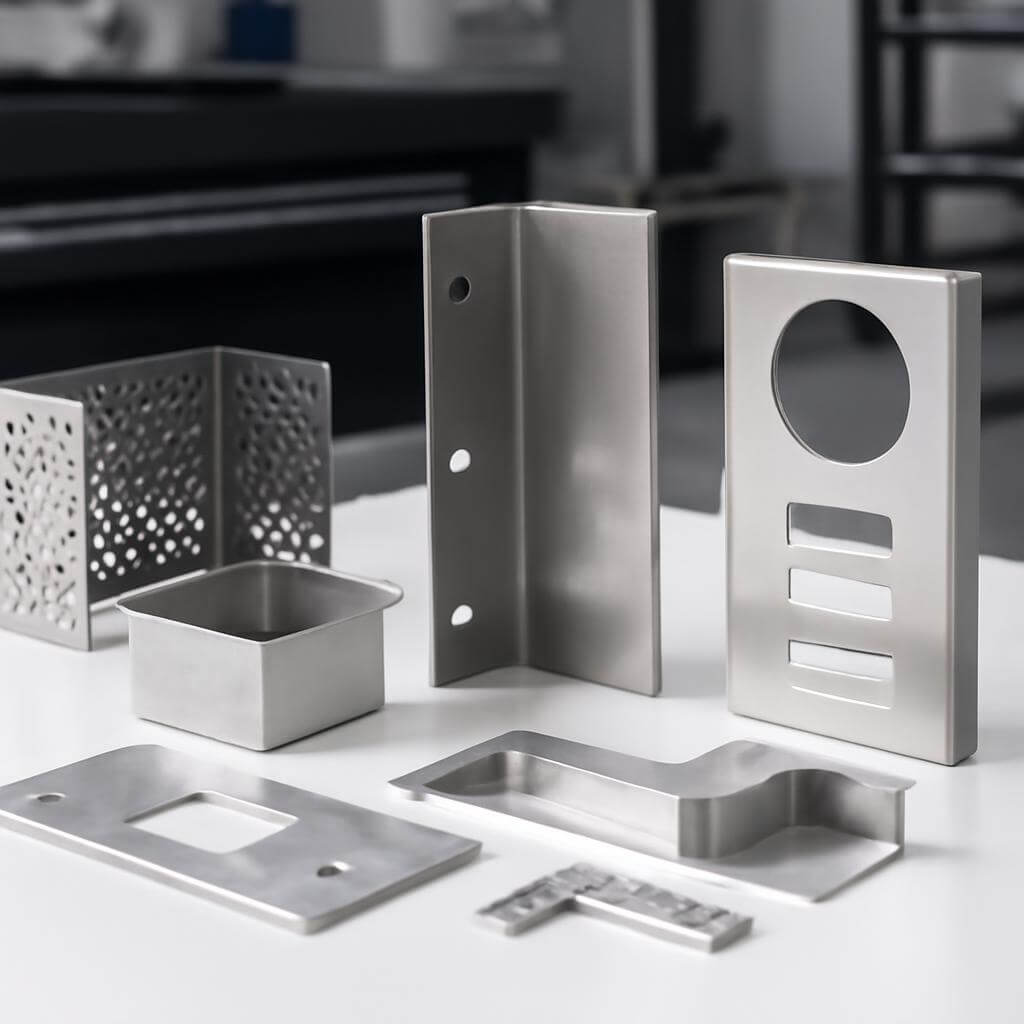
Key Materials and Processes in Sheet Metal Fabrication
Material Options
Choosing the right material is foundational to your project’s success. Each material offers distinct advantages:
- Stainless Steel: Ideal for corrosion resistance and strength in demanding environments.
- Aluminum: Lightweight and resistant to oxidation, suitable for aerospace and electronics applications.
- Cold-Rolled Steel: Economical and easy to machine, perfect for structural components.
- Galvanized Steel: Combines strength with rust protection for outdoor applications.
Core Manufacturing Processes
Sheet metal fabrication involves several critical processes:
- Laser Cutting: High precision and clean edges for complex geometries.
- CNC Punching: Efficient for repetitive hole patterns and medium-volume production.
- Bending: Achieves custom angles and shapes with tight tolerances.
- Welding: Ensures structural integrity for assemblies.
- Finishing: Powder coating or anodizing enhances durability and appearance.
Combining these processes strategically can reduce costs and improve manufacturability.
Application Scenarios and Industry Use Cases
Sheet metal fabrication is essential in industries requiring durable, precise, and custom-engineered components. Common applications include:
- Electrical Enclosures: Protect sensitive electronics in industrial and outdoor settings.
- Control Cabinets: Secure housing for automation systems.
- HVAC Components: Ductwork and brackets for heating and cooling systems.
- OEM Equipment Housings: Custom designs for proprietary machinery.
For example, a custom sheet metal shop like Yishang can manufacture kiosks with integrated electronics, laser-cut panels for precision assembly, or powder-coated brackets for outdoor installations.
Cost Drivers and How to Optimize Your Project
Several factors influence the cost of sheet metal fabrication:
- Material Choice: Stainless steel and aluminum are more expensive than cold-rolled steel but may be necessary for certain applications.
- Complexity: Intricate designs with multiple bends or tight tolerances require advanced machinery and skilled operators.
- Volume: Higher production volumes often reduce per-unit costs due to economies of scale.
- Finishing: Powder coating and anodizing add cost but improve durability and aesthetics.
To optimize costs, work with your supplier to simplify designs, minimize secondary operations, and standardize features wherever possible. As one manufacturing engineer notes, “Early design decisions often determine cost, assembly efficiency, and long-term consistency.”
Common Mistakes and Sourcing Risks
Buyers often encounter challenges in sheet metal fabrication due to avoidable mistakes:
- Unclear Tolerances: Ambiguous specifications can lead to misaligned parts or assembly issues.
- Overdesign: Excessive complexity increases costs without adding functional value.
- Poor Supplier Communication: Miscommunication about material, finish, or lead time can derail projects.
Mitigate these risks by providing clear RFQs, collaborating on design-for-manufacturability, and verifying supplier capabilities.
How to Choose a Reliable Sheet Metal Fabrication Shop
Selecting the right supplier is critical. Look for the following attributes:
- Engineering Support: Can the supplier assist with design optimization?
- Quality Control: Are inspections and certifications in place?
- Lead Time Stability: Does the supplier have a proven track record of timely delivery?
- Finishing Consistency: Are surface treatments uniform across batches?
Yishang, for example, offers end-to-end support from prototyping to mass production, ensuring reliable outcomes for custom sheet metal projects.
Conclusion
Choosing the right sheet metal fabrication shop requires careful evaluation of materials, processes, and supplier capabilities. By partnering with a trusted manufacturer like Yishang, you can reduce sourcing risks, optimize costs, and ensure high-quality results for your custom projects. Contact Yishang today to discuss your specifications and start turning your designs into reality.
FAQs
- What material is best for this application?
Material choice depends on factors like corrosion resistance, strength, and cost. Stainless steel is ideal for harsh environments, while aluminum suits lightweight applications. - Which process is more suitable: laser cutting or CNC punching?
Laser cutting is better for precision and complex geometries, while CNC punching excels in repetitive hole patterns and medium-volume production. - How should tolerances be defined for fabricated parts?
Define tolerances based on functional requirements and assembly needs. Collaborate with your supplier to ensure manufacturability. - What surface finish is recommended for outdoor or corrosive environments?
Powder coating and anodizing provide excellent protection against corrosion and weathering. - How can we reduce fabrication cost without sacrificing quality?
Optimize designs, simplify bends, and standardize features to minimize secondary operations and material waste. - What information should be included in an RFQ for custom sheet metal parts?
Include material specifications, tolerances, surface finish requirements, annual volume, and detailed drawings in your RFQ.