
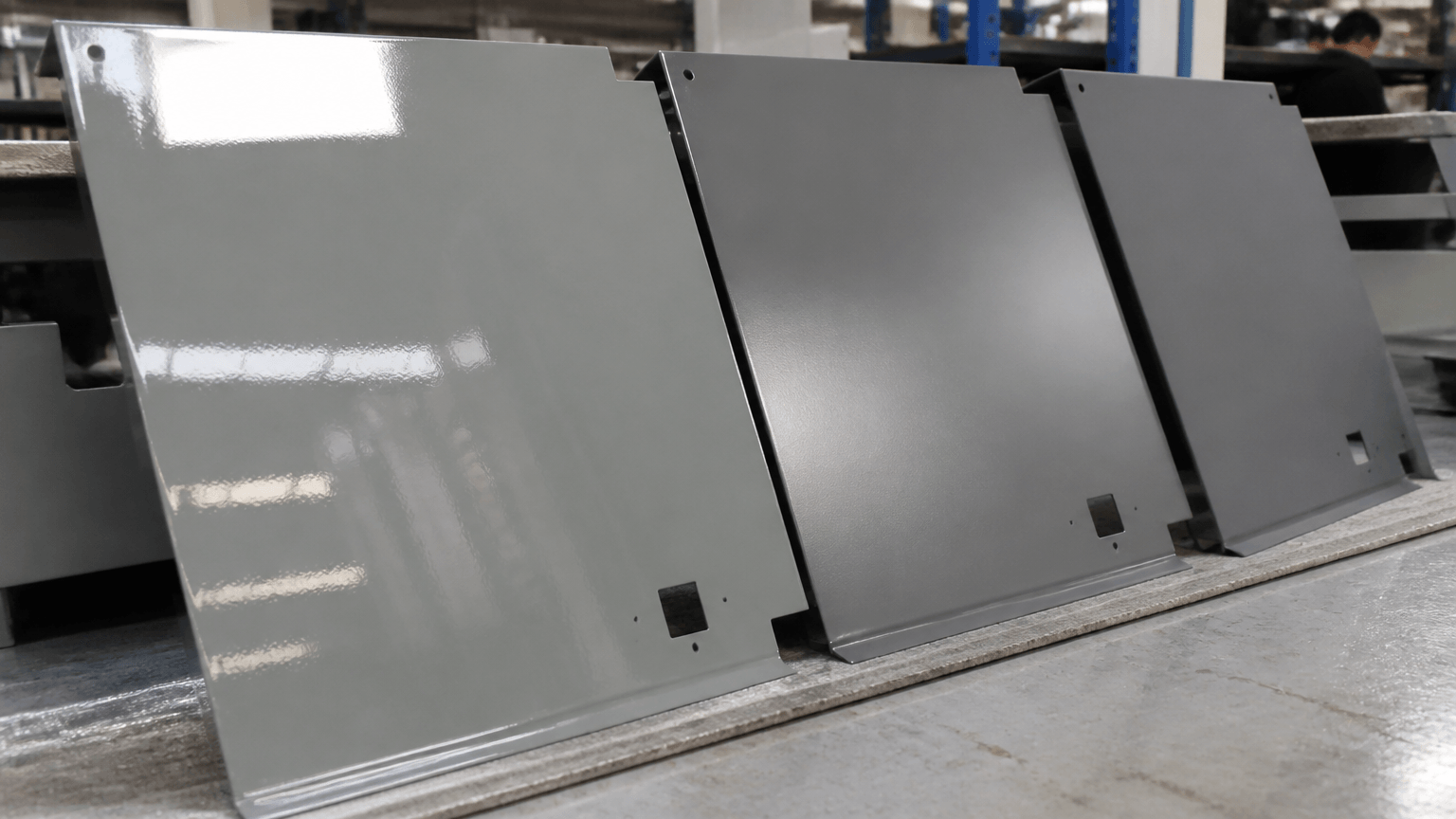
Shiny powder coat usually means a smooth, reflective, high-gloss powder-coated surface. Powder coating can produce this appearance, but shiny is not a complete engineering specification. For an OEM enclosure, cabinet, frame, or welded assembly, confirm the gloss target, color, texture, substrate, service environment, and approved physical sample before production.
If a drawing says shiny black for a cabinet door or frame, the fabricator still needs to know how the finish will be judged and where it must remain cosmetic. A glossy appearance is influenced by powder formulation, substrate condition, pretreatment, film thickness, curing, geometry, and viewing conditions.
Glossy appearance and coating performance also require separate checks. A reflective surface does not prove adhesion, cure quality, corrosion resistance, chemical resistance, or outdoor suitability.
Shiny powder coat is a finish description, not a powder type
When a buyer is approving a cabinet door, enclosure, display rack, or welded frame, the word shiny can create disagreement between the sample, drawing, and production batch. Replace it with a measurable gloss requirement confirmed under an agreed method or powder-supplier specification, together with color, texture, and a representative physical sample.
High-gloss finishes generally reflect light clearly and appear smooth. Semi-gloss reflects less light, satin diffuses reflection further, and matte minimizes visible reflection. These labels are useful starting points, but they can be interpreted differently between suppliers. The same nominal color may look deeper, brighter, or more reflective when gloss or texture changes.
A RAL reference can guide color selection, but it does not define gloss, texture, substrate influence, or acceptable batch variation. High gloss can suit enclosures, cabinets, display racks, frames, and welded assemblies where appearance is part of the product requirement. It can also make fingerprints, cleaning marks, scratches, panel waviness, weld finishing, dust inclusions, and reflected-light differences easier to see. For enclosure projects, glossy powder-coated sheet metal enclosures should be reviewed as complete assemblies rather than only as flat color chips.
Specify gloss, color, and texture together
For a part that will be compared under production lighting or assembled beside other finished components, record the complete visual-finish package before sampling.
| Finish detail | Define | Why it matters |
|---|---|---|
| Gloss | Target or acceptable range, agreed measurement method, angle where applicable, and comparison conditions | High-gloss, semi-gloss, satin, and matte terms can vary. |
| Color | RAL or other reference, powder-supplier reference where applicable, and approved sample | Color alone does not establish gloss or texture. |
| Texture | Smooth, fine texture, wrinkle, or another defined surface, including limits on visible orange peel | Texture changes reflection and defect visibility. |
| Sample | Actual substrate, pretreatment, powder, color, gloss, texture, and representative geometry | A flat chip may not show bends, welds, edges, recesses, or large reflective panels. |
| Visible surfaces | Primary faces, secondary faces, concealed areas, edges, holes, and internal cavities | Spraying access and acceptance expectations differ by area. |
| Batch control | Agreed lighting, viewing position, retained sample, powder identification, and side-by-side comparison method | Reflections and material batches can affect consistency. |
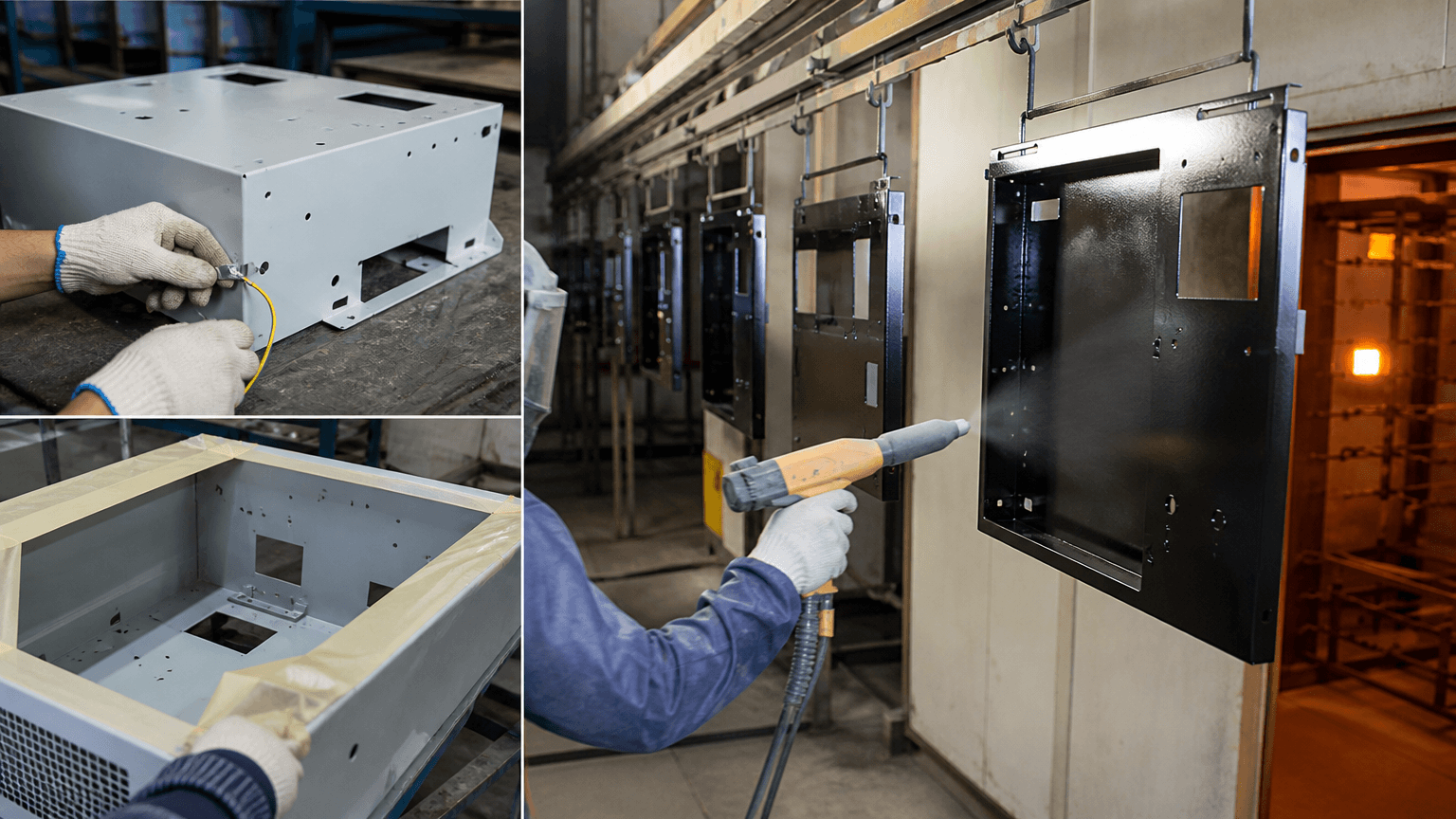
Sample approval should also identify masking zones, hanger marks, grounding points, and surfaces hidden after assembly. This gives procurement, engineering, and production teams one reference when a repeat batch is compared with the approved part.
Match the powder system to the service environment
Two parts with the same shiny black appearance may need different powder systems. An indoor control enclosure may face cleaners and frequent handling, while an outdoor cabinet may face UV exposure, salt, or condensation. High-gloss powder coating is an appearance choice; it does not select the chemistry or pretreatment.
| Service condition | System and process discussion | Questions to resolve |
|---|---|---|
| General indoor use | Evaluate epoxy, epoxy-polyester, or polyester powder against corrosion, chemical, mechanical, and appearance needs. | Will the part face humidity, cleaners, abrasion, frequent handling, or heat? |
| Outdoor UV exposure | Consider polyester or super-durable polyester against the required weathering exposure. | What are the expectations for UV, color retention, gloss retention, and maintenance? |
| Coastal or humid use | Review chemistry with substrate preparation, pretreatment, edges, joints, drainage, and required corrosion testing. | Will salt, condensation, trapped moisture, or dissimilar-metal contact be present? |
| Chemical or frequent cleaning | Check the selected powder against the actual chemicals, concentration, contact time, and cleaning method. | Which cleaners, oils, solvents, disinfectants, or process chemicals will contact the coating? |
| High-contact surfaces | Balance gloss visibility with abrasion, cleaning, handling, and assembly requirements. | Will users touch, slide, stack, wipe, or assemble against the visible surface? |
Epoxy systems may be evaluated for indoor applications, while prolonged UV exposure requires separate assessment. Epoxy-polyester systems may also be considered for indoor use. Polyester systems are commonly evaluated for exterior applications, and super-durable polyester may be considered when higher weathering expectations apply. These are screening directions, not universal grades; final selection should follow the substrate, environment, customer requirements, and powder manufacturer guidance.
Steel, galvanized material, aluminum, and other substrates do not automatically use the same cleaning and conversion process. Pretreatment must address oil, oxide or rust where applicable, residue, corrosion risk, substrate compatibility, powder chemistry, and project requirements.
Geometry and preparation control glossy coverage
For a glossy enclosure or welded frame, the appearance is often determined before the part reaches the spray booth. Sheet metal fabrication creates the cut and formed part, welding joins separate pieces, polishing is a separate finishing operation, powder coating follows preparation, and assembly brings coated and uncoated components together.
Machined inserts or brackets should be identified separately: the drawing should state whether they are coated, masked, installed after coating, or left uncoated, and whether threads, bores, or mating surfaces need protection.
- Inspect the fabricated surface. Oil, laser-cut oxide or residue, rust, welding spatter, weld contamination, grinding marks, and inconsistent polishing can remain visible or interfere with coating. Sharp edges need review because coverage and appearance can differ at an edge.
- Confirm cleaning and pretreatment. Degreasing and the selected pretreatment must match the substrate and service conditions. Powder coating does not remove the need to control contamination before spraying.
- Review spraying access. Deep cavities, narrow gaps, inside corners, hole edges, and closely spaced features may receive less consistent deposition because of electrostatic field behavior often called the Faraday effect. Do not assume internal surfaces will match open external faces.
- Plan grounding, hanging, and masking. Reliable grounding is needed for electrostatic application. Hanger contact points can leave uncoated or marked areas, while threads, electrical contacts, bonding points, seals, and tight mating interfaces may require masking.
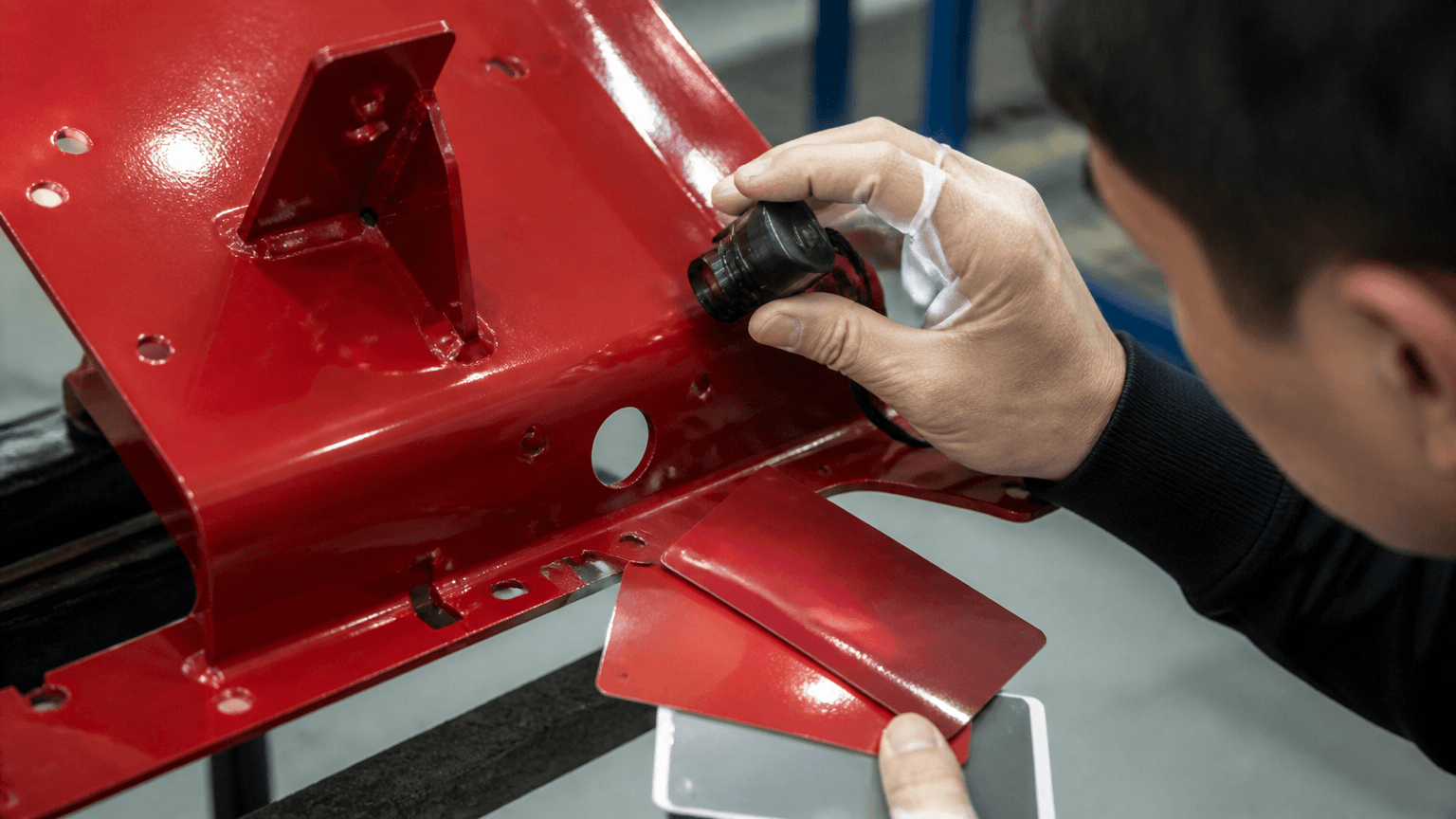
- Assess film buildup. Insufficient deposition can affect hiding and edge coverage. Excessive buildup can alter appearance and interfere with holes, threads, hinges, seals, or mating parts. The requirement should follow the selected powder data and functional design.
- Validate cure conditions. Cure assessment should consider the temperature reached by the metal part and the required time, not only oven air temperature. Part mass, loading, geometry, powder formulation, and supplier instructions influence the result.
Design review should identify visible faces, spraying access, hanger positions, grounding points, masking zones, internal cavities, drainage or venting concerns, and post-coating assembly interfaces. A prototype review before powder-coated batch production can expose coverage, appearance, or assembly-fit issues before release.
Set acceptance criteria for samples and production batches
Approve samples in two passes. Appearance inspection checks color, gloss, texture, and visible surfaces against the approved reference. Performance inspection checks functional requirements such as adhesion, cure, or environment-specific resistance.
A practical appearance checklist includes:
- Color and gloss comparison against the approved sample, with the intended texture confirmed under agreed lighting and viewing conditions.
- Visible contamination, runs or heavy buildup, pinholes, orange peel, scratches, exposed metal, and inconsistent reflection.
- Edge and hole coverage, weld-area appearance, internal areas identified as visible, masking accuracy, grounding marks, and hanger contact points.
- Film-thickness requirements and dimensional or assembly effects around holes, threads, seals, hinges, and mating faces.
Conditional performance checks may include film thickness, adhesion, cure, hardness or impact, salt-spray exposure, chemical resistance, or accelerated weathering. Test methods, specimen preparation, acceptance limits, and inspection frequency should come from the intended environment, customer specification, applicable product requirements, and powder manufacturer guidance.
Glossy parts also need handling and packaging controls that reduce avoidable rubbing, scuffing, and fingerprint transfer during storage and shipment. Concealed areas, non-coated surfaces, masking zones, and contact marks should be documented rather than judged by the same cosmetic expectation as primary visible faces.
Yishang provides custom sheet metal manufacturing, powder coating, polishing, assembly, prototype review, and batch production for OEM and ODM projects. Its surface finishing options for custom metal parts and inspection and batch quality control for coated metal products can be reviewed against a specific part. Yishang also lists ISO and RoHS certifications in its company information; project documentation should still match the customer’s requirements.
Planning a shiny powder coat project? Send Yishang the 2D drawings or 3D files, material and substrate information, intended environment, cleaning or contact conditions, color reference, target gloss, texture, approved-sample expectations, visible surfaces, masking and grounding zones, assembly constraints, prototype or batch quantity, packaging expectations, and inspection requirements. Yishang can review the sheet metal geometry, coating risks, prototype needs, and batch-production scope before quotation.
Where RFQ Assumptions Create Cost and Production Risk
Many sheet metal fabrication problems begin before production starts. If drawings, tolerances, finish expectations, material grades, or assembly requirements are unclear, suppliers may quote based on different assumptions. That can make prices difficult to compare and may lead to rework, cosmetic rejection, assembly misalignment, or production delays later.
For OEM buyers, the goal is not simply to request the lowest price. The goal is to make sure each supplier is quoting the same manufacturing reality. Before confirming an order, clarify which dimensions are fit-critical, which surfaces are cosmetic, whether prototypes must match batch-production conditions, and how finished parts will be inspected.
Frequently Asked Questions
What coating thickness details should buyers define before requesting a quote?
Buyers should define the functional requirement, drawing notes, critical dimensions, material or process expectations, and any inspection points related to coating thickness. This helps suppliers quote the same manufacturing scope instead of making different assumptions.
How can masking areas affect cost, fit, or lead time?
masking areas can change tooling, forming, welding, finishing, inspection, or rework requirements. If buyers do not clarify it early, two supplier quotes may look comparable while covering different production risks.
Why should powder coating be reviewed before prototype approval?
powder coating may look acceptable on a single sample but become harder to control during batch production. Buyers should confirm whether the prototype reflects the same process, finish, and inspection conditions expected for production.
What inspection points matter most for shiny powder coat projects?
Important inspection points usually include fit-critical dimensions, holes or mating areas, cosmetic surfaces, finish build-up, welded or formed features, and any dimensions that affect downstream assembly. These points should appear in the RFQ or drawing notes.
How can buyers reduce assembly clearance risk before batch production?
Buyers can reduce risk by clarifying drawings, locking key material and finish assumptions, defining inspection timing, approving a representative sample, and confirming which dimensions or surfaces require tighter process control.
How can Yishang help review shiny powder coat requirements?
Yishang can review drawings, RFQ notes, material requirements, tolerance expectations, finish details, samples, and assembly needs to identify unclear assumptions before quoting or batch production.