
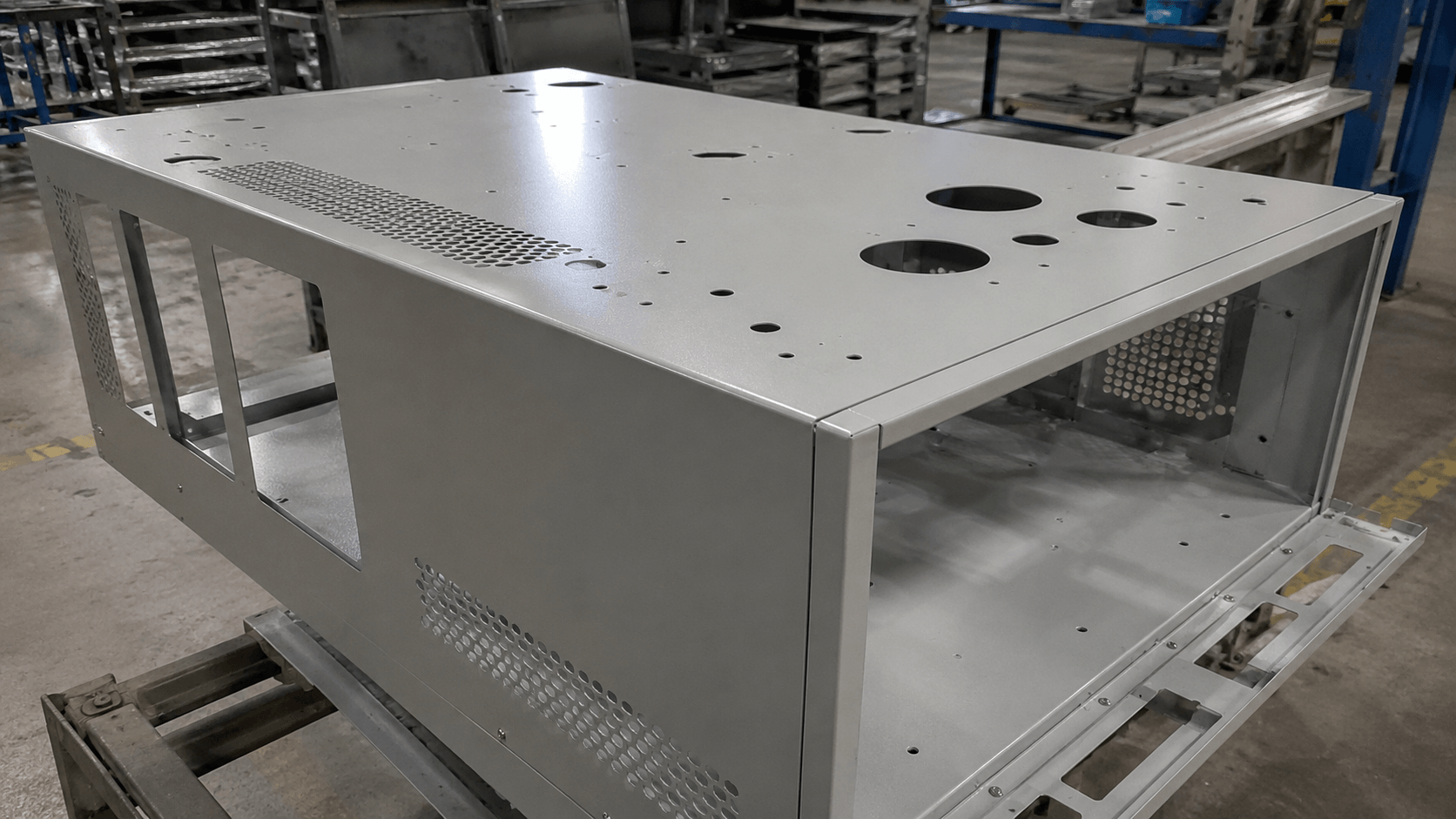
Top coat powder coating usually means the final visible powder coating layer in a finish system. For an OEM enclosure, bracket, or frame, that layer may be applied over a compatible primer, or it may be the only powder layer applied to prepared metal. The approved specification should identify which arrangement is required rather than relying on the word “topcoat” alone.
This distinction becomes important when a buyer is approving a prototype or preparing a production drawing. Substrate, indoor or outdoor exposure, moisture, ultraviolet exposure, geometry, appearance, assembly interfaces, and inspection requirements all influence whether a single powder layer, primer-plus-topcoat system, or color-plus-clear arrangement should be evaluated.
What does top coat powder coating mean?
A topcoat is the final visible coating layer in a multi-layer finish system. In powder coating, dry powder is applied to prepared metal and then cured so it melts, flows, and forms a continuous coating. When a primer is used, the topcoat normally provides the specified visible color, gloss, or texture.
Terminology varies between suppliers. A supplier may call the final coat on a single-layer powder-coated part a “topcoat,” even when no separate primer is present. Therefore, top coat powder coating does not define the complete protection or appearance system by itself. The drawing, purchase specification, or quotation should state whether the part requires a single powder layer, a primer and powder topcoat, or a color coat followed by a clear powder coat.
- Powder coating system: The complete route, including substrate preparation, pretreatment, powder layers, curing, and inspection.
- Primer: An underlying coating selected for functions such as adhesion support, corrosion-control objectives, or compatibility with the topcoat. It is not normally the final visible layer.
- Clear coat: A transparent powder layer that may be applied over a color or decorative layer for a defined appearance or system requirement. It is not automatically necessary.
- Pretreatment: Chemical or mechanical preparation before powder application, such as cleaning, conversion treatment, or blasting. It is not a powder coating layer.
- Liquid paint: A wet coating applied from a liquid carrier. Liquid topcoat painting and powder topcoat application are different processes.
Powder coating is also separate from the operations that make the part. Cutting, bending, and forming create the sheet metal component; welding joins components; machining may produce an insert or interface part; and assembly brings components together. Finishing follows those operations, so masking and coating requirements should be assigned to the actual component and its interfaces. See Surface Finishing for broader finishing context.
Where the topcoat fits in the finishing sequence
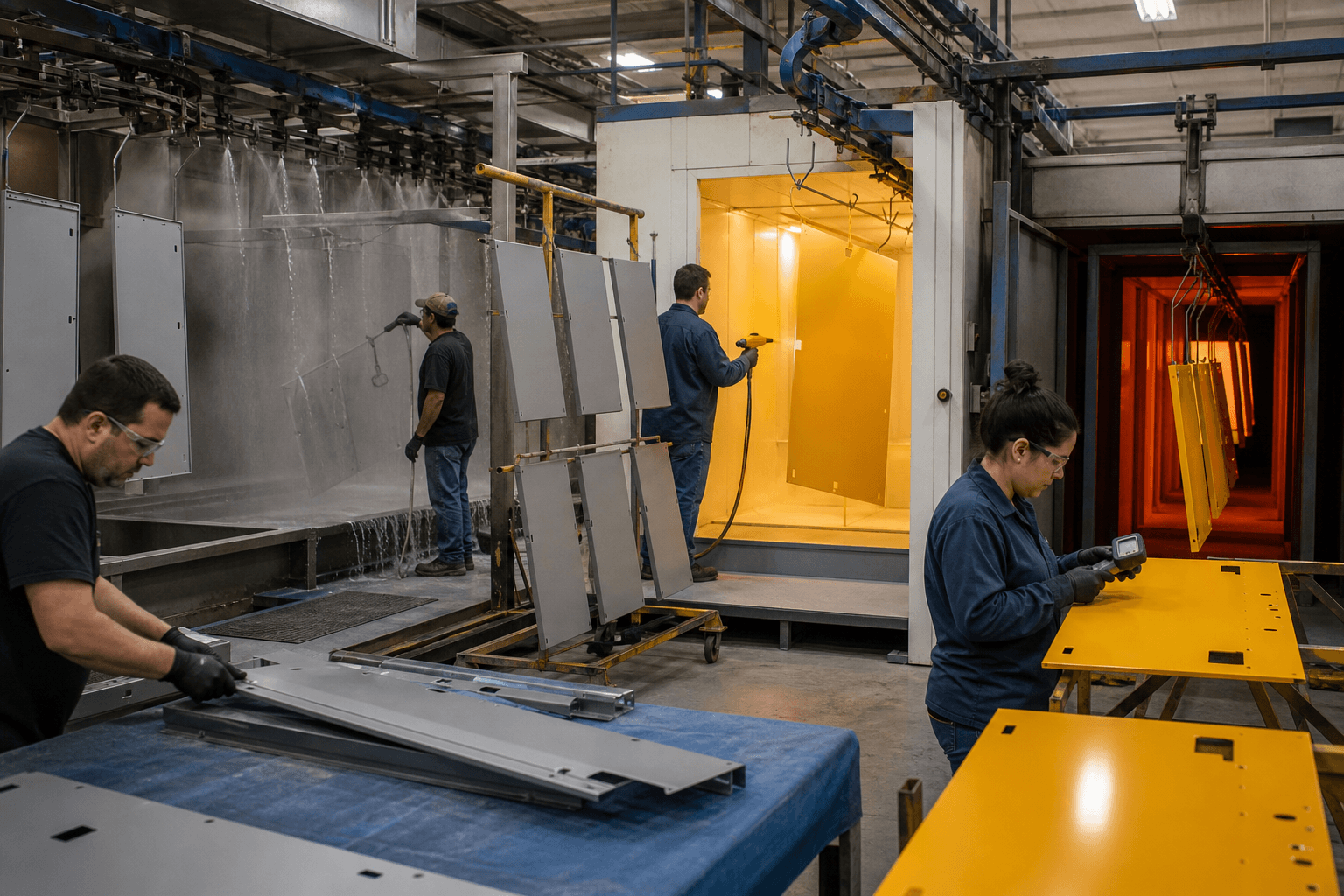
When an OEM buyer reviews a fabricated enclosure, bracket, or frame, the visible topcoat is only one stage between the fabricated substrate and the accepted part. The exact sequence depends on the substrate, powder product, geometry, and required performance.
- Review the substrate and fabricated part. Confirm the metal type and thickness, weld condition, sharp edges, oil, rust, mill scale, galvanized surfaces, existing coatings, and areas that must remain uncoated.
- Clean and prepare the surface. Remove oil, dust, loose corrosion, and other contaminants. Galvanized steel and other substrates may require a compatible preparation route; see Galvanized Steel when applicable.
- Apply pretreatment. Depending on the project, this may include degreasing, rinsing, conversion treatment, acid cleaning, or abrasive preparation. The method must match the substrate and approved coating system.
- Apply primer if required. A primer may be evaluated when substrate condition, exposure, edge coverage, corrosion-control objectives, or qualification requirements call for a multi-layer system. Primer and topcoat products must be compatible.
- Apply the powder topcoat. Electrostatic attraction helps charged powder adhere to the grounded workpiece before curing. Gun access, part orientation, recesses, edges, welds, internal surfaces, and masking still affect coverage.
- Cure the selected powder. Heat allows the powder to melt, flow, and chemically crosslink. Cure conditions are product-specific and must come from the selected powder supplier’s data.
- Inspect the finished part. Depending on the agreement, inspection may cover appearance, coverage, film thickness, adhesion, cure evidence, masking, and other defined characteristics.
A topcoat cannot compensate for unsuitable pretreatment, contaminated metal, poor substrate condition, incomplete coverage, or incorrect curing. Adding another layer or changing the appearance does not automatically correct a system-level process failure.
Single-layer, primer, or clear-coat arrangement?
For a part moving from prototype review to production, select the finish arrangement from the substrate and service environment first, then address appearance and verification. Epoxy, polyester, hybrid, clear, metallic, matte, gloss, and textured products have different properties and limitations. No powder chemistry should be treated as universally suitable without reviewing product data for the intended environment.
| Arrangement | When it may be evaluated | Details to confirm |
|---|---|---|
| Single powder coat layer | A prepared substrate and compatible powder product may meet the intended service and appearance requirements. | Substrate preparation, powder chemistry, exposure, edge and recess coverage, target film thickness, cure, and inspection limits. |
| Primer plus powder topcoat | A multi-layer system may be considered for substrate, exposure, edge coverage, or qualification needs. | Primer/topcoat compatibility, intercoat preparation, total coating build, cure sequence, masking, repair method, and project-specific test criteria. |
| Color coat plus clear powder coat | A clear layer may be considered for a defined decorative effect or another documented system requirement. | Compatibility, color and gloss shift, clear-layer coverage, visual approval standard, cure schedule, and whether the clear layer is required. |
Compare each arrangement against substrate type, moisture, condensation, chemicals, outdoor and ultraviolet exposure, color, gloss, texture, and required appearance zones. Folded edges, weld seams, deep returns, internal cavities, cabinet backs, and large frame surfaces can make coverage and visual consistency more difficult. A primer or clear coat is a system decision, not an automatic upgrade.
What should the OEM specification include?
A useful finish specification gives the coating supplier enough information to process the actual part and separates visual approval from measurable production acceptance.
- Substrate: Metal type, relevant grade, and sheet or plate thickness.
- Initial condition: Bare, galvanized, blasted, pretreated, or carrying an existing coating.
- Pretreatment: Required route, or permission to propose a substrate-compatible method for approval.
- Powder system: Required chemistry or approved product family, subject to product-data review.
- Appearance: Color reference, gloss, texture, metallic effect where relevant, and an approved visual sample or reference.
- Film thickness: Target value or range where required, together with measurement locations and method.
- Uncoated areas: Masking zones, grounding points, threaded holes, bonding surfaces, labels, gaskets, and assembly interfaces.
- Cure: Requirements based on the selected powder supplier’s data rather than an assumed generic temperature or dwell condition.
- Inspection: Viewing conditions, measurement locations, sampling frequency, test methods, and acceptance criteria.
- Disposition: Repair, touch-up, stripping, recoating, reinspection, and responsibility for rejected parts.
Review the geometry before coating. Sharp edges may receive less consistent coverage than broad faces. Welds can retain contamination or create local irregularities. Deep recesses may be difficult for the spray pattern to reach, while hanging points provide electrical contact but may leave small uncoated or marked areas. Identify internal cavities and cabinet backs as functional or appearance surfaces.
For a large enclosure or frame, confirm how the geometry will be handled, whether components need to be processed separately, and how visible surfaces will be matched during assembly. Equipment limits and handling conditions are project-specific. See Custom Sheet Metal Enclosures That Arrive Ready to Assemble when coating coverage affects cabinet interiors or assembly interfaces.
A visual sample can approve color, gloss, texture, and general appearance. It does not replace measurable criteria for thickness, adhesion, cure, coverage, or defect limits. Define both approval types separately.
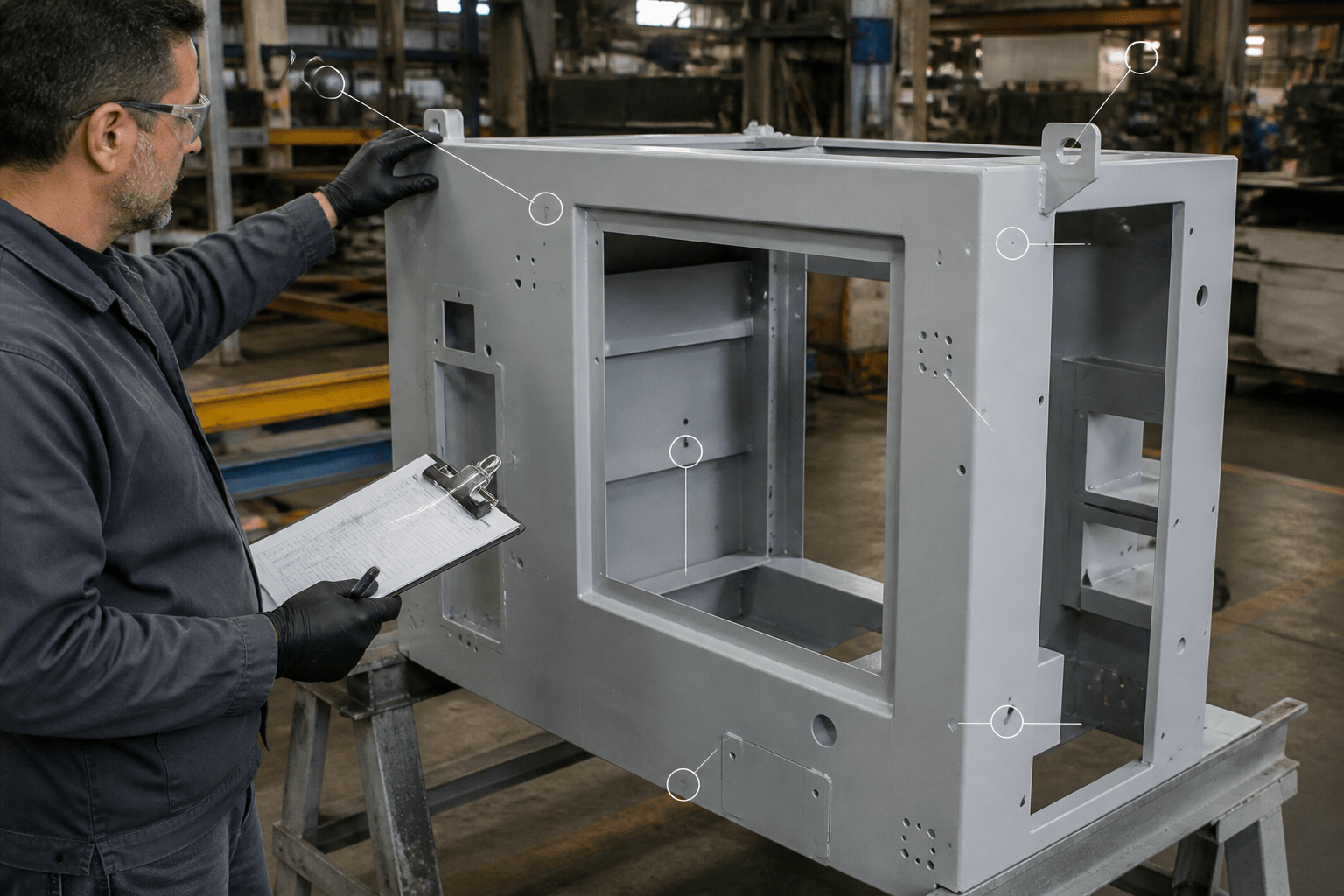
Inspection points and topcoat defects
When a finished part is questioned, review the complete coating route rather than assuming the visible topcoat is the only cause. A defect limited to an edge, weld, recess, masked boundary, or internal surface may reflect geometry or preparation as well as the selected powder.
- Locate the issue. Record whether it appears on a primary appearance zone, hidden surface, edge, weld, recess, cavity, masked boundary, or hanging point. For color or gloss concerns, record the lighting and viewing distance.
- Classify the defect. Examples include pinholes, craters or shrinkage defects, orange peel, runs, missed areas, exposed edges, contamination, scratches, and batch-to-batch color variation.
- Check coverage and thickness. Compare measurement locations with the agreed inspection plan. A broad flat face does not necessarily represent an edge, cavity, weld, or recessed surface.
- Review adhesion and cure evidence. Poor adhesion may relate to contamination, unsuitable pretreatment, incompatible layers, or insufficient cure. The method and acceptance value must come from the approved specification or product data.
- Trace process conditions. Review powder identity, substrate preparation, masking, application access, curing, handling, packaging, and batch changes.
- Agree the disposition. Decide whether the part is acceptable, repairable, or requires stripping and recoating. Define repair limits, reinspection, and responsibility before production.
Specific test methods, results, and limits must come from the approved coating specification or supplier data. See Quality Control for broader conformance-control context.
Where RFQ Assumptions Create Cost and Production Risk
Many sheet metal fabrication problems begin before production starts. If drawings, tolerances, finish expectations, material grades, or assembly requirements are unclear, suppliers may quote based on different assumptions. That can make prices difficult to compare and may lead to rework, cosmetic rejection, assembly misalignment, or production delays later.
For OEM buyers, the goal is not simply to request the lowest price. The goal is to make sure each supplier is quoting the same manufacturing reality. Before confirming an order, clarify which dimensions are fit-critical, which surfaces are cosmetic, whether prototypes must match batch-production conditions, and how finished parts will be inspected.
Frequently Asked Questions
What coating thickness details should buyers define before requesting a quote?
Buyers should define the functional requirement, drawing notes, critical dimensions, material or process expectations, and any inspection points related to coating thickness. This helps suppliers quote the same manufacturing scope instead of making different assumptions.
How can masking areas affect cost, fit, or lead time?
masking areas can change tooling, forming, welding, finishing, inspection, or rework requirements. If buyers do not clarify it early, two supplier quotes may look comparable while covering different production risks.
Why should powder coating be reviewed before prototype approval?
powder coating may look acceptable on a single sample but become harder to control during batch production. Buyers should confirm whether the prototype reflects the same process, finish, and inspection conditions expected for production.
What inspection points matter most for top coat powder coating projects?
Important inspection points usually include fit-critical dimensions, holes or mating areas, cosmetic surfaces, finish build-up, welded or formed features, and any dimensions that affect downstream assembly. These points should appear in the RFQ or drawing notes.
How can buyers reduce assembly clearance risk before batch production?
Buyers can reduce risk by clarifying drawings, locking key material and finish assumptions, defining inspection timing, approving a representative sample, and confirming which dimensions or surfaces require tighter process control.
How can Yishang help review top coat powder coating requirements?
Yishang can review drawings, RFQ notes, material requirements, tolerance expectations, finish details, samples, and assembly needs to identify unclear assumptions before quoting or batch production.