
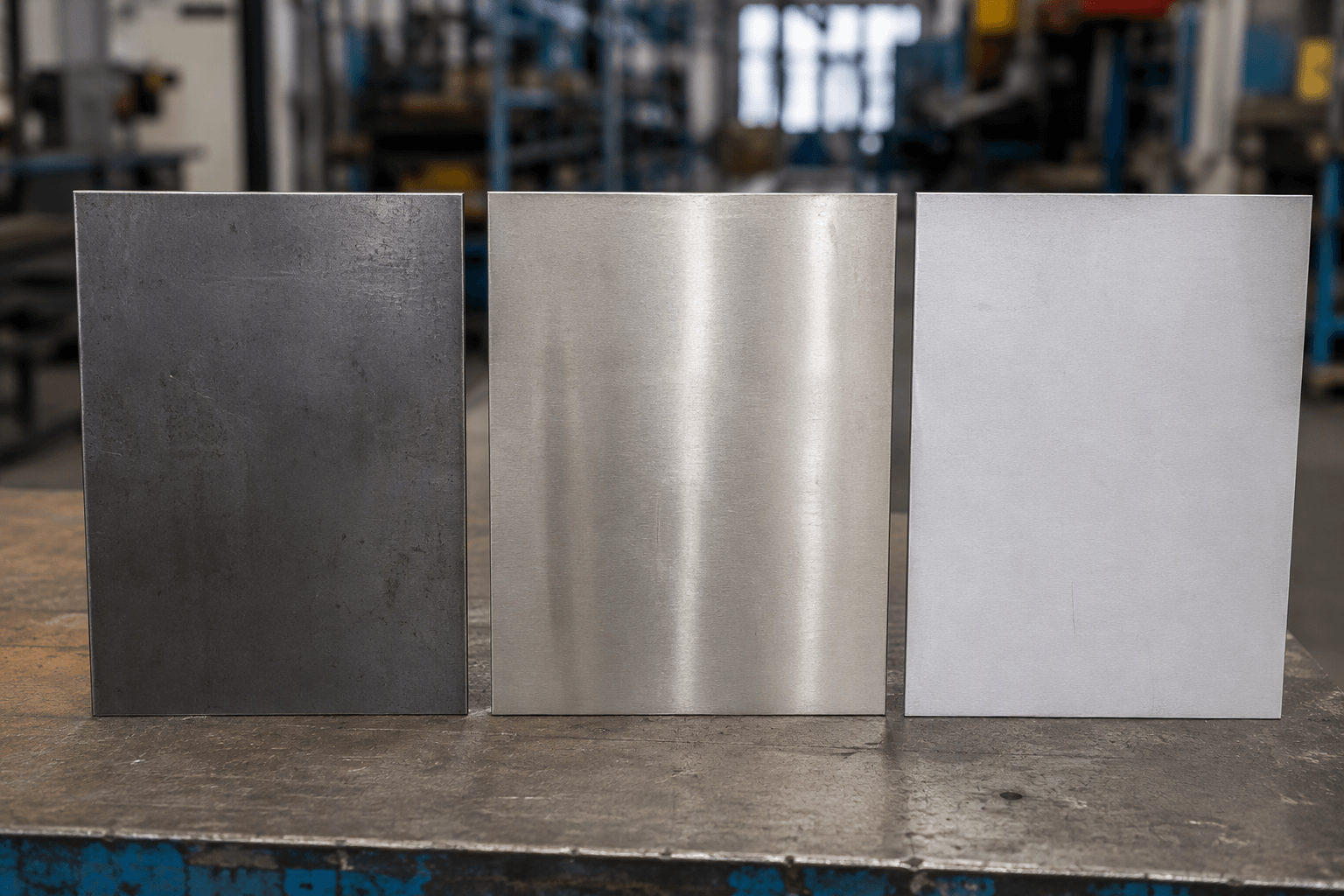
12 gauge sheet metal is not one universal thickness: the nominal value depends on the material. For reference, 12 gauge mild steel is 0.1046 inches (2.66 mm), stainless steel is 0.1094 inches (2.78 mm), and aluminum is 0.0808 inches (2.05 mm).
12 Gauge Sheet Metal Thickness Chart by Material
Gauge is a reference designation used for sheet and plate products. It is useful for general communication, but it does not identify one identical thickness across every metal. The material system behind the gauge chart matters.
| Material | 12 gauge, nominal inches | 12 gauge, nominal millimeters | Specification note |
|---|---|---|---|
| Mild steel | 0.1046 in | 2.66 mm | Use as a nominal reference, not a guaranteed delivered value. |
| Stainless steel | 0.1094 in | 2.78 mm | The stainless gauge reference differs from the mild-steel reference. |
| Aluminum | 0.0808 in | 2.05 mm | The aluminum gauge reference is thinner than the listed steel values. |
These values are nominal reference points. They should not be treated as proof that the material delivered to a project will measure exactly that number. The ordered product may be governed by a particular material specification, product form, supplier stock condition, and applicable thickness variation.
The practical rule is simple: a higher gauge number means thinner sheet within the relevant gauge system. However, the gauge number alone does not tell a buyer whether the sheet is mild steel, stainless steel, aluminum, or another material. That is why “12 gauge” and “12 gauge steel” are not interchangeable descriptions when a design is being quoted or released for production.
How 12 Gauge Compares with 14, 16, and 18 Gauge
12 gauge is thicker than 14 gauge, 16 gauge, and 18 gauge when the comparison is made within the same material system. In other words, moving from 12 to 14, 16, or 18 gauge generally means selecting progressively thinner sheet. This inverse relationship is one of the most important points for engineers and purchasing teams to remember.
| Gauge comparison | Relative thickness | How to use the comparison |
|---|---|---|
| 12 vs. 14 gauge | 12 gauge is thicker | Check the same material chart before converting either value to an exact dimension. |
| 12 vs. 16 gauge | 12 gauge is thicker | Do not assume the difference is interchangeable for a formed or load-bearing part. |
| 12 vs. 18 gauge | 12 gauge is thicker | Compare actual inch or millimeter values when fit, clearance, or rigidity matters. |
A comparison chart must identify its material basis. A 12 gauge aluminum value cannot be compared casually with a 12 gauge stainless steel value, and the same caution applies when comparing 14, 16, or 18 gauge across different metals. If a design review depends on a small dimensional difference, use the specified thickness in inches or millimeters rather than relying on gauge terminology.
It is also important to separate a nominal chart conversion from a purchase requirement. A chart helps an engineer understand the approximate thickness associated with a gauge designation. A drawing or purchase order tells the supplier what material and product specification must actually be provided.
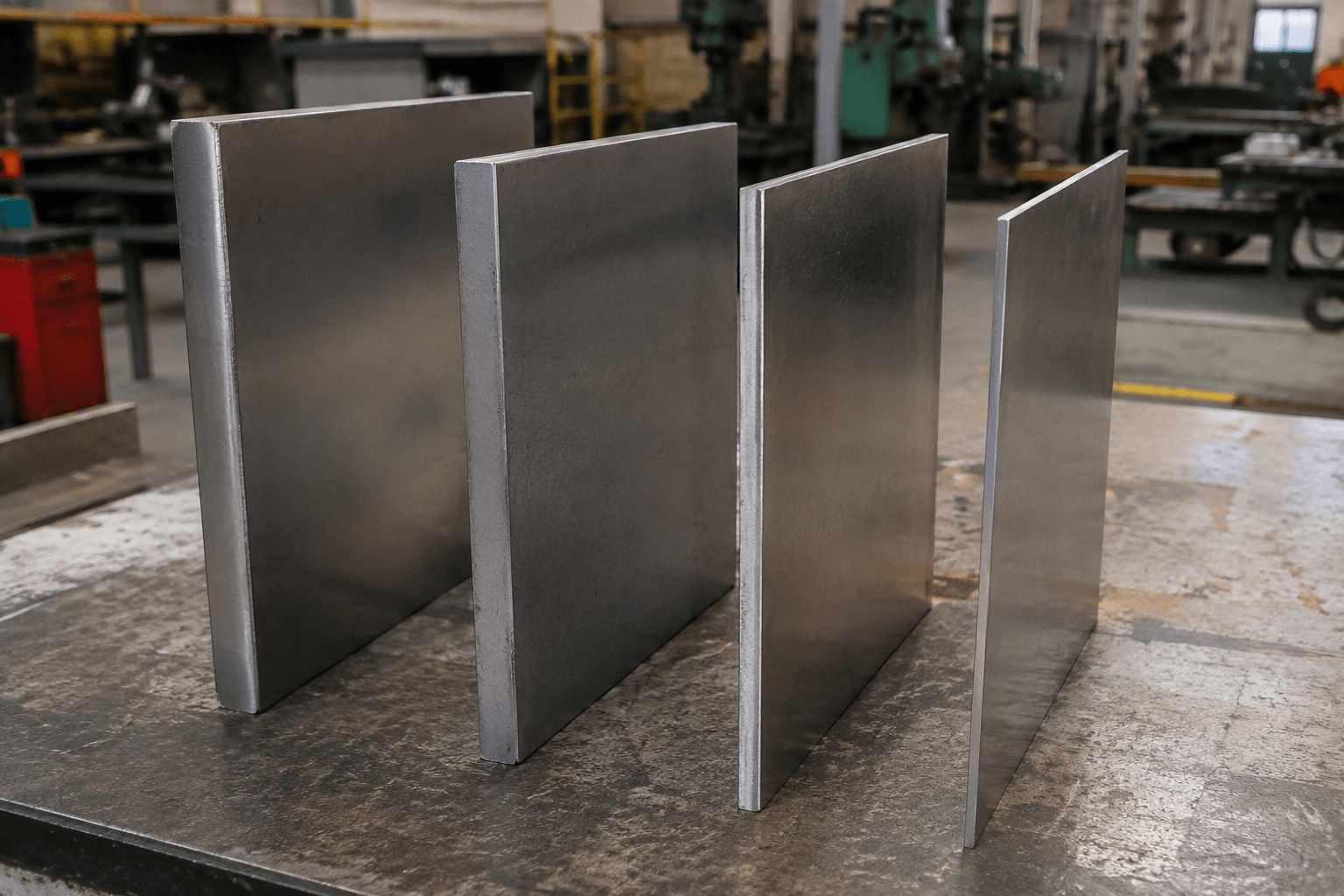
Material and Thickness: What Changes in the Design?
Selecting 12 gauge is not only a dimensional decision. The material and thickness together influence how a custom sheet metal part behaves during use and fabrication. The correct choice depends on the part function, geometry, formed features, environment, available stock, and engineering requirements.
Rigidity and part behavior
Increasing sheet thickness generally gives a part more resistance to flexing, but the result also depends on material properties, unsupported span, bends, hems, beads, mounting points, and overall geometry. A flat panel and a formed enclosure made from the same nominal thickness may behave differently because the formed features change the section shape.
For a bracket, the engineer may be balancing stiffness against the space available for bends and fasteners. For an enclosure panel, the decision may involve panel size, access openings, mounting features, and the need to limit unwanted movement. These are design questions, not conclusions that can be made from gauge alone. Structural or safety-critical applications require engineering validation for the intended loads and service conditions.
Weight and material behavior
Material density affects the weight of a part even when the nominal gauge label appears similar. The listed 12 gauge aluminum reference is 2.05 mm, while the listed mild steel and stainless steel references are 2.66 mm and 2.78 mm respectively. The material choice therefore affects more than corrosion considerations or appearance; it also changes the thickness reference being used.
Aluminum may be considered when lower mass is important, while stainless steel may be selected for environmental or material-specific requirements. Mild steel may be appropriate where the design and application call for it. The decision should be based on the complete specification rather than an assumption that one material can be substituted for another because both are described as 12 gauge.
Bendability and fabrication planning
Cutting and forming decisions depend on the selected material and its specified thickness. A sheet metal fabricator must review the part’s bends, holes, edge conditions, formed features, and material before confirming how the design can be processed. Material condition and geometry can affect forming behavior, so a gauge label does not replace a drawing review.
The same principle applies to a custom bracket, panel, or enclosure. A change from mild steel to stainless steel or aluminum can affect how the part is cut and formed, even when the requested gauge number remains 12. Any change in material or thickness should therefore be considered a design change until its fit, geometry, and fabrication implications have been checked.
How to Specify 12 Gauge on a Drawing or Purchase Order
For early discussion, “12 gauge” may be a useful starting point. For production documentation, pair the material name with a direct thickness value. This gives the supplier a clearer basis for reviewing stock, quoting the part, and identifying any issue with the requested specification.
Useful specification patterns include:
- Mild steel, 0.1046 in nominal thickness
- Stainless steel, 0.1094 in nominal thickness
- Aluminum, 2.05 mm nominal thickness
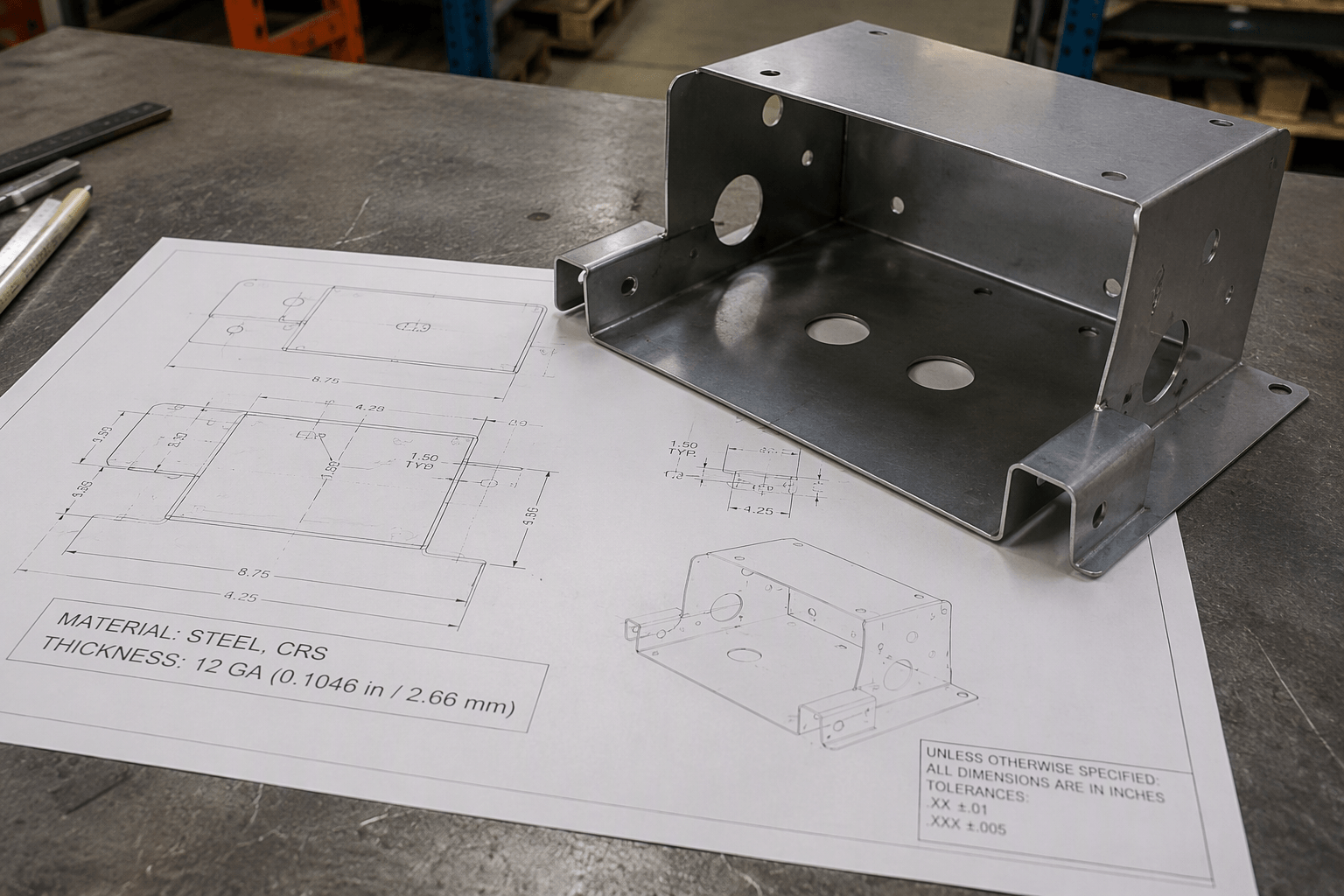
If the project begins with a gauge designation, write the direct value alongside it where appropriate, for example: 12 gauge mild steel, nominal 0.1046 in (2.66 mm). This records the intended material system and reduces the risk of a supplier applying the wrong chart.
The drawing should also make clear whether the listed value is a nominal reference or a required actual thickness. Those are not automatically the same. The buyer and supplier should confirm the applicable material specification, available stock thickness, and relevant thickness variation before the order is finalized. If a particular actual measurement is important for assembly clearance, fit, or interface dimensions, that requirement should be addressed explicitly in the controlled specification.
Do not use gauge as a substitute for material grade, surface condition, temper, or other requirements that the part needs. Those details are separate from the gauge designation and should be included when they are relevant to the application. Likewise, do not assume that changing only the material name leaves the part unchanged; the design review may need to consider cutting and forming requirements separately.
For application context, a custom bracket specification can be reviewed alongside the relevant custom metal brackets built to your drawings. For larger formed panels, the same material-and-thickness discipline applies to custom sheet metal enclosures.
What a Manufacturer Needs to Confirm the Right Thickness
A manufacturer reviewing a custom sheet metal part needs more than a gauge number. Provide the material type, required thickness in gauge, inches, or millimeters, and the part drawing or CAD file if available. The part function and any formed features are also useful because they show whether the thickness is connected to a clearance, rigidity, mounting, or forming requirement.
Include the expected project quantity or production context as well. Stock availability and production planning can depend on the exact material and thickness requested, so the supplier should confirm what can be sourced and what specification will govern the delivered sheet.
For an OEM or ODM custom sheet metal specification review, provide the material type, required thickness in gauge, inches, or millimeters, drawing or CAD file if available, part function, formed features, and expected quantity. Yishang can review these requirements and help clarify the specification before production planning.
Frequently Asked Questions
How thick is 12 gauge steel in inches and millimeters?
The nominal 12 gauge mild steel reference is 0.1046 inches, or 2.66 mm. Stainless steel uses a different listed reference of 0.1094 inches (2.78 mm), so the material must be identified.
Which is thicker, 12 gauge or 16 gauge sheet metal?
12 gauge is thicker than 16 gauge within the same material gauge system. For an exact comparison, identify the material and compare the actual inch or millimeter values from the applicable chart.
Which is thicker, 12 gauge or 14 gauge steel?
12 gauge steel is thicker than 14 gauge steel. The gauge number moves in the opposite direction from thickness: a higher number indicates thinner sheet within the relevant system.
Should a drawing specify 12 gauge, or should it list the exact thickness and material?
For production, list the material and direct thickness together, such as mild steel at 0.1046 inches (2.66 mm) nominally. Also state whether the value is nominal or an actual required thickness, and confirm the supplier’s applicable material specification and thickness variation.
In short, 12 gauge sheet metal thickness depends on the material: 2.66 mm nominally for mild steel, 2.78 mm for stainless steel, and 2.05 mm for aluminum in the listed references. Use gauge for orientation, but use material plus direct thickness for a controlled OEM or ODM specification.