
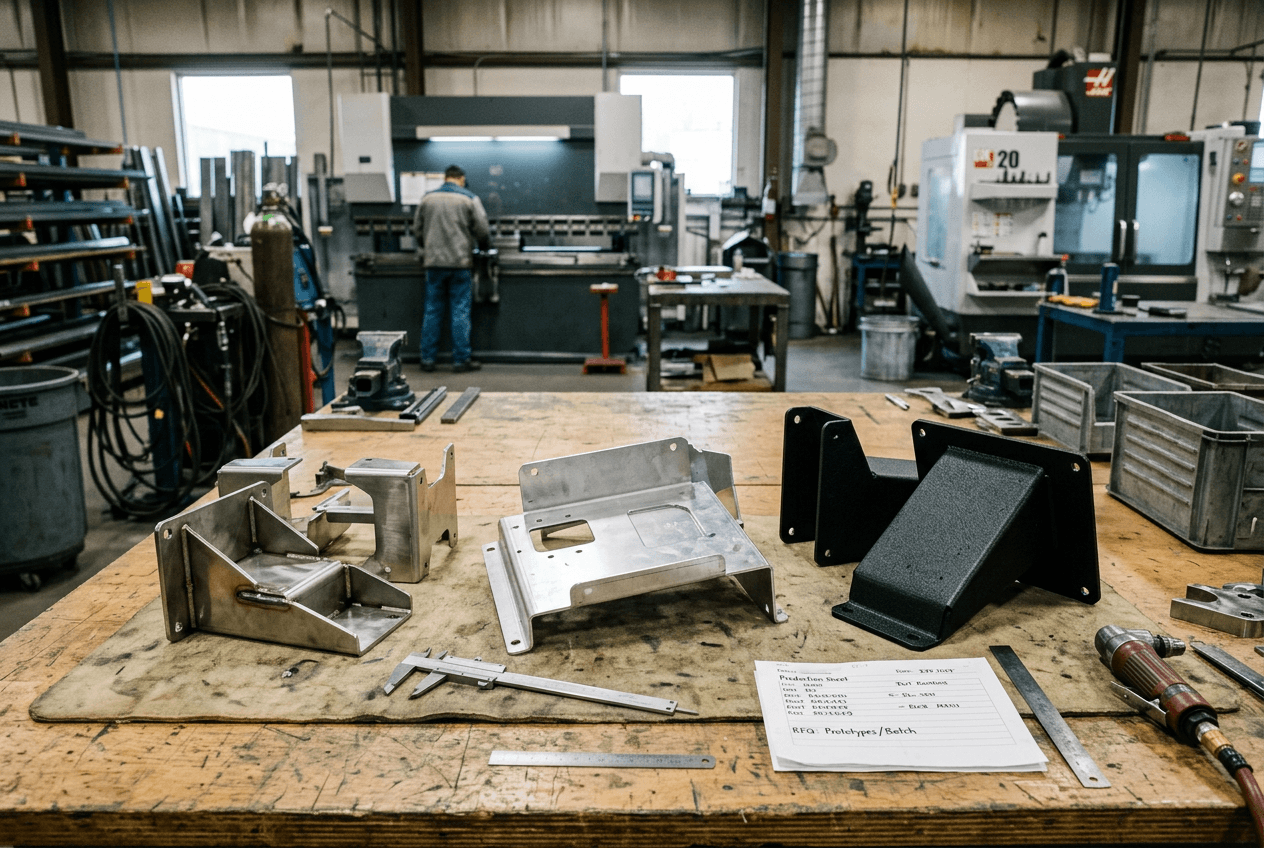
An OEM buyer sends one enclosure drawing to three metals fabrication suppliers. One supplier quotes cold rolled steel with powder coating. Another assumes galvanized sheet. A third suggests aluminum because the buyer mentioned shipping weight.
The unit prices look close. The quotes are not close. Each supplier has priced a different manufacturing route, with different risks for bending, welding, coating, assembly fit, inspection, and batch repeatability.
The problem often appears after prototype approval. A cabinet door shows waviness. Welded corners need more grinding than expected. Coated holes feel tight. A bracket fits during sampling but drifts during batch welding. Then the supplier revises the price or lead time because the original material assumption cannot support the production requirement.
This article focuses on one procurement risk: unclear material assumptions in the RFQ create non-comparable quotes and expose buyers to cost changes after prototyping. Material choice does not sit alone. It connects to forming, weld distortion, surface finish, tolerance, assembly, packaging, and service conditions.
If an RFQ only says “metal enclosure, powder coated, 1.5 mm,” suppliers must guess. Those guesses may reduce the first quote. They may also move cost into rework, inspection, coating correction, or production delays.
Where Material Assumptions Make Three Quotes Price Different Parts
A drawing can define size, hole locations, and bend lines without defining the production risk. Procurement may see one part number. Suppliers may see several possible routes. One route favors low raw material cost. Another favors clean bending. A third protects against corrosion or cosmetic rejection.
That gap matters because suppliers build quotes from assumptions. They estimate sheet yield, cutting speed, bend difficulty, weld time, grinding effort, coating preparation, masking, inspection, and scrap allowance. If the RFQ does not explain the application, each supplier may assign those costs differently.
Application notes reduce hidden quoting differences
Material names alone rarely solve the problem. “Steel” can mean a low-cost indoor route or a corrosion-controlled route. “Stainless” can mean brushed visible surfaces, polished welds, or standard industrial finish. “Aluminum” can mean weight savings, but it may also increase welding distortion risk on thin doors or panels.
Procurement teams should explain why a material matters. State whether the part works indoors or outdoors. Identify humidity, cleaning chemicals, heat, load, visible faces, gasket areas, hinge points, sliding surfaces, and mating parts. If suppliers may propose alternatives, say so in the RFQ and ask them to show the tradeoff.
Consider a wall-mounted control cabinet. The drawing shows a 1.5 mm enclosure with a hinged door and powder coating. One supplier quotes cold rolled steel because it forms well and takes powder coating cleanly. Another quotes galvanized sheet because the cabinet may sit near a loading dock. Both quotes can be reasonable, but they do not carry the same welding, edge protection, coating, or corrosion assumptions.
Yishang often reviews drawings together with RFQ notes for custom sheet metal fabrication projects such as enclosures, cabinets, brackets, frames, and welded assemblies. The useful discussion starts before price comparison: which material-process route can survive the full production path, not only the first sample.
The Cheap Sheet Choice Can Move Cost Into Bending and Welding
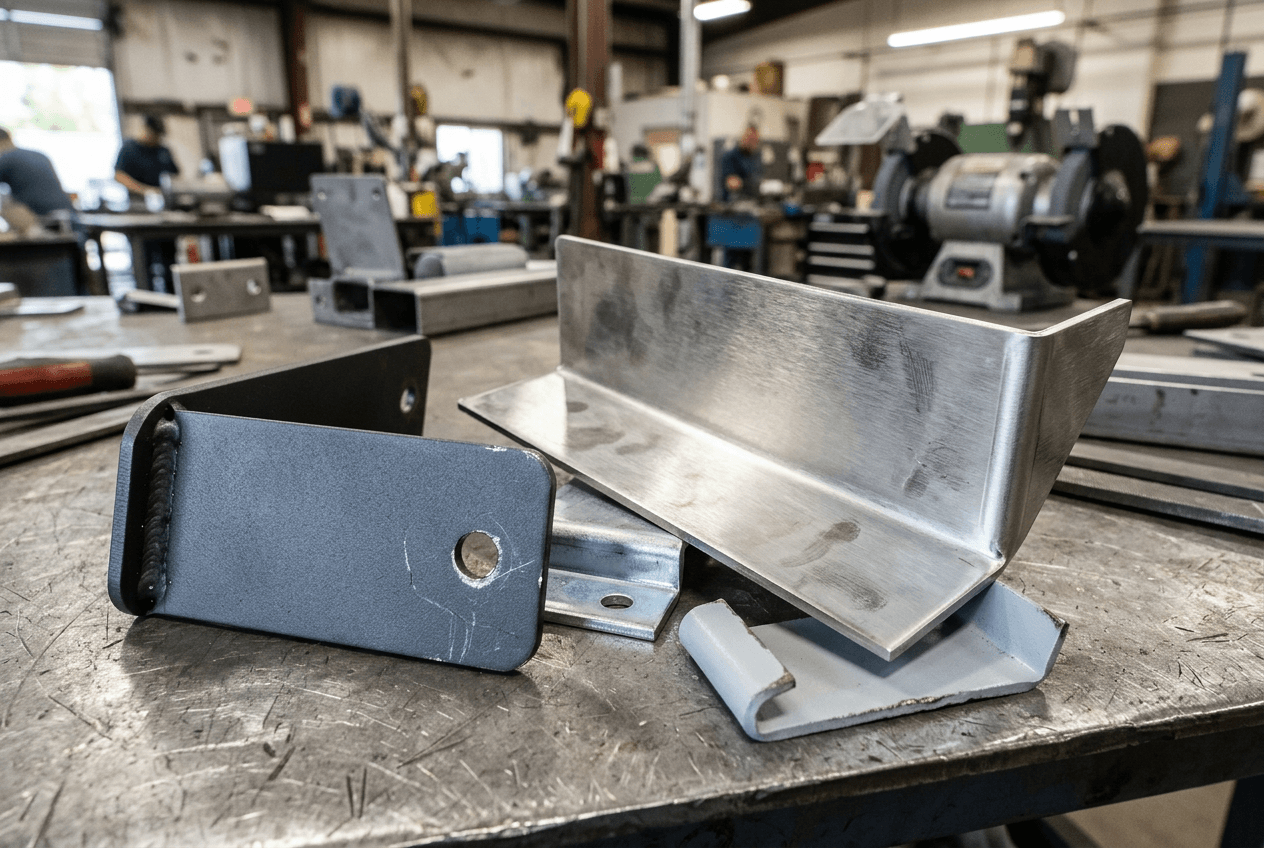
Raw sheet price attracts attention because buyers can compare it quickly. Fabrication cost behaves differently. A cheaper sheet can raise total cost if it cracks during bending, springs back unpredictably, dents easily, distorts during welding, or needs extra manual correction.
In metals fabrication, material behavior affects the quote as much as material price. Thickness, hardness, grain direction, bend radius, hole-to-bend distance, and flatness all influence repeatability. A low-cost quote may assume smooth forming. Production may later prove that the part needs larger radii, different tooling, slower welding, fixtures, or relaxed tolerances.
Bend decisions affect assembly before anyone sees the batch
A sheet metal enclosure can pass dimensional checks on outside size and still fail during assembly. Holes near bend lines may stretch. Flanges may spring back. A cover may not sit square against a gasket. Small errors at several bends can stack into a visible door gap.
The RFQ should identify functional bends and mating features. Buyers do not need to control every bend radius. They should mark the features that affect hinges, locks, tabs, gaskets, inserts, slides, and screw alignment. That lets the supplier review whether the proposed material can hold those areas through normal forming.
Welded assemblies multiply material assumptions
Welding adds heat, sequence, access, clamping, and finishing risk. Mild steel may weld efficiently for frames and brackets, but it relies on the finish system for corrosion protection. Stainless steel may reduce corrosion risk, yet welded areas may need cleaning, polishing, or passivation. Aluminum may reduce weight, but thin panels can warp during welding.
One realistic example involves a light aluminum equipment door. The buyer wants lower shipping weight and asks suppliers to quote aluminum instead of steel. The prototype looks acceptable after a technician adjusts the hinge side by hand. During a 500-piece batch, punched vents and welded reinforcement tabs create inconsistent flatness. Assembly workers spend extra time correcting the door gap, and the supplier requests a revised process price.
A second example involves a welded steel mounting bracket for a machine frame. The drawing calls for tight perpendicularity after welding. One supplier includes a fixture and inspection time. Another assumes normal welding tolerance. The second quote looks cheaper, but it may not include the work needed to hold the functional angle. The RFQ should clarify the tolerance, load direction, mating surface, and whether post-weld correction is acceptable.
Finish Expectations Can Overrule the Quoted Material Route
Finish requirements often arrive late because buyers treat them as appearance details. That timing creates cost risk. Finish affects material selection, surface preparation, weld treatment, coating build, masking, hole clearances, inspection standards, and packing.
Powder coating shows the problem clearly. A powder coated cabinet front may need smooth visible surfaces, covered weld marks, and controlled gloss. A hidden industrial bracket may only need functional protection. If both RFQs say “black powder coating,” suppliers may price very different standards.
Coating thickness changes fit
Powder coating adds thickness to edges, slots, holes, tabs, and mating faces. That build can reduce clearance. A 6.0 mm tab may not slide into a 6.0 mm slot after both surfaces receive coating. Threads may bind. Hinges may feel tight. Masking may become necessary around inserts, grounding areas, gasket lands, or sliding parts.
Buyers should identify surfaces where coating must not affect assembly. They should also state whether tapped holes need plugging, chasing, or masking. If the project uses PEM inserts, locks, hinges, captive nuts, or mating plastic parts, include those details before suppliers freeze the quote.
Cosmetic standards change preparation time
Visible surfaces change the material route before cutting starts. A retail display frame with all sides visible under store lighting needs different handling than a hidden machine bracket. Raw sheet scratches may print through coating. Laser edges may need more deburring. Welds may need grinding, and grinding marks may need control.
Finish language should cover more than color. RAL number helps, but it does not define gloss, orange peel limits, weld shadow, pinholes, acceptable scratches, or A-surface and B-surface areas. Photos of acceptable and unacceptable samples reduce disputes. Marked drawings help even more.
Outdoor or humid applications need material and finish decisions together. Mild steel with pretreatment and powder coating may work in protected conditions. Galvanized sheet can improve corrosion resistance, but it can complicate welding, edge protection, and coating adhesion. Stainless steel can reduce coating dependency, but it increases material cost and may require careful brushing or polishing.
Prototype Approval Can Hide Batch Cost Triggers
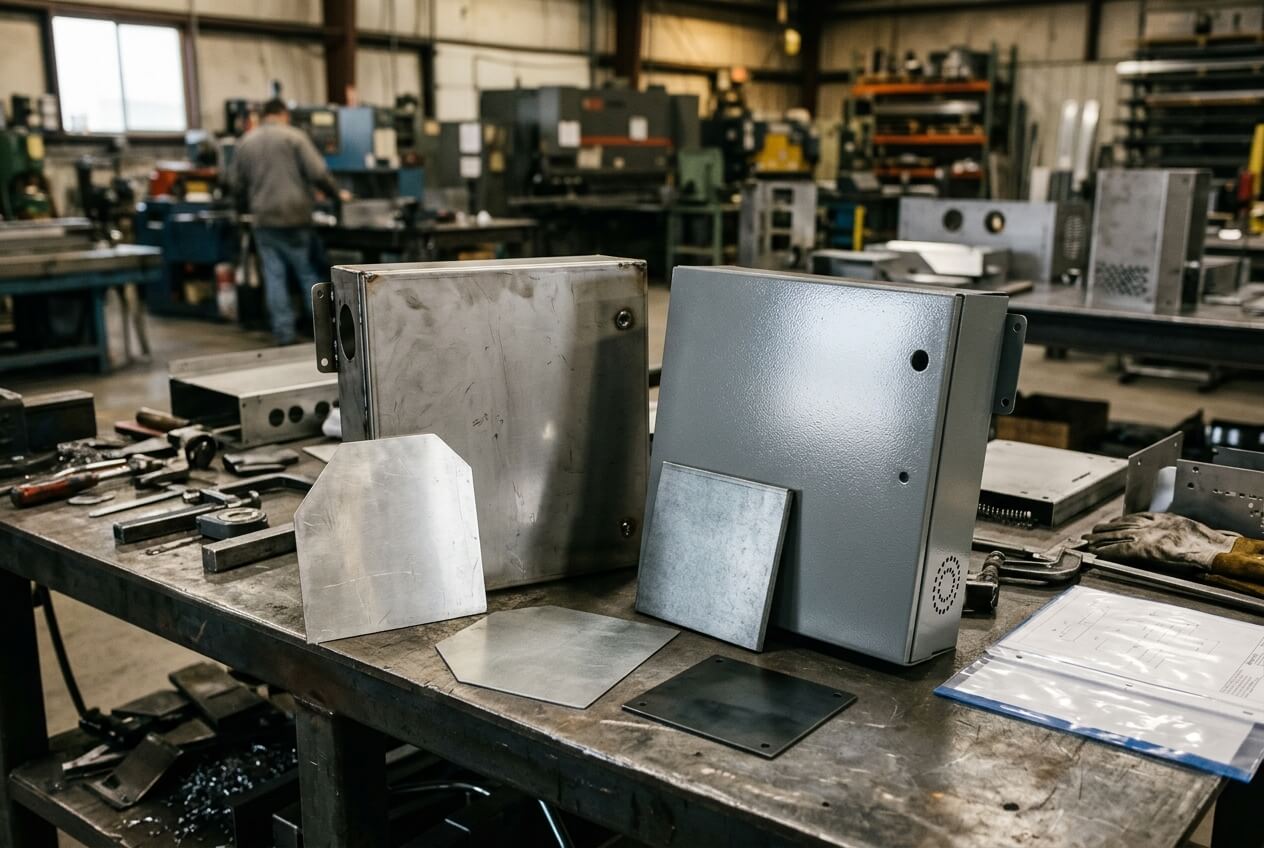
A strong prototype does not always prove batch repeatability. A skilled technician can adjust a flange, open a hole, chase a thread, polish a weld, or correct a door gap. Those actions may not appear in the approval report. They can later become hidden labor in production.
This risk grows when the selected material sits near the limit of the process. A cabinet panel may pass sampling because one operator controls the bend sequence carefully. During batch production, normal material variation can create inconsistent flatness. A welded frame may look square because the sample stayed clamped longer than planned. The batch may require a dedicated fixture to repeat that result.
Ask what happened during the sample build
Buyers should treat prototype approval as a manufacturing review, not only a visual sign-off. Ask whether the supplier changed holes, adjusted bends, reworked coating, corrected welding distortion, or used special handling. If the sample needed manual correction, decide whether the drawing, tolerance, fixture, or material should change before batch release.
For example, a removable rear panel on an electronics enclosure may fit during sampling after the supplier slightly enlarges two screw holes. If no one updates the drawing, the batch repeats the original tight condition. Assembly slows down, coated screws scrape, and the buyer receives complaints even though the prototype passed.
Another example involves a stainless steel internal bracket with two bends and a welded nut. The prototype fits the mating machine part. Later, batch parts show nut position variation because welding heat pulls the thin flange. The real issue combines material, heat, tolerance, and assembly function. A clearer RFQ could have identified the nut position as critical and justified a fixture or a design change.
Before issuing the batch purchase order, procurement should confirm the production material grade, thickness tolerance, coating route, inspection dimensions, weld fixture needs, and packaging method. These checks protect lead time too. Late material or finish changes can delay cutting, bending, coating, and assembly slots.
What to Freeze Before Comparing Metals Fabrication Quotes
Price comparison only works when suppliers price the same risk. A lower quote may exclude grinding, masking, fixture welding, coating allowance, or inspection records. A higher quote may include those items because the supplier saw the production problem earlier.
The goal is not to over-specify every detail. The goal is to stop suppliers from guessing differently. A practical RFQ package should include 2D drawings, 3D files if available, prototype quantity, batch or annual quantity, target material or approved alternatives, finish expectations, critical tolerances, mating part details, and assembly function.
Separate fixed requirements from flexible choices
Some requirements cannot move. Compliance, load, corrosion exposure, grounding, customer appearance, or a mating interface may force a specific material or tolerance. Other items may allow alternatives. State that difference clearly. For example: “Quote cold rolled steel with powder coating, and advise whether galvanized sheet improves corrosion resistance without affecting welded corners or coating adhesion.”
Do the same with tolerances. Tight tolerances on every edge increase inspection and scrap. Mark the holes, tabs, gasket faces, hinge lines, or frame surfaces that drive assembly fit. Let the supplier use normal sheet metal tolerance where it does not affect function.
Ask suppliers to list assumptions and exclusions in the quotation. Useful items include material grade, thickness, finish process, masking, weld grinding, cosmetic standard, inspection method, fixtures, packaging, and lead time triggers. This makes quote comparison slower at the start, but it reduces post-prototype price changes.
Yishang can review drawings, material requirements, finish expectations, tolerances, prototypes, and assembly notes before a custom sheet metal fabrication quote is finalized. That review works best when buyers share the product environment and batch target, not only a flat drawing.
Preparing an RFQ for a metal enclosure, cabinet, bracket, frame, panel, housing, or welded assembly? Send Yishang your drawings, material requirements, quantities, critical tolerances, finish expectations, and target prototype or batch schedule.
Include photos, mating part details, coating notes, cosmetic standards, and assembly concerns if available. Yishang can review the material-process assumptions behind the quote before they become prototype rework, batch cost changes, or fit problems. Start with Yishang sheet metal fabrication.
Frequently Asked Questions
What should OEM buyers prepare before requesting a sheet metal fabrication quote?
Buyers should prepare drawings, material grade, sheet thickness, quantities, tolerance notes, finish expectations, and any assembly or inspection requirements. The clearer the RFQ, the fewer assumptions the supplier needs to make during quoting.
Why do sheet metal fabrication quotes vary between suppliers?
Quotes often vary because suppliers make different assumptions about tolerances, material yield, finishing steps, welding complexity, inspection needs, packaging, and lead time. A detailed RFQ helps buyers compare quotations on the same technical basis.
How can tolerance requirements affect fabrication cost?
Tight tolerances may require more controlled cutting, forming, fixturing, inspection, or secondary work. Buyers can control cost by separating fit-critical dimensions from non-critical dimensions instead of applying tight tolerances everywhere.
When is a prototype recommended before batch production?
A prototype is useful when the part has tight fit-up, visible surfaces, welded assemblies, complex bends, or mating components. It helps confirm manufacturability, assembly behavior, and finish expectations before larger quantities are produced.
What surface finish details should be included in an RFQ?
Buyers should specify finish type, color, coating thickness if required, cosmetic surfaces, corrosion expectations, masking areas, and any visual acceptance standard. This avoids finish-related rework or quote changes later.
How can Yishang support custom sheet metal fabrication projects?
Yishang can review drawings, clarify fabrication requirements, discuss materials and finishes, support prototypes, and prepare for batch production based on the buyer’s RFQ details.