
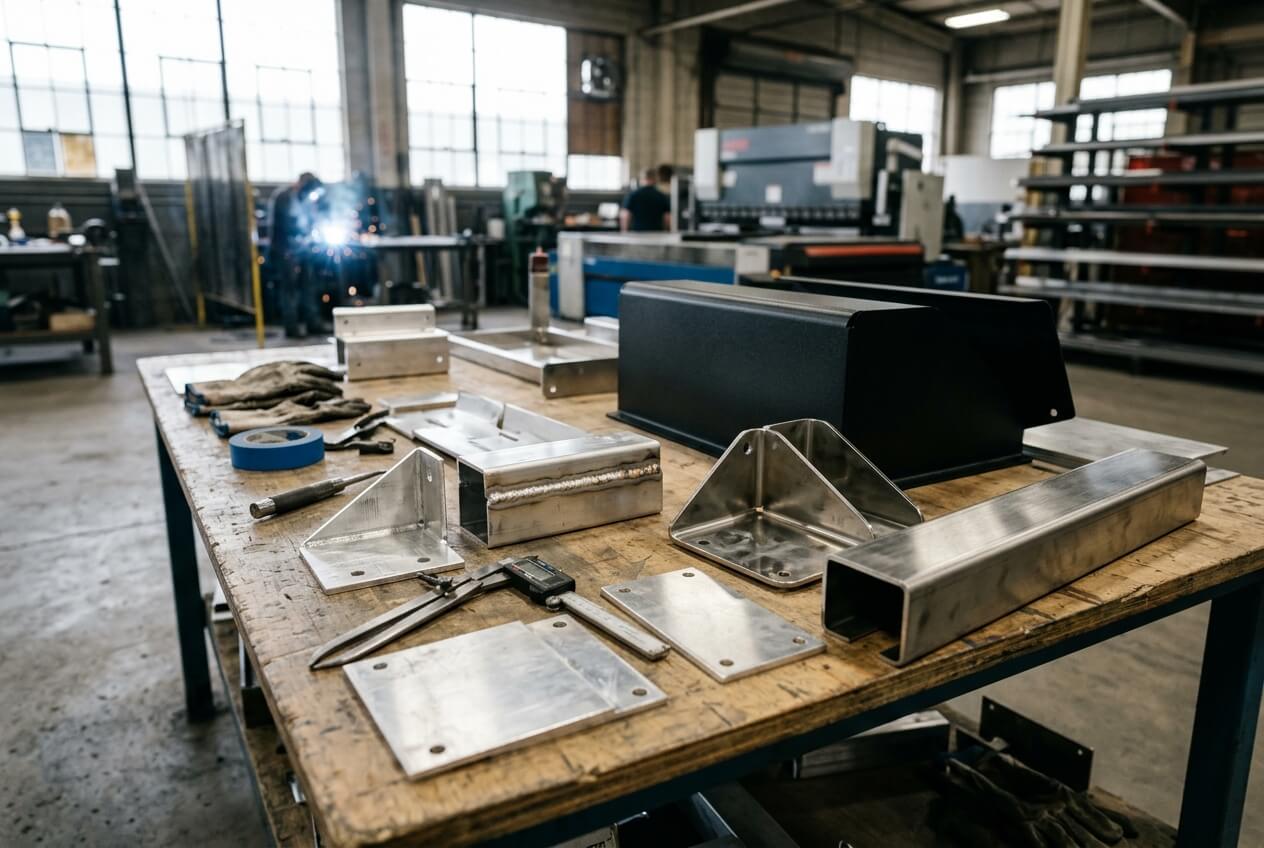
An OEM buyer sends one RFQ for a powder-coated aluminum enclosure to three suppliers. The drawing says only "aluminum, 2.0 mm, black powder coat." It also shows bends, mounting holes, PEM fasteners, and one welded corner.
One aluminum fabrication shop quotes 5052. Another assumes 6061-T6. A third does not state the alloy or temper at all. The lowest unit price looks easy to approve, but production may expose a different cost: cracked bends, distorted welded corners, tight coated holes, sanding marks under paint, or panels that no longer align during assembly.
This article focuses on one procurement risk: incomplete aluminum RFQs create quote assumptions that buyers cannot compare. The risk starts with a short material or finish note. It moves into bending, welding, finishing, tolerance, inspection, and packing decisions. It then appears as rework, delayed approval, supplier change requests, or inconsistent batch parts.
When "Aluminum Sheet" Turns One RFQ Into Three Different Quotes
Many buyers shorten the material callout when they need a fast price. They write "aluminum sheet" and expect each supplier to quote the same part. That rarely happens. Aluminum grade, temper, thickness range, grain direction, surface condition, and protective film can all change the fabrication route.
A shop that assumes 5052 may plan safer bending and welding for a formed enclosure. A shop that assumes 6061 may build the quote around strength but add risk at tight bends. Another supplier may quote a generic stock material and leave the decision open until purchase order stage. The three prices may look like market competition, yet they describe different risk levels.
The quote gap starts before production
The problem usually starts in the drawing package, not on the shop floor. A part copied from a steel design may keep sharp bends and short flanges. A part copied from a machined aluminum design may use 6061 because the old component needed stiffness. Sheet metal does not follow the same rules. If the RFQ does not explain the function, suppliers fill the blanks with their own habits.
For example, a buyer may request a small electronics enclosure with a smooth front face, four bent sides, PEM inserts, and two welded seams. If the RFQ only states material and color, one supplier may include bend-risk review, weld cleanup, deburring, and cosmetic handling. Another may quote basic cutting, bending, and coating. The cheaper offer may not include the work needed to make the enclosure acceptable.
The buyer does not need to write a textbook specification. A short functional note helps. State whether the part needs bendability, corrosion resistance, stiffness, cosmetic appearance, low weight, weldability, or electrical grounding. When Yishang reviews drawings for custom sheet metal fabrication, this context helps the team question risky assumptions before the quote becomes the purchasing benchmark.
Why Alloy Assumptions Change Bend, Weld, and Hole Decisions
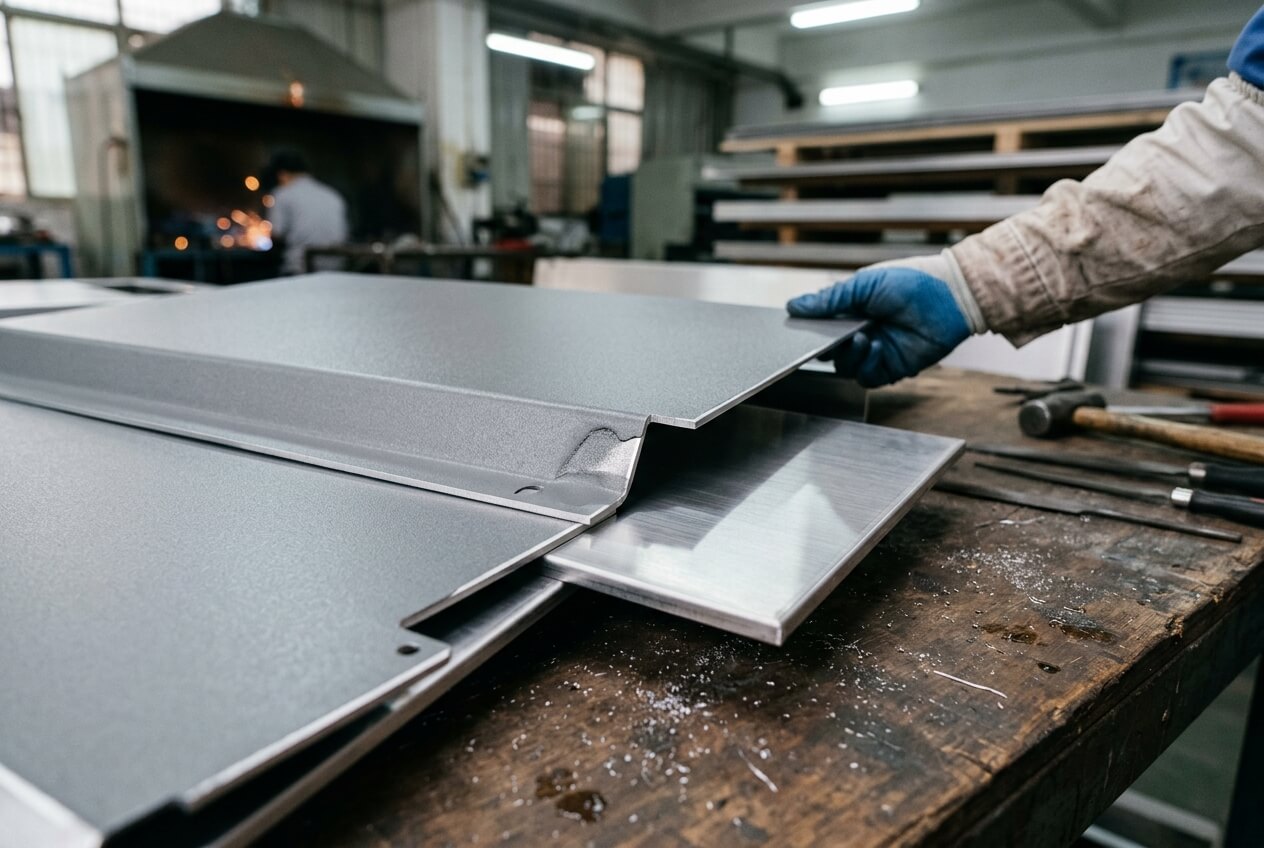
Aluminum material choice affects more than raw material cost. It changes the bend radius, springback expectation, weld sequence, fixture need, and edge finishing labor. If the alloy remains unclear, the quote may hide the most expensive operations.
Consider a 2.5 mm aluminum mounting bracket for equipment. The buyer asks for 6061 because the bracket carries load. That may be reasonable. However, the drawing places two slotted holes close to a bend line and requires a tight inside radius. One supplier may enlarge the bend radius and adjust the flat pattern before quoting. Another may quote exactly to the drawing and hope the bend works. Those offers do not carry the same production risk.
Bends create early warning signs
Tight bends, small return flanges, holes near bends, louvers, embossing, and cosmetic outside bend faces deserve attention during RFQ review. Aluminum may crack, mark, or spring back more than the buyer expects. A quote that excludes engineering review may appear lower because it ignores these issues.
Buyers can reduce this risk by marking critical bend areas and explaining which dimensions drive assembly. If a bend radius can change, say so before quotation. If an outside face must remain clean after bending, mark it as visible. These notes help the fabrication shop choose tooling, handling protection, and inspection points.
Welding can turn a low price into a rework cost
Welded aluminum assemblies create another assumption trap. Thin aluminum moves under heat. Long seams can pull frames out of square. Ground welds can still show through powder coating if the surface preparation is poor. A low quote may exclude fixtures, controlled weld sequence, or cosmetic weld cleanup.
A realistic case is a lightweight display frame made from laser-cut and bent aluminum parts. The buyer wants clean corners and consistent alignment for shelves. If the RFQ only states "welded frame, powder coat black," suppliers may price very different routes. One may include a fixture and post-weld straightness checks. Another may rely on manual fitting. The first price looks higher, but it may protect batch consistency and reduce sorting later.
Finish and Tolerance Notes Can Prove the Quote Was Not Complete
Buyers often treat finish as the last operation. In aluminum sheet metal work, finish requirements change earlier decisions. Powder coating, brushing, polishing, masking, and cosmetic bare surfaces affect cutting, deburring, welding cleanup, handling, inspection, and packing.
The risk grows when the RFQ says only "black powder coat." That phrase does not define color standard, gloss, texture, coating thickness, masking areas, visible faces, or acceptance level for weld shadows. A supplier that includes sanding and protected handling will not price the same as a supplier that assumes normal tool marks can remain under coating.
Coating thickness can create assembly failure
Powder coating adds thickness. On a flat cover, this may cause no problem. On hinge holes, threaded inserts, slots, tabs, locks, sliding features, or mating bracket faces, coating buildup can stop assembly. If the buyer does not mark masked areas or critical fits, the supplier may coat everything by default.
Picture a control cabinet panel with cutouts for switches, hinge holes, and an internal bracket pattern. The raw prototype fits. After coating, two holes become tight and one hinge sits under pressure. The root cause did not start with the coating line. It started when the RFQ failed to identify which holes and mating faces controlled assembly.
Tolerance notes create the same problem. A drawing may show overall size but leave hole positions under a general tolerance. One supplier may inspect every mounting hole because it understands the assembly. Another may inspect only overall dimensions. The parts may pass one interpretation and fail the buyer’s build.
Cosmetic surfaces need clear boundaries
Aluminum scratches easily during cutting, bending, welding, transfer, and packing. Protective film, tool protection, sanding direction, careful stacking, and separate packaging all add cost. If the buyer does not mark visible surfaces, quote comparison becomes unreliable.
A simple surface classification can prevent disputes. Mark "visible after installation," "internal non-visible," and "mask before coating" on the drawing or RFQ notes. This does not overcontrol the supplier. It tells the shop where cosmetic labor matters and where normal fabrication marks may be acceptable.
Prototype Approval Can Hide the Assumptions That Made the Sample Work
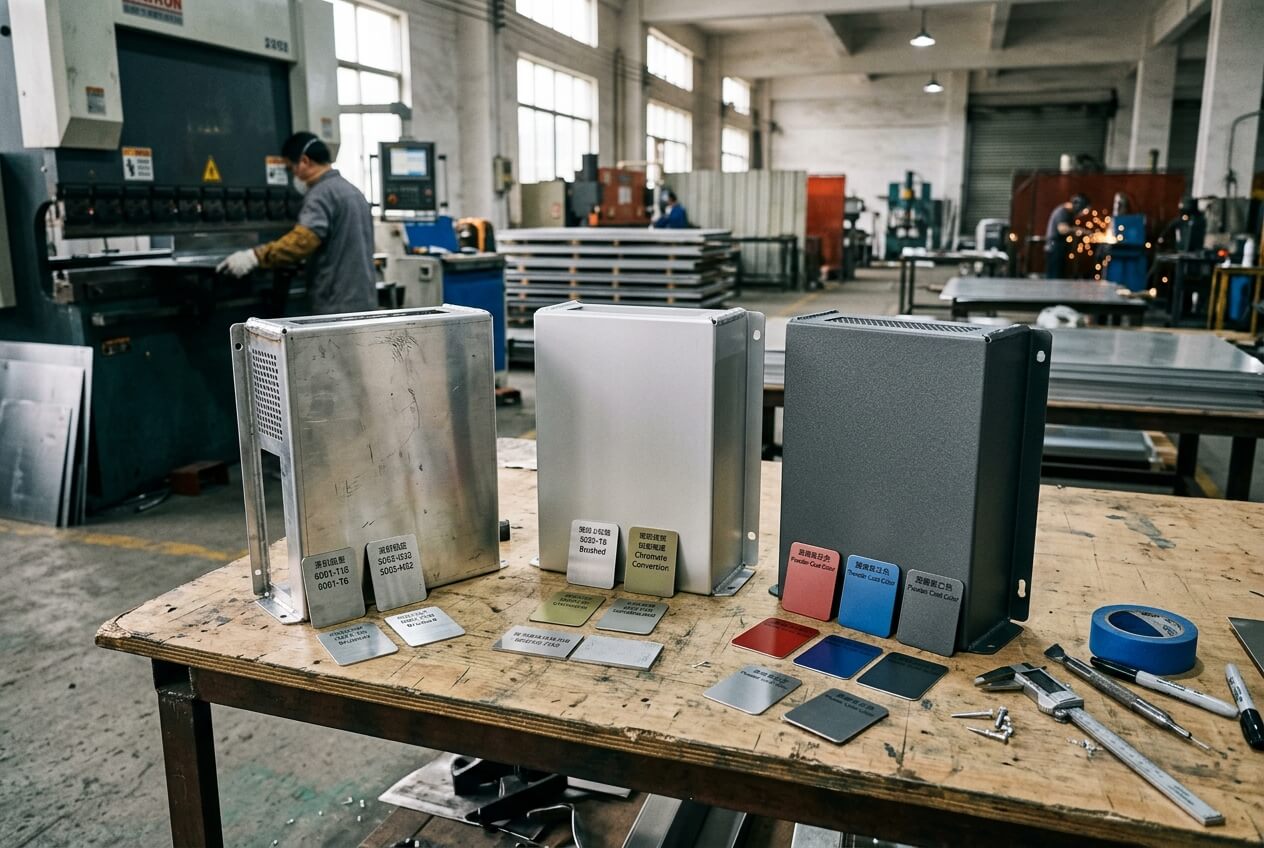
A buyer may approve one aluminum prototype because it fits and looks acceptable. That approval does not always protect the batch. The prototype may include extra hand deburring, slow bending, manual hole correction, careful weld straightening, or surface cleanup that the production quote does not include.
The risk appears when nobody records how the sample passed. A technician may adjust the bend angle after springback. A welder may clamp the frame differently to control distortion. A finisher may sand one visible face more carefully than planned. If these actions stay informal, the first batch may repeat the original problem.
Raw prototypes do not prove coated fit
A raw aluminum sample can confirm basic shape, flat pattern, and assembly concept. It cannot prove final coated clearance, gloss consistency, weld visibility, masking quality, or scratch sensitivity. If appearance or assembly fit matters, approve a finished prototype or at least a finish coupon made with the intended preparation and coating process.
For example, a prototype enclosure may accept the customer’s PCB tray after two slots get filed by hand. If the buyer approves only the final sample, batch parts may arrive with the same tight slots. The supplier may argue that the parts match the original drawing. The buyer may argue that the approved sample fit. Both sides lose time because the correction never became a controlled requirement.
Batch consistency needs controlled assumptions
Aluminum batch consistency depends on repeatable inputs. These include alloy and temper, sheet thickness range, bend tooling, bend sequence, weld fixture, cooling method, deburring standard, coating thickness, and packing method. The buyer does not need to manage every shop operation. However, the RFQ should identify the features that cannot drift.
Yishang can support this stage by reviewing prototype notes, marked-up drawings, finish comments, and assembly feedback before batch quotation. That review keeps the conversation tied to production risk, not only to the approved sample. It also helps separate acceptable supplier methods from uncontrolled manual fixes.
What to Lock Before Comparing an Aluminum Fabrication Shop Quote
Price comparison should start after the main assumptions become visible. Otherwise, the lowest quote may only reflect missing work. Buyers should not demand unnecessary detail, but they should lock the inputs that affect alloy behavior, finish acceptance, assembly fit, and repeatability.
Before approving a quote, ask each supplier to confirm the aluminum grade and temper, or explain the alternative they plan to use. Confirm thickness, bend radius expectations, and any bends near holes or cosmetic faces. Identify critical dimensions, especially mounting holes, enclosure openings, hinge locations, mating bracket faces, and welded frame squareness.
Finish notes deserve the same discipline. State color reference, gloss, texture, coating thickness range, masking areas, visible surfaces, and protected contact points. If the part needs PEM fasteners, threads, inserts, or hardware after coating, clarify the order of operations and inspection method.
Supplier communication should focus on assumptions, not general capability claims. Ask what the quote includes and excludes. Ask whether fixtures, weld cleanup, deburring, coating protection, packing, and first article inspection are included. If the supplier proposes a design change, request the reason and the impact on cost, lead time, and batch consistency.
Lead time also ties back to assumption control. A quote based on stock alloy, simple finish, and loose inspection may move faster than a quote that includes special material, masking, cosmetic sanding, or fixture work. Faster is not always wrong. It only becomes risky when the schedule hides a process that the part actually needs.
Need a quote for aluminum sheet metal parts, enclosures, brackets, frames, cabinets, or welded assemblies? Send Yishang your drawings, material requirements, quantities, tolerances, finish expectations, photos, samples, and prototype notes. The team can review alloy assumptions, bend risk, weld cleanup, coating buildup, cosmetic surfaces, and assembly fit before you compare unit prices. Start your RFQ at https://zsyishang.com/.
Frequently Asked Questions
What should OEM buyers prepare before requesting a sheet metal fabrication quote?
Buyers should prepare drawings, material grade, sheet thickness, quantities, tolerance notes, finish expectations, and any assembly or inspection requirements. The clearer the RFQ, the fewer assumptions the supplier needs to make during quoting.
Why do sheet metal fabrication quotes vary between suppliers?
Quotes often vary because suppliers make different assumptions about tolerances, material yield, finishing steps, welding complexity, inspection needs, packaging, and lead time. A detailed RFQ helps buyers compare quotations on the same technical basis.
How can tolerance requirements affect fabrication cost?
Tight tolerances may require more controlled cutting, forming, fixturing, inspection, or secondary work. Buyers can control cost by separating fit-critical dimensions from non-critical dimensions instead of applying tight tolerances everywhere.
When is a prototype recommended before batch production?
A prototype is useful when the part has tight fit-up, visible surfaces, welded assemblies, complex bends, or mating components. It helps confirm manufacturability, assembly behavior, and finish expectations before larger quantities are produced.
What surface finish details should be included in an RFQ?
Buyers should specify finish type, color, coating thickness if required, cosmetic surfaces, corrosion expectations, masking areas, and any visual acceptance standard. This avoids finish-related rework or quote changes later.
How can Yishang support custom sheet metal fabrication projects?
Yishang can review drawings, clarify fabrication requirements, discuss materials and finishes, support prototypes, and prepare for batch production based on the buyer’s RFQ details.