
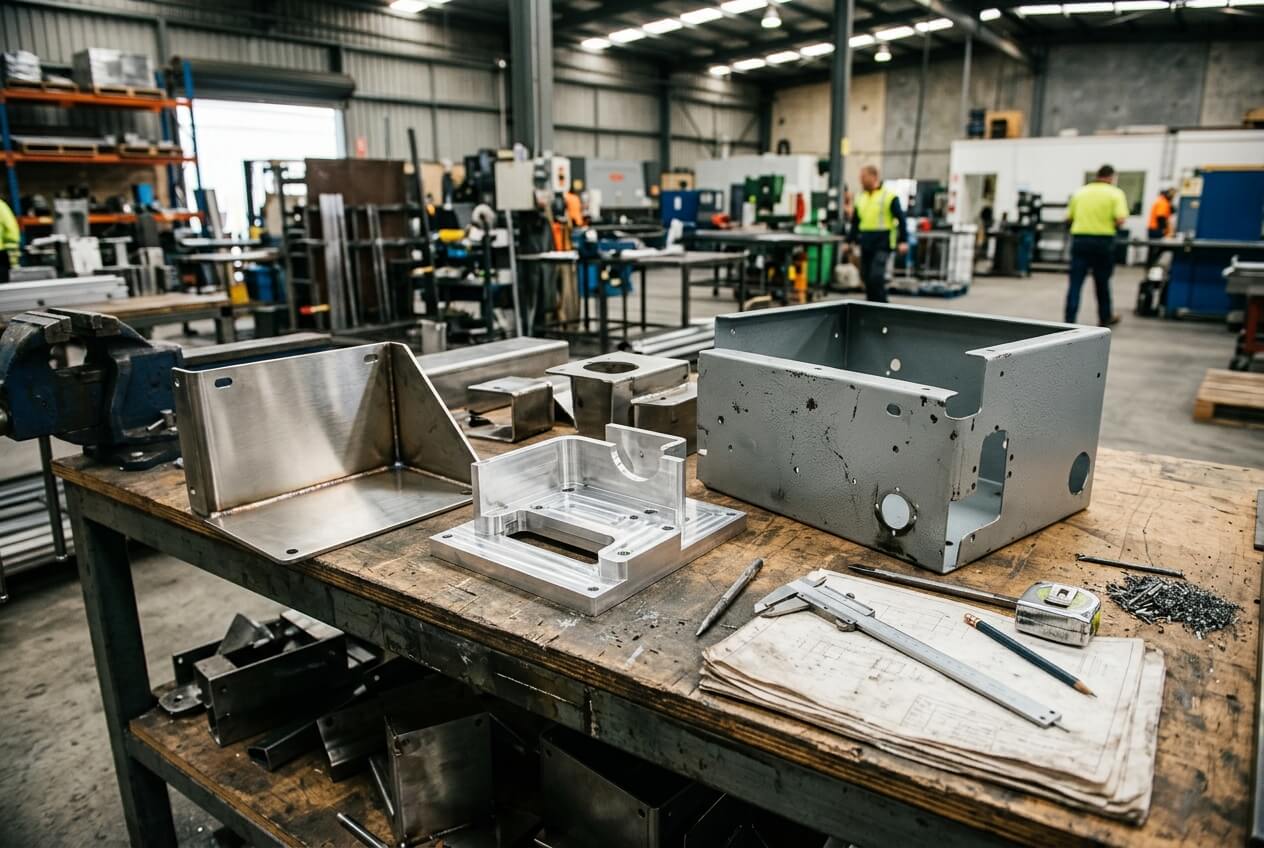
An OEM buyer sends one RFQ for a powder-coated control enclosure. The drawing shows folded panels, welded corner tabs, PEM-style fasteners, hinge gaps, and a short material note: aluminum or stainless steel acceptable. One supplier prices an easy-form aluminum sheet. Another includes stainless welding cleanup. A third asks where the enclosure will be installed and whether the front face is cosmetic.
Those suppliers are not only offering different prices. They are pricing different manufacturing routes. The buyer sees a spreadsheet comparison, but the numbers do not describe the same material risk, finish risk, inspection effort, or assembly fit. That is the procurement problem behind many custom machining solutions for sheet metal parts.
The risk starts before production. A vague RFQ lets each supplier fill in missing details with different assumptions. Those assumptions then affect laser cutting, bending, welding, powder coating, masking, inspection, packing, and lead time. A low unit price may exclude the work that keeps a cabinet door aligned, a bracket flat, or a welded frame square after finishing.
This article focuses on one buyer risk: RFQ ambiguity that makes quotes look comparable when they are not. Material, tolerance, finish, prototype approval, and batch consistency all matter, but they matter because unclear quote assumptions move hidden cost and failure risk into production.
Where Vague Material Notes Turn One RFQ Into Several Different Quotes
A material note such as aluminum, stainless steel, galvanized steel, or equivalent can help engineering keep options open. It can also make the RFQ unstable. Unless the buyer defines what must stay fixed, suppliers may choose different grades, thicknesses, bend radii, weld methods, and finish levels.
That gap changes the quote before anyone cuts metal. One supplier may focus on raw material cost. Another may select a grade that bends with less cracking risk. A third may include extra surface preparation because the part has visible faces. Procurement then compares prices that carry different assumptions.
The hidden route behind a simple material choice
Consider an outdoor equipment enclosure. The buyer allows aluminum or stainless steel to reduce cost pressure. Aluminum may cut weight and bend easily, but welded corners and visible powder-coated faces need careful distortion control. Stainless steel may improve corrosion resistance, yet weld discoloration, polishing, or passivation can add labor.
If the RFQ does not define outdoor exposure, cosmetic expectations, and welded seam requirements, two quotes may both look compliant. In practice, one quote may cover a basic fabricated box. The other may cover a finished enclosure that can survive installation and customer inspection.
A similar issue appears with internal brackets. A food equipment bracket may only support a sensor inside a covered area, or it may sit in a washdown zone. The phrase stainless bracket does not answer that question. Suppliers may quote different stainless grades, surface finishes, and cleaning expectations. The cost difference then comes from the use condition, not from supplier efficiency.
Before buyers rank quote totals, they should identify the main performance driver. Weight, corrosion resistance, stiffness, weld strength, conductivity, cosmetic appearance, and assembly fit do not point to the same material route. When the RFQ leaves that priority unclear, custom machining solutions become difficult to compare.
How Material Assumptions Distort Forming, Welding, and Finish Cost
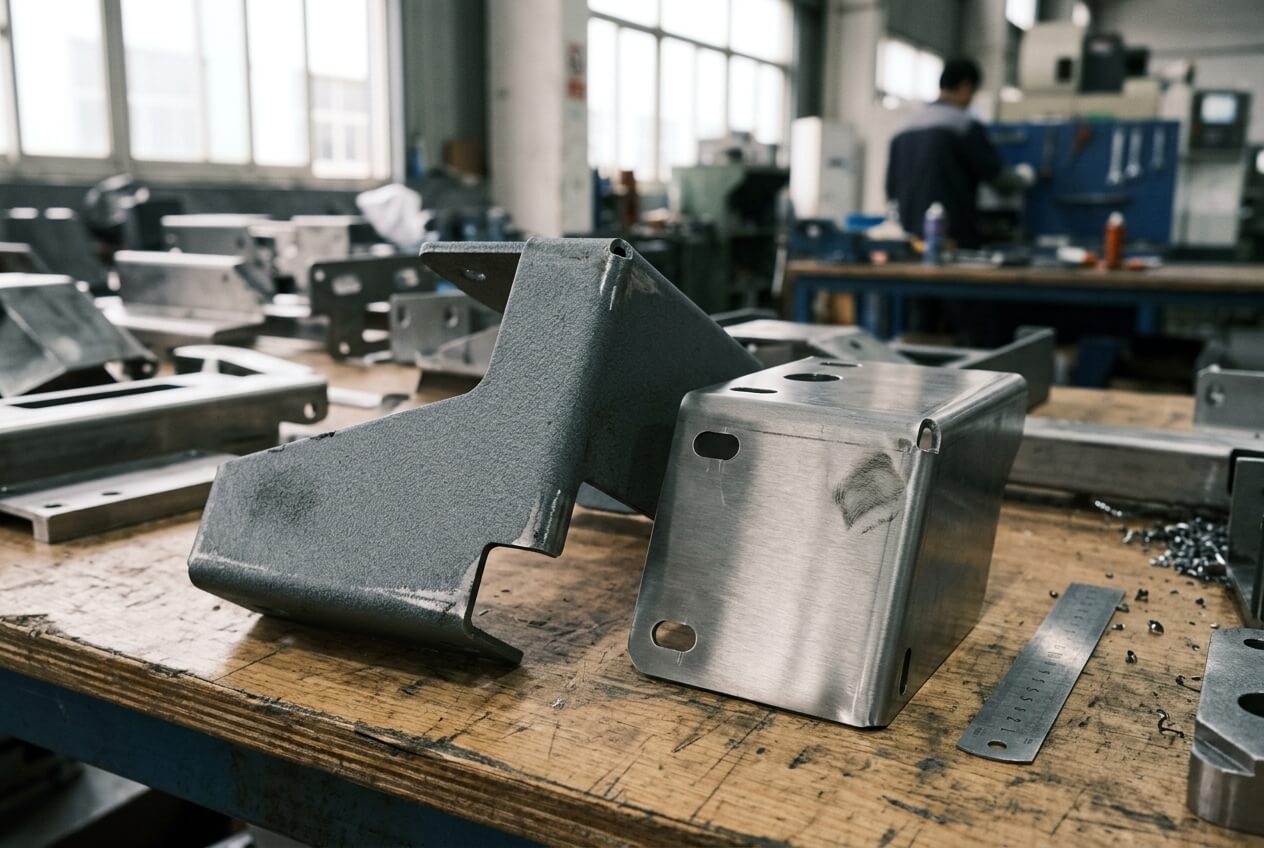
Material ambiguity rarely stays in the material line. It spreads into the process plan. A sheet that looks acceptable on a specification table may behave poorly after bending, welding, or coating. Suppliers then decide whether to include extra labor, larger scrap allowance, different tooling, or additional inspection.
Those choices can change both price and delivery time. They also explain why a cheaper quote may become expensive after the purchase order. The supplier may need rework, the buyer may need drawing changes, or the batch may miss assembly requirements.
Bends and holes expose early assumptions
A powder-coated steel panel with countersunk holes near bends creates a typical RFQ trap. If the sheet is too thin, the panel can oil-can after forming. If the sheet is too thick, press brake force increases and countersink depth becomes harder to control. A tight inside radius may work for one grade but crack another.
The drawing may show the final shape, but it may not explain which surfaces are cosmetic or which holes control alignment. A supplier who assumes standard forming may quote low. Another supplier may allow for bend testing, a safer radius, or inspection after forming. Both prices answer the same RFQ, but only one may reflect the real manufacturing risk.
Weld cleanup and coating change the quoted workload
Welding creates the same problem. Mild steel can offer a practical route for powder-coated cabinets and frames. Still, heat can pull mounting holes out of position if the weld sequence lacks control. Stainless steel reduces corrosion concerns, but it may need weld discoloration control. Aluminum reduces weight, yet welded and coated aluminum faces can show uneven cleanup if the RFQ expects a high cosmetic level.
Finish notes also create hidden variation. A drawing that says powder coat black does not define texture, gloss, coating thickness, masking, grounding points, or weld dressing. For a retail-facing display rack, visible weld marks may trigger rejection. For a hidden industrial support, the same marks may not matter.
Yishang can review these conflicts during drawing review when buyers provide application notes, not only CAD files. A note such as visible front panel in customer area gives the supplier a different quoting signal than rear frame, appearance not critical. That short sentence can prevent a quote based on the wrong finish route.
When Assembly Fit Gets Priced as Standard Fabrication Instead of Controlled Risk
Assembly fit often becomes the first visible consequence of RFQ ambiguity. A part may meet a general flat pattern, yet fail when it mounts to a machine, accepts a hinge, carries a gasket, or fits another fabricated component. The problem usually begins with missing control dimensions in the RFQ.
Standard sheet metal tolerances may suit covers, guards, and non-critical panels. They may not suit door gaps, sliding brackets, gasket faces, or welded frames that bolt to existing equipment. When the buyer does not identify those interfaces, the supplier may price the part as ordinary fabrication.
Project example: cabinet door gaps after coating
An OEM orders a small electrical cabinet with a formed door, welded hinge mounts, and black powder coating. The prototype closes after light hand adjustment. The RFQ did not define the target door gap, coating buildup around hinge holes, or masking on the latch area.
During batch production, powder coating reduces clearance near the hinges. Some doors rub. Others need extra adjustment before packing. The issue did not start at assembly. It started when the quote treated coating as a finish only, not as a dimensional factor. The buyer should have clarified post-coating clearances, masked zones, hinge alignment, and inspection points before comparing prices.
Project example: brackets that fit the drawing but miss the machine
A manufacturer sources formed mounting brackets for a conveyor upgrade. The drawing shows hole positions and a general bend angle. It does not show the mating rail, slotted adjustment range, or which hole pair sets the datum. One supplier quotes standard bend tolerance. Another asks for the mating assembly and includes extra inspection.
The lower quote may still produce brackets that match the drawing. However, small bend variation shifts the hole pattern when the bracket mounts to the rail. Installation crews then open holes or sort parts on site. The unit price looked better, but the project absorbed cost through field labor and schedule delay.
Buyers can reduce this risk by marking functional interfaces. They should identify datum holes, mating faces, gasket surfaces, hinge zones, slots, and clearance-critical areas. They should also state which dimensions require inspection after welding or finishing, not only after cutting.

Why Prototype Approval Does Not Remove RFQ Assumption Risk
A prototype proves that one part can be made. It does not prove that the quote assumptions can repeat across a batch. This matters for custom sheet metal fabrication because prototypes often receive more manual attention than production parts.
A technician may adjust a bend by hand, select a flatter sheet, spend extra time grinding a weld, or correct a frame before inspection. Those actions can create a good sample without creating a stable production method. If the buyer approves the sample only by appearance, the supplier may not know which controls must continue during batch production.
Manual corrections can hide weak controls
Welded assemblies show this risk clearly. A prototype frame may sit flat because the supplier clamps it carefully and corrects twist after welding. In production, heat distortion can move mounting points unless the supplier controls the weld sequence, fixture design, and inspection datums. A vague RFQ leaves those controls open to interpretation.
Material substitutions can also undermine repeatability. A supplier may use an equivalent sheet that meets a broad standard but behaves differently during bending or surface finishing. That may not matter for a simple cover. It can matter for a tight-fit enclosure, aligned bracket, or visible display fixture.
Sample approval should lock the assumptions that matter
After prototype approval, buyers should record what the sample proved. Did it prove cosmetic appearance, assembly fit, weld strength, coating color, packaging method, or production repeatability? Each answer points to different controls.
Useful approval notes include material grade and thickness range, bend radius, approved surface texture, visible face photos, weld cleanup level, coating supplier or color standard, masking method, inspection datum, and any manual adjustment made during sampling. These notes do not overcomplicate the project. They prevent the approved sample from becoming a one-off part.
When buyers send prototype feedback to Yishang, they should separate preferences from functional requirements. A small scuff on a hidden inner face may not need tighter control. A hinge gap, welded corner flatness, or gasket surface may need clear measurement. That distinction helps keep cost under control while protecting the real risk.
What Buyers Should Clarify Before Comparing Quote Totals
Procurement teams often need pricing before every engineering detail is final. That is normal. The key is to show suppliers which assumptions they may choose and which assumptions they must not change. Otherwise, the lowest quote may simply reflect the fewest included controls.
A strong RFQ does not need to become a long textbook. It needs to define the consequence areas that affect price, lead time, and reject risk. The buyer should make the supplier quote against the same material route, finish expectation, and inspection burden.
Clarify fixed requirements and negotiable options
Start with the installed use. State whether the part works indoors, outdoors, in humidity, near chemicals, in food equipment, in a retail display, or in general industrial service. Then identify the main priority: weight, corrosion resistance, stiffness, weld strength, conductivity, cosmetic surface, or assembly cost.
Next, mark the fabrication pressure points. Tight bends, long flanges, holes near bend lines, countersinks, welded corners, inserted fasteners, hinge areas, sliding fits, and gasket faces all change the manufacturing route. Suppliers can quote more accurately when they know which features drive failure risk.
Finish expectations also need boundaries. Define color, texture, gloss if relevant, visible faces, hidden faces, acceptable weld cleanup, masking areas, grounding points, thread protection, and coating thickness concerns. These notes stop suppliers from pricing a basic finish when the project needs controlled appearance or clearance.
Use quote questions to reveal hidden assumptions
Short questions often expose the real difference between suppliers. Ask which material grade and thickness they quoted. Ask what bend radius, weld method, and finish preparation they assumed. Ask whether visible welds receive grinding before coating. Ask which dimensions they inspect after welding and after coating.
Lead time should also connect to assumptions. A quote that includes fixture building, sample review, masking, or post-coating inspection may take longer than a basic fabrication quote. That extra time may prevent rework. If speed matters, buyers should ask which controls can stay and which cosmetic requirements can relax without affecting function.
For overseas sourcing, this clarification should happen before the purchase order. Once material is ordered and coating slots are booked, changes to grade, finish, tolerances, or assembly interfaces can affect cost and delivery. Clear RFQ communication protects both the budget and the schedule.
RFQ details that make supplier quotes comparable
- Drawings and files: 2D drawings, 3D CAD, flat patterns if available, and revision level.
- Material limits: required grade, thickness range, allowed substitutions, and non-negotiable performance points.
- Functional interfaces: datum holes, mating faces, hinge areas, gasket surfaces, slots, and clearance-critical dimensions.
- Finish expectations: visible faces, color, texture, masking, threaded areas, grounding points, and weld cleanup level.
- Inspection needs: dimensions checked after forming, welding, coating, and final assembly.
- Commercial context: prototype quantity, batch quantity, target delivery, packaging needs, and sample approval criteria.
If competing quotes for an enclosure, cabinet, frame, bracket, panel, or welded assembly differ sharply, do not compare unit prices first. Compare the assumptions behind them. A quote that includes the right controls may look higher, but it may reduce rework, installation delays, and batch rejection.
For a clearer RFQ review, send your drawings, CAD files, material requirements, quantities, tolerances, finish expectations, assembly interfaces, and prototype feedback to Yishang. The team can review whether the quoted route fits the cutting, bending, welding, powder coating, inspection, and batch production risks behind your custom machining solutions.
Frequently Asked Questions
Why do sheet metal quotes vary so much when suppliers receive the same RFQ?
Large price gaps often come from different assumptions. One supplier may price a basic material and standard finish. Another may include weld cleanup, masking, tighter inspection, or a grade better suited to the use environment. Buyers should compare material, process, finish, tolerance, and inspection assumptions before comparing unit prices.
How should an RFQ define equivalent material for custom machining solutions?
Equivalent material should define the performance that cannot change. State the required thickness range, corrosion resistance, stiffness, weight target, weldability, coating compatibility, and cosmetic surface level. Without those limits, suppliers may choose grades that meet the wording but create different forming, welding, or finishing risks.
Which tolerances should buyers highlight instead of tightening every dimension?
Buyers should highlight dimensions that affect assembly fit and field performance. These include datum holes, hinge locations, gasket faces, mating flanges, slots, bracket alignment, and welded frame mounting points. Over-tightening every dimension raises cost, while missing the functional dimensions increases installation and rejection risk.
Why can powder coating create assembly problems after a prototype looks correct?
Powder coating adds thickness around hinges, slots, threads, latch areas, and mating faces. A prototype may close after manual adjustment, while batch parts rub or bind after coating. The RFQ should define masking, coating thickness concerns, clearances, and dimensions that require inspection after finishing.
What prototype approval notes help protect batch consistency?
Record the material, thickness, bend radius, weld cleanup level, finish standard, visible face photos, masking method, inspection datums, and any manual corrections made during sampling. These notes tell the supplier which controls must repeat during production and which sample details are only cosmetic preferences.
When should buyers ask for manufacturability feedback before awarding the purchase order?
Ask before award when the part has allowed material substitutions, tight bends, welded assemblies, cosmetic faces, powder coating, hinge gaps, gasket surfaces, or critical mounting holes. Early feedback helps align the quote with real production risk before material purchasing, tooling setup, and finishing schedules begin.