
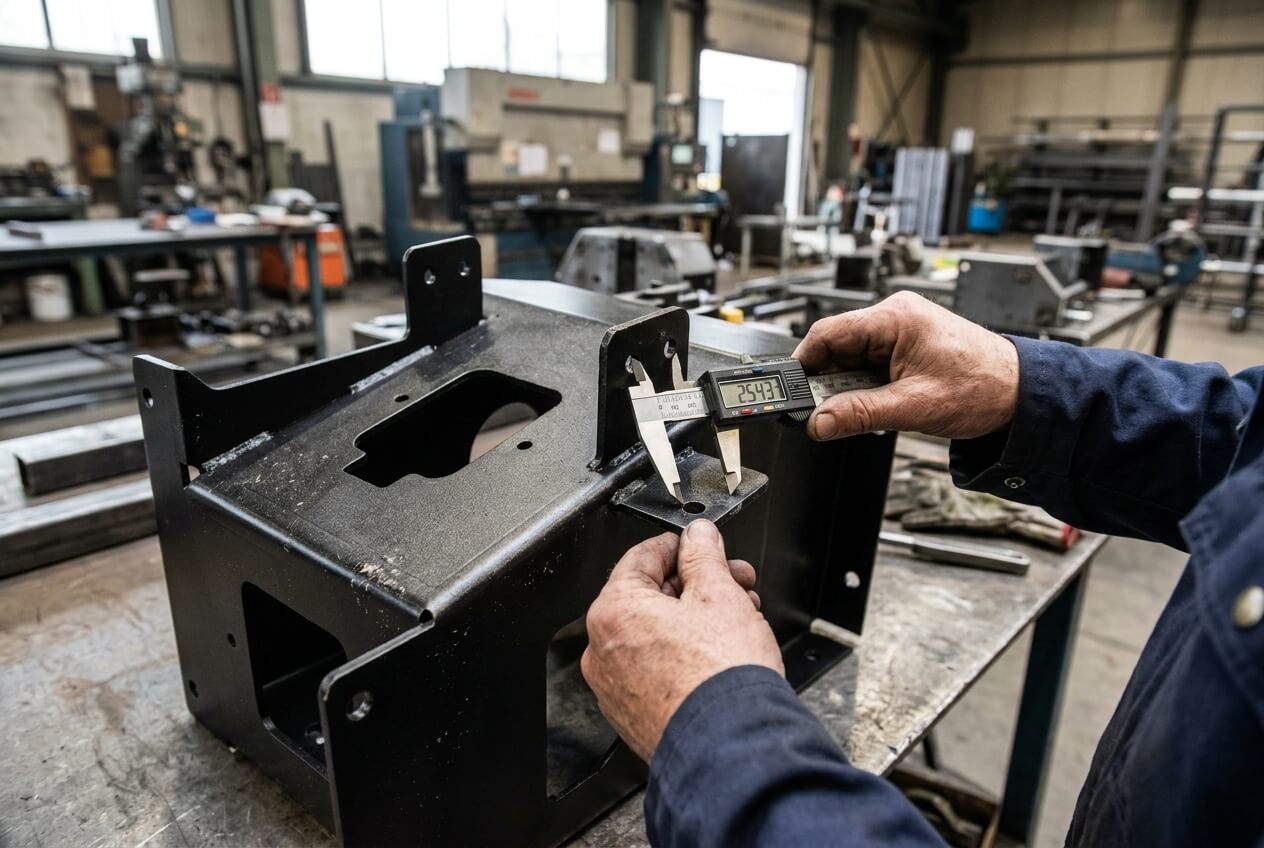
An OEM buyer can approve a black powder coated prototype and still receive a batch that fails assembly. The color may look right. The panels may feel smooth. The quote may also look competitive. Yet the first shipment can arrive with tight hinges, blocked mounting holes, exposed hook marks, uneven gloss, and scratches on customer-facing faces.
The failure often starts in the RFQ, not in the coating booth. Many drawings say only black powder coat powder or black powder coat, then leave the supplier to decide film thickness, masking, inspection stage, cosmetic surfaces, and packaging protection. Each supplier then prices a different job. One quotes simple coating. Another includes masking and finished-dimension checks. A third inspects only general appearance.
This article focuses on one procurement risk: unclear black powder coating requirements distort quotes before production starts. Once that happens, buyers compare prices that do not include the same responsibilities. Later, the same ambiguity creates rework, assembly delay, disputed defects, and inconsistent repeat batches.
Where Vague Black Powder Coat Powder Notes Distort Supplier Quotes
A black finish line on a drawing looks simple, but it controls several production decisions. The supplier must choose a coating type, gloss, texture, pretreatment approach, masking labor, inspection method, and handling process. If the RFQ does not define these points, the quote reflects assumptions instead of shared requirements.
That gap becomes expensive during supplier comparison. A smooth semi-gloss black finish on an indoor bracket does not require the same control as a fine-texture matte black finish on a visible electronics enclosure. A welded machine frame may need durable coverage on edges and corners. A retail display rack may need consistent appearance across all exposed rails. The words black powder coat powder do not tell the supplier which outcome matters most.
Same drawing, different quoted scope
Consider a control enclosure with a hinged front door, PEM nuts, grounding studs, and a removable top cover. Supplier A prices coating on all surfaces, with no masking except obvious threads. Supplier B masks grounding points, protects hinge areas, checks coating thickness, and measures critical holes after finishing. Supplier C quotes a lower price because it treats the finish as general cosmetic coating only.
The buyer may see three unit prices. In reality, the buyer has three different inspection plans. The lowest quote may exclude the work that prevents stiff hinges, failed grounding, and post-coating reaming. The higher quote may include labor that never appears as a separate line item.
Lead time changes for the same reason. Masking, fixture planning, sample approval, and packaging trials add time. If the RFQ hides these tasks, the supplier may promise a shorter schedule. Production then slows when the team discovers functional areas that cannot accept coating. A small missing note can push delay into the batch stage, where schedule pressure is highest.
Buyers should not try to specify every surface equally. They should identify the finish decisions that affect rejection. These usually include visible A-surfaces, threaded or fitted areas, grounding points, sliding or hinge interfaces, finished hole sizes, coating thickness range, and packaging contact areas.
Unmarked Masking Areas Turn Finish Ambiguity Into Assembly Risk
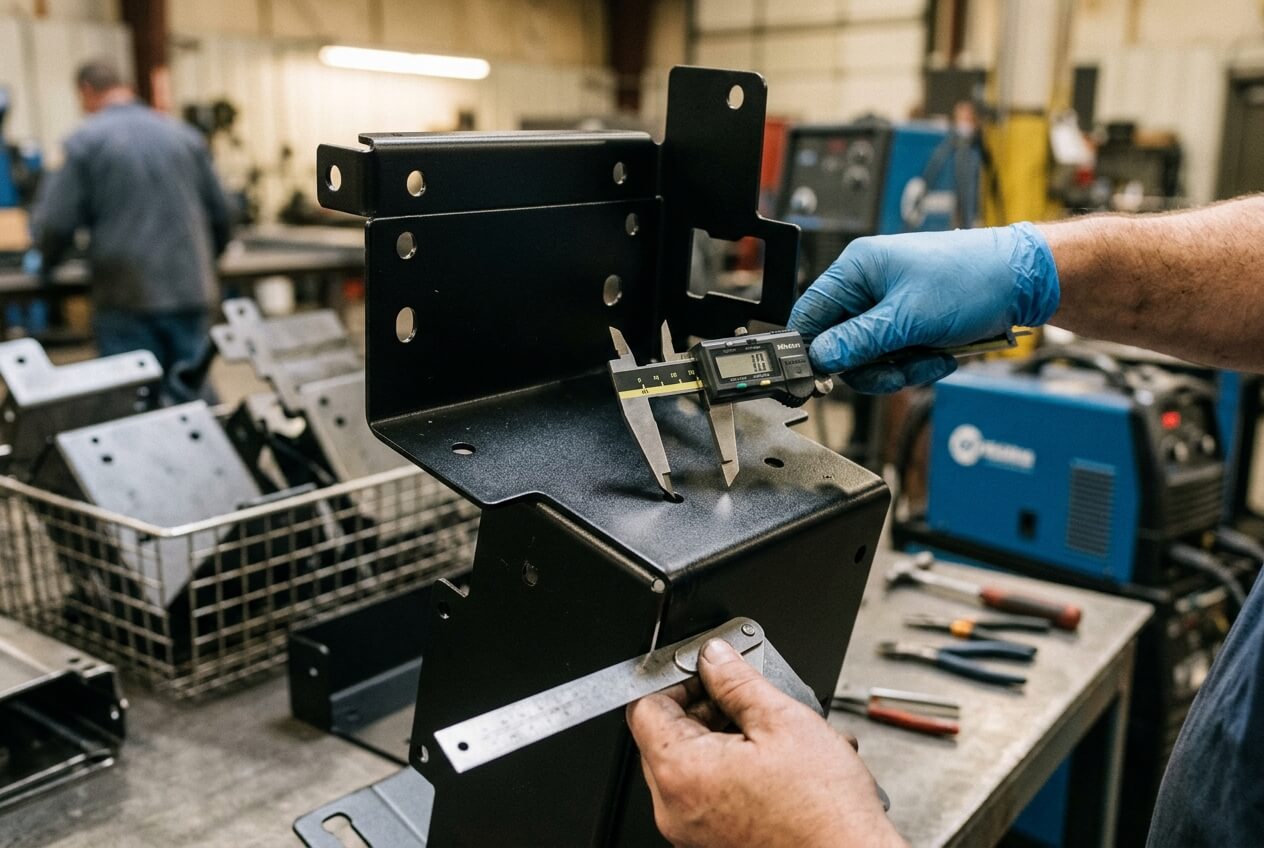
Masking often decides whether a black powder coated part assembles smoothly. It also changes cost. When the drawing does not mark masking zones, the supplier must guess which areas can accept coating and which areas must stay bare or controlled.
Powder coating adds thickness. That thickness can block screw holes, reduce slot clearance, change hinge movement, cover grounding surfaces, and interfere with hardware. A part can pass laser cutting and bending inspection, then fail after coating because the finished condition was never defined.
Functional surfaces need different rules than cosmetic surfaces
Threads, PEM nuts, bearing pads, countersinks, latch pockets, sliding rails, hinge barrels, label recesses, and electrical contact points often need protection. Some features need full masking. Others only need a coating allowance or post-coating go/no-go check. The right choice depends on function, tolerance, corrosion needs, and assembly sequence.
Over-masking also creates problems. Bare metal around a visible screw hole may look unfinished. Exposed steel may reduce corrosion resistance. Extra masking labor can increase cost without improving performance. Buyers should decide where coating must be excluded, not simply ask for maximum masking.
A bracket example shows the consequence chain. A buyer orders black powder coated wall brackets for equipment mounting. The RFQ shows hole diameter before coating but does not state the finished hole requirement. The supplier coats the holes. During assembly, bolts do not pass freely. Workers ream the holes by hand, chip the surrounding coating, and create inconsistent edges. The buyer rejects the batch for poor finish, while the root cause sits in the missing finished-hole instruction.
A better RFQ would mark the holes as finished critical features. It would state whether the supplier should mask them, enlarge the laser-cut diameter for coating build-up, or verify bolt fit after coating. That small note changes the quote, the inspection plan, and the production route.
Material thickness also matters here. Thin sheet metal parts can distort during bending, welding, and curing. A tight slot in 1.0 mm steel may behave differently from the same slot in a 3.0 mm bracket. If the buyer provides material, thickness, tolerance, and assembly hardware details together, the supplier can judge whether masking alone solves the problem.
Cosmetic Surfaces Create Quote Risk When Buyers Do Not Define Rejection
Black finishes can hide minor color differences, but they expose shape, handling, and surface defects. Matte black may reduce glare, yet show rub marks depending on texture. Gloss black can look premium on a small sample, then reveal waviness, weld grinding marks, fingerprints, and scratches on a large panel.
Suppliers cannot price cosmetic control accurately without knowing which faces matter. A visible front panel needs different acceptance rules than an internal mounting flange. A top rail on a retail frame may need strict hook-mark control. The underside of the same frame may not.
A-surfaces prevent disputes over normal coating marks
Drawings should mark A-surfaces and B-surfaces when appearance matters. Photos also help. Buyers can circle front faces, top covers, door edges, customer-facing rails, and shelf lips. The supplier can then plan hanging points, rack contact locations, handling gloves, inspection lighting, and packaging protection.
Without those markings, production may treat all surfaces under a general visual standard. That standard may allow small hook marks, light orange peel, minor texture variation, or handling marks in places the buyer later considers critical. The supplier may argue that the parts meet normal powder coating practice. The buyer may argue that the parts fail the product’s market expectation.
A retail display rack shows this risk clearly. The buyer approves one matte black sample upright. Batch production includes uprights, shelves, welded bases, and cross rails. The supplier hangs parts from convenient points. Some hook marks land on the upper front rails. Each mark looks small, but the assembled rack places them at eye level. The batch now creates a customer-facing defect that the quote never covered.
The earlier clarification should not say only no scratches. That phrase invites argument. A stronger note defines visible faces, viewing distance, acceptable texture range, gloss target if needed, handling expectations, and packaging contact limits. It can also state where small rack marks are acceptable.
Cost drivers then become visible. Stricter cosmetic control may require different hanging, more rack space, extra handling, added inspection time, protective film, or separated packaging. These steps can raise unit price and lead time. They may still cost less than sorting, repainting, or air shipping replacements after rejection.
Prototype Approval Fails When Batch Inspection Rules Stay Informal
A prototype often receives more attention than a batch. One experienced worker may spend extra time sanding welds, masking threads, adjusting the hinge, and packing the sample. The buyer approves the result. Problems begin when the supplier does not convert that sample into batch rules.
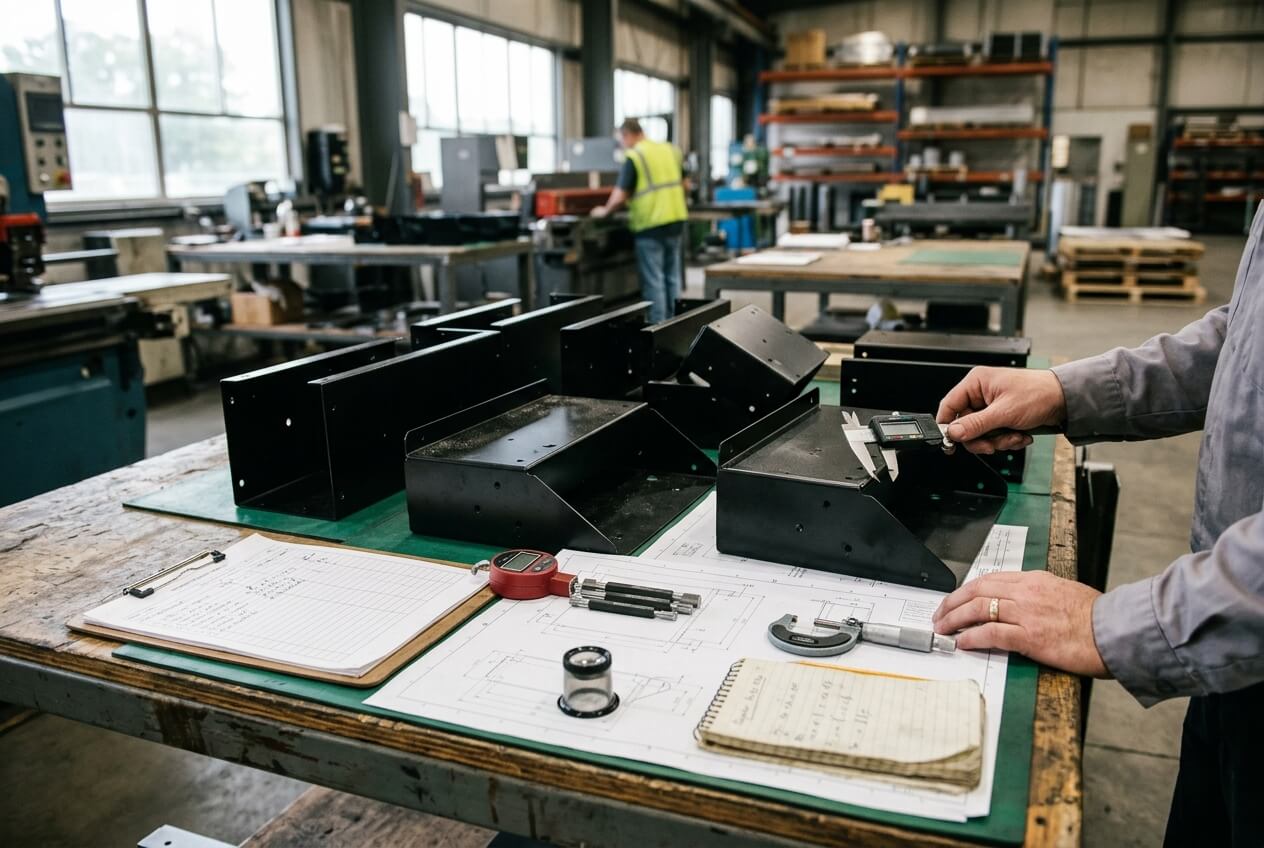
Prototype approval should freeze more than color. It should capture gloss, texture, A-surfaces, coating thickness expectations, masking zones, finished dimensions, repair limits, assembly checks, and packaging method. Otherwise, batch production relies on memory and interpretation.
Finished assembly checks must follow the sample
Finished dimensions need special attention. Powder thickness varies with part geometry, grounding, rack position, powder type, and operator control. Flat coupons do not behave like folded enclosures, welded frames, deep channels, or tight latch pockets.
An electronics enclosure may pass as bare metal. After coating, the door gap tightens because both the shell and door edges gained thickness. Workers force the door closed, chip the corners, and bend the hinge slightly. The defect looks like poor adhesion or rough handling. The real cause is missing clearance control after finishing.
The batch release plan should tell inspectors when to check a dimension. Some dimensions belong to bare-metal fabrication. Others must be verified after coating because the finished part must accept hardware or fit another component. Drawings should identify the finished critical dimensions clearly.
Batch consistency also depends on supplier communication. If the buyer asks for the prototype surface to be a little smoother, that comment needs a measurable or visual reference. A signed sample, finish code, gloss range, texture description, and marked photo reduce interpretation. They also help when replacement panels or repeat orders must match earlier shipments.
Yishang reviews black powder coated enclosures, brackets, frames, and welded assemblies by connecting fabrication details with finishing risks. That review has the most value before quotation locks, because coating decisions can change masking labor, fixture design, inspection time, and packaging method.
Clarify the Quote Package Before Price Comparison Locks In the Wrong Risk
Buyers can reduce rejection risk by making suppliers quote the same coating responsibilities. The goal is not to create a long specification for every surface. The goal is to remove assumptions that affect assembly fit, cosmetic acceptance, batch consistency, cost, and delivery.
A useful RFQ package starts with drawings. Include 2D drawings for tolerances and inspection dimensions. Add 3D files when geometry affects assembly, hinge movement, slots, covers, or brackets. State material grade, material thickness, quantity, expected batch schedule, and whether the part needs prototype approval before production.
The finish note should define the black powder coat powder expectation more clearly than color alone. Include gloss or texture, indoor or outdoor use, pretreatment concerns if corrosion matters, target film thickness where relevant, and whether the supplier should match an existing sample. If appearance matters, mark A-surfaces and provide photos.
Assembly details deserve equal attention. List hardware, mating parts, grounding points, inserts, sliding areas, hinge locations, latch areas, and bolt sizes. Mark holes or slots that must pass a finished go/no-go test. State whether coated dimensions or bare-metal dimensions control acceptance.
Packaging can protect or ruin the finish. Black panels and rails often show rub marks after transport. If customer-facing surfaces cannot touch each other, say so before quotation. The supplier may need dividers, bags, foam, film, or individual wrapping. Those choices affect price and packing volume.
Clear communication also improves lead time planning. Suppliers can schedule masking, coating trials, sample review, inspection, and assembly checks before the batch enters production. Late clarification creates line stoppages, rework, and arguments over who owns the extra cost.
For projects involving custom sheet metal fabrication, metal enclosures, brackets, frames, cabinets, or welded assemblies, buyers should send the complete risk picture before they compare suppliers. Drawings alone rarely show which coating assumptions can damage the project.
Practical next step: Send Yishang your 2D drawings, 3D files if available, material requirements, sheet thickness, quantities, tolerance notes, black powder coat powder expectations, cosmetic surface markings, masking needs, assembly hardware details, and packaging concerns. The team can review how cutting, bending, welding, coating, inspection, and packing should align before you approve the quote or release batch production.
Frequently Asked Questions
What should an RFQ say beyond black powder coat powder?
The RFQ should define gloss or texture, A-surfaces, masking zones, target film thickness, finished critical dimensions, assembly hardware, and packaging expectations. These details help suppliers quote the same work instead of making different assumptions.
When should holes be inspected after black powder coating?
Inspect holes after coating when bolts, pins, inserts, grounding hardware, or mating parts depend on the finished opening. If coating build-up can reduce clearance, mark the hole as a finished critical feature and define the acceptance method.
How do A-surfaces affect the quoted price of black powder coated parts?
A-surfaces require stricter control over scratches, hook marks, orange peel, gloss variation, handling marks, and packaging contact. The supplier may need different hanging points, more careful handling, added inspection, or extra protection during shipping.
Why can a prototype pass while the production batch fails?
A prototype may receive extra manual care that does not appear in batch instructions. Buyers should freeze the approved sample, masking rules, finished dimensions, cosmetic limits, assembly checks, and packaging method before production starts.
Does masking every functional area always reduce risk?
No. Excess masking can increase cost, expose bare metal, and create appearance or corrosion concerns. Buyers should mark areas that truly need protection and define where coating remains acceptable.
What information helps Yishang review black powder coated sheet metal parts?
Useful information includes drawings, material and thickness, quantities, tolerances, finish expectations, sample photos, A-surface markings, masking requirements, hardware details, assembly notes, and packaging concerns.