
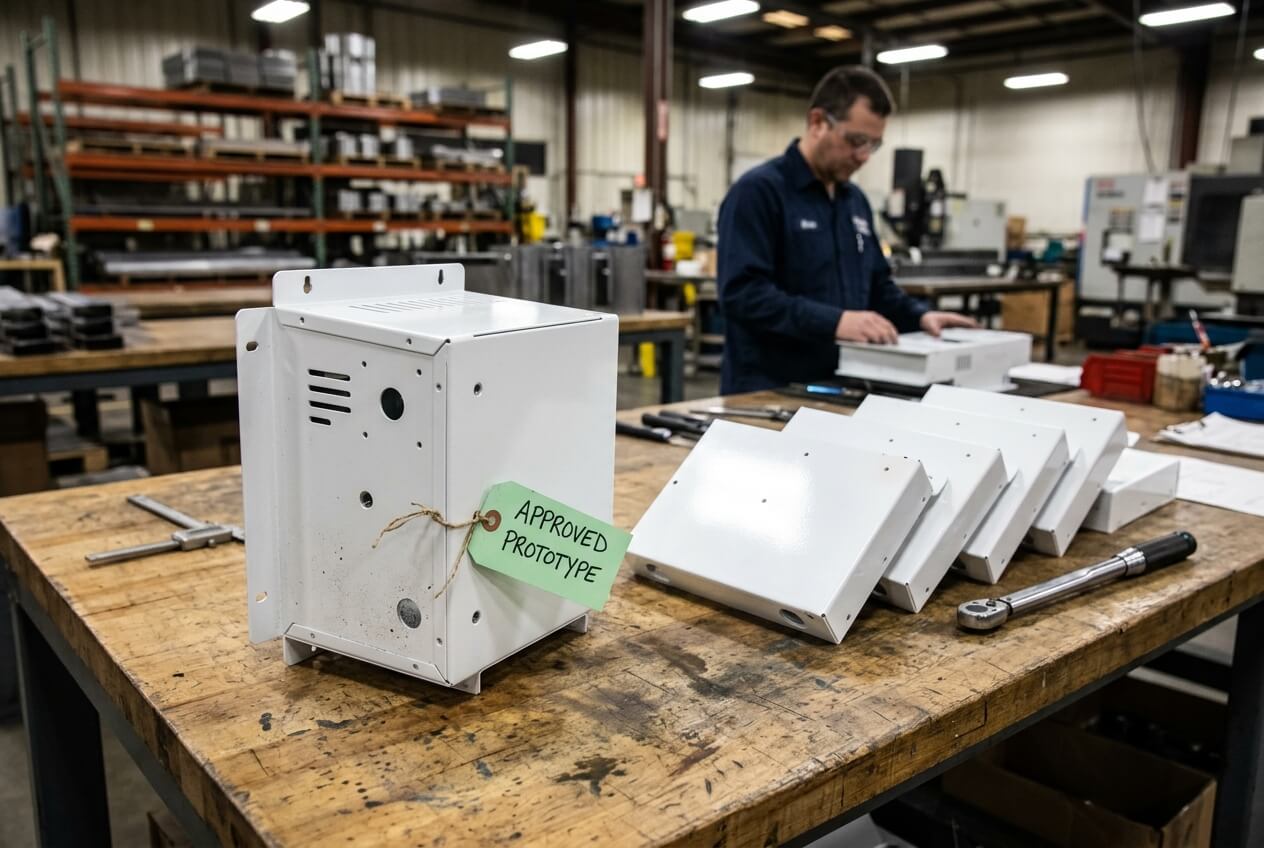
A sourcing engineer approves one white sheet metal enclosure after a prototype review. The door looks clean under office lighting. The gloss appears even. The latch closes without rubbing. Procurement releases a 500-piece order.
Six weeks later, the batch arrives with warmer doors, cooler side panels, heavier texture near welded corners, and visible mismatch at the seams. The supplier says the parts meet the drawing because the drawing only says “white powder coating.” The buyer expected the approved sample to define the batch.
This is the central procurement risk with a white powder coat finish: sample approval often becomes an informal standard, but it does not define how the supplier must repeat color, gloss, film thickness, masking, and assembly fit across production. White surfaces expose small process changes. A single good prototype does not protect a buyer from batch variation unless the RFQ, drawing, and release notes turn that sample into a measurable production requirement.
For custom sheet metal fabrication, the risk does not sit only in the powder booth. It starts in RFQ wording, drawing notes, material choices, bend and weld design, tolerance decisions, prototype records, and final inspection rules. If those details remain vague, two suppliers can quote the same part while assuming very different levels of finish control.
The Approved Sample Becomes Risky When It Is Not a Production Standard
Prototype approval often happens under schedule pressure. The buyer wants to lock the design, confirm the launch date, and release the first batch. One white sample may prove that a supplier can achieve the look once. It does not prove that doors, covers, brackets, frames, and welded assemblies will match each other after a full coating run.
White is less forgiving than black, grey, or textured dark colors. A small shift in cure temperature, powder lot, film thickness, substrate condition, or oven loading can change the perceived shade. On a black internal bracket, the buyer may never notice. On a white medical equipment panel, lighting housing, retail display rack, or cabinet door, the difference appears immediately when parts sit side by side.
Side-by-side assembly changes the inspection result
Many prototypes do not represent the final visual comparison. A buyer may approve one front cover, but the production unit includes a rear housing, side panels, hinge plates, latch area, and mounting brackets. If these parts come from different coating batches, the assembled enclosure can show a visible seam mismatch even when each part looks acceptable alone.
Consider a wall-mounted control cabinet. The prototype includes one door and one box. During batch production, the doors run on Monday and the housings run on Wednesday. The oven load changes, and the supplier uses a new powder lot. The finished cabinet still matches a broad “white” description, but the door edge looks warmer than the housing flange. The end customer rejects the cabinet because the mismatch sits on the front face.
A display rack creates a similar problem. The buyer approves one upright and one shelf. In production, multiple shelves, support brackets, welded bases, and side frames assemble into one retail fixture. A slight gloss or texture difference between components becomes obvious under store lighting. The finish dispute began when the sample approval did not define the batch comparison method.
The sample record must travel into production
Buyers should treat the approved sample as evidence, not as a complete specification. The approval record should state which white reference applies, which surfaces count as cosmetic, how much color drift the buyer accepts, and how the supplier should compare parts that meet at visible seams.
Photos alone rarely solve the problem. Cameras, screens, and lighting distort white. A stronger release package includes a physical master panel or approved part, a RAL or other color reference, a gloss range, and agreed lighting or measurement conditions. If the buyer cares about part-to-part matching, the approval should say so before production starts.
Vague RFQ Wording Lets Suppliers Quote Different Levels of White Control
Procurement teams often compare unit prices before they compare assumptions. That becomes dangerous when the RFQ says “white powder coat,” “pure white,” “very white,” or “same as photo.” These phrases do not tell a fabricator which powder chemistry, inspection method, masking standard, or rework allowance to include in the quotation.
One supplier may price a standard indoor polyester white with normal visual inspection. Another may include sample panels, powder lot control, tighter oven monitoring, spectrophotometer readings, and extra handling for cosmetic surfaces. The second quote may look expensive, but it may cover the batch consistency risk that the first quote leaves open.
Color words need measurable boundaries
A practical RFQ separates the color target from the appearance standard. Color can come from a RAL code, a physical master sample, an approved sample panel, CIELAB L*a*b* values, or another documented reference. Appearance should define gloss, texture, orange peel acceptance, film thickness range, visible grinding limits, and masking edges.
For a white powder coat finish, buyers should also address yellowing. Some powders shift warmer when the oven overbakes parts or holds them at high temperature for too long. Thick welded frames heat differently from thin covers. A simple time setting may under-cure one area and overheat another.
If a lighting fixture housing needs high reflectance, a standard cabinet white may not meet performance or brand expectations. The supplier may need a powder with better titanium dioxide pigment, optical brightener, or stronger anti-yellowing performance. That choice can increase powder cost and extend procurement lead time. If the RFQ hides that requirement, the buyer may receive a cheap quote that cannot deliver the expected appearance.
Quote comparison should expose the assumptions
Buyers can reduce quote distortion by asking suppliers to state what their price includes. Does the quote assume standard powder or a named powder code? Does it include a master sample? Will the supplier measure gloss or only inspect visually? Are cosmetic surfaces handled separately? Will the same coating supplier handle the prototype and batch?
This clarification does not make every project expensive. A back-office bracket may only need a durable standard white. A customer-facing equipment enclosure may need tighter part-to-part control. The buyer’s real risk should decide the finish control level, not a vague phrase in the RFQ.
Yishang can review drawings, finish notes, and sample expectations during RFQ clarification. That review helps procurement compare quotations based on the same white finish requirement, rather than on different supplier guesses.
Fabrication Decisions Can Make the Same White Powder Look Different
Finish disputes often trace back to fabrication decisions made before coating. Laser cutting, bending, welding, grinding, hardware insertion, and masking all affect how the final surface reflects light. A white coating does not hide these differences. It often makes them easier to see.
Buyers should connect the finish requirement to the fabricated part. Drawings that only list the powder color leave the supplier to decide which faces need cosmetic control and which areas can accept coating buildup. That creates risk during quotation and production.
Geometry changes powder coverage and texture
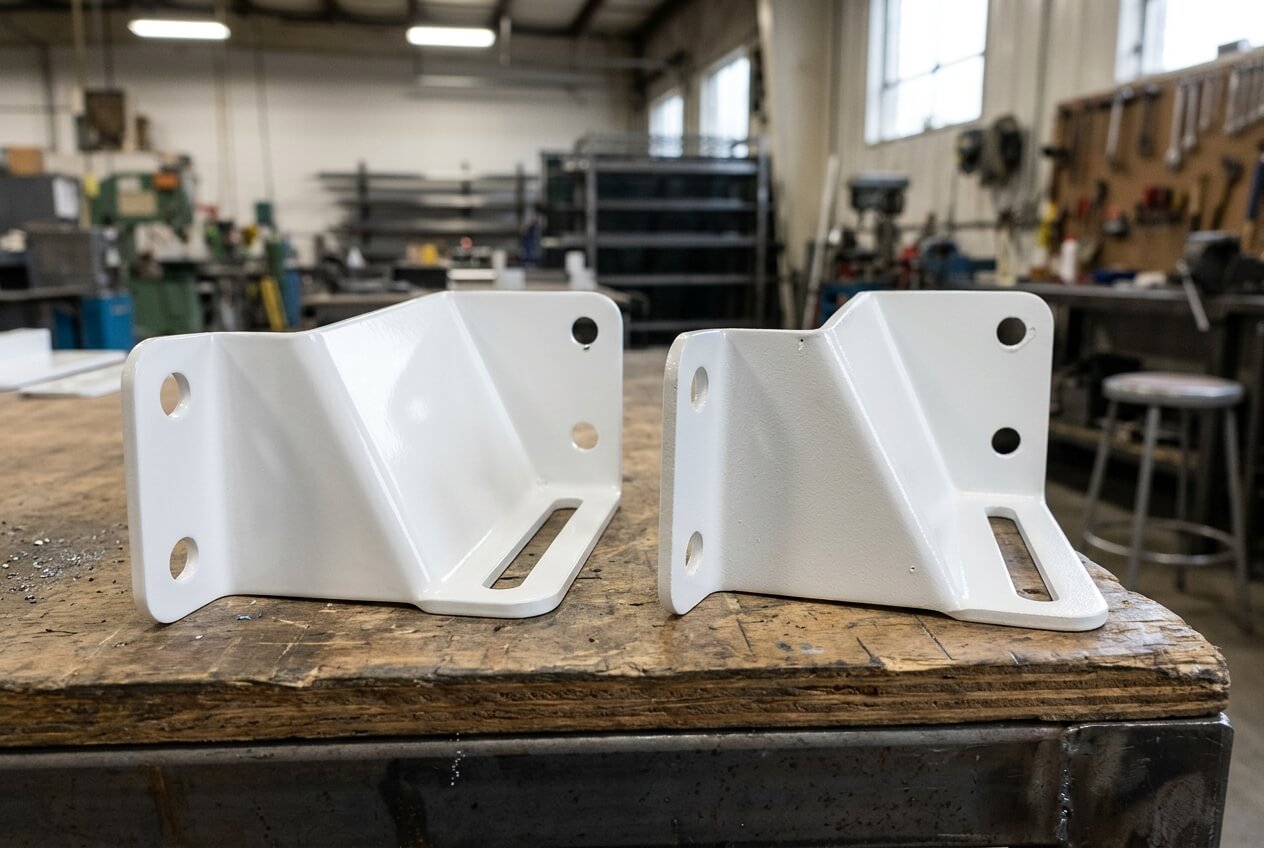
Deep channels, sharp inside corners, dense hole patterns, narrow returns, and welded seams do not coat like flat panels. Powder can build heavily in some areas and appear thinner in others. On a white enclosure, the outer face may look smooth while the inner flange looks heavier or more textured.
Welded assemblies add another layer of risk. Heat marks, grinding scratches, and uneven surface roughness can telegraph through the coating. White powder may highlight a poorly blended weld toe, especially under laboratory, showroom, or retail lighting. If the drawing does not define visible weld areas, the supplier may grind to a structural standard instead of a cosmetic one.
Material and pre-treatment affect the final appearance
The same powder can look different over cold rolled steel, galvanized sheet, and aluminum if pre-treatment and film build vary. Oil residue, fingerprints, blasting roughness, phosphate variation, or surface oxidation can affect adhesion and color perception. These details also influence scrap risk and lead time because coating defects often appear late in production.
Material choice should not sit apart from finish approval. If the prototype used one substrate and the batch uses another, the buyer should treat the finish approval as incomplete. A small material substitution can change color stability, surface smoothness, and masking behavior.
Masking and tolerances affect both appearance and fit
Powder coating adds thickness. That thickness can interfere with hinges, sliding rails, PEM fasteners, threaded holes, latch areas, grounding points, and tight mating flanges. If the drawing does not mark masked zones, the coating team must decide during production. Those decisions can create visible exposed edges or functional interference.
Imagine a white electrical cabinet with a concealed hinge and tight door return. The prototype closes after a technician adjusts the hinge by hand. In batch production, coating buildup around the hinge holes and door flange causes rubbing. The white edge chips during assembly. The buyer sees a finish failure, but the root cause sits in clearance, tolerance, and masking decisions that should have been clarified before release.
Cosmetic and functional requirements must work together. Mark visible faces, masked holes, grounding areas, threaded areas, and post-coating fit surfaces. When tolerances are tight, specify whether dimensions apply before or after coating. This prevents the supplier from protecting appearance while damaging assembly fit, or protecting fit while leaving visible masking marks.
Batch Production Changes the Process That Made the Prototype Look Right
A prototype usually receives extra attention. The fabricator may use a lighter oven load, a senior operator, shorter handling routes, or more manual adjustment. Batch production introduces different realities. More parts hang in the oven. Mixed geometries heat unevenly. Operators handle more surfaces. Assembly teams combine parts from different runs.
These changes do not mean the supplier made a careless part. They mean the buyer needs a production release standard that reflects batch conditions, not prototype conditions.
Coating run differences can break visual consistency
Oven loading affects peak metal temperature. Thin panels reach temperature faster than heavy welded frames. If both run together, one part may see more heat than the other. White powder can yellow or shift gloss when cure conditions drift outside the ideal window.
Powder lot changes can also matter. Two lots of the same named white may stay within the powder maker’s tolerance but still differ enough for side-by-side assemblies. The risk grows when doors, covers, and frames ship as one visible unit.
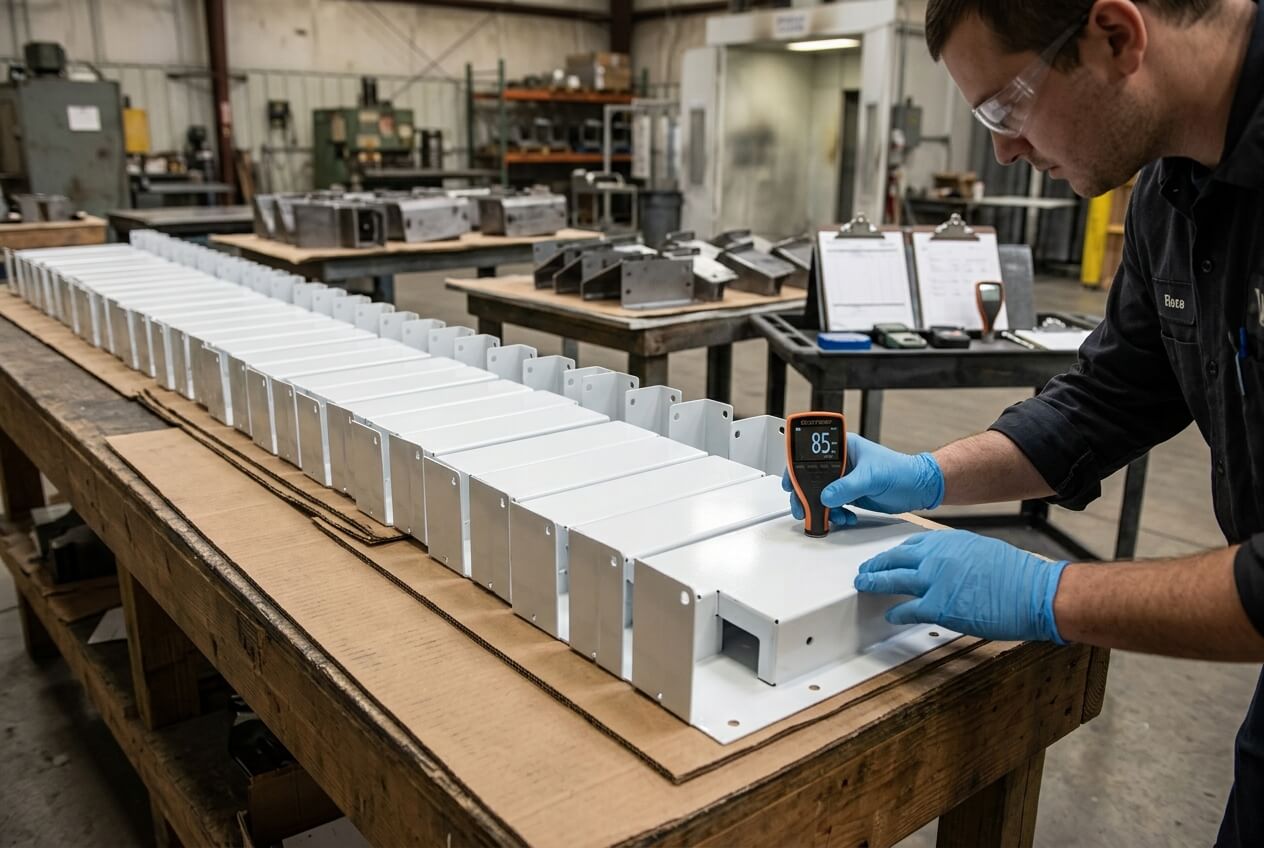
Buyers can ask suppliers to record powder code, powder lot, cure schedule, and production date for the first batch. They can also request a first-article review after coating and assembly. This step catches mismatch before the full order ships.
Inspection should match the way customers judge the product
Many incoming inspections check parts individually on a table. Customers often judge products after assembly, under real lighting, and from normal viewing distance. That difference can turn an accepted shipment into a field complaint.
For a white metal enclosure, useful checks include comparison against the approved master, ΔE readings on visible panels, 60° gloss readings, film thickness at flat surfaces and edges, masking accuracy, and assembly fit after coating. For a welded display frame, inspection should include the assembled frame, not only loose tubes or brackets.
The buyer should also define acceptance rules for minor texture, orange peel, weld shadow, and edge coverage. Without these rules, production teams may ship parts that meet a normal industrial coating standard while failing the buyer’s brand appearance.
Clarify the White Finish Standard Before Comparing Quotes or Releasing the Batch
The best time to control this risk comes before procurement compares final quotes and before the buyer signs off the prototype. At that stage, the supplier can still price the correct powder, plan the coating route, confirm masking, review tolerances, and warn about geometry that may show variation.
A short production release note can prevent a long dispute. It should identify the approved white reference, acceptable color drift, gloss target, cosmetic surfaces, masking requirements, and any fit-critical areas affected by coating thickness. It should also state whether parts that assemble side by side require tighter matching than hidden or internal parts.
Buyers do not need to specify the most expensive finish every time. They need to state the real expectation. If the product is an internal bracket, a standard white with normal inspection may work. If the product is a visible enclosure, cabinet, frame, or lighting housing, the quotation should include the controls needed to repeat the approved sample.
Supplier communication should focus on consequence chains, not preferences. If the color reference remains vague, quote assumptions drift. If the masking plan stays open, assembly fit may fail. If the prototype record lacks powder and cure data, the batch may not match. If inspection happens only on loose parts, the assembled unit may disappoint the end customer.
Before release, send the drawing package, material requirements, quantities, tolerances, powder or color references, gloss expectations, approved prototype photos, masking notes, cosmetic surface markings, and assembly concerns. If a master sample exists, identify how production parts should compare against it. If the customer previously rejected yellowish panels or visible weld shadows, share that history.
Yishang reviews custom sheet metal parts, enclosures, brackets, frames, and welded assemblies with these production risks in mind. For an RFQ or batch review, send drawings, material requirements, quantities, tolerances, and finish expectations through Yishang. The goal is to define a white powder coat finish that can repeat across the batch, not only look correct on one prototype.
Frequently Asked Questions
Why can a white powder coat finish match the sample but fail in batch production?
The sample may not define the full production standard. Batch production can use different oven loading, powder lots, part mixes, handling methods, or assembly sequences. If the RFQ does not define color reference, gloss, masking, cosmetic surfaces, and acceptance rules, the supplier may repeat the general finish but miss the buyer’s expected side-by-side appearance.
What should an RFQ say instead of only “white powder coating”?
The RFQ should include a color reference, such as a RAL code, approved sample, master panel, or L*a*b* target. It should also define gloss range, acceptable color drift, cosmetic surfaces, masking zones, film thickness concerns, and inspection method. For assemblies, state whether visible parts must match each other after final assembly.
When should buyers use ΔE and 60° gloss readings for white sheet metal parts?
Use measured controls when the product has visible panels, customer-facing surfaces, or multiple white parts joined together. ΔE helps control color difference against a master. A 60° gloss range helps control surface reflection under consistent lighting. For hidden brackets, visual inspection against an approved sample may be enough.
How can coating thickness affect assembly fit on white enclosures and cabinets?
Powder adds film thickness to hinges, holes, flanges, sliding areas, latch zones, and mating faces unless the drawing requires masking. Tight clearances may close up after coating. That can cause rubbing, chipped edges, poor grounding, or difficult fastener installation. Drawings should mark masked zones and clarify whether key dimensions apply before or after coating.
Does a brighter white always increase cost and lead time?
Not always, but it can. Brighter or higher-reflectance whites may require a specific powder formulation, tighter cure control, sample panels, or extra inspection. Those steps can affect powder cost, production planning, and lead time. Buyers should define whether brightness affects function, brand appearance, or only general color preference.
What should buyers send before scaling a white prototype to batch production?
Send drawings, material grade, quantities, tolerances, assembly notes, approved sample photos, color references, gloss expectations, masking requirements, cosmetic surface markings, and any previous rejection history. This information helps the supplier price the correct controls and reduce the risk of batch mismatch after prototype approval.