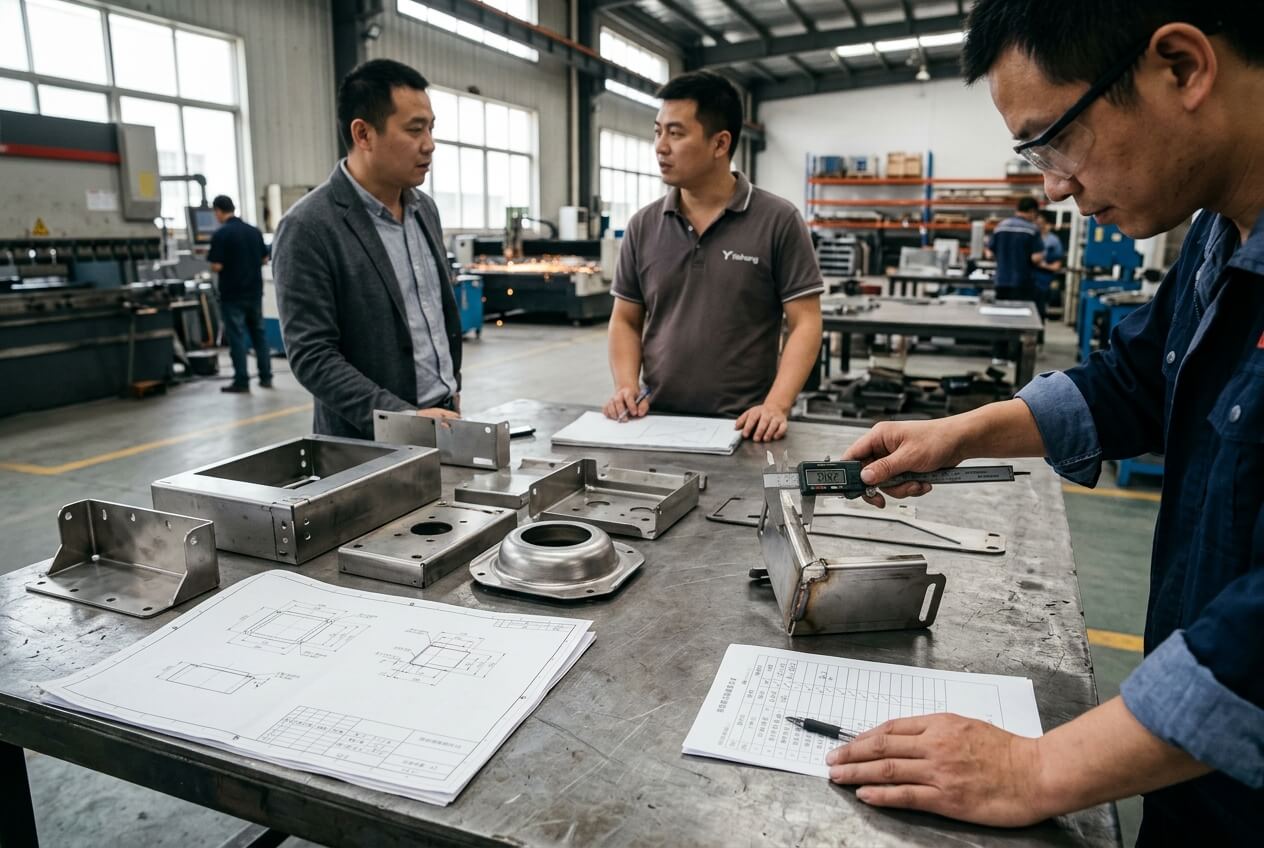
An OEM buyer sends the same sheet metal RFQ to three suppliers. The drawings show a powder-coated enclosure with a welded base, bent side panels, a hinged door frame, and several mounting brackets. Each quote lists the same material family and nominal thickness. One supplier offers a lower unit price and a shorter delivery time.
The first sample explains the price gap. Bent flanges spring back more than expected. Holes near bend lines no longer match the mating parts. Welded corners need hand correction before coating. After powder coating, the door rubs against the frame. The buyer did not change the drawing. The supplier quoted different assumptions about how the sheet would deform.
This is where stress vs strain becomes a purchasing control. Buyers do not need to calculate a full stress-strain curve. They do need to know when material behavior can change bend angles, weld distortion, coating clearance, and assembly fit.
The dominant risk is RFQ ambiguity. When drawings leave stress-strain related behavior unclear, suppliers price different process routes. One quote may include material certificate checks, bend trials, fixture planning, and final inspection after coating. Another may assume standard stock, standard bend allowances, and correction during assembly. Both quotes may look valid until production exposes the difference.
The low quote risk starts when material behavior stays implicit
Many RFQs describe sheet metal as a simple purchasing item: grade, thickness, finish, and quantity. That can work for flat covers or low-risk panels. It becomes unsafe when a part must bend tightly, carry load, align with other parts, or look clean after finishing.
Stress means the internal force in the material. Strain means the deformation that follows. In fabrication, buyers usually care about a few practical points: elastic behavior, yield strength, tensile strength, elongation, and work hardening. These values influence springback, cracking risk, permanent deformation, and repeatability.
Why the same material name can still quote differently
A drawing may call for stainless steel, cold rolled steel, galvanized sheet, or aluminum. That description may not define the delivery condition, minimum elongation, or batch variation. A supplier who treats those details as open may quote a cheaper material source. Another supplier may price a controlled sheet condition and include certificates. The unit prices differ because the production risk differs.
Consider a stainless steel display bracket with a tight return flange. The buyer marks the material and thickness but does not specify elongation or inside bend radius. A low quote assumes the standard radius will work. During bending, the outside of the flange cracks. The supplier then asks to increase the radius, change material condition, or accept visible cracking. The cost issue started in the RFQ, not at the press brake.
A different case involves a wall-mounted enclosure cover that must seal against a gasket. The part does not carry heavy load, but it needs flatness and stable flange angles. If the supplier ignores yield strength and springback, the cover may pass a quick dimensional check but fail to compress the gasket evenly. The buyer sees a leak path. The quote hid a forming assumption.
Procurement teams should not turn every RFQ into a materials textbook. They should flag the areas where material behavior affects product function. Critical bends, load paths, visible faces, hinge zones, gasket contact areas, and mounting holes need more than a material trade name.
Vague RFQs let springback become an assembly-fit problem
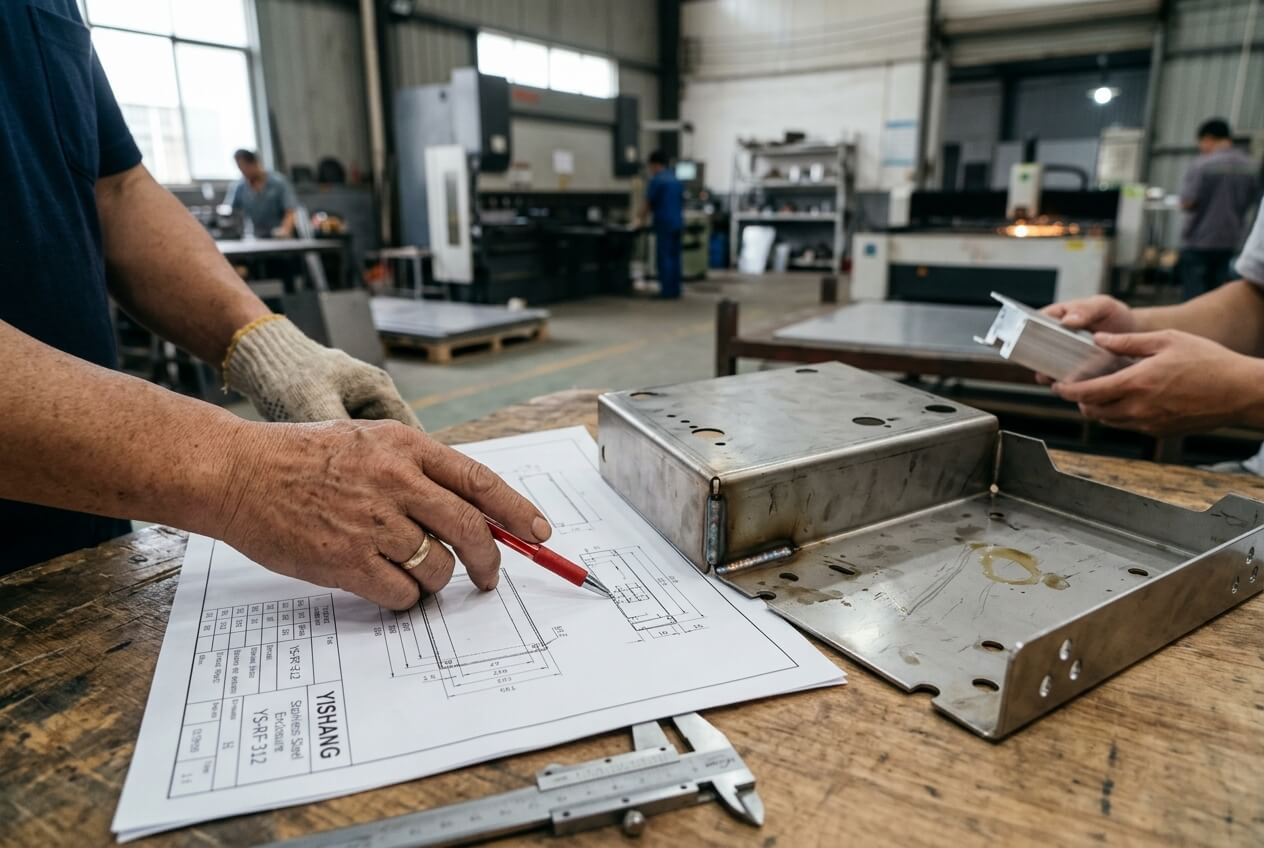
Springback often looks like a shop-floor problem. In many projects, it begins as a quotation problem. If the RFQ does not define which formed dimensions matter after bending, suppliers may quote only the flat pattern and standard bend tolerances.
Sheet metal returns slightly after the press brake releases pressure. Higher yield strength usually increases springback. Low elongation raises cracking risk when the inside radius is too small. Grain direction can also affect formed results. These effects become expensive when holes, slots, latches, or hinge features sit close to bend lines.
Hole position near bends creates a chain reaction
A laser-cut blank can meet every flat dimension before forming. After bending, a one-degree angle shift can move a mounting hole enough to break assembly alignment. The supplier may elongate holes, rework flanges, or adjust the mating part. Each fix adds time and creates a new quality risk.
For a control cabinet, this chain can run through the whole product. The side panel springs back more than planned. The door opening changes slightly. Hinge holes still pass their local tolerance, but the door gap becomes uneven after assembly. Powder coating then adds thickness around edges and hinge areas. A small forming assumption turns into rubbing, chipped coating, and delayed shipment.
Buyers should mark dimensions that matter after forming, not only before forming. Useful notes include hole-to-bend distance, flange angle, formed width, datum surfaces, and mating hole patterns. If the product fits plastic, glass, electronics, or another metal frame, the RFQ should include mating drawings or photos. That context helps the supplier quote the real inspection condition.
Yishang may ask for assembly photos or mating part details when a bend feature controls fit. Those questions do not slow the RFQ for decoration. They help identify whether the quote must include forming review, tooling adjustment, prototype inspection, or tighter batch control.
Welded and coated assemblies expose assumptions the flat drawing hides
A flat drawing rarely shows how stresses build during welding and finishing. Yet welded sheet metal assemblies often fail through distortion, not raw material strength. The RFQ risk increases when buyers request a welded cabinet, frame, or enclosure but define only the final outside dimensions.
Welding adds local heat. Heated areas expand, cool, and contract. Thin panels can wave. Corners can pull out of square. Long frames can twist. Material strength and stiffness influence how the structure reacts, while fixture design and weld sequence decide whether the result repeats.
Welding scope changes cost before it changes quality
A cheap quote may include welding time only. A stronger quote may include tack sequence planning, fixture use, straightening allowance, and inspection before finishing. These are not optional extras when the assembly controls door gaps, shelf alignment, or mounting points. They are risk controls.
Imagine a welded display frame made from bent sheet components. The drawing shows overall size and powder coat color. It does not define squareness after welding, load condition, or inspection after coating. The supplier welds the frame freehand and corrects the first sample manually. Batch production then shows inconsistent diagonals. Shelves rock during assembly, and the coating chips where workers force parts into position.
Powder coating can make this worse. Coating thickness reduces clearance around hinge barrels, slots, tabs, and sliding contacts. It also highlights waviness on cosmetic faces. A panel that looks acceptable before coating may show uneven reflections after finishing. A frame that fits before coating may bind afterward.
The RFQ should state where final inspection occurs: after bending, after welding, after coating, or after assembly. Functional surfaces need special attention. For enclosures, that may include door gaps, gasket areas, hinge alignment, latch engagement, and grounding points. For frames, it may include diagonal squareness, mounting feet, shelf positions, and load-bearing faces.
These details change cost drivers. They can require fixtures, trial parts, coating masks, longer inspection time, or a different tolerance strategy. They also affect lead time. Clarifying them before quote comparison prevents a supplier from winning the job by excluding the work that prevents rework.
Prototype approval can hide batch drift if the RFQ does not lock the right controls
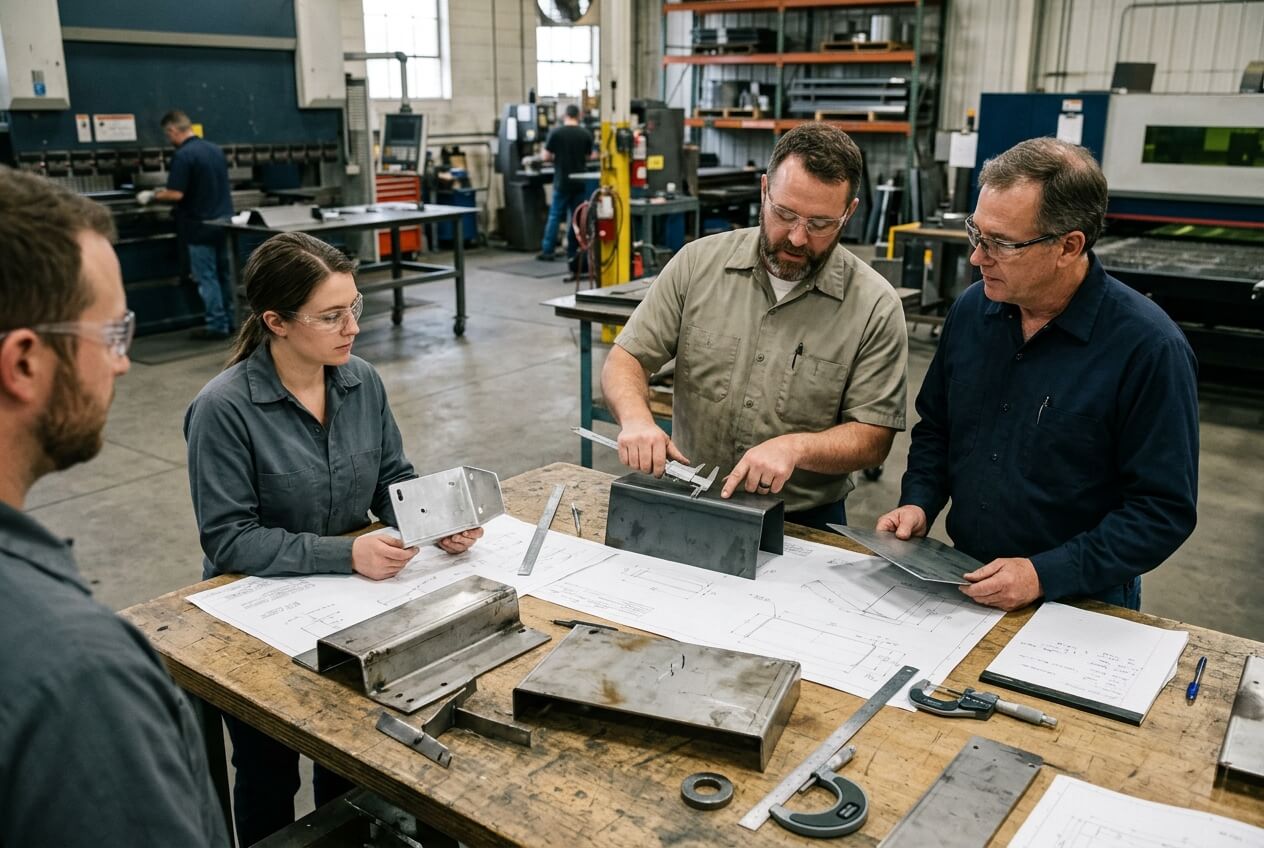
A signed prototype does not guarantee batch consistency. The sample may use one sheet lot, one operator, one machine setup, and extra hand correction. Batch production may use a different coil, a different delivery condition, or a faster process route. The material grade remains the same, but the stress-strain behavior can shift enough to change springback and fit.
This issue appears often in enclosures and brackets with tight functional features. A prototype bracket may bend cleanly because the first sheet lot has enough elongation. The production lot may show slightly lower ductility. Cracks appear at the outside radius, or the operator increases the radius to avoid cracking. That change then moves the mating surface.
Sample approval should define what must repeat
Buyers should ask what the supplier will carry from prototype into production. Important items include material source or equivalent mechanical properties, bend tooling, bend sequence, weld fixture, coating specification, and inspection points. The goal is not to freeze every factory detail. The goal is to stop a rescued prototype from becoming a misleading approval sample.
For a powder-coated electronics enclosure, the approved sample may close smoothly. In batch production, a slightly different yield strength causes more springback on the door frame. Workers adjust the hinge area by hand, which scratches the coating after final assembly. The shipment delay looks like a finishing problem, but the root cause sits in uncontrolled material and forming assumptions.
Supplier communication matters here. Buyers should ask direct questions before issuing the purchase order. Did the sample use production material? Did the supplier hand-adjust any formed or welded area? Will batch inspection check the same functional dimensions as the sample? Will the inspection report record dimensions after coating? Clear answers reduce surprises during scale-up.
Yishang can review prototype notes, drawings, and production quantities before buyers scale a sample into batch manufacturing. This review helps separate one-time sample correction from repeatable sheet metal fabrication controls.
Make quote comparison about exposed risk, not only unit price
Buyers can compare sheet metal quotes more safely when each supplier prices the same assumptions. The RFQ should not ask suppliers to guess which dimensions, surfaces, and material properties matter. It should make the high-risk areas visible before price comparison.
Start with the drawing. Identify critical formed dimensions, bend radii, hole locations near bends, datum surfaces, load areas, and assembly interfaces. Add finish expectations where coating thickness, masking, or cosmetic appearance affects function. Define tolerances that protect assembly fit, and avoid tight tolerances on non-functional areas that only add cost.
Next, clarify material requirements. For risk-bearing parts, include grade, thickness, delivery condition, and any required mechanical property range. If the part has tight bends or load requirements, ask whether the quote includes material certificates or equivalent batch control. Suppliers can then price the same material behavior instead of guessing.
Prototype and batch requirements also belong in the RFQ. State whether prototype material must match production material. Ask for inspection after bending, welding, coating, or final assembly where those stages affect fit. If the product ships overseas, include packaging expectations for thin panels or finished assemblies, because distortion during transport can erase good fabrication work.
Finally, compare supplier responses, not just totals. A useful response may challenge a tight bend radius, recommend a larger clearance after coating, suggest a weld fixture, or ask for mating part drawings. A weak response often says only, “We can make according to drawing.” That answer may sound convenient, but it can hide expensive assumptions.
Send Yishang your drawings before you lock the quote: include material requirements, quantities, critical tolerances, finish expectations, assembly photos, mating part details, and prototype notes. The review can identify where stress vs strain behavior, forming, welding, coating, or inspection assumptions may affect price, lead time, and batch consistency. Start your RFQ at zsyishang.com.
Frequently Asked Questions
Why does stress vs strain matter in a sheet metal RFQ?
Stress vs strain matters because material behavior affects forming, welding, coating clearance, and final assembly fit. If the RFQ lists only grade and thickness, suppliers may quote different assumptions for springback, bend radius, elongation, and batch control. That makes a low quote risky.
What material details should buyers add for tight bends or load-bearing brackets?
Buyers should add material grade, thickness, delivery condition, minimum yield strength, tensile strength, elongation, bend radius, and loading direction. If holes sit near bends, the RFQ should require inspection after forming. These details reduce cracking, springback, and alignment risk.
How can springback turn into an enclosure assembly problem?
Springback changes flange angles and formed dimensions after bending. When hinge holes, latch slots, gasket faces, or mounting holes depend on those bends, a small angle shift can create door gaps, rubbing, or poor sealing. Coating thickness can make the problem more visible.
Why can a prototype pass but batch production fail?
A prototype may use a different sheet lot, slower forming method, extra hand correction, or special welding adjustment. Batch production may not repeat those conditions. Buyers should confirm material control, tooling, weld fixture, coating process, and final inspection points before approving scale-up.
Should final inspection happen before or after powder coating?
It depends on the function. Cosmetic panels, hinge areas, gasket surfaces, slots, and close-clearance assemblies often need inspection after coating. Powder coating adds thickness and can reveal distortion. RFQs should state the inspection stage for each critical dimension.
What should buyers send with drawings to reduce hidden quote assumptions?
Send material requirements, quantities, critical tolerances, finish expectations, mating part drawings, assembly photos, sample notes, and load or fit requirements. This information helps suppliers quote the same risk scope instead of making different assumptions about fabrication behavior.