
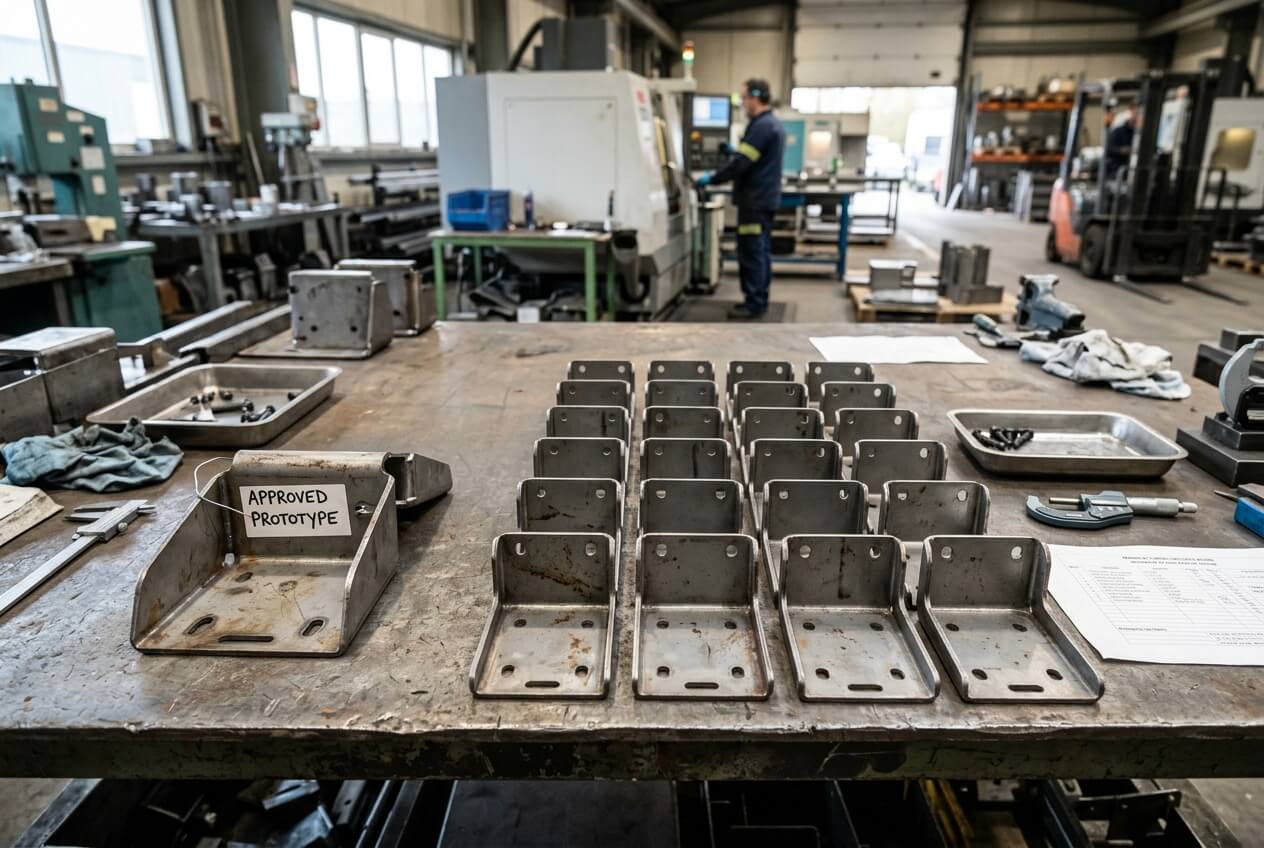
A buyer can approve a steel enclosure prototype and still receive an inconsistent production batch. The sample door may close well. The mounting holes may line up. The powder coating may look acceptable under office lighting. Six weeks later, the first shipment tells a different story. Some doors sit proud, several brackets need drilling, and rust appears near welded seams after sea freight.
This is where the search question what is a ferrous metal definition becomes more than a classroom definition. A ferrous metal contains iron as a major component. Carbon steel, cold rolled steel, hot rolled steel, galvanized steel, and stainless steel all fall into this group. For OEM sheet metal buyers, the definition only opens the conversation. The real procurement risk starts when an RFQ treats ‘ferrous metal’ or ‘steel’ as enough information for repeatable batch production.
The dominant risk is prototype-to-batch drift. A prototype often passes because a supplier can hand-fit, re-bend, grind, shim, polish, or touch up one piece. Batch production cannot depend on hidden correction. If the RFQ does not lock the material, thickness tolerance, bend assumptions, weld sequence, finish route, and inspection points, each supplier may quote a different process while appearing to quote the same part.
Procurement teams should not only ask, ‘What is the lowest unit price?’ They should ask, ‘Which production assumptions will repeat the approved sample?’ That question protects cost, lead time, assembly fit, and field reliability.
Vague Ferrous Metal Wording Lets the Prototype Hide Batch Variation
The phrase ‘ferrous metal’ answers one basic question: the metal contains iron. It does not define the grade, sheet condition, forming behavior, corrosion protection, or surface quality. In custom sheet metal fabrication, those missing details can separate a clean prototype from a troublesome batch.
A drawing that says ‘steel, powder coated’ gives suppliers room to make assumptions. One supplier may quote cold rolled steel because the part needs a smooth cosmetic surface. Another may choose hot rolled steel to reduce material cost. A third may suggest galvanized steel for corrosion resistance, but may not include post-weld zinc repair. All three quotes can look compliant if the RFQ only uses broad ferrous wording.
Where the batch drift starts
Batch drift often starts with a small drawing gap. The buyer approves a sample made from one sheet source, one bend program, and one finishing route. Later, the purchase order focuses on price and quantity. Nobody records whether the sample used cold rolled steel, a specific thickness range, extra weld grinding, or masking around threaded inserts.
That missing record creates a weak handoff from prototype approval to batch release. The supplier may repeat the visible shape, but not the exact production path. If the approved prototype needed manual correction, the batch may miss the same fit or finish target.
Consider a retail display frame. The prototype uses 1.2 mm cold rolled steel. The powder coat looks smooth, and the welded corners pass a visual review. During batch quoting, a supplier prices hot rolled steel because the drawing only says mild steel. The unit price drops, but the production team now needs more surface preparation. If the quote did not include that preparation, the batch may show texture, sanding marks, or uneven gloss on customer-facing rails.
The consequence chain is clear. Broad material wording creates different quote assumptions. Different assumptions create different processes. Different processes create batch variation. Buyers reduce that risk when they define the exact grade, sheet condition, allowed substitutes, and approval rules before they accept the prototype as the production standard.
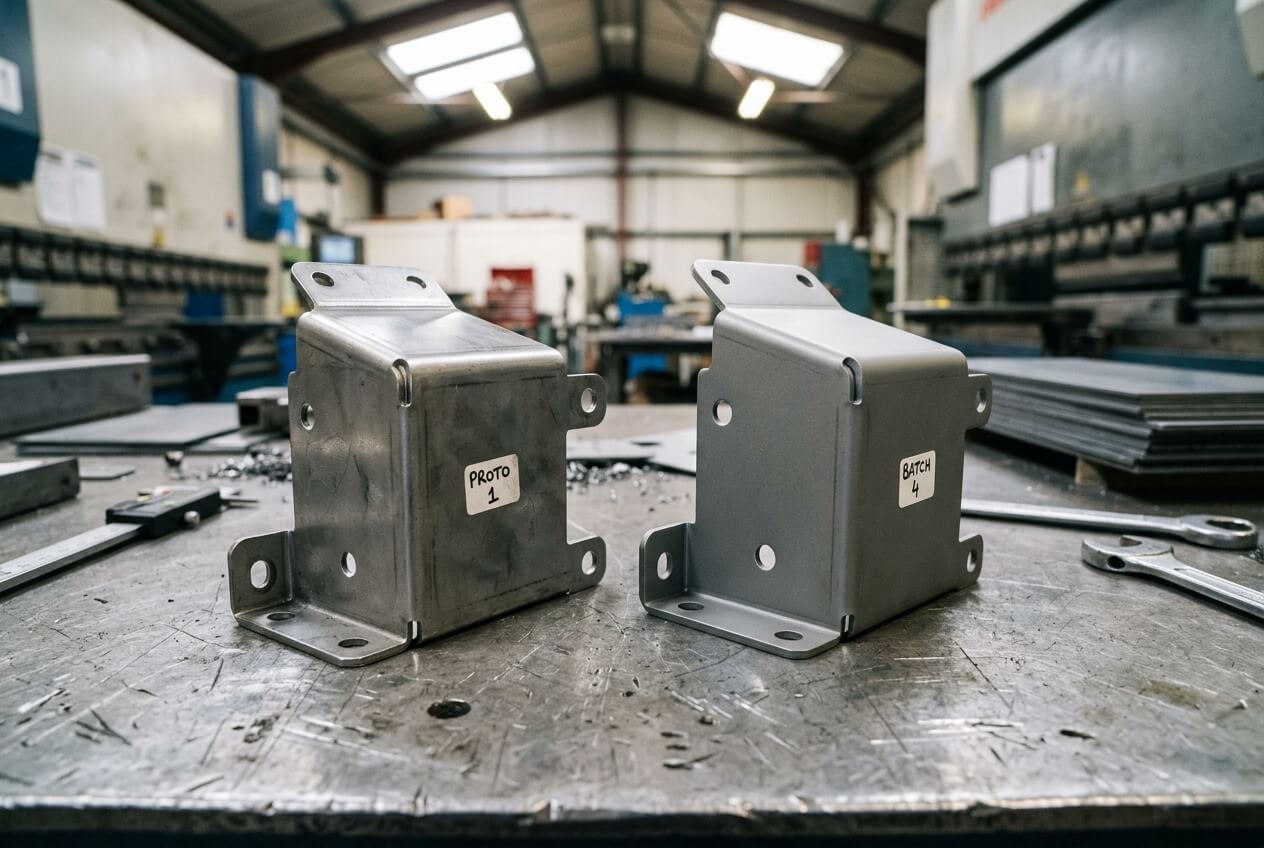
Low Quotes Often Price Different Production Assumptions, Not the Same Steel Part
Procurement teams often compare steel fabrication quotes by unit price, tooling cost, and lead time. That comparison can mislead buyers when the RFQ lacks production detail. A low quote may not show better efficiency. It may exclude the controls that made the prototype acceptable.
A metal cabinet quote can vary because suppliers include different work scopes. One quote may include laser cutting, controlled bending, fixture welding, cosmetic weld dressing, phosphate pretreatment, powder coating thickness control, masking, assembly checks, and export packaging. Another may include basic cutting, bending, welding, and coating, with grinding or masking treated as extra work. Both quotations may describe a powder coated steel cabinet. They do not carry the same batch risk.
The quote comparison problem
When buyers compare those quotes only by total cost, they may choose a production route that cannot repeat the sample. The problem appears later as rework, missed lead time, or assembly failure. A cabinet door that fit the prototype may bind after coating. A welded frame may rack during shipping. A bracket slot may need filing before installation.
Small omissions also change lead time. If the RFQ does not mention cosmetic faces, the supplier may plan standard handling. When scratches appear on visible panels, the team must polish, recoat, or remake parts. If the RFQ does not define masking, powder coating may fill threaded inserts or grounding points. Cleaning those areas after coating slows assembly and can damage the finish.
A practical quote review should focus on production assumptions behind the price. Ask whether the quote names the ferrous material grade, sheet thickness tolerance, weld dressing level, powder coating route, masking requirements, packing method, and inspection plan. Also ask whether the supplier priced the approved prototype corrections as normal production work.
Yishang may review drawings and sample notes at this stage to identify hidden assumptions before batch release. That review should connect the prototype result to a repeatable fabrication route, not merely confirm that the part can be made once.
Manual Prototype Corrections Become Expensive When the Batch Repeats Them
A prototype gives useful evidence, but it can also hide risk. Skilled technicians can make one enclosure, bracket, or welded assembly fit by hand. They can open a hole slightly, adjust a flange, grind a weld corner, straighten a frame, or sand a coating defect. Those actions may satisfy a sample review, yet they create a dangerous question for procurement: will the batch need the same corrections?
Manual correction becomes expensive because it rarely scales. It adds labor, extends lead time, and creates inconsistent quality. Worse, it can remain invisible if the approval note only says ‘sample approved.’ The supplier may believe the buyer accepted the part as made. The buyer may assume the production process will remove the need for rework. Both sides carry different expectations into batch production.
Example: enclosure holes that passed only after adjustment
An electrical enclosure prototype uses 1.5 mm carbon steel. During trial assembly, two hinge holes sit slightly off position after bending and coating. The prototype team opens the holes by hand, installs the hinge, and sends the sample for approval. The buyer sees a door that opens smoothly.
If nobody records the adjustment, the batch repeats the original hole location. After powder coating, the hinge screws pull unevenly. Some doors rub the frame, and operators spend extra time fixing each unit. The issue did not start at assembly. It started when the prototype correction failed to become a drawing change, tolerance change, fixture change, or inspection point.
Example: welded frame straightened before approval
A welded steel frame for a machine base may look square during prototype approval. Behind the result, the welder may have changed the weld sequence and straightened the frame after cooling. In batch production, different operators follow a faster sequence. Heat distortion increases, and several frames rock on the floor.
This problem affects more than appearance. Rocking frames can fail installation checks, damage attached panels, or force field teams to shim the assembly. The buyer pays through delay, rework, and weaker confidence in the supplier. Procurement should clarify weld fixtures, weld sequence, post-weld inspection, and acceptable flatness before converting the prototype into a production order.
Sample approval should therefore include the sample history. Record any hand fitting, sanding, hole enlargement, re-bending, shim use, weld correction, coating repair, or substitute material. Then decide whether to change the drawing, adjust the process, approve the correction as standard work, or request a revised prototype.
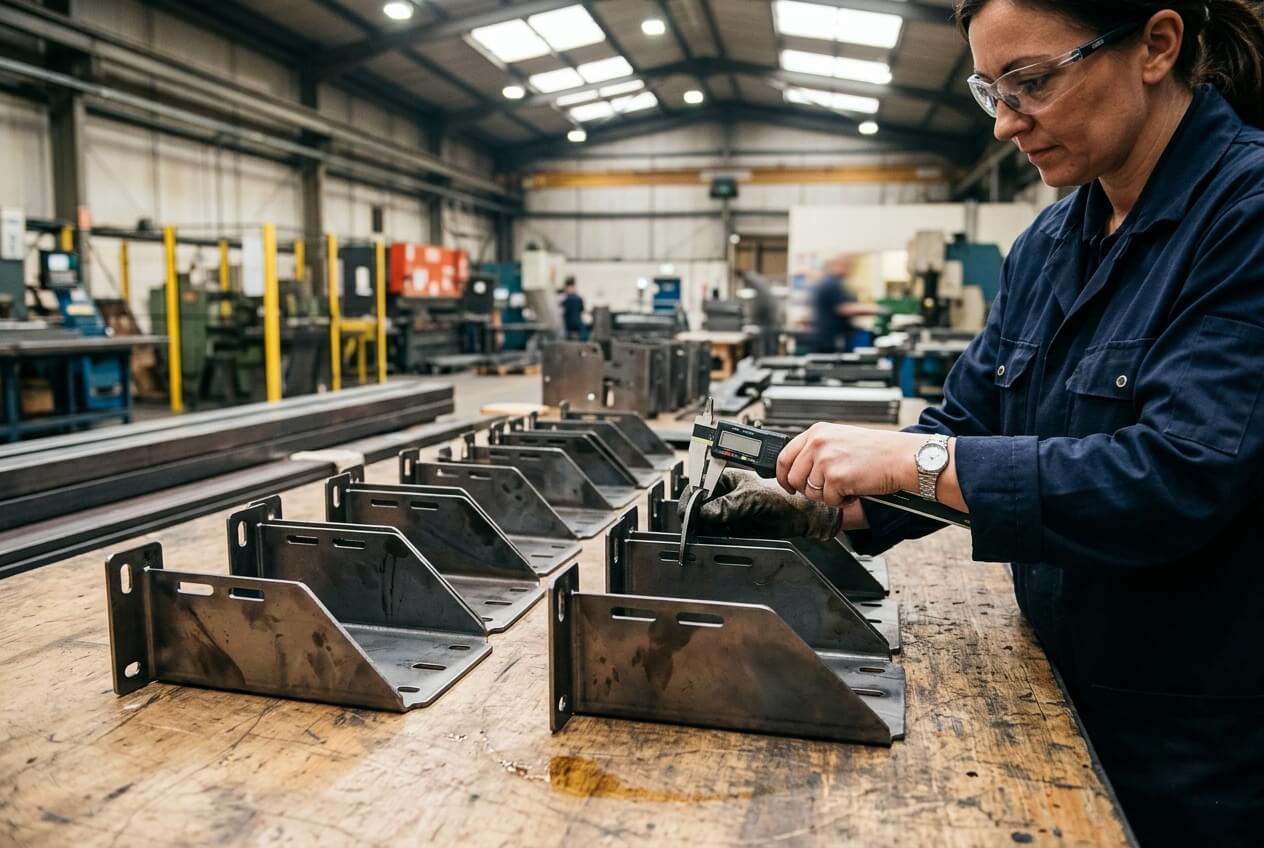
Assembly Fit Fails When Ferrous Material, Bends, Welds, and Coating Stack Together
Batch consistency risk often appears at assembly, not during individual part inspection. A panel can meet its outside dimensions and still fail when it meets a hinge, bracket, chassis, gasket, or mating frame. Ferrous sheet metal parts create this risk because material thickness, bend variation, weld heat, and finish buildup stack together.
A definition of ferrous metal does not tell the supplier which dimensions matter most after fabrication. It does not identify the hinge line, the hole-to-bend distance, the door gap, the mounting slot, or the grounding area. If the drawing treats every dimension equally, inspection may focus on features that do not protect the final assembly.
Coating buildup can change a good fit into a tight fit
Powder coating adds thickness. That thickness matters near slots, holes, PEM nuts, threaded inserts, sliding surfaces, tabs, and mating flanges. A prototype can pass after workers chase threads or scrape a grounding point. In a batch of 300 cabinets, that same correction becomes a schedule problem.
Buyers should define coating thickness range, color, gloss, texture, pretreatment, and masking. They should also mark functional no-coat or controlled-coat areas. Cosmetic expectations need location-based language. A small orange peel defect on a hidden back face may be acceptable. The same defect on a front door may trigger rejection.
Weld heat changes dimensions after cutting and bending look correct
Welding adds another layer of variation. Carbon steel, stainless steel, and galvanized steel all respond differently to heat and preparation. Galvanized seams need attention because welding can damage the zinc layer near studs, hinges, and corners. If the RFQ does not define post-weld corrosion protection, rust can appear even when flat panels looked suitable before assembly.
Assembly-critical tolerances need priority. A bracket used inside a cabinet may not need a tight overall length, but its hole-to-slot relationship may matter. A welded display frame may need controlled flatness more than a perfect hidden weld bead. When buyers identify the functional features, suppliers can choose better fixtures, bend checks, weld sequence, and inspection points.
This clarification also helps cost control. Over-tightening every dimension increases price and may extend lead time. Leaving every dimension vague increases rework risk. The better approach sets tight tolerances only where assembly, safety, sealing, grounding, or customer-visible fit requires them.
Before Batch Release, Approve the Production Assumptions Behind the Sample
Buyers reduce prototype-to-batch drift when they approve both the physical sample and the assumptions behind it. The approval package should answer a simple question: what must the supplier repeat, and what must change before production?
Start with material control. State the exact ferrous material, such as cold rolled steel, hot rolled steel, galvanized steel, stainless steel, or a specific carbon steel grade. Define the sheet thickness and acceptable tolerance where it affects bending or assembly. If substitutes are allowed, require written approval before production.
Next, connect tolerances to assembly. Mark the holes, flanges, hinge lines, door gaps, slots, tabs, gasket surfaces, and mating faces that decide fit. Do not rely only on overall dimensions. A large enclosure can measure correctly and still fail because one bend line moved too close to a mounting hole.
Finish expectations need the same discipline. Define pretreatment, primer if needed, powder coating color, gloss, texture, thickness range, masking, and corrosion expectations. For outdoor cabinets or welded galvanized parts, clarify how cut edges and welded areas regain protection. For stainless parts, define brushed direction, visible faces, and acceptable handling marks.
Finally, document the prototype history. If the sample needed hand correction, choose one action before batch release. Update the drawing, change the fixture, revise the tolerance, add an inspection step, or approve the manual process as a priced production operation. Do not let informal prototype fixes become unpaid batch expectations.
A concise RFQ package helps supplier communication and quote comparison. Send drawings, 3D files if available, material requirements, quantities, target lead time, finish expectations, tolerance priorities, sample photos, and assembly notes. Ask suppliers to list assumptions and exclusions. This creates a clearer cost comparison and reduces late disputes.
Next step for procurement: If you are moving a ferrous metal enclosure, cabinet, bracket, frame, or welded assembly from prototype to batch production, send your drawings, material requirements, quantities, tolerances, finish expectations, approved sample photos, and assembly notes to Yishang. The review can focus on material substitution, weld distortion, coating buildup, hole alignment, cosmetic faces, corrosion protection, and repeatable inspection before you compare quotes or release the purchase order.
Frequently Asked Questions
What is a ferrous metal definition in a sheet metal RFQ?
A ferrous metal contains iron as a major component. In a sheet metal RFQ, that definition is too broad for production control. Buyers should state the exact material type or grade, such as carbon steel, cold rolled steel, hot rolled steel, galvanized steel, or stainless steel, because each option affects forming, welding, finishing, corrosion risk, and cost.
Why can a steel prototype pass but the batch fail assembly?
A prototype may pass after hand fitting, hole adjustment, weld correction, sanding, or coating touch-up. If those corrections do not become drawing changes, process controls, or inspection points, the batch may repeat the original problem. Assembly failures often appear when bend variation, weld distortion, thickness tolerance, and coating buildup stack together.
Should procurement allow ferrous material substitution after sample approval?
Only with a written approval rule. A change from cold rolled steel to hot rolled steel, or from plain carbon steel to galvanized steel, can affect surface quality, weld preparation, coating appearance, corrosion protection, and bend behavior. If a supplier proposes substitution, review fit, finish, and inspection requirements again before batch production.
What RFQ details help prevent prototype-to-batch drift?
Buyers should define the material grade, sheet condition, thickness tolerance, assembly-critical features, cosmetic faces, weld dressing level, coating route, masking areas, corrosion expectations, packaging needs, quantities, and target lead time. They should also share prototype notes, especially any rework or manual adjustment made before approval.
How does powder coating create batch consistency risk?
Powder coating adds thickness to holes, slots, flanges, hinges, threads, and mating surfaces. A sample may fit after manual cleaning or scraping, but a batch can suffer from tight assembly, blocked grounding points, or damaged threads. Buyers should define coating thickness, masking, no-coat zones, and functional surfaces before production release.
When should Yishang review drawings before batch production?
Yishang should review the project before batch release when the approved sample involved steel material choices, weld distortion risk, tight assembly fit, powder coating, masking, visible cosmetic faces, or prototype rework. Early review helps connect the accepted sample to a repeatable fabrication, finishing, assembly, and inspection plan.