
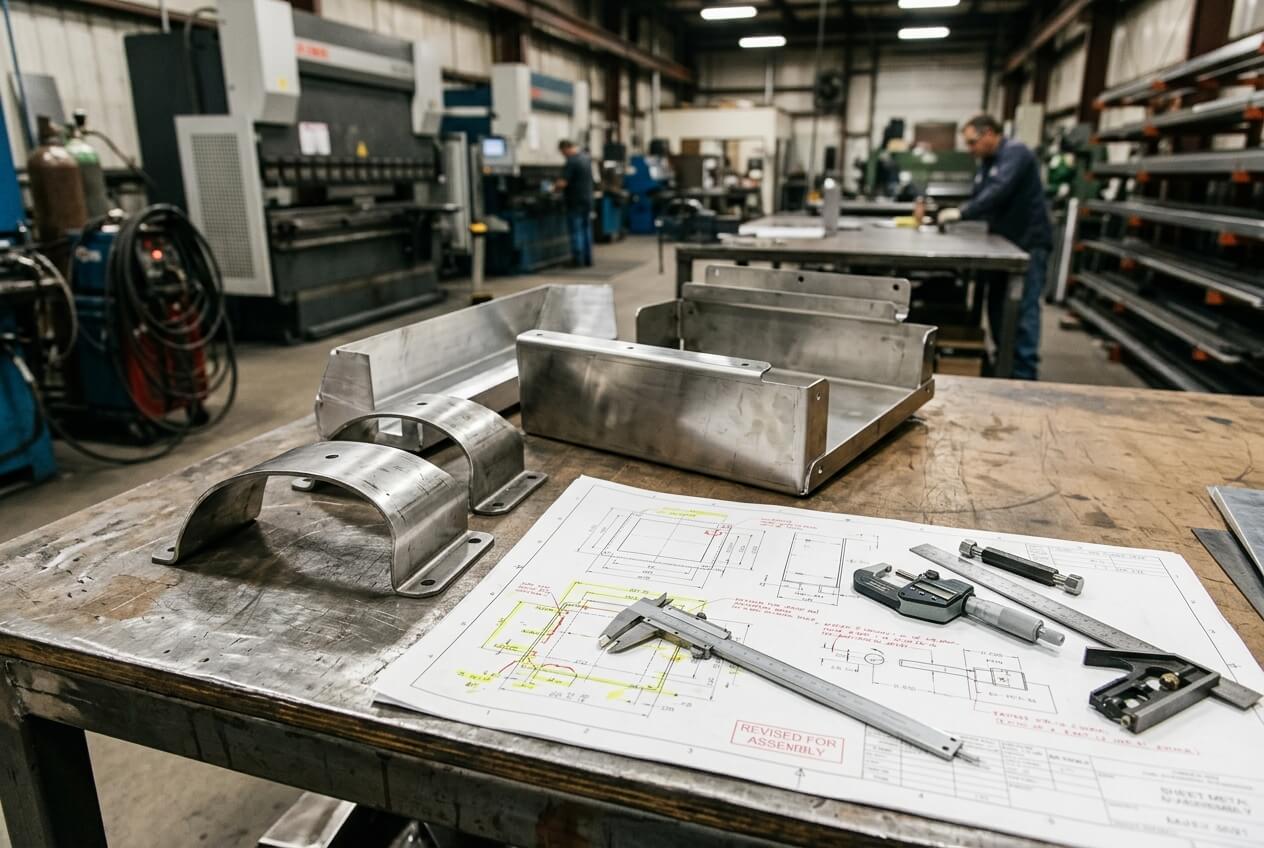
An OEM buyer may send a drawing for a thin sheet metal enclosure with a copper contact, several mounting brackets, and a visible powder coated cover. The drawing marks one corner as "brazed joint required," but it does not define joint purpose, filler metal, clearance, heating method, cleaning, inspection, or coating sequence.
Three suppliers can return similar unit prices while quoting three different jobs. One may price manual torch brazing with hand clean-up. Another may include an induction fixture and post-braze dimensional checks. A third may plan to weld, rivet, or redesign the joint unless the buyer rejects the change.
The buyer sees a price comparison. In reality, the RFQ has created a procurement risk: the brazing process remains undefined, so each supplier fills the gaps differently. That gap can later become a sample delay, cost revision, coating defect, assembly fit problem, or quality dispute.
For custom sheet metal fabrication, brazing rarely fails because buyers ignore the word itself. It fails commercially because drawings do not explain what the brazed area must do. The safest RFQ does not turn procurement into process engineering. It simply removes the assumptions that make quotes impossible to compare.
Where Brazing Process Assumptions First Distort Sheet Metal Quotes
The first distortion usually starts with function. A drawing may call for brazing, but it may not explain why the joint needs that method. The buyer may need electrical continuity, reduced heat distortion, a smoother visible corner, a sealed seam, or a way to join dissimilar metals.
Each function changes the quote. A cosmetic braze on a visible cover needs different cleaning and finishing than a hidden conductive joint inside a cabinet. A structural joint on a frame needs different lap area, fixturing, and inspection than a small locating tab. When the RFQ names the process but not the function, the supplier must guess the risk level.
Function drives the cost, not the word brazing
A supplier who assumes a low-risk cosmetic joint may price simple preparation and visual inspection. Another supplier may assume the joint carries load and include fixture development, trial parts, and dimensional checks after heating. Both suppliers may use the same term, but they are not quoting the same manufacturing responsibility.
This creates a dangerous procurement pattern. The lowest quote may not be cheaper because the factory works better. It may be lower because the factory excluded the controls the part actually needs. Procurement only discovers the difference when the first article fails, when the coating bubbles near the joint, or when the assembled enclosure does not fit its mating part.
Project example: copper contact inside a steel enclosure
Consider a powder coated steel electronics enclosure with a copper grounding strip. The drawing shows a brazed connection, but it does not state whether the strip must remain conductive after powder coating. One supplier may coat the full assembly and leave the buyer to scrape the contact area. Another may include masking, cleaning, and conductivity checks.
The price difference does not come from sheet metal cutting or bending. It comes from an RFQ assumption. If the buyer had stated the grounding requirement, masking area, coating sequence, and test method, the quotes would have aligned earlier. The purchase decision would then compare capability and cost on the same basis.
The Missing Joint Details That Turn One Drawing Into Three Prices
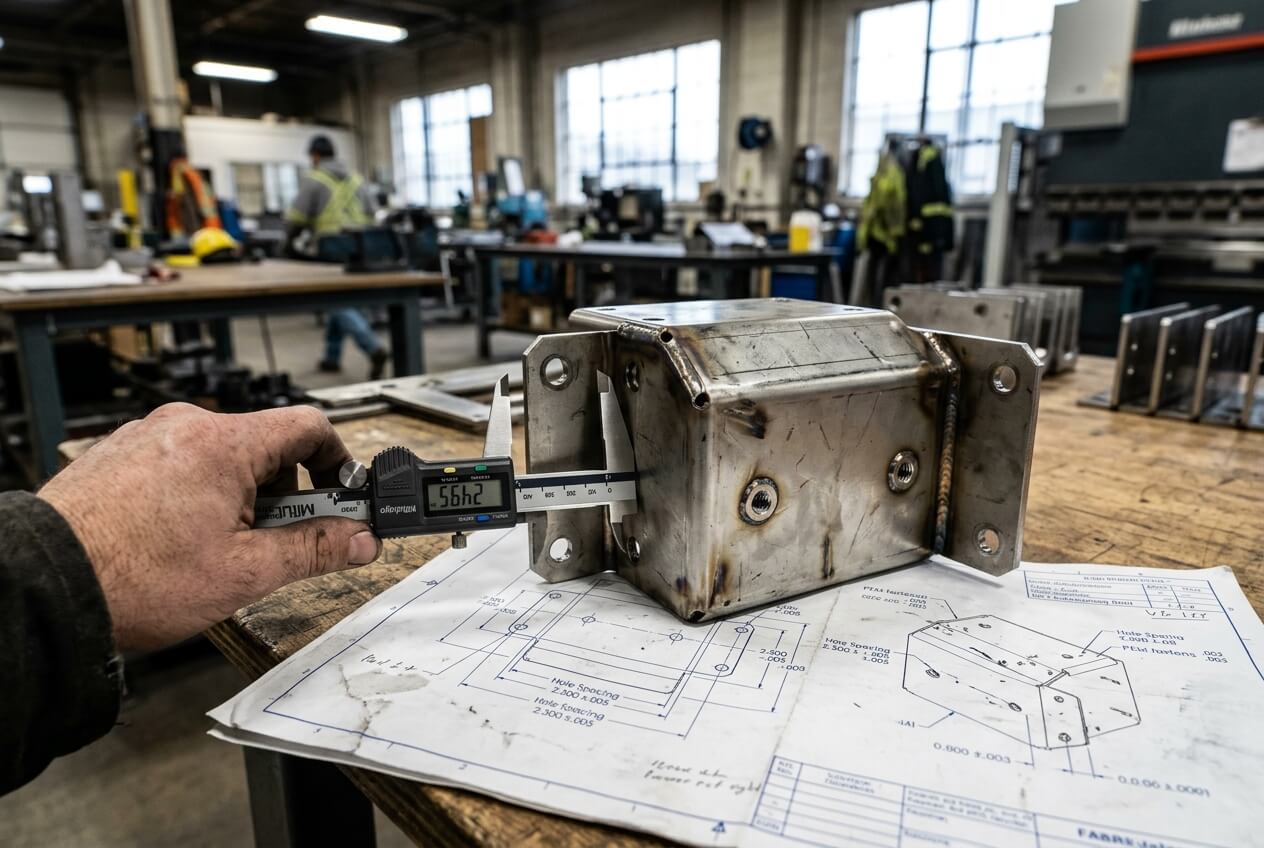
Brazing depends on controlled filler flow. It does not behave like welding across a wide open gap. Capillary action needs a suitable joint clearance, clean surfaces, and enough overlap. Thin sheet metal makes these details harder because laser cutting, bending, springback, and fixture pressure all affect the final gap.
If the RFQ does not define or request the joint assumptions, suppliers must decide whether to include engineering time. One may quote from the CAD file only. Another may add trial parts to confirm filler flow. A third may flag the design as unsuitable and propose welding or fastening. The quote table then mixes production routes instead of comparing one defined requirement.
Clearance and lap length change both risk and unit price
Joint clearance affects filler flow and repeatability. A gap that runs too wide can leave weak or inconsistent fill. A gap that runs too tight can block flow and create a joint that looks acceptable from the outside. In batch production, small variations in cutting, bending, or forming can turn a stable prototype into inconsistent output.
Lap length also affects strength and appearance. A short lap may suit a compact bracket, but it may not provide enough bonded area. A longer lap may improve strength, yet it can add material, increase hidden overlap, or create a visible shadow after powder coating. Buyers should not leave these decisions buried inside a supplier quote.
Material combinations add another layer. Carbon steel, stainless steel, copper, brass, and aluminum respond differently to heat and surface preparation. Dissimilar metals can expand at different rates during the brazing process. That movement can open a joint, shift a hole, or leave a visible step near a finished face.
Filler metal assumptions affect production control
Some buyers know the required filler specification. Many do not. Either position can work if the RFQ controls the assumption. If the filler matters for conductivity, corrosion, service temperature, sealing, or strength, the drawing should state it. If the supplier can choose the filler, the quote should name the assumed filler family and cleaning method.
That statement gives procurement a practical comparison tool. A quote that includes filler selection, flux removal, fixturing, and inspection may look higher than a manual quote. It may also carry less downstream risk. Yishang often reviews this kind of drawing detail during custom sheet metal fabrication discussions, especially when a brazed feature sits near a cosmetic face, bend line, or mating interface.
Finish and Assembly Notes That Change the Supplier’s Hidden Work
Many brazing disputes appear after the metalwork looks complete. The joint may pass a quick visual review, but the final part still fails because the RFQ did not connect the brazed area to finish and assembly requirements. Powder coating, polishing, masking, conductivity, and mating fit can all change the supplier’s workload.
Buyers often separate these topics in their files. One drawing shows the brazed joint. Another note mentions powder coating. A third assembly drawing controls hinge holes, glass fit, gasket compression, or bracket alignment. If the supplier quotes from only one view, the hidden work disappears from the price.
Coating sequence can expose weak RFQ language
Brazing before powder coating usually allows the supplier to heat, clean, and finish the assembly as one unit. That route still needs control. Flux residue, oxidation, and filler overflow can affect coating adhesion or create visible defects. If the RFQ does not define cleaning and cosmetic limits, one supplier may include careful local finishing while another may include only basic washing.
Brazing after powder coating creates a different risk. Local heat can discolor or damage the coating near the joint. The supplier may need masking, touch-up, special fixturing, or a revised joining method. These steps affect cost and lead time, but they may not appear in the quote unless procurement asks for the finish sequence.
Project example: display frame with visible corner joints
A retail display frame may use thin stainless tube with sheet metal brackets. The buyer may request brazed corners to avoid large weld beads and grinding marks. The prototype can look acceptable under office lighting. During batch production, however, small filler overflow near the corners can become more visible after finishing.
The consequence chain starts with a vague appearance requirement. The supplier prices a functional joint, not a cosmetic one. Production then creates parts that hold together but fail the buyer’s visual standard. Rework adds polishing time, changes the surface texture, and may delay shipment. A better RFQ would mark visible surfaces, allowable discoloration, joint smoothness, and inspection lighting or sample approval criteria.
Assembly fit must be checked after heat
Heat can move thin sheet metal. A cabinet door frame may remain within tolerance before brazing, then shift near hinge holes after heating. A mounting bracket may look flat alone, but pull an enclosure wall out of position during final assembly. Powder coating can then add thickness at the same interfaces that already moved.
For this reason, the RFQ should identify dimensions that matter after brazing and finishing. Hole position, flatness, frame squareness, tab location, and mating clearances need clear inspection timing. If assembly fit matters, send the mating part drawing or sample. The supplier cannot protect an interface it cannot see.
Why Prototype Approval Can Hide Batch Brazing Risk
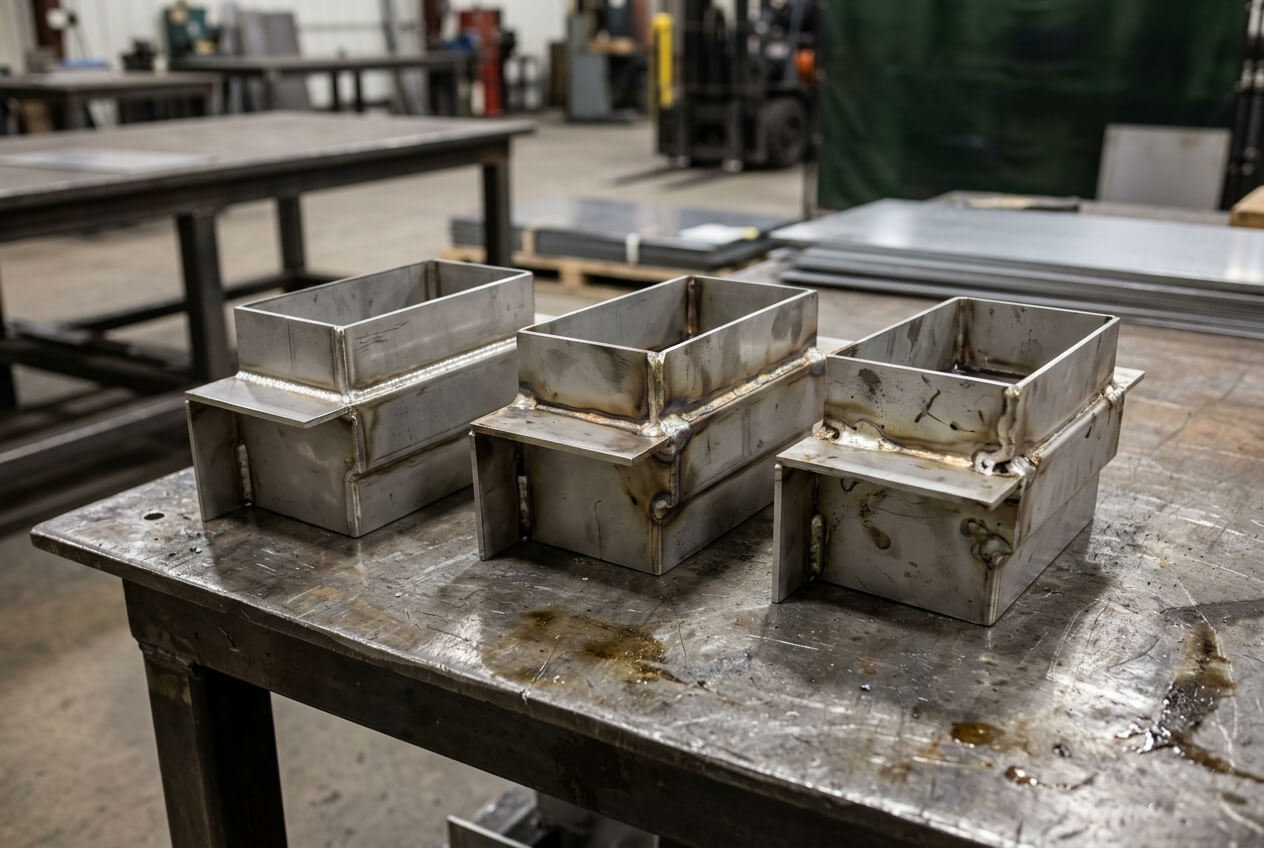
A good prototype can still hide an RFQ problem. Skilled operators can control heat by feel, clean residue by hand, and correct small distortion on one part. Batch production tests whether the drawing, fixture, inspection plan, and finish standard can repeat without heroic effort.
Procurement often treats prototype approval as proof that the method works. That assumption can fail when order quantity rises. A batch of 500 enclosures or frames needs repeatable joint preparation, controlled heating, consistent cleaning, and defined acceptance criteria. If the prototype succeeded through extra manual correction, the approved sample may not represent the quoted production route.
Sample approval should record the process assumptions
Buyers should ask suppliers to document the assumptions behind the approved sample. The note does not need to reveal proprietary process details. It should confirm the joining route, fixture approach, filler assumption, cleaning method, finish sequence, and inspection basis. This record helps prevent a quiet process change after purchase order release.
Without that record, a supplier may simplify the method to protect margin. Another supplier may keep the process stable but request a price increase after discovering the real inspection burden. Both outcomes damage procurement planning. The buyer then faces either a quality risk or a late commercial dispute.
Batch consistency depends on inspection timing
Inspection before brazing does not protect the final assembly. A flat blank can warp during heating. A correct hole pattern can move after the joint shrinks or the fixture releases. A clean surface can receive coating buildup that blocks grounding, sliding, or fastening.
First-article approval should include checks after brazing and after finishing when those steps affect the function. For assemblies, the approval should also include fit-up with mating parts. This matters for metal enclosures, cabinet frames, brackets, welded assemblies with brazed inserts, and any part that must align with glass, covers, rails, hinges, or fasteners.
Lead time also connects to this risk. A quote that ignores trials, fixture tuning, coating tests, or first-article inspection may show a shorter schedule. That schedule may collapse once production starts. Clear RFQ assumptions allow suppliers to include the right preparation time before the buyer commits to a launch date.
What to Lock Before Comparing Brazed Assembly Quotes
A strong RFQ does not need to dictate every detail of the brazing process. It needs to stop suppliers from pricing different versions of the same part. The buyer should lock the commercial assumptions that affect cost, lead time, repeatability, and acceptance.
Start with joint purpose. State whether the brazed area provides strength, conductivity, sealing, heat transfer, cosmetic joining, or positional location. Then define the material grades for each component. For dissimilar metals, highlight the contact area and any corrosion, conductivity, or temperature requirement.
Next, control the geometry. Add lap length, target clearance if known, bend-to-joint distance, and critical surfaces that must remain flat. If the supplier should recommend these values, ask the supplier to state the assumptions in the quote. This keeps engineering judgment visible instead of hidden.
Finish notes need equal attention. Mark cosmetic faces, no-residue areas, masked conductive zones, grounding surfaces, coating thickness concerns, and post-braze cleaning expectations. If a coated part must assemble without scraping, forcing, or hole rework, state that requirement before quotation.
Inspection notes should follow the consequence chain. A hidden non-critical joint may need visual inspection only. A conductive joint may need a continuity check. A sealed joint may need a leak test. A bracket or frame near mounting features may need dimensional inspection after heating and finishing. A critical prototype may justify sectioning, pull testing, or agreed sample limits.
Supplier communication should then focus on quote comparability. Ask each supplier to separate the joining method, excluded assumptions, fixture needs, first-article plan, inspection basis, and any drawing concerns. A higher quote may include controls that the lower quote omitted. A lower quote may still be valid, but only if the requirements truly allow a simpler route.
When the drawing names brazing but the function remains open, alternative joining methods may deserve comparison. Welding, spot welding, riveting, clinching, threaded inserts, adhesives, tabs, or redesign can reduce risk in some sheet metal parts. The RFQ should say whether alternatives are allowed and whether the supplier must quote the specified brazing process separately.
Yishang can review RFQ drawings for custom sheet metal parts, enclosures, brackets, frames, and assemblies where brazing appears near finished surfaces or mating features. The useful discussion happens before price comparison, not after the PO. Early review can identify unclear joint function, finish sequence conflicts, tolerance risks, and prototype-to-batch questions.
Practical next step: If your project includes a brazed joint, copper contact, dissimilar metal feature, heat-sensitive panel, powder coated cosmetic surface, or assembly fit requirement, send Yishang your drawings, material requirements, quantities, tolerances, finish expectations, photos, samples, and assembly notes. Ask for the quote assumptions to be stated clearly so you can compare suppliers on the same manufacturing basis.
Frequently Asked Questions
What brazing process details should an RFQ include for sheet metal parts?
Include the joint purpose, base material grades, lap length or clearance expectations, filler metal requirement if known, heating or supplier-proposed method, cleaning needs, coating sequence, and inspection method. These details keep suppliers from quoting different hidden versions of the same joint.
Why can two suppliers quote very different prices for the same brazed joint?
They may assume different fixture needs, filler metals, cleaning levels, cosmetic standards, inspection steps, or post-braze correction. The lower price may exclude work that the part needs later. Ask each supplier to state its assumptions before comparing unit prices.
How does powder coating affect a brazed sheet metal assembly?
Powder coating can reveal filler overflow, trap poor cleaning, cover conductive areas, or add thickness near mating surfaces. The RFQ should define masking, cleaning, cosmetic faces, coating sequence, and any surfaces that must remain electrically conductive.
Should prototype approval be enough for batch production approval?
No. A prototype may rely on extra manual control or correction. For batch production, record the approved process assumptions and inspect critical dimensions after brazing and finishing. Assembly fit should be checked when the part connects to a cabinet, enclosure, frame, or bracket.
When should a buyer allow alternatives to brazing?
Allow alternatives when the drawing specifies brazing but the real requirement is strength, conductivity, appearance, or positioning. Welding, inserts, riveting, clinching, tabs, or redesign may reduce cost or batch risk. Ask suppliers to quote the specified brazing route separately from any alternative.
What files should I send for a brazed sheet metal RFQ review?
Send 2D drawings, 3D files if available, material grades, quantities, tolerances, finish expectations, coating notes, photos, samples, and mating assembly information. Clear inputs help the supplier identify brazing assumptions before the quote becomes a purchase order.