
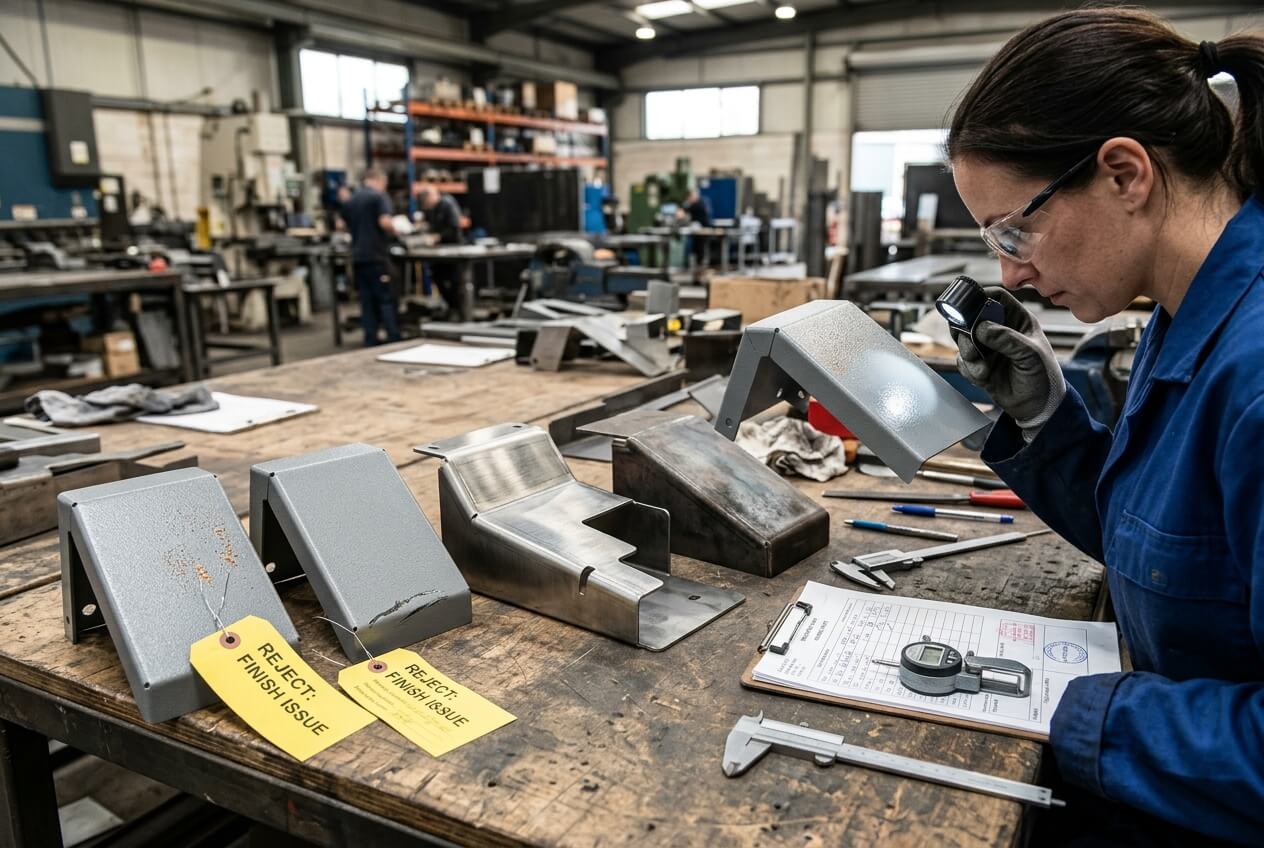
An OEM buyer sends drawings for a mild steel control cabinet, two display rack brackets, and a welded base frame. Three suppliers return similar prices, so the lowest quote looks safe. The prototype arrives on size. Then the first production batch creates a dispute. Powder builds up around mounting slots. Masked threaded holes show overspray. Cabinet doors carry rub marks. Welded corners show through the coating.
The coating line did not create the problem alone. The RFQ left finish acceptance open. Mild steel cuts, bends, welds, and powder coats well, so buyers often treat it as a simple material callout. In custom sheet metal fabrication, the larger procurement risk sits in the gap between “powder coat black” and the actual condition the buyer expects to receive.
When that gap stays open, suppliers quote different versions of the same part. One supplier includes weld blending, thread masking, protected packing, and post-coat fit checks. Another prices a basic industrial finish. The unit prices look comparable, but the acceptance standard is not comparable. This article focuses on one risk: unclear finish rules on mild steel enclosures, panels, brackets, cabinets, frames, and welded assemblies.
Unclear Finish Acceptance Makes Mild Steel Quotes Look Cheaper Than They Are
A drawing can show the flat pattern, bend lines, hole positions, weld symbols, and material thickness. It can still leave the buyer exposed. A note such as “mild steel, powder coat black” does not define which faces must look clean, which defects matter, or which dimensions must function after coating.
That missing information changes the quote before production starts. A hidden internal bracket needs a different finish standard than a front cabinet door. A retail display rack upright needs cleaner weld transitions than a machine frame behind a guard. If both drawings carry the same short finish note, suppliers must guess the level of preparation and inspection.
The lowest quote may exclude the work that prevents rejection
Finish-related labor can hide inside fabrication assumptions. A supplier may include only normal deburring and powder coating. Another may add sanding on visible faces, spatter removal, thread masking, careful hanging, edge coverage checks, and individual wrapping. Both suppliers may honestly say they quoted powder coating. They did not quote the same acceptance condition.
This creates a procurement trap. Purchasing compares line items while engineering compares finished parts. The buyer discovers the mismatch only after prototypes or batch delivery. At that point, the discussion moves from price to responsibility. Rework can involve stripping, sanding, recoating, cleaning threads, replacing damaged hardware, or remaking parts.
Project example: an equipment maker ordered mild steel cabinet doors for a wall-mounted controller. The drawing gave thickness, bend radius, hinge holes, and a black powder coat note. It did not mark the front face as cosmetic. The delivered batch met geometry, but light sanding marks and minor weld shadows remained visible under shop lighting. The buyer expected a customer-facing surface. The supplier had priced an industrial cabinet surface.
The corrective action should have happened before quote comparison. The RFQ needed a cosmetic face mark, viewing distance, texture or gloss reference, handling mark limits, and packing expectations. Without those details, the lowest price only proved that the supplier made fewer finish assumptions.
Powder Coating Ambiguity Turns Small Features Into Assembly Problems
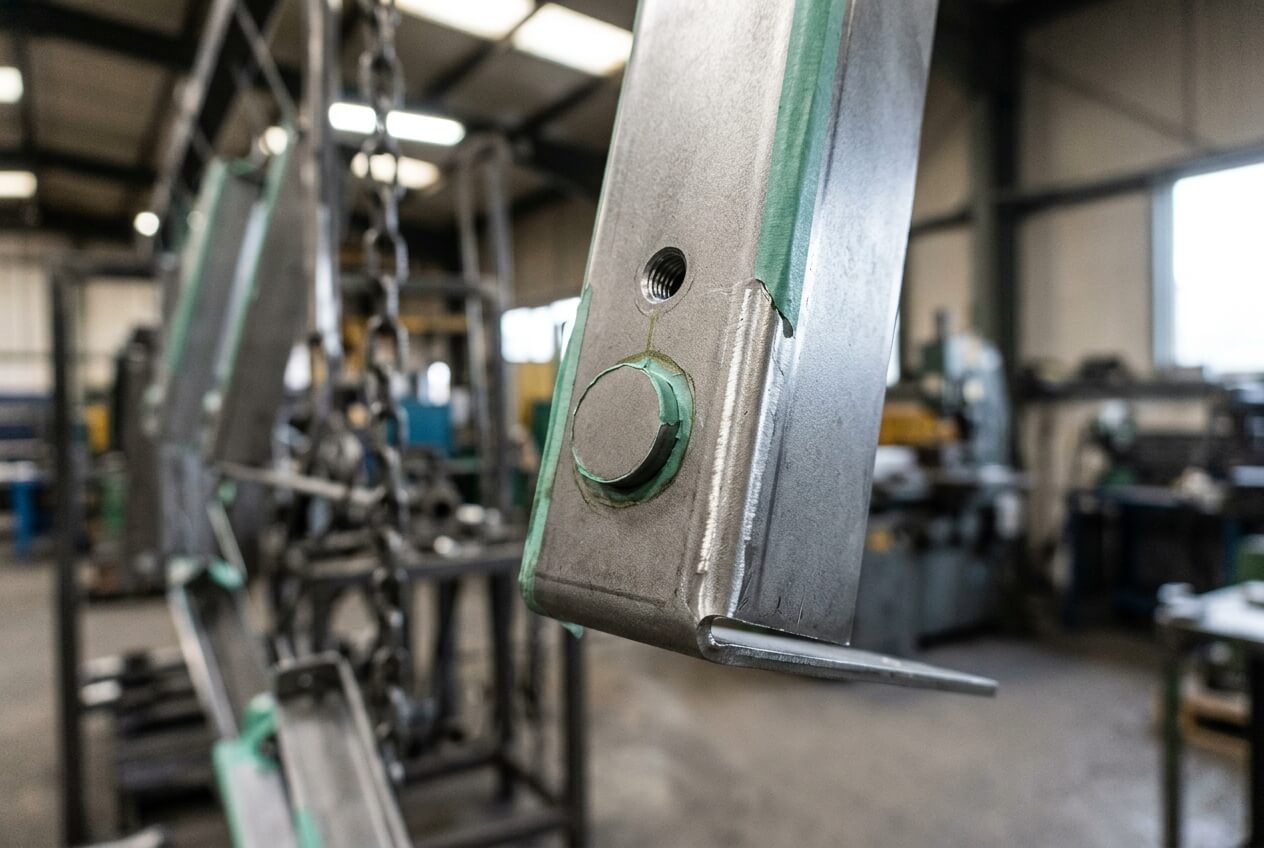
Many mild steel parts pass raw fabrication inspection but fail after coating. Powder adds measurable thickness. That thickness affects slots, hinges, threaded areas, mating flanges, tabs, covers, and grounding faces. If the RFQ does not say which dimensions matter after coating, the supplier may inspect the raw part and still ship a finished part that creates assembly friction.
Coating build-up causes problems in predictable places. Slotted holes lose adjustment range. Sliding covers scrape at the corners. Hinges bind after assembly. PEM nuts accept screws poorly if overspray enters the thread. Grounding pads fail continuity checks when powder covers the contact surface. These issues look like poor workmanship, but they often begin as unclear finish rules.
State whether critical dimensions apply before or after coating
A laser-cut slot may measure correctly before finishing. After coating, the usable opening becomes smaller. That may not matter for a clearance hole. It can matter a lot for a bracket that installers adjust in the field. The drawing should identify features that must remain functional after finishing, not only after cutting and bending.
Consider a mild steel cover that slides over an inner chassis. The prototype fits before powder coating. After coating, the inside corners feel tight. The team approves one sample after a small manual adjustment. During batch production, normal variation in bend angle, coating thickness, and handling produces covers that bind or sit proud. The buyer calls it a tolerance failure. The real source sits between tolerance and finish acceptance.
Masking also changes both cost and risk. Threaded studs, PEM inserts, bearing faces, hinge barrels, nameplate zones, electrical contact areas, and tight mating surfaces all need clear instructions. A supplier who masks every functional surface will quote more labor. A supplier who masks only obvious holes may quote lower. The difference will not appear in the material line item, but it will appear during assembly.
Project example: a buyer ordered mild steel mounting brackets for a kiosk frame. The slots allowed vertical adjustment during installation. The drawing listed slot size but did not say the dimension applied after powder coating. The finished slots still accepted the bolts, but installers lost enough movement to create alignment problems. A wider slot or a controlled coating zone would have cost less than field rework.
Buyers can reduce this risk by separating cosmetic approval from functional approval. Check the coated prototype with screws, hinges, gaskets, labels, covers, mating panels, and grounding hardware. Then update the drawing or RFQ so batch production follows the same rules.
Surface Preparation Assumptions Decide Whether Coating Hides Defects or Highlights Them
Powder coating does not make every mild steel surface look smooth. It can hide small color variation, but it often highlights grinding marks, weld transitions, edge conditions, waviness, and dents. Large flat panels make this risk obvious. Glossy finishes reflect uneven surfaces. Matte finishes reduce reflection but may show rub marks. Textured finishes hide more, but they may not match the product design.
The RFQ should tell the supplier what condition the surface needs before coating. Mild steel sheets can arrive with mill marks, light scratches, oil residue, or edge oxidation. Fabrication adds laser scale, burrs, punch marks, weld spatter, sanding lines, and handling marks. If the buyer only specifies the final color, the supplier must decide how much preparation to include.
Visible welds need a priced standard, not a verbal expectation
Welded assemblies create the largest finish disputes. A mild steel display rack may need exposed corners to look smooth after coating. That expectation requires weld control, grinding, sanding, and careful inspection before powder. A machine frame may only need safe edges, no loose spatter, and full coating coverage. Treating both parts as “powder coated welded steel” leads to either unnecessary cost or rejection risk.
Buyers often use vague phrases such as “nice finish,” “clean welds,” or “smooth surface.” Those phrases do not tell the supplier whether welds should disappear, remain visible but neat, or only be free from spatter. Photos, approved samples, marked cosmetic zones, and written limits help suppliers price the correct work.
Surface preparation also affects lead time. Extra sanding, weld blending, rework after inspection, and controlled packing take production hours. If the supplier discovers the finish expectation after prototype feedback, the schedule can slip. If the supplier discovers it after coating a batch, the project may need stripping and recoating. That step can damage threads, distort thin parts, or add visible texture changes.
For enclosures and cabinets, buyers should mark customer-facing doors, side panels, top covers, and exposed rear service panels. Hidden internal plates do not need the same finish. This selective approach protects appearance without forcing premium preparation onto every surface.
Yishang can review drawings, finish notes, photos, and samples for mild steel enclosures, frames, brackets, and welded assemblies before quotation. The useful outcome is not a sales claim. It is a clearer list of assumptions around cosmetic faces, weld preparation, masking, and coated fit.
Prototype Approval Can Create False Confidence Before Batch Production
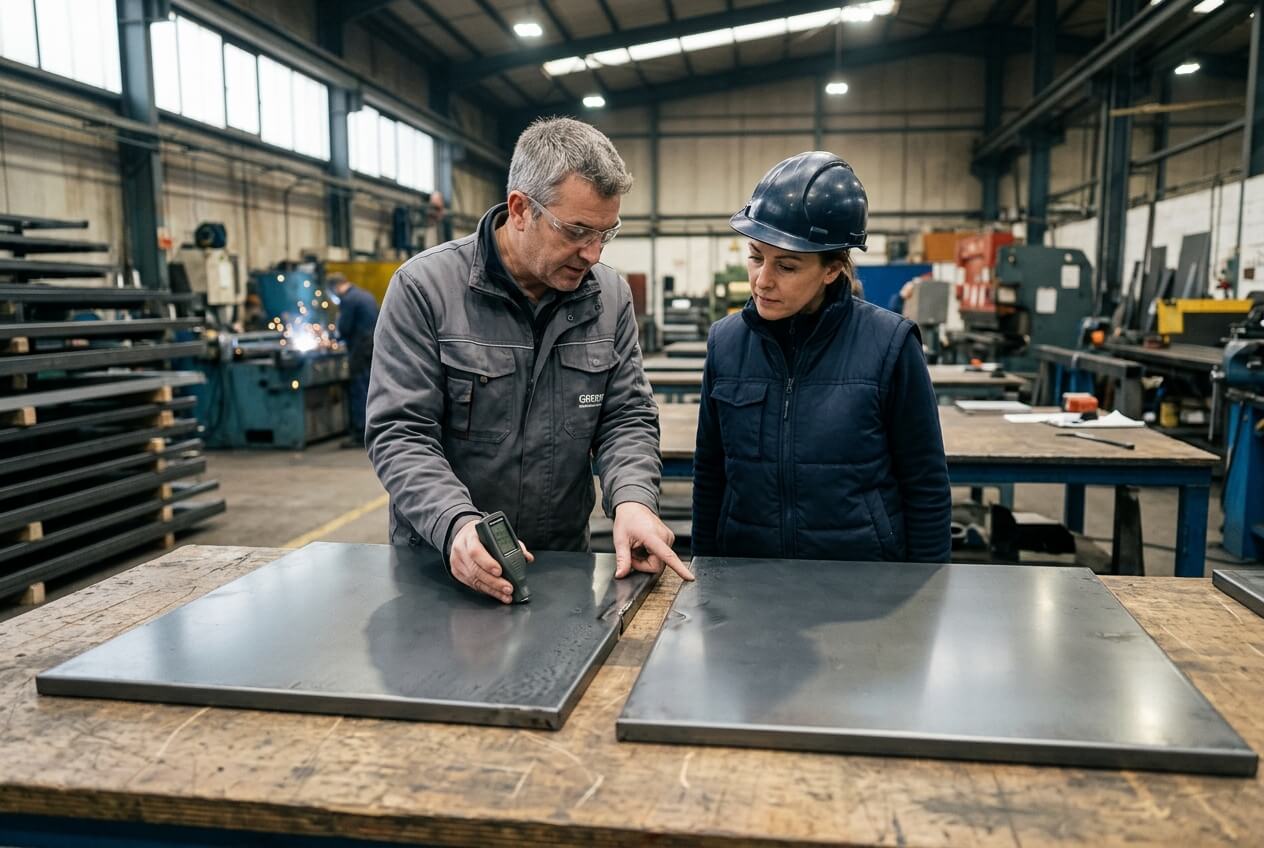
A good prototype does not automatically protect a mild steel production batch. Prototypes often receive more manual attention than batch parts. Teams handle them carefully, inspect them closely, and correct small issues without recording the correction. If the buyer approves that prototype without defining acceptance limits, the supplier may not repeat the same extra work during production.
The risk grows when a prototype review focuses on appearance alone. A coated enclosure can look acceptable on a desk but fail when assembled with hinges, screws, seals, locks, or internal electronics. A welded frame can pass visual inspection but place mounting points outside the practical adjustment range after welding and coating. The buyer needs approval criteria that connect the sample to batch inspection.
Define what the approved sample actually controls
A golden sample can control color, texture, gloss, and general workmanship. It does not automatically control every future variation. Buyers should state whether the sample controls weld smoothness, sanding direction, orange peel, edge coverage, masking quality, handling marks, packing method, or only color and texture.
Batch consistency also depends on fixtures, hanging points, coating method, and packing flow. Thin mild steel panels can flex during handling. Large cabinet doors can rub inside cartons. Frames can collect more powder around welded corners. If the RFQ ignores these production realities, the first batch may drift from the approved prototype even when operators follow normal process controls.
Inspection should target the features most likely to fail. For enclosures, check coating coverage at edges, vents, hinge zones, and screw holes. For cabinets, check door gaps after coating. For brackets, confirm the coated hole function and installation movement. For welded frames, inspect visible weld transitions, mounting datums, and coating continuity near heat-affected areas.
Packing belongs inside finish acceptance because it protects the finished condition. Coated mild steel parts can rub during domestic trucking or export freight. Large flat panels, cabinet doors, and display rack components often need separators, corner protection, wrapping, or protected stacking. If the buyer expects cosmetic faces to arrive without abrasion, the RFQ must say so.
Clarify Finish Rules Before Comparing Suppliers, Not After Rejection
The safest time to remove finish ambiguity is before quote comparison. Once suppliers price different assumptions, the buyer cannot fairly compare unit cost, tooling, lead time, or sample charges. A clear RFQ lets each supplier quote the same work scope and identify manufacturability concerns early.
Start with the drawing package. Mark cosmetic surfaces and functional coated features. Identify material grade or standard if it matters, not only the phrase mild steel. State thickness, tolerances, critical datums, weld expectations, and whether key dimensions apply before or after finish. Add finish details such as color reference, gloss, texture, coating thickness range, masking areas, and surface preparation needs.
Then explain the assembly context. Tell the supplier where the part installs, which faces remain visible, which parts move, where grounding occurs, and which features installers adjust. This context helps the fabricator flag cost drivers and lead-time risks before production. It also reduces supplier communication loops because the RFQ answers the questions that usually appear after quoting.
Do not make every surface premium by default. That increases cost and may extend lead time without improving product function. Instead, divide the part into visible surfaces, functional interfaces, hidden surfaces, and weld areas. This approach gives purchasing a clearer price comparison and gives quality teams a practical inspection standard.
Before releasing a batch, align the approval process. Review the coated prototype for appearance and assembly fit. Record any manual corrections. Update drawings or notes if the sample required wider slots, more masking, extra weld blending, different packing, or a changed tolerance. Batch consistency improves when the supplier can build to written rules rather than memory.
RFQ review CTA: If your project involves powder coated mild steel enclosures, cabinets, brackets, frames, panels, or welded assemblies, send Yishang your drawings, material requirements, quantities, tolerances, finish expectations, masking notes, coating thickness targets, photos, samples, assembly conditions, and prototype feedback. The team can review where finish acceptance may affect quotation, manufacturability, sample approval, and batch consistency before production starts. Share project details through Yishang.
Frequently Asked Questions
Why does a simple “powder coat black” note create risk on mild steel parts?
It does not define cosmetic faces, masking areas, coating thickness, weld preparation, inspection distance, or packing rules. Suppliers may quote different levels of work while using the same finish description. The buyer then compares prices that do not reflect the same acceptance standard.
How should cosmetic surfaces be marked on a mild steel enclosure drawing?
Mark the faces visible after installation, such as doors, front panels, top covers, and exposed sides. Add viewing direction, color reference, gloss or texture, and limits for scratches, sanding marks, weld shadows, and handling marks. Hidden internal parts can carry a lower finish standard.
When should coating thickness be controlled on slots, hinges, and mating flanges?
Control it when powder build-up can reduce clearance, movement, grounding, or adjustment. Sliding covers, slotted holes, hinge zones, tabs, contact pads, and close-fitting flanges need clear post-coat requirements. State whether critical dimensions apply before or after coating.
Which masking details most often change sheet metal fabrication quotes?
Threads, PEM nuts, studs, grounding pads, hinge areas, bearing faces, nameplate zones, electrical contact surfaces, and tight assembly interfaces often drive masking labor. If the RFQ omits these areas, one supplier may include detailed protection while another prices basic coating only.
Why can a mild steel prototype pass but the production batch still fail?
The prototype may receive extra manual finishing, lighter handling, or informal corrections. It may also pass appearance review without full assembly testing. Record what the approved sample controls, then update drawings for coated fit, masking, weld preparation, and packing before batch release.
What should buyers send for a finish-risk review before requesting a quote?
Send drawings, material requirements, quantities, tolerances, finish expectations, masking notes, coating thickness targets, photos, samples, assembly conditions, and packing needs. These details help a fabricator flag quote assumptions before they become prototype disputes or batch rejections.