
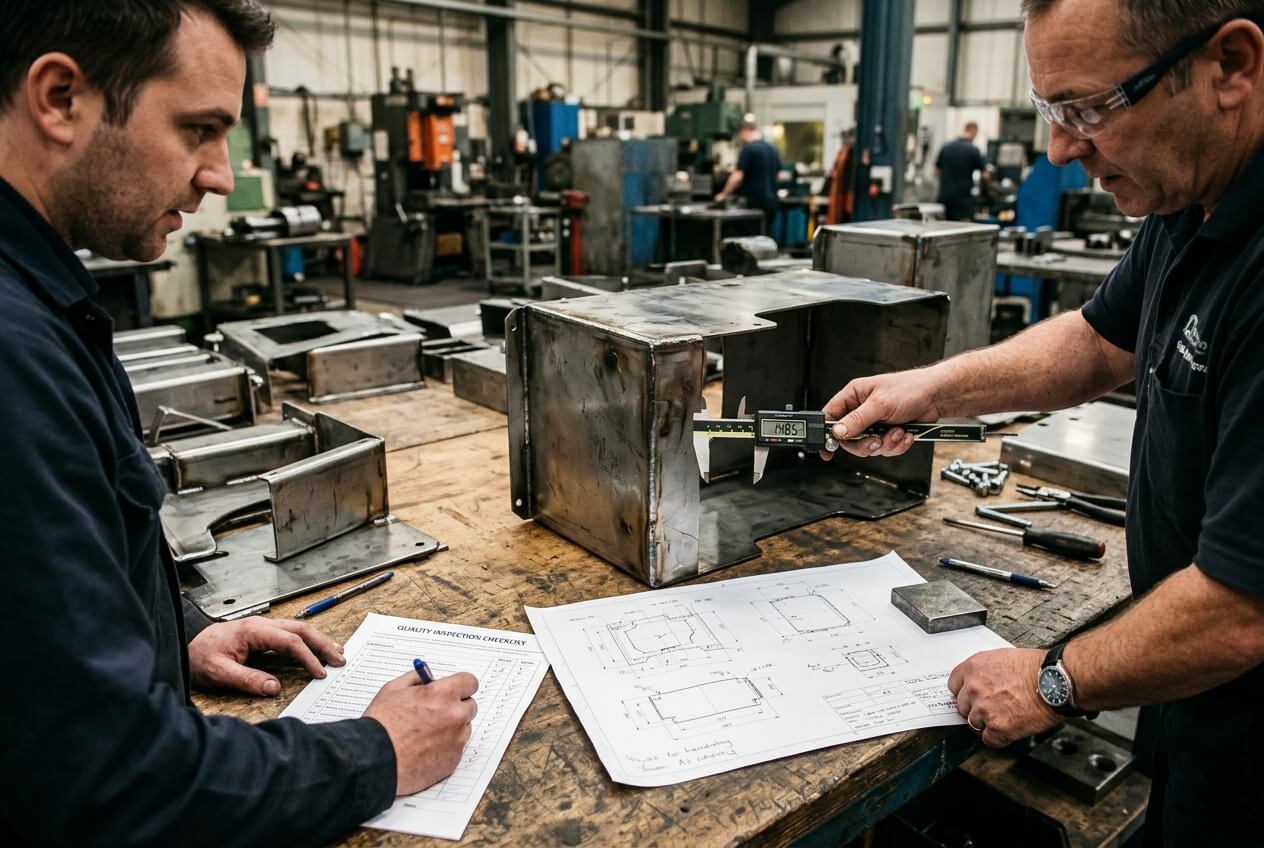
In a hot forging production line manufacturing project, buyers usually focus on the press, induction heater, transfer system, trimming station, and inspection equipment first. Sheet metal parts often enter the RFQ later. Guards, operator cabinets, electrical enclosures, access panels, brackets, cooling covers, welded frames, and small welded assemblies look less risky than the main equipment.
That view creates a procurement trap. These parts may look simple on a drawing, but they connect to fixed machine bases, moving transfer paths, hot work areas, cable routes, maintenance zones, and operator access points. If the RFQ leaves those interfaces unclear, each supplier fills the gaps with different assumptions. One quote may include fixtures, finish masking, post-coating inspection, and assembly packing. Another quote may cover only cutting, bending, basic welding, and bulk shipment.
This article focuses on one dominant risk: RFQ ambiguity that turns low sheet metal quotes into installation delays. The problem does not start on the installation floor. It starts when drawings, tolerances, materials, finish expectations, prototype notes, and batch controls do not describe how the part must work on the forging line.
Where RFQ Assumptions Start to Distort Fabrication Quotes
Most quote distortion begins when the drawing shows geometry but not function. A guard panel may list thickness, bend lines, hole sizes, and powder coating color. It may not show the adjacent press column, transfer arm clearance, hinge side, or operator-facing edge. A supplier that prices only the flat part can respond quickly. A supplier that studies fit-up will ask more questions before quoting.
Those questions change the price basis. They may add welding fixture time, extra deburring, hole inspection after coating, PEM hardware, packing by assembly set, or masking for grounding points. Without those details, buyers compare numbers that do not represent the same scope.
A low price can hide missing fabrication steps
Consider a set of removable guards around a billet transfer system. The RFQ drawing shows bent panels and welded tabs. It does not mention that maintenance staff remove the guards every shift while wearing gloves. One supplier quotes laser cutting, bending, and standard powder coating. Another includes radius checks, rounded hand-contact edges, reinforced handles, and labeled packing by machine section.
The cheaper quote looks attractive until installation starts. Operators find sharp access edges. Some tabs need slotting because coating reduced the mounting clearance. Installers mix panels from different line sections because the packing did not match the assembly sequence. The buyer then pays with rework hours, site delays, and friction between procurement and engineering.
Ambiguity also affects lead time
Missing RFQ data does not only affect unit price. It also affects lead time. If the buyer clarifies interface holes after production starts, the supplier may need revised programs, new bending setups, fixture changes, or recoating. A two-day drawing question can become a two-week delay when it appears after cutting or welding.
For line-side sheet metal, buyers should treat unanswered assumptions as commercial risk. Ask suppliers to state what they included for welding fixtures, critical-hole inspection, coating masking, hardware installation, assembly labeling, and packing. When assumptions become visible, procurement can compare quotes with less guesswork.
Missing Interface Data Turns Correct Parts into Wrong Installation Parts
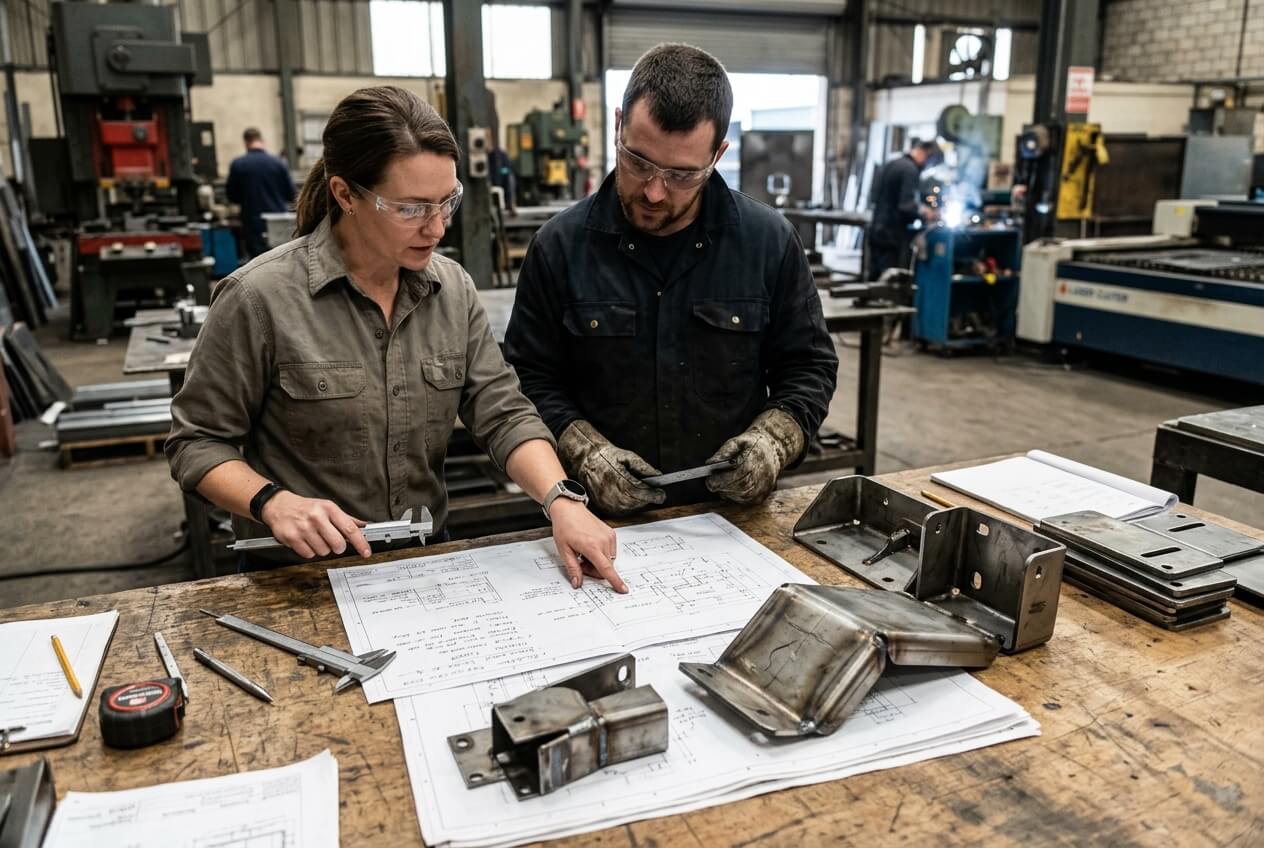
A sheet metal part can match its drawing and still fail on a forging line. That happens when the drawing controls the part shape but not the installation interface. Press-base holes, heater frames, transfer rails, cable trays, coolant pipes, sensor brackets, and maintenance doors all create fit conditions that basic fabrication drawings often miss.
Procurement may not see these details as quote inputs. Engineering may assume the supplier will understand them from the layout. The supplier may only receive isolated part drawings. Each handoff removes context, and the final quote reflects a simpler part than the buyer actually needs.
Project example: operator cabinet beside an induction heater
An operator cabinet near an induction heating area may look like a standard welded frame with sheet metal panels. The RFQ lists outside dimensions, door size, color, and quantity. It does not mark the cable entry side, grounding points, anchor-hole datums, ventilation openings, or clearance around the door swing.
The prototype may pass a visual check. During installation, the door hits a nearby guard rail. Cable holes sit on the wrong side after the electrical layout freezes. Anchor holes fall within general tolerance but do not match the base plate cleanly after welding and powder coating. None of these failures require exotic engineering. They require earlier interface information.
The better RFQ does not need a heavy manual. It needs practical notes. Mark fixed mounting datums. Show nearby obstructions. Identify the door swing area. State whether the cabinet receives electrical components before or after shipment. Add photos or layout screenshots when drawings do not show the site condition.
Project example: sensor brackets near a transfer path
Sensor brackets often look like low-value parts, so buyers may push them into a general bracket RFQ. Yet a small bend-angle error can point a sensor away from the billet path. A coating buildup around a mounting slot can shift the final position. Vibration can loosen a bracket if the design lacks stiffness or proper hardware.
If the RFQ only states material thickness and hole sizes, the supplier may use normal bending tolerance and standard packing. A better RFQ marks the sensor direction, critical height, bend-angle requirement, cable clearance, and inspection point after bending. This keeps the quote tied to the function, not just the shape.
Yishang can support drawing review at this stage when buyers need custom sheet metal fabrication parts checked against mating equipment, mounting conditions, and assembly sequence before the final quote comparison.
Tolerance, Material, and Finish Notes Should Reduce Risk, Not Inflate Every Feature
RFQ ambiguity often pushes buyers into two poor choices. Some buyers leave tolerances, materials, and finishes too loose, which invites quote gaps. Others tighten every dimension, specify high-cost material, or over-control cosmetic finish to avoid trouble. Both approaches can increase procurement risk.
The safer route is selective control. Buyers should identify which features affect installation, service, safety, or appearance. Then they can leave non-functional areas with practical fabrication tolerance. This keeps cost drivers visible and prevents the supplier from overpricing the whole part to protect against unclear requirements.
Control the features that change during fabrication
Laser-cut holes may meet the drawing before bending. Welding can pull them out of position. Powder coating can reduce clearance. Press-fit fasteners can distort thin sheet around the hardware. If the RFQ only requires inspection before these processes, the buyer may approve parts that later fail assembly.
Mounting holes on welded frames deserve special attention. If a frame bolts to a fixed press base, inspect those holes after welding and coating. If the design allows installation adjustment, define slot size and orientation. If the holes only support a loose cover, keep the tolerance wider. This approach protects the critical interface without forcing precision across every flange.
Finish expectations must match the line environment
Finish notes also need function. A powder-coated enclosure panel in a clean operator area may need consistent color and surface quality. A cover near hot scale, oil mist, or radiant heat may need a different finish choice or a more realistic appearance expectation. If buyers do not state which surfaces remain visible, suppliers may spend money on hidden faces or under-control visible ones.
Material notes work the same way. A thicker sheet may improve stiffness but add weight, cost, and forming difficulty. Stainless steel may help in a wet or corrosive area but may not solve a heat-clearance problem. Aluminum may reduce weight but change welding, grounding, and finish decisions. The RFQ should connect material to the risk it solves.
These decisions influence cost and lead time. Tight final inspection after coating, special masking, extra fixtures, stainless fabrication, and cosmetic sorting all add work. Buyers should request these controls where they prevent line disruption, not as blanket requirements.
Prototype Approval Does Not Remove RFQ Risk Unless Batch Controls Are Recorded
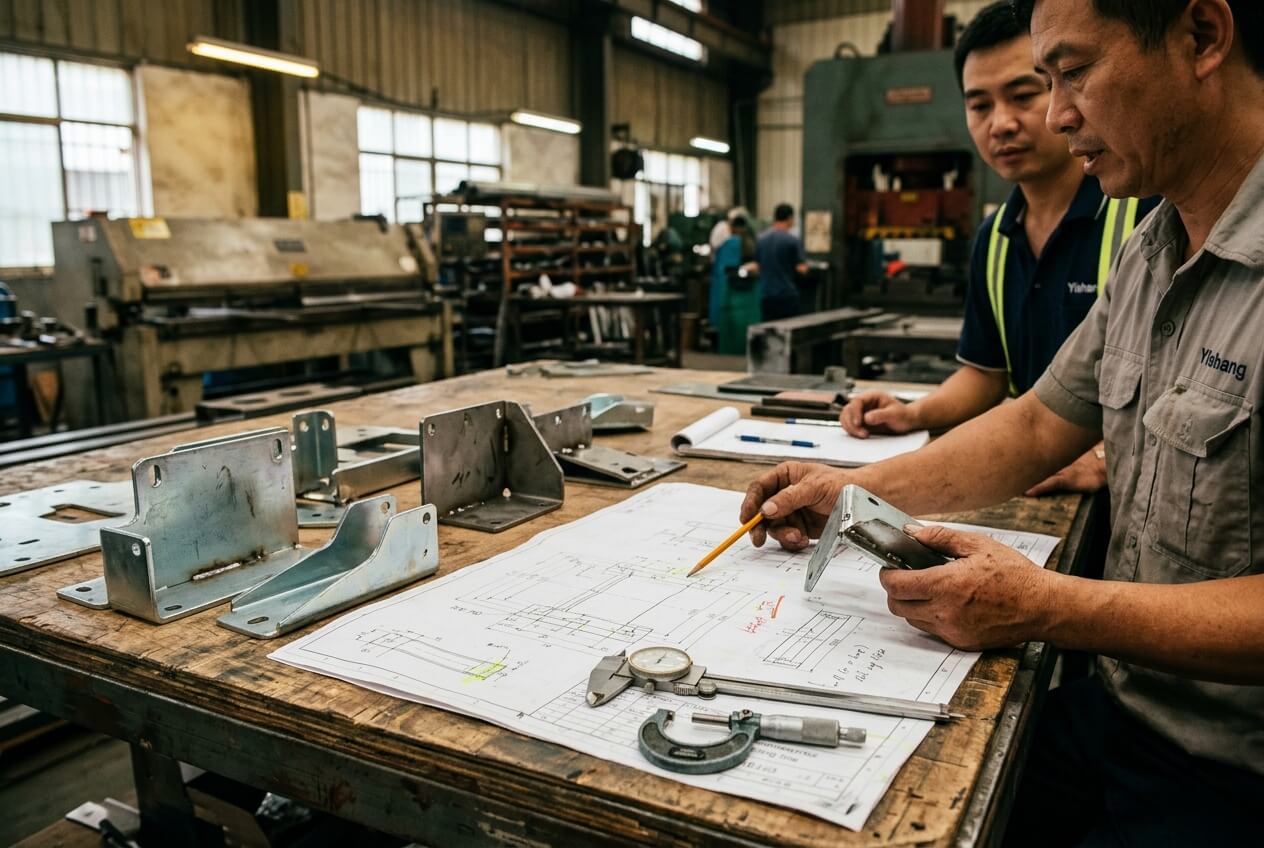
Many buyers approve one prototype and expect the production batch to repeat it. That assumption becomes risky when the part includes bending, welding, inserts, coating, and assembly. A prototype can hide workshop adjustments. A technician may file a hole, correct a door gap, tweak a bracket angle, or grind a welded corner before coating.
If those changes never reach the drawing or inspection plan, batch production can drift. The first sample fits because one skilled worker adjusted it. The next 200 pieces follow the original drawing and repeat the old problem. Procurement then faces a difficult argument: the supplier says it made the parts to drawing, while the installation team says the batch does not match the approved sample.
Record what made the prototype acceptable
Prototype approval should answer two questions. Does the design work on the forging line? Can the supplier repeat that condition in batch production? The second question needs records. If the prototype needed larger slots, update the drawing. If a welded assembly needed a fixture to stay square, include fixture time in the production quote. If coating thickness affected a door gap, revise the clearance or inspection point.
Buyers should also define what prototype approval covers. It may cover fit only, finish only, or both. It may include door operation, hinge alignment, bracket angle, hardware position, weld appearance, masking, and packing. A short approval note can prevent a long dispute later.
Batch consistency depends on process control
Repeatability requires more than a signed sample. Suppliers need stable bend tooling, welding sequence, fixture use, hardware installation checks, finish controls, and final inspection of functional features. If the batch ships in multiple lots, the supplier should control revisions and labels so installers do not mix old and new versions.
For welded assemblies and metal enclosures, buyers should ask how the supplier will maintain the approved condition. Will it inspect frame squareness after welding? Will it check door gaps after coating? Will it pack cabinet panels as matched sets? These questions connect prototype approval to real production control.
Yishang can review prototype comments and revised drawings when buyers need the approved sample condition converted into repeatable sheet metal parts, frames, brackets, cabinets, or enclosure assemblies.
What Buyers Should Clarify Before Comparing Supplier Quotes
Before comparing prices for forging-line sheet metal parts, buyers should make the hidden assumptions visible. The goal is not to write a long specification for every cover or bracket. The goal is to stop suppliers from quoting different versions of the same job.
Start with drawings. Add the mating equipment, controlled datums, critical holes, operator-facing surfaces, and removable access areas. If the drawings cannot show the full layout, include photos, marked screenshots, or assembly notes. State which dimensions need inspection after welding, coating, or hardware insertion.
Then connect commercial terms to fabrication reality. Quantities affect fixtures and unit cost. Prototype quantities need more review time than repeat batches. Tight tolerances, cosmetic finish requirements, stainless material, masking, labeled packing, and assembly checks all change cost and lead time. If buyers hide these details until after award, the lowest quote may become the most expensive option.
Supplier communication should also stay specific. Instead of asking, “Can you make this part?”, ask which assumptions the supplier made for fit, finish, inspection, packing, and batch repeatability. Request exceptions in writing. Ask whether the quote includes post-coating checks for critical holes and gaps. Confirm how drawing revisions will be controlled after prototype approval.
A clear RFQ helps both sides. Buyers reduce rework, site modification, and schedule disputes. Suppliers quote the true scope instead of protecting themselves with broad assumptions or underpricing missing work. In hot forging production line manufacturing, this discipline matters because small sheet metal parts can stop a large installation.
Preparing an RFQ for guards, operator cabinets, brackets, frames, welded assemblies, or metal enclosures for a forging-line project? Send Yishang your drawings, material requirements, quantities, tolerance notes, finish expectations, prototype comments, and any photos of mating equipment. The team can review fabrication assumptions before you lock the quote. Start through Yishang.
Frequently Asked Questions
Why do sheet metal quotes for forging-line parts vary so much?
Suppliers often quote different assumptions. One quote may include welding fixtures, masking, hardware installation, post-coating inspection, and labeled packing. Another may include only cutting, bending, and basic welding. Buyers should ask each supplier to state what the price includes for fit, finish, inspection, and batch control.
Which RFQ details matter most for hot forging production line manufacturing sheet metal parts?
Critical mounting holes, mating equipment locations, operator-facing surfaces, access requirements, material grade, coating expectations, quantities, and inspection points matter most. These details show how the part will work on the line, not just how it looks as an isolated component.
Should buyers apply tight tolerances to every dimension?
No. Tight tolerances should protect functional areas such as press-base holes, sensor positions, door gaps, hinge alignment, and mating surfaces. Non-functional flanges and hidden covers can often use practical fabrication tolerance. Selective control reduces cost while protecting installation fit.
How can prototype approval fail to protect the production batch?
A prototype may include manual adjustments that never reach the drawing. Workers may file holes, adjust doors, or correct welded corners. If the buyer does not record those changes, the batch may follow the original drawing and lose the approved fit. Update drawings and inspection notes before release.
What should buyers clarify about powder coating before ordering enclosures or guards?
Clarify visible surfaces, color expectations, masking areas, threaded holes, grounding points, and final clearance after coating. Powder coating adds thickness and can affect door movement, hinge fit, slots, and hardware engagement. Inspect critical features after coating when they affect assembly.
When should buyers involve a sheet metal fabrication supplier in RFQ review?
Involve the supplier before final quote comparison if drawings lack interface details, finish notes, tolerance priorities, batch quantities, or prototype acceptance criteria. Early review helps expose assumptions while the buyer can still adjust drawings, pricing scope, and lead-time expectations.