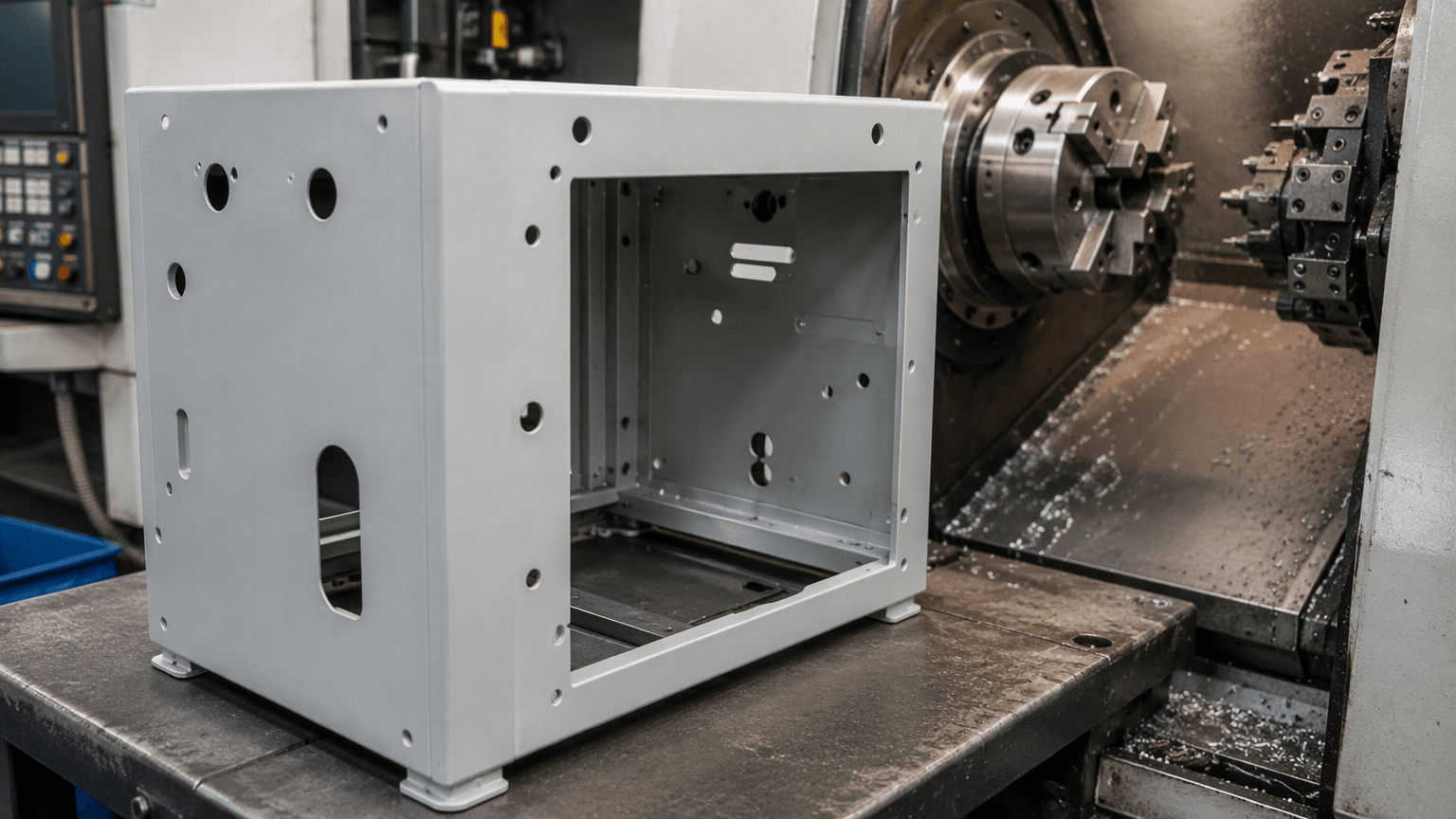
The process of a lathe machine uses a rotating workpiece and a cutting tool to remove material and create features such as outside diameters, shoulders, grooves, tapers, bores, and threads. A typical route starts with drawing review, material preparation, workholding, tool setup, machining, inspection, and any specified finishing or assembly work.
Lathe machining and powder coating are separate operations. Turning creates the dimensional features of a machined part. Powder coating finishes a suitable metal substrate by applying dry powder and thermally curing it. When an OEM product combines a turned insert with a fabricated enclosure, bracket, cabinet, or frame, the project team should coordinate machining, sheet metal fabrication, welding, finishing, and assembly as separate process stages.
Process of a Lathe Machine: Main Stages
1. Review the Part Requirements
Production starts with the drawing or 3D model. The manufacturer reviews the material, stock size, finished diameters, lengths, bores, threads, grooves, surface requirements, tolerances, and interfaces with mating components. The team should identify features that will later receive coating, press into another part, connect to a weldment, or support assembly because the finish can affect a functional interface.
2. Prepare and Secure the Workpiece
The operator secures the raw bar, tube, casting, or other workpiece in a chuck, collet, or another suitable workholding arrangement. Correct alignment and adequate support help maintain the relationship between diameters, shoulders, holes, and end faces during cutting. The part geometry and required operations determine the setup.
3. Set the Cutting Tools and Machine Coordinates
The operator selects tools for facing, turning, boring, grooving, threading, or drilling. The setup establishes tool positions and the reference points that control each cut. On a CNC lathe, the program directs tool movement and spindle rotation. On a manual lathe, the operator controls the movements directly. In both cases, the process removes material from a rotating workpiece to form the specified geometry.
4. Machine the Features
Facing creates a flat end surface, while external turning reduces an outside diameter. Boring enlarges or finishes an internal diameter, and drilling creates a hole along the spindle axis. Grooving, chamfering, taper turning, and threading create additional functional or assembly features. A part may need roughing passes to remove material, followed by finishing passes for the final dimensions and surface condition.
5. Inspect and Complete the Part
The inspection plan should address the dimensions and features that control the part’s function. Depending on the drawing and agreed quality plan, the inspection may cover diameter, length, thread condition, bore size, concentric relationships, surface condition, and visual defects. The operator may then deburr or clean the part. If the component will receive powder coating, the team should define the coating route and all areas that must remain uncoated before releasing the part for finishing.
How Lathe Machining Fits a Sheet Metal Route
Lathe machining does not replace laser cutting, CNC punching, bending, or welding. Laser cutting and CNC punching create profiles and holes in sheet material. Bending forms that sheet, welding joins fabricated components, machining removes material from a rotating or otherwise supported workpiece, and assembly combines completed parts. A turned shaft, bush, spacer, threaded insert, or other machined feature may interface with a sheet metal enclosure or welded frame, but each operation has its own drawing requirements and inspection controls.
An OEM route may include laser cutting or CNC punching for panels, bending for flanges, welding for the frame, lathe machining for an insert, surface preparation, powder coating, inspection, and final assembly. The design determines the sequence. Threads, bearing seats, grounding points, mating faces, and close-fitting surfaces may need machining after coating, protection during coating, or dimensional checks after finishing. The drawing should state which approach applies.
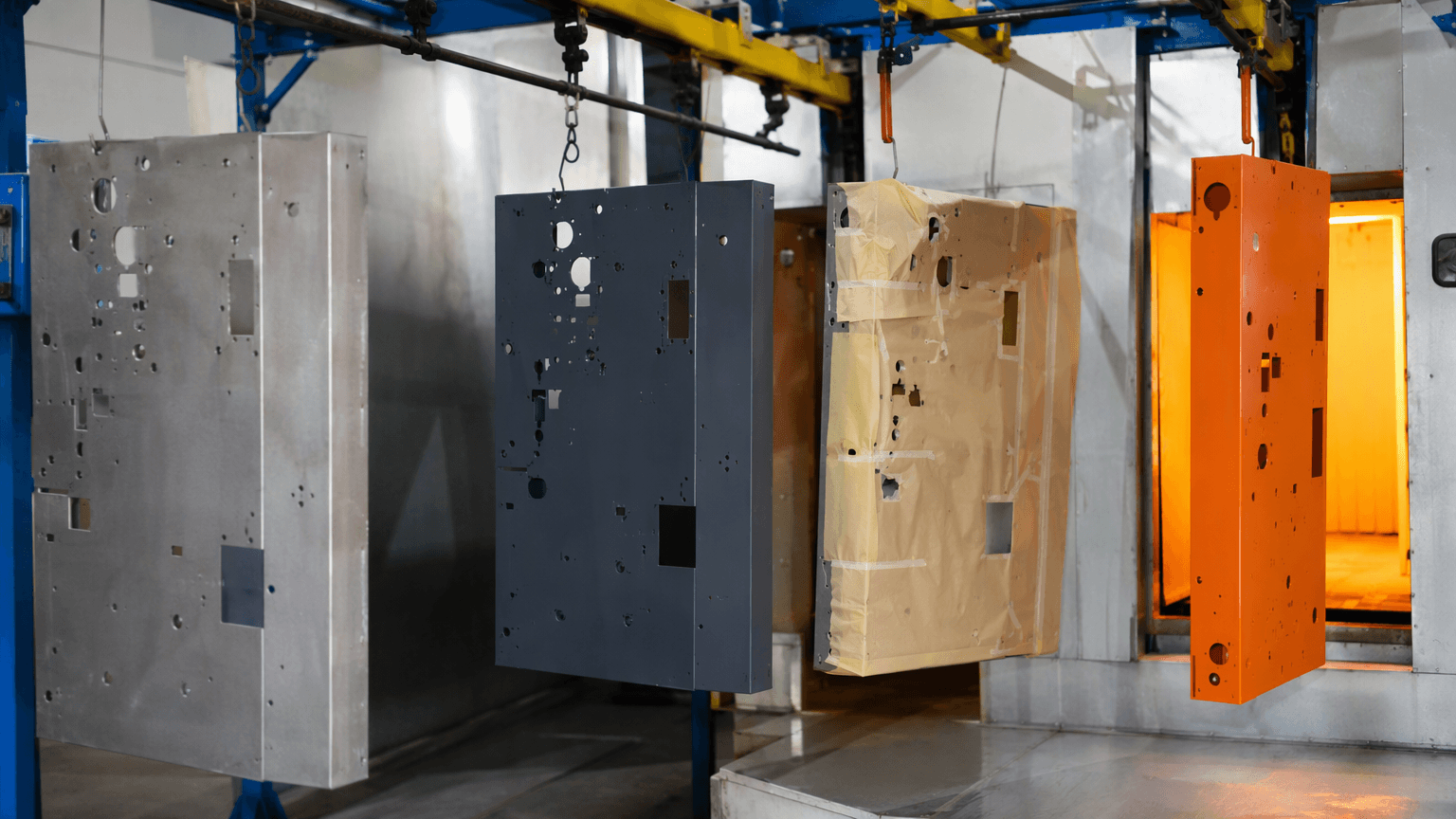
What Does Metal Powder Coated Mean?
Metal powder coated means that a metal part has received a dry powder coating applied to its surface and thermally cured. The basic sequence consists of substrate cleaning or pretreatment, powder deposition, and heat curing. The term describes the finished surface. It does not describe a separate metal material or a lathe operation.
During application, the coater directs powder toward a conductive metal workpiece. Electrostatic attraction helps charged particles deposit on the grounded substrate before curing. Part geometry affects access: deep recesses, narrow channels, enclosed sections, overlapping flanges, and shielded corners can affect deposition consistency. A machined part with threaded holes or close-fitting diameters may need masking or a post-coating dimensional check.
What Controls a Powder-Coated Part?
Two parts with a similar color and gloss can perform differently because the complete coating system controls the result. Substrate type, surface condition, cleaning, pretreatment, powder selection, film build, curing, handling, and service environment all influence adhesion, corrosion resistance, and appearance.
Oil, grinding residue, rust, oxides, weld spatter, dust, and incompatible marking materials can create defects or weaken bonding. Sharp edges and rough weld transitions can affect coverage and appearance. The team should review weld condition before coating because surface preparation cannot correct every fabrication defect. The coating supplier or process owner should define the curing window for the selected system and consider the part material, thickness, geometry, and actual metal temperature. The project should not assume a universal cure condition or performance result.
Powder coating does not automatically suit every metal, temperature exposure, chemical condition, outdoor environment, or electrical requirement. The project team must review the substrate and service environment against the selected coating system.
Specification Checklist for an OEM Part
A request such as “black powder-coated metal” does not fully define a repeatable finish. The drawing or purchase specification should identify:
- Material: State the substrate, grade where relevant, and thickness. Identify whether the item is a turned component, sheet, formed part, or welded assembly.
- Appearance: Provide a color code or approved physical sample, gloss requirement, and smooth or textured surface requirement.
- Film and inspection: Define a target film requirement or the agreed measurement method, inspection locations, and acceptance criteria without assuming a universal thickness.
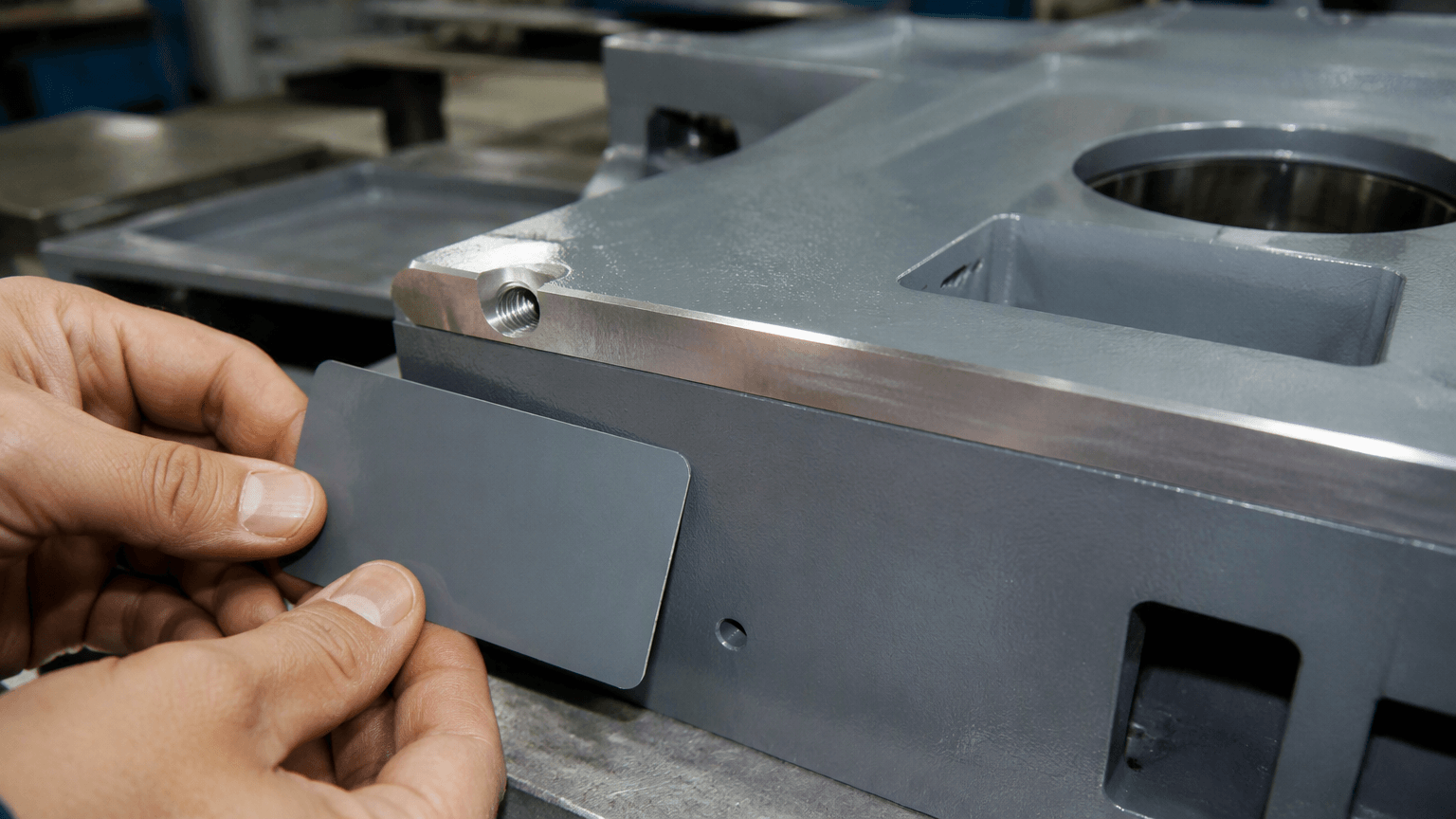
- Masking: Mark threads, precision holes, grounding points, labels, seals, weld contacts, mating faces, and other areas that must remain uncoated or controlled.
- Dimensions: Identify fits, openings, connector cutouts, latch locations, sliding surfaces, thread conditions, and other interfaces that require a post-coating check.
- Racking: Define acceptable hanging or support points and the permitted location of contact marks or small uncoated areas.
- Approval: State whether the project needs a first article, finish sample, defined visual inspection condition, or batch-to-batch comparison.
For a powder-coated enclosure or frame, coordinate these details with the fabricated geometry and any machined inserts. See Yishang’s custom sheet metal enclosures and custom metal frames information for related product routes.
Powder Coating, Liquid Paint, and Other Finishes
Powder coating is one possible finishing route. Liquid paint uses a wet coating with different application, drying, curing, and repair considerations. Anodizing provides an electrochemical surface treatment primarily associated with aluminum. Electroplating deposits a metallic coating electrochemically, while galvanizing provides a zinc-based protection route for suitable steel products and structures.
| Route | Key distinction | Questions to resolve |
|---|---|---|
| Powder coating | The coater deposits dry powder and thermally cures it. | Can the substrate, geometry, interfaces, and service environment accommodate the selected system? |
| Liquid paint | The coater applies a wet coating and then dries or cures it. | Do heat exposure, repair, geometry, or appearance requirements favor this route? |
| Anodizing | The process electrochemically treats a surface, mainly on aluminum. | Does the aluminum part require this treatment and its dimensional and appearance characteristics? |
| Electroplating or galvanizing | These routes provide metallic or zinc-based protection. | Do metallic surface properties, electrical contact, corrosion requirements, geometry, and dimensions control the choice? |
No finish is universally superior. Selection depends on the substrate, geometry, temperature, corrosion environment, appearance, repair needs, dimensional interfaces, batch size, and available process controls.
Planning Before Machining and Finishing
Part dimensions, workholding, tool access, internal features, batch quantity, fixture requirements, coating access, oven constraints, masking complexity, color changes, handling, and rework can influence production planning, cost, and lead time. Enclosed or recessed geometry may limit powder access. Cavities may also need drainage or venting so pretreatment liquid or trapped air does not affect processing.
Resolve the order of machining, fabrication, coating, and assembly before production. The team may need to protect threads, grounding areas, and mating faces during powder application. Some dimensions may require verification after coating. For finish-route information, see Surface Finishing; for inspection documentation, see Quality Control.
Information to Send for Project Review
For an OEM or ODM review, provide the 2D drawing or 3D files, material, thickness or stock size, finished dimensions, quantity, and project type, such as prototypes, batch production, welded assemblies, machined parts, or assembled products. Include the color or approved finish reference, gloss, texture, masking and uncoated-area details, assembly interfaces, inspection requirements, service environment, and required timing.
Yishang states that it has more than 26 years of custom metal manufacturing experience, exports to more than 50 countries, and supports B2B custom manufacturing. A drawing review can clarify the lathe machining process for machined features, the sheet metal fabrication route, and whether the requested powder-coated finish fits the part geometry and functional interfaces.
Frequently Asked Questions
What coating thickness details should buyers define before requesting a quote?
Buyers should define the functional requirement, drawing notes, critical dimensions, material or process expectations, and any inspection points related to coating thickness. This helps suppliers quote the same manufacturing scope instead of making different assumptions.
How can masking areas affect cost, fit, or lead time?
masking areas can change tooling, forming, welding, finishing, inspection, or rework requirements. If buyers do not clarify it early, two supplier quotes may look comparable while covering different production risks.
Why should powder coating be reviewed before prototype approval?
powder coating may look acceptable on a single sample but become harder to control during batch production. Buyers should confirm whether the prototype reflects the same process, finish, and inspection conditions expected for production.
What inspection points matter most for process of lathe machine projects?
Important inspection points usually include fit-critical dimensions, holes or mating areas, cosmetic surfaces, finish build-up, welded or formed features, and any dimensions that affect downstream assembly. These points should appear in the RFQ or drawing notes.
How can buyers reduce assembly clearance risk before batch production?
Buyers can reduce risk by clarifying drawings, locking key material and finish assumptions, defining inspection timing, approving a representative sample, and confirming which dimensions or surfaces require tighter process control.
How can Yishang help review process of lathe machine requirements?
Yishang can review drawings, RFQ notes, material requirements, tolerance expectations, finish details, samples, and assembly needs to identify unclear assumptions before quoting or batch production.