
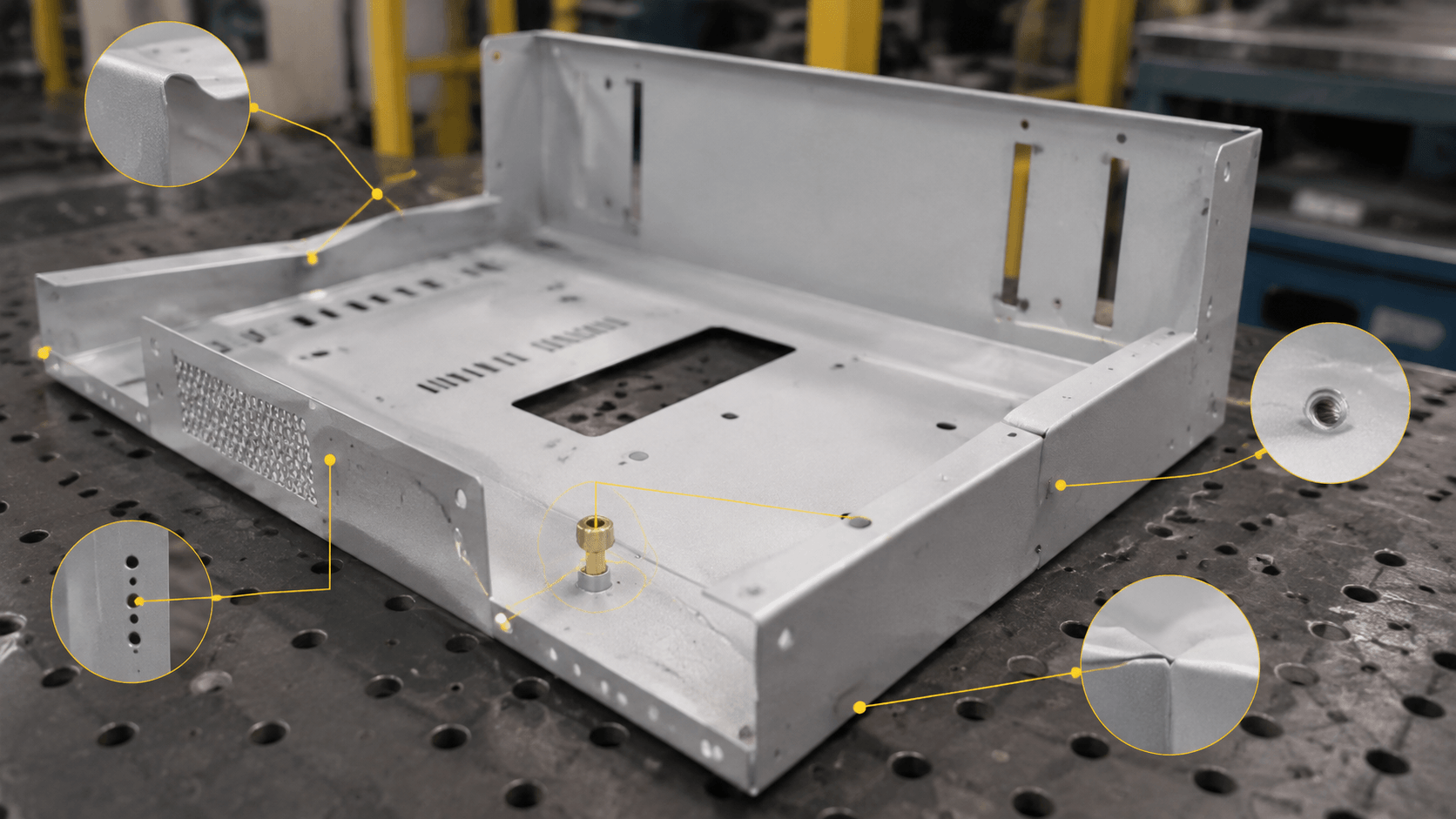
"Metal powder coated" normally means that a fabricated metal part—such as a bent sheet-metal enclosure, cabinet, frame, bracket, rack, or welded assembly—has received a dry powder-coating finish. The powder is electrostatically deposited on the prepared metal substrate and then melted and heat-cured into a finish film. It describes a metal part with a cured surface treatment; it does not describe powder metallurgy or a complete OEM requirement.
For an OEM buyer releasing a bent enclosure or welded frame, those omissions can appear as coating on a thread, an unusable grounding point, color variation, or interference at a mating flange. Review the finish together with the bending design and fabrication route before prototype approval or an RFQ.
The phrase is a finish description, not a complete specification
When a drawing for a bent enclosure reaches procurement with only this finish note, the supplier must infer details that can affect fabrication, assembly, appearance, and inspection. A vague callout may not reveal whether the visible flange is cosmetic, whether a threaded hole must remain bare, or whether internal surfaces need the same coverage as the exterior.
In normal industrial usage, powder coating finishes an already fabricated metal substrate. Powder metallurgy is different: it forms a component from metal powder through processes such as compaction and sintering, while powder coating applies coating material to an existing part.
The term is also distinct from liquid paint, which applies a wet coating; electroplating, which deposits a metallic layer through an electrochemical process; anodizing, which is primarily an aluminum conversion finish; and galvanizing, which is a zinc-based protection route for steel. Powder coating on plastic is a separate application because the substrate, preparation, heating limits, and feasibility are different. The fabrication route can be reviewed through custom sheet metal fabrication built to your drawings.
"Metal powder coated" does not identify whether the part is mild steel, stainless steel, aluminum, or galvanized steel. It also does not define the powder system, color reference, gloss, texture, film thickness, cure basis, masking, or inspection criteria. Those decisions belong in the project specification.
How a fabricated part becomes powder coated
Fabrication and substrate preparation
On a new OEM enclosure, coating normally follows cutting, punching, bending, deburring, and welding. This sequence matters: later forming or welding can damage a cured film, while oil, oxides, weld residue, or poor coverage before curing can affect the finished result. Preparation and cure conditions must be confirmed for the actual substrate and selected powder system.
- Complete fabrication. Cutting, punching, bending, deburring, and welding normally occur before coating. Post-fabrication coating is usually the relevant route for a finished OEM part. Pre-coated sheet is a separate route; cut edges, bend areas, and weld zones require their own feasibility review.
- Clean and degrease. Oil, fingerprints, dirt, weld residues, and other contamination are removed because they can affect adhesion or appearance.
- Remove rust or oxides where applicable. Mild-steel rust, scale, and loose oxides require appropriate treatment. Stainless steel and aluminum present different oxide and contamination conditions.
- Pretreat or blast. Chemical pretreatment, abrasive preparation, or another agreed method is selected for the alloy, surface condition, and coating requirement.
- Dry the part. Moisture or trapped residues in seams, recesses, and hollow sections can create defects during heating. Drainage, venting, and part orientation may matter for welded assemblies.
Powder application, curing, and geometry control
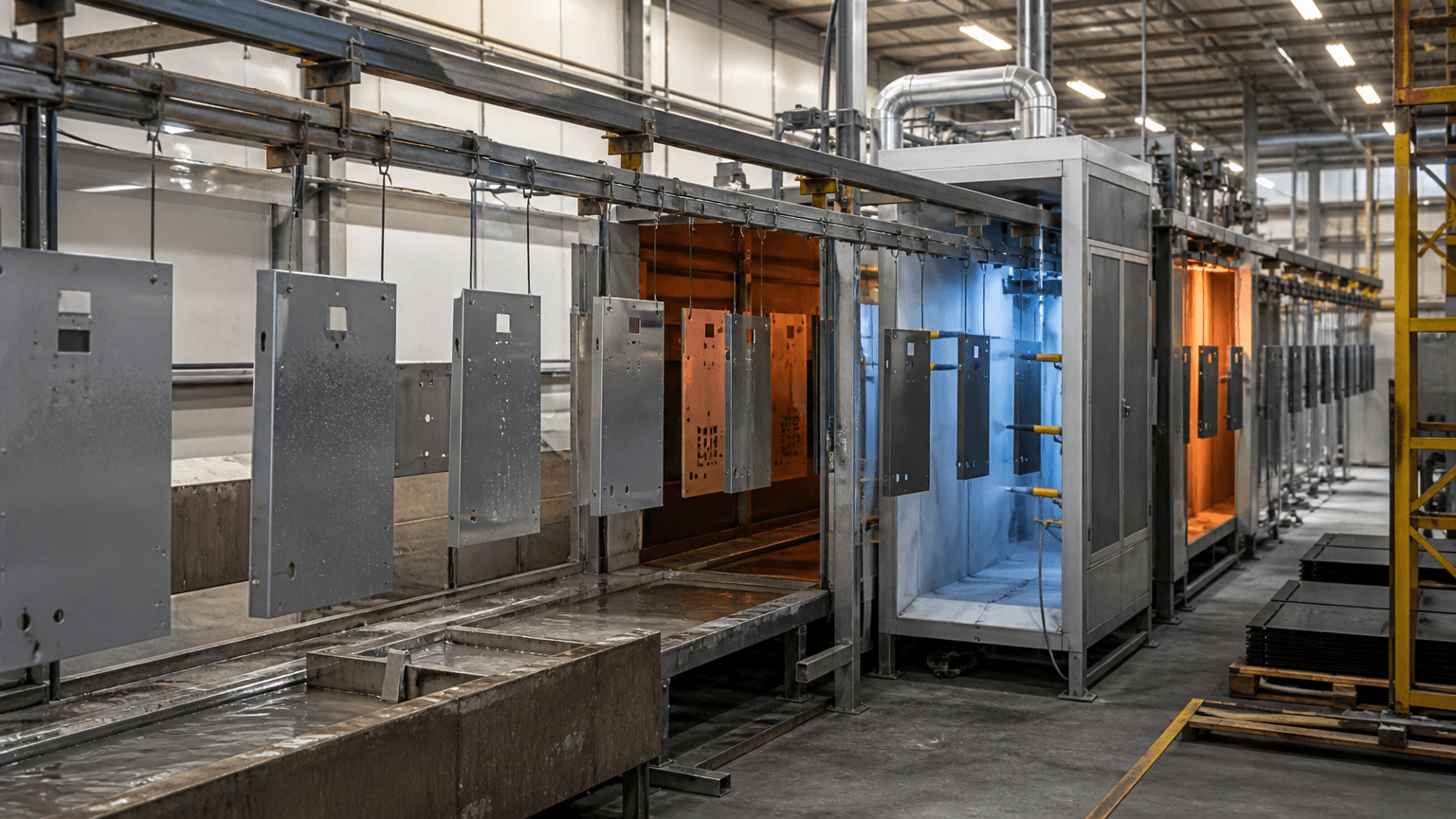
- Apply powder electrostatically. Charged powder is attracted to the grounded metal. Edges, internal corners, narrow channels, and deep recesses may receive different coverage from broad faces because of geometry and Faraday-cage effects.
- Melt and cure. Heat melts the powder and develops the finish film. The process window depends on the powder system and actual part temperature, not on a universal oven setting.
- Cool, inspect, and handle. After cooling, the agreed appearance, coverage, thickness, fit, and masked areas are checked before protective packaging.
Keep operation boundaries visible. Sheet-metal fabrication creates the cut and bent form; welding joins separate components; CNC machining produces separate precision parts or interfaces; powder coating finishes the prepared exposed substrate; assembly joins components; and inspection verifies specified characteristics. A machined insert or bracket inside a sheet-metal enclosure therefore needs its own material, finish, masking, and interface decisions.
Substrate condition changes preparation. Mild steel may require attention to rust, oil, weld spatter, and scale. Stainless steel needs control of contamination and oxide condition, while aluminum requires preparation suited to its oxide layer and alloy. Galvanized steel has a zinc surface that may need compatible pretreatment and a review of heating or outgassing risks.
Geometry belongs in the DFM review. Identify bend radii, holes or slots near bends, short flanges, bend-sequence constraints, and dimensions that remain critical after coating. Sharp edges, weld seams, porosity, spatter, and rough transitions remain fabrication issues; coating does not hide every defect or eliminate exposed-edge concerns. Hanging points may leave rack or hook marks, so their location and acceptable appearance should be agreed in advance.
Match the finish route to the part and service conditions
At design review, an indoor enclosure and a welded frame exposed to moisture, heat, abrasion, or chemicals may use the same nominal color but still require different preparation, coating, masking, and evidence. Choose the route from the complete part and environment specification rather than from a generic advantage claim.
| Review point | Powder-coating decision | Alternative route or boundary |
|---|---|---|
| Substrate | Select preparation for the actual mild steel, stainless steel, aluminum, or galvanized surface. | Anodizing is primarily an aluminum conversion route; galvanizing is a zinc-based steel-protection route. Neither is simply another powder color. |
| Environment | Define moisture, chemicals, abrasion, heat, and exposure before selecting pretreatment and the powder system. | A specified metallic-protection requirement may point to plating, galvanizing, or another tested finish rather than a generic powder coat. |
| Appearance | Set color, gloss, texture, viewing conditions, and acceptable variation using a code or approved sample. | Liquid paint may suit localized blending, field repair, heat-sensitive parts, or a visual requirement needing a different application route. |
| Size and batch | Review rack access, orientation, handling, curing constraints, color changes, and repeatability at the planned volume. | Very large, localized, low-volume, or frequently repaired parts may require evaluation of another route. |
| Interfaces and repair | Map threads, grounding points, sliding faces, hinges, bearing seats, and tight mating areas for masking or controlled coating. | Electroplating may be relevant where a metallic layer or specific contact behavior is required. Liquid paint may be considered for localized repair. |
Enclosures, cabinets, frames, and welded assemblies can need different interior coverage, flange masking, grounding, hinge, and rack-mark decisions even when they share a nominal color. The Surface Finishing scope can help structure that comparison, but the final choice remains part-specific.
Turn the finish note into an executable requirement
A drawing or purchase order should give the supplier enough information to quote, manufacture, and inspect the finish without conflicting assumptions. For a bent panel, begin with the fabricated condition and the interfaces that must remain functional, then define appearance, process basis, acceptance method, and packaging.
OEM coating-specification worksheet: Complete these fields for the specific project. Where a value depends on the powder system, substrate, or equipment, specify the required basis and approval method instead of copying a universal number.
| Field | Buyer-defined information |
|---|---|
| Substrate and condition | Material, grade where relevant, sheet thickness, formed or welded condition, machined components, and existing treatment. |
| Preparation | Cleaning, rust or oxide removal, blasting, chemical pretreatment, and treatment of weld areas. |
| Powder system | Selected system or performance basis, including primer or multiple-stage requirements if applicable. |
| Color | Color code, approved physical sample, or retained reference; state whether internal and external surfaces differ. |
| Gloss, texture, and appearance grade | Gloss level, texture type, metallic or special-effect expectations, visible-face requirements, and appearance class or grade. |
| Film thickness | Required value or agreed range when relevant, measurement approach, and inspection locations. |
| Cure basis | Requirement linked to the selected powder system, supplier process records, and actual part temperature. |
| Masking and contact zones | Threads, holes, grounding points, labels, hinges, bearing or sliding areas, electrical contacts, and tight mating surfaces. |
| Edges and geometry | Expectations for edge coverage, corners, recesses, internal surfaces, weld seams, drain areas, and rack or hook marks. |
| Inspection method | Visual defects, color, gloss, texture, coverage, thickness, adhesion or cure checks, dimensional fit, and batch consistency. |
| Approval, quantity, and batch plan | Sample or first article, retained visual reference, finish or powder reference, prototype quantity, production quantity, and batch structure. |
| Packaging | Separation materials, protection from rubbing and impact, contamination control, and delivery-condition checks. |
For formed panels, mark cosmetic faces, bend flanges, holes near bends, threads, grounding areas, and mating surfaces directly on the drawing or masking map. This connects bending design, coating coverage, and final assembly.
FINISH: [powder system]; [color code or approved sample]; [gloss]; [texture].MASK: [threads], [grounding points], and [functional mating faces] shown on marked-up drawing.VERIFY: [defined locations] for appearance, thickness, adhesion or cure, and post-coating fit.
These examples show callout structure, not universal values. Review the custom sheet metal enclosure design and finish note together.
Use sample approval to control the production handoff
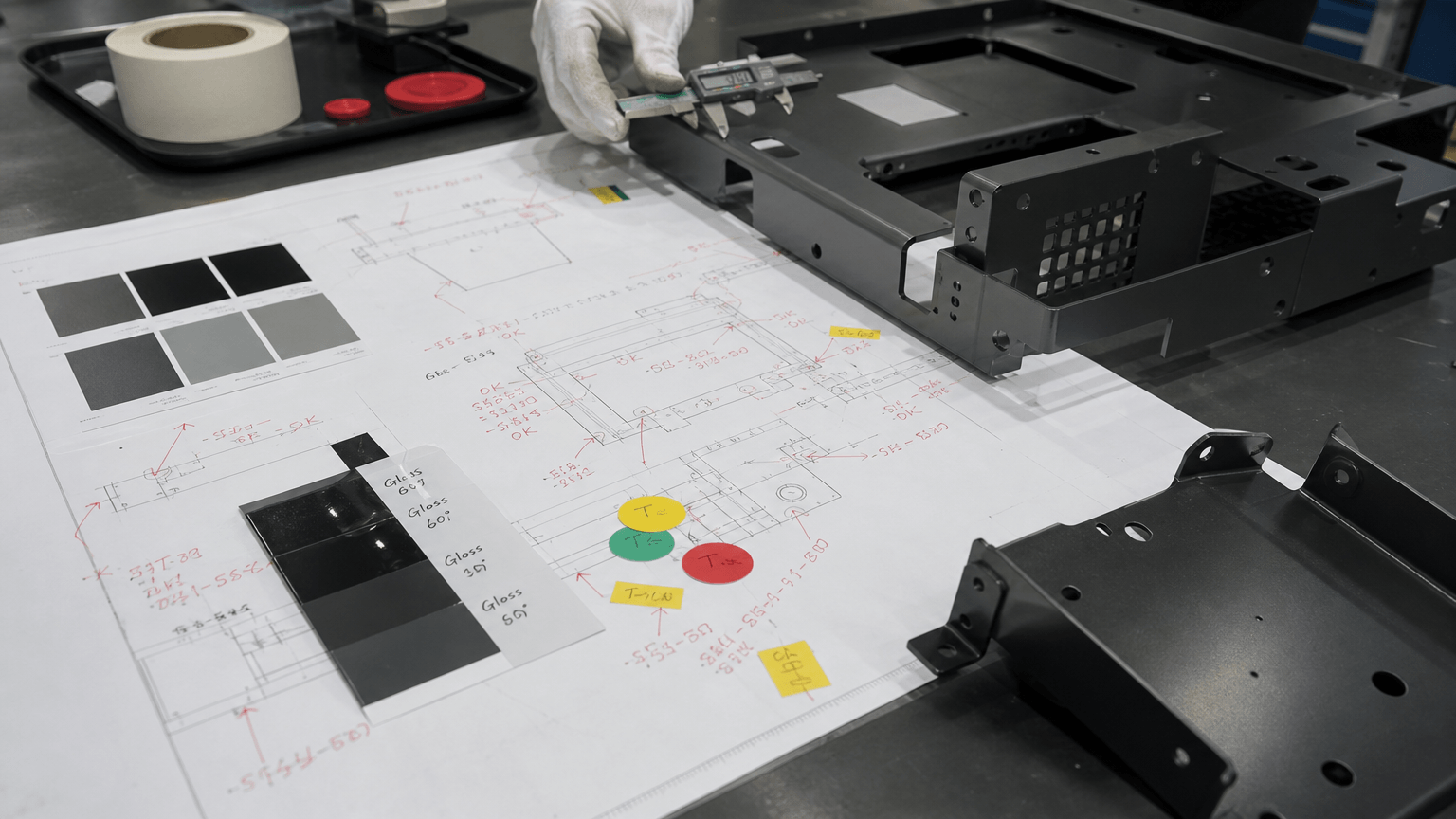
For a new enclosure or welded assembly, sample approval is the point where the buyer can settle appearance and interface questions before releasing a production batch. The reference should show what acceptable coating looks like on the actual geometry, not only on a flat color card.
- Review the design brief. Confirm substrate, bending design, weld condition, visible faces, contact zones, and inspection basis.
- Approve a sample or reference panel. Record accepted color, gloss, texture, coverage, and appearance under agreed viewing conditions. Retain the reference for production comparison.
- Inspect first articles. Check contamination, pinholes, orange peel, runs, exposed metal, edge coverage, weld areas, and rack marks. Verify threads, holes, grounding points, hinges, mating surfaces, thickness, and agreed adhesion or cure checks.
- Control the batch. Compare color and gloss against the retained reference. Track the agreed finish or powder reference, plan color changes and cleaning, and define when rework requires approval.
- Define delivery condition. Packaging should prevent rubbing, impact, and contamination. Assess transport damage separately from a defect created during coating.
Cost and lead time are shaped by part size, batch volume, masking complexity, rack or hook access, acceptable rack or hook marks, color changes, curing constraints, handling, inspection, and rework. Large or awkward assemblies may need a feasibility review, while small batches can involve more setup and changeover effort. A dependable price or schedule therefore requires the part and batch plan, not the finish phrase alone.
Request a finish-feasibility review: Send Yishang the part drawing, CAD file, or representative dimensions; substrate, grade if known, and thickness; part size, quantity, batch plan, and prototype or production status; target environment; color code or approved sample, gloss, texture, and appearance expectations; plus a marked-up drawing for threads, holes, mating surfaces, grounding areas, and other controlled zones. Include inspection, sample-approval, and packaging conditions. Yishang can review the custom sheet-metal route and coating brief before production, helping identify missing finish, fit, and inspection details. The review can support prototype or batch production and draws on more than 26 years of custom metal-product manufacturing experience. See the related Quality Control scope when defining the inspection handoff.
Frequently Asked Questions
For a buyer comparing drawings, samples, and production quantities, these questions usually concern the substrate, interfaces, finish evidence, and prototype handoff—not just the color name.
Is "metal powder coated" the same as "powder-coated metal"?
In most OEM conversations, yes. Both usually mean a metal substrate with a cured powder-coating finish. Neither phrase identifies the alloy, preparation, color, gloss, thickness, masking, cure basis, or inspection criteria.
Can mild steel, stainless steel, aluminum, or galvanized steel all be powder coated in the same way?
They may all be candidates, but they do not automatically use the same preparation. Oxide condition, contamination, weld condition, pretreatment, and heating considerations vary by substrate and must be confirmed for the fabricated part.
Will powder coating affect threads, holes, grounding points, or mating dimensions?
It can if these areas are not masked or controlled. Coating may change effective dimensions or obstruct contact, so mark the functional zones and require post-coating checks of threads, holes, grounding points, hinges, sliding faces, and mating dimensions.
Is powder-coated metal automatically suitable for outdoor or corrosive environments?
No. Suitability depends on the substrate, preparation, coating system, geometry, exposure, and agreed evidence. A generic color or finish description cannot guarantee corrosion life, outdoor performance, or service life.
What should be added to an RFQ when the requirement only says "metal powder coated"?
Add the substrate and thickness, preparation, coating system or performance basis, color or approved sample, gloss, texture, film-thickness basis, cure requirements, masking map, appearance grade, inspection method, first-article approval, batch plan, packaging requirements, and any dimensions or tolerances that remain critical after coating. State whether prototype or production parts are required.