
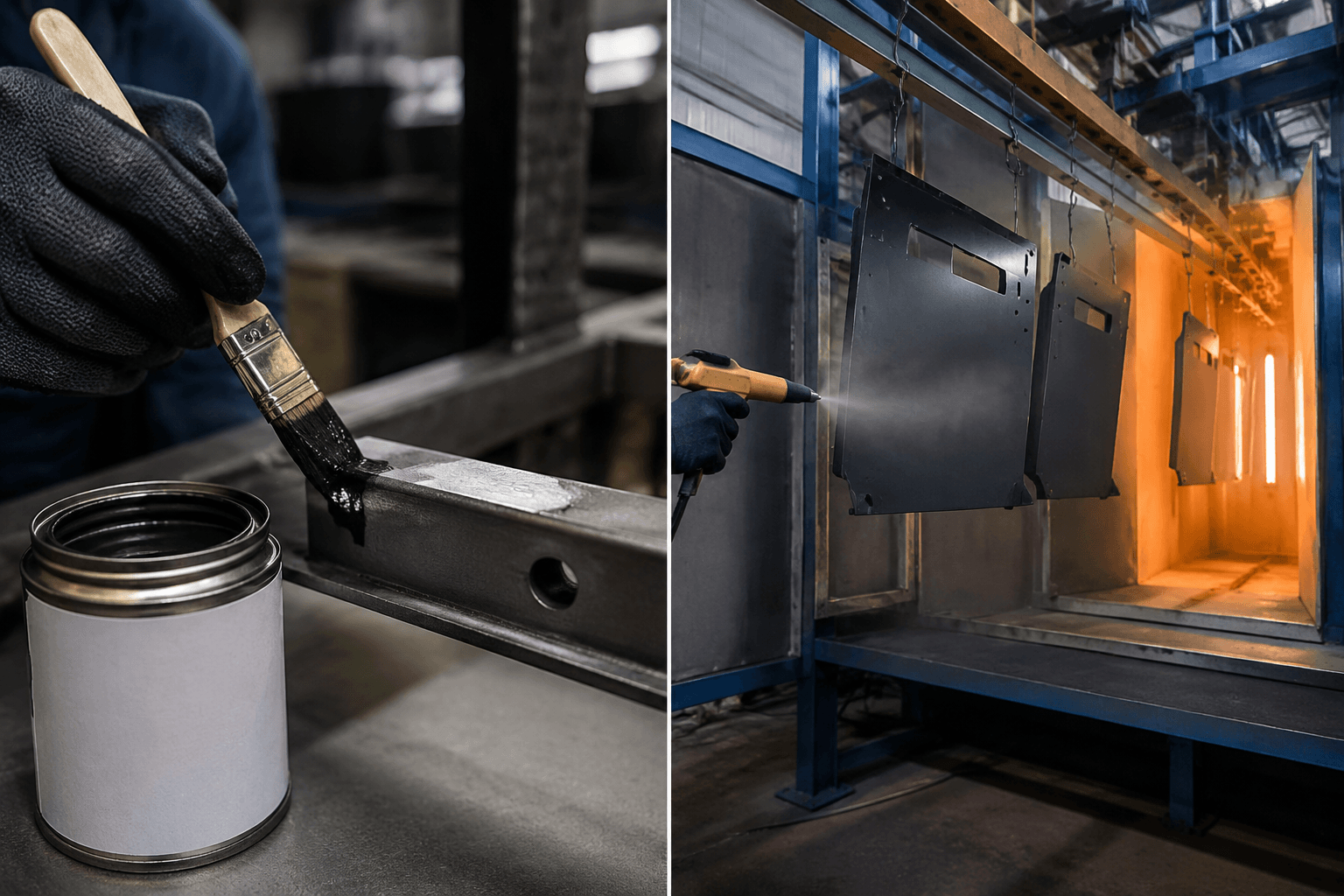
Short answer: Packaging a coating in a can does not prove that it is conventional powder coating. If can means an aerosol, the product is usually a liquid touch-up coating, although its label and technical data sheet should be checked before classification.
Industrial powder coating normally uses dry powder applied through controlled equipment, followed by melting, fusing, or curing according to the coating system’s technical data sheet. A container may hold loose powder, an aerosol liquid, or a brush-on repair material, so packaging alone is not evidence of the process.
This distinction matters when a damaged metal enclosure needs local repair, a prototype needs an appearance check, or an OEM buyer is planning repeat production. A small can-based product may solve one visible chip without being suitable for coating an entire cabinet or batch of sheet-metal parts.
For sourcing, compare the complete finishing route rather than the can’s purchase price. Preparation, application, curing or drying, inspection, handling, packaging, and possible rework can determine the practical cost and result.
What Does Powder Coating in a Can Actually Mean?
When an OEM request says powder coating in a can, the buyer may be asking for a field-repair product or assuming that the original factory process is available in aerosol form. Those are different requirements, and confusing them can affect color matching, film build, adhesion, assembly interfaces, and service performance.
Start with the product label and technical data sheet rather than the product name. Confirm four points:
- Application method: Look for aerosol spraying, brushing, electrostatic spray, fluidized-bed application, or another defined method.
- Cure instructions: Air-dry, recoat, bake, melt, fuse, and heat-cure instructions describe different coating routes. Follow the product-specific data sheet.
- Substrate and preparation: Check suitable metals, cleaning requirements, pretreatment, primers, and use restrictions.
- Finish details: Review stated color, gloss, texture, film build, coverage, and handling or inspection conditions.
If the documentation identifies dry powder, compatible industrial equipment, and controlled heat curing or fusion, the material may be a genuine powder-coating product supplied in a container. If it identifies a liquid aerosol or brush-on coating, treat it as a touch-up or liquid refinishing route unless the documentation clearly states otherwise.
Four Products Buyers May Be Conflating
The table below separates the material from the application route. A repair coating can be useful for its intended purpose without reproducing the finish or performance of the coating originally applied to a complete part.
| Product type | Physical form | Application and curing | Typical role and repeatability | What to verify |
|---|---|---|---|---|
| Powder packaged in a container | Dry powder | Requires specified industrial equipment and controlled heat-based melting, fusion, or curing. | Material for a controlled powder-coating process; repeatability depends on the complete system. | Confirm that the powder and equipment suit the part and finish requirement. |
| Aerosol liquid touch-up coating | Liquid propelled from a pressurized can | Sprayed, dried, or cured as the documentation specifies. | Localized repair or small-area refinishing; coverage depends heavily on application. | Check color, gloss, texture, film build, adhesion, and service limits. |
| Brush-on or liquid repair coating | Liquid applied by brush or another simple method | Dries or cures according to its instructions. | Small chips, edges, hidden areas, or repairs where spray equipment is unavailable. | Consider brush marks, uneven thickness, and visible blending boundaries. |
| Factory powder-coating route | Dry powder applied to a prepared part | Uses an industrial method such as electrostatic spray or fluidized-bed coating, followed by controlled heat. | Complete parts, visible surfaces, and repeat production when geometry and specification are suitable. | Define preparation, application, curing, masking, handling, and inspection controls. |
For this reason, the word powder in a product title is weak evidence. The stated application method and cure profile are more reliable indicators of the actual coating route.
Why Industrial Powder Coating Needs a Controlled Route
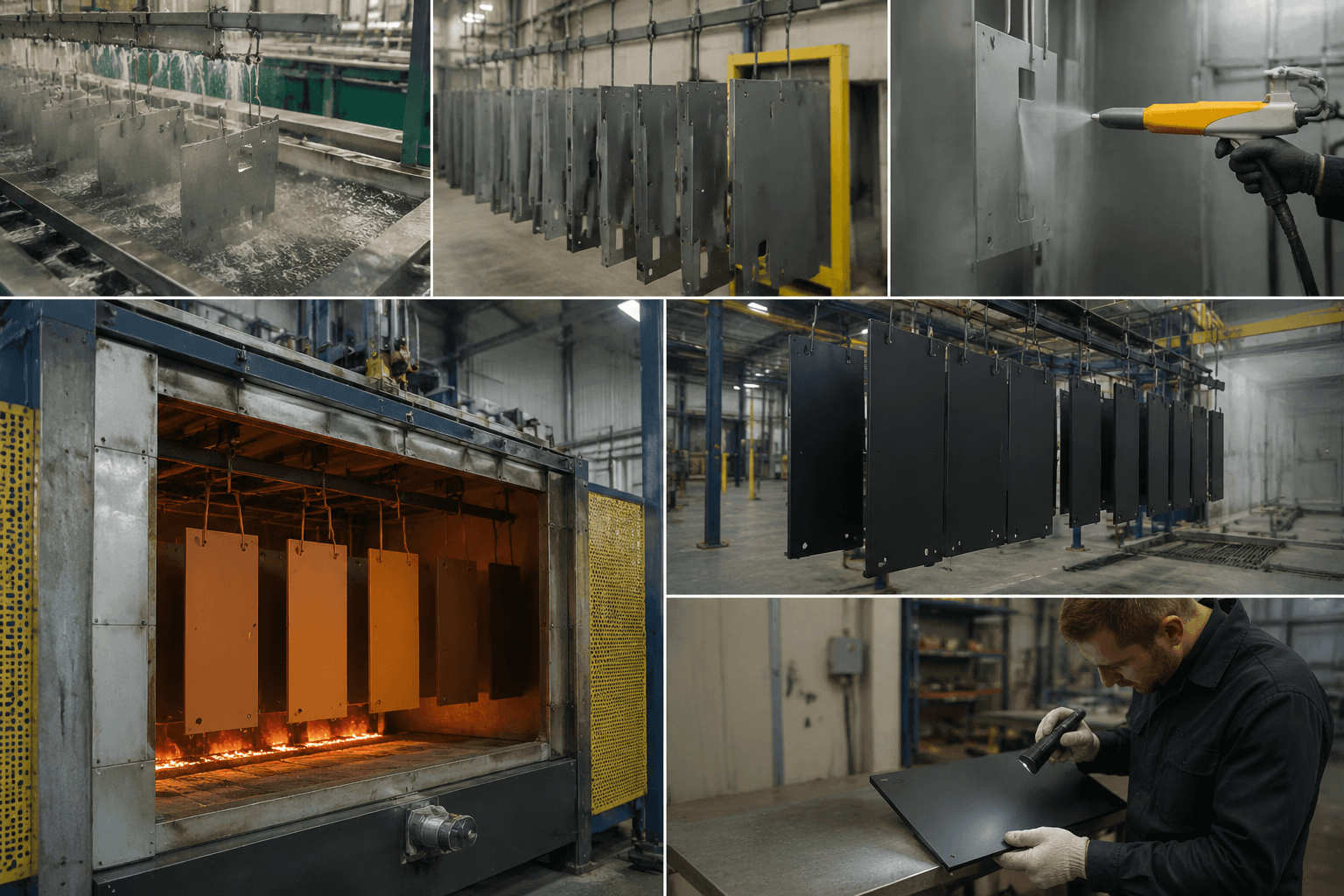
For an OEM part, the final finish depends on the interaction between substrate preparation, powder deposition, heat, geometry, and inspection. Industrial powder coating is therefore a process sequence, not simply material sprayed from a container.
- Prepare the substrate. Address oil, oxidation, residue, weld contamination, and other surface conditions. Cleaning, degreasing, conversion treatment, abrasive preparation, or another pretreatment depends on the metal and coating system.
- Apply the dry powder. Electrostatic spray commonly uses controlled deposition on a suitably prepared and grounded part. Fluidized-bed coating uses a different process in which the part contacts suspended powder. Neither is ordinary liquid aerosol spraying.
- Heat and cure the coating. Powder particles must melt and flow before the system cures or fuses. The supplier’s technical data sheet defines the heat profile, which must be considered with the part’s material, thickness, mass, and heat capacity. There is no universal cure schedule for every powder system.
- Cool and inspect. Handle the part to avoid damage, then check agreed requirements such as coverage, appearance, film thickness, color, gloss, and adhesion where applicable.
- Review geometry before production. Oven capacity must suit the part envelope. Deep recesses, narrow channels, internal surfaces, weld areas, and Faraday-cage effects can affect deposition and coverage. Hang points and masking also influence assembly.
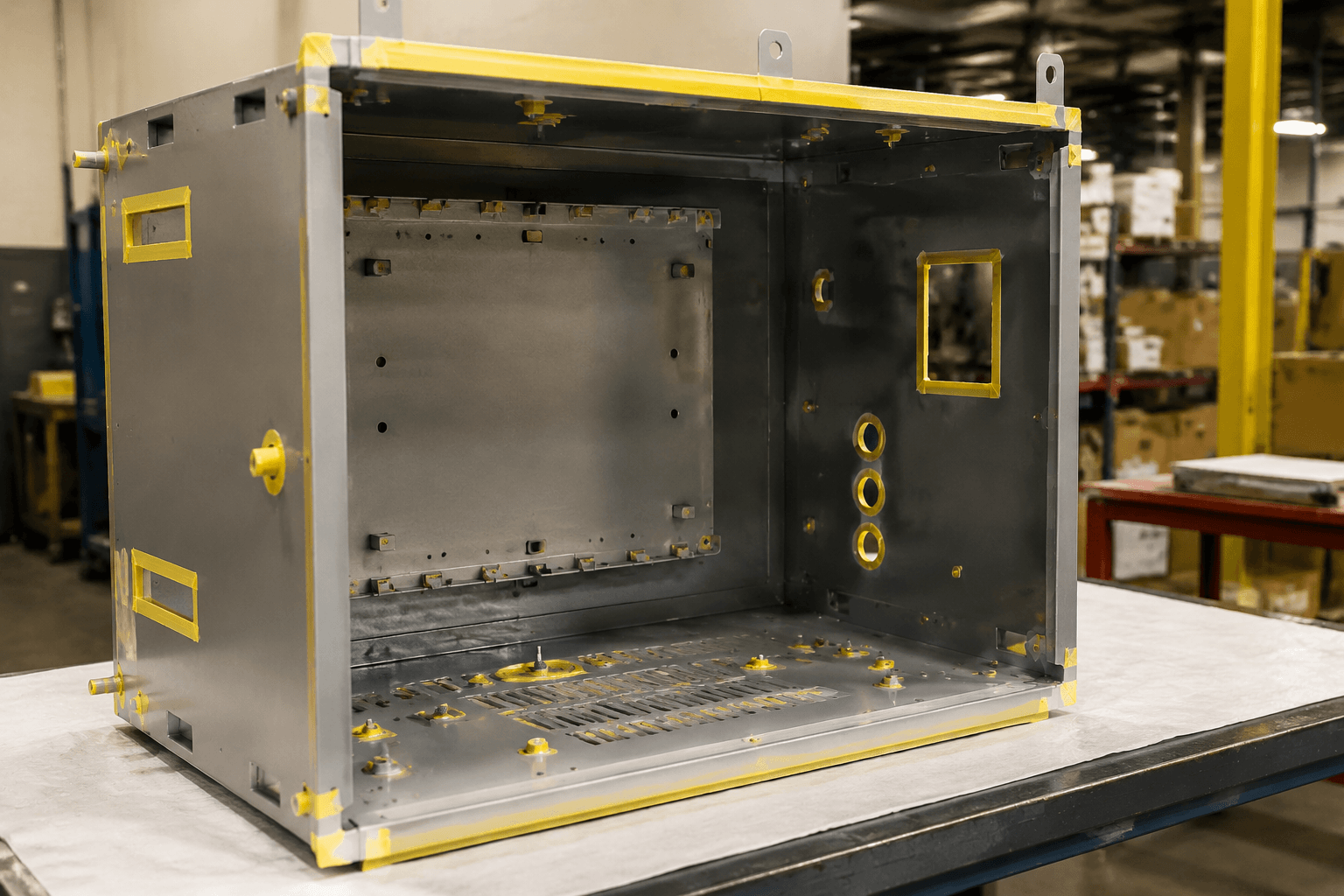
On a cabinet or enclosure, review more than the outside face. Threads, grounding or electrical contact areas, gasket seats, mating surfaces, recesses, internal areas, and hang points may need masking, selective coverage, or defined acceptance conditions. See the guidance on custom sheet-metal enclosures that arrive ready for assembly.
Choose the Route by Repair Scope and Finish Requirement
A can-based product may fit a limited repair, but the decision changes when a complete part must meet consistent appearance or service requirements. Use repair area, quantity, visibility, exposure, repeatability, and available curing controls as the main criteria. Validate a proposed route on a sample or representative area when appearance or performance is important.
| Project situation | Can-based touch-up | Liquid refinishing | Factory powder coating |
|---|---|---|---|
| Small isolated chip or scratch | May be practical when documentation supports the substrate and preparation. Best treated as a localized repair. | Useful when a larger blend area or controlled spray finish is needed. | Usually excessive for one defect unless the whole part is already being recoated. |
| One-off prototype | May support a limited appearance check, but does not prove the production finish. | May suit a prototype when liquid drying or curing can be controlled. | Useful when the prototype must represent the intended production coating. |
| Repeat production | Can add application labor, film variation, handling, and color-consistency risk. | Can work with a defined material, spray process, preparation, and inspection plan. | May offer a more controlled route when the part, powder, pretreatment, and curing capacity are suitable. |
| Highly visible exterior | Requires checks for color, gloss, texture, edge coverage, and blending boundaries. | May allow localized blending, but still needs validation against the surrounding finish. | Can suit a complete controlled finish after approval of color and appearance. |
| Outdoor, abrasive, chemical, or demanding service | Do not assume a touch-up can restores the original protection. Verify the product, preparation, and environment. | Check the liquid system’s substrate and service requirements before selection. | Consider only after the specified powder system and pretreatment are validated. |
| No oven or controlled curing equipment | Use only a product whose instructions fit the available conditions; that does not make it an industrial powder route. | May be possible when the product is designed to dry under those conditions. | Conventional powder coating generally needs controlled heat-based fusion or curing. |
A localized repair has a different objective from coating a complete enclosure, frame, cabinet, or production batch. The repair may be judged mainly by appearance, while factory coating must also address repeatability, coverage, masking, assembly interfaces, inspection, and packaging. A similar-looking touch-up is not automatically an equivalent protective coating.
Define the Factory Finish Before You Issue an RFQ
Instead of requesting only powder coating in a can, state whether the requirement is a finished, factory-coated part or a separate product for field repair. For a coating route on custom metal parts, include the following in the drawing or RFQ:
- Part, drawing, and substrate: Identify the alloy or material, dimensions, relevant tolerances, thickness, current surface condition, and weld areas.
- Pretreatment: Define the expected cleaning and pretreatment route, or request a recommendation based on the substrate and service environment.
- Appearance: Provide a color reference, gloss level, texture target, and approved sample or visual standard where practical.
- Film thickness and cure: State any target or acceptance range, and require the coating system’s technical data sheet and cure profile to be followed for the complete part.
- Masking and interfaces: Mark threads, grounding or electrical contact areas, gasket surfaces, mating faces, bearing points, hang points, recesses, internal surfaces, and areas that must remain uncoated.
- Inspection and rework: Define acceptable limits for color variation, gloss or texture differences, orange peel, pinholes, runs, bare areas, coverage, and adhesion where applicable. State how defects will be accepted, repaired, or reprocessed. The quality-control process should reflect these criteria.
- Packaging: Specify separators, protective wrapping, stacking, and handling requirements so coated surfaces are not scratched or marked before assembly.
Compare the Full Cost, Not the Can Price
The price of one can covers the material package, not the complete finishing task. An OEM comparison should include surface preparation, masking, application labor, drying or curing, equipment, handling, color matching, inspection, packaging, and possible rework. A can may be economical for one isolated defect, while repeated application across many parts can create inconsistent film build and additional labor.
Factory powder coating may involve setup, batch scheduling, oven loading, color changes, and geometry review. Liquid refinishing has its own preparation, application, drying, and inspection requirements. Quantity, part dimensions, color changes, coating coverage, service environment, and packaging needs all affect cost and lead time, so no universal comparison is reliable without project details.
The practical choice is to classify the requirement first: localized repair, liquid refinishing, or a factory-applied powder-coating route. For an integrated review of the part and finish, see custom sheet-metal fabrication and send a part drawing or clear photos, base material and surface condition, whether the need is a repair, prototype, or repeat-production order, the color and gloss or texture target, any film-thickness or inspection requirement, part dimensions, quantity, use environment, and areas that must remain uncoated. With more than 26 years of custom metal manufacturing experience, Yishang can assess pretreatment, masking, curing, inspection, and packaging without assuming that an aerosol product is the right solution.
Frequently Asked Questions
These questions often arise when an OEM drawing, prototype request, or repair instruction uses the phrase powder coating in a can. The answers help separate a field touch-up from a finish that must be specified, sampled, and inspected for production.
How can I tell whether a product in a can is true powder coating or liquid aerosol paint?
Read the label and technical data sheet. Confirm the physical form, application equipment, substrate limits, and cure instructions. Aerosol spray and air-dry language generally indicate a liquid touch-up route; dry-powder application and controlled heat-cure instructions indicate a conventional powder system.
Can a can-based product repair a chipped or scratched powder-coated metal enclosure?
It may suit a localized cosmetic repair when the documentation supports the substrate and preparation method. Prepare the damaged area as instructed, then validate color, gloss, texture, adhesion, and coverage. Do not assume the repair restores the original coating system’s performance.
Can conventional powder coating be applied without an oven or controlled curing method?
A conventional dry-powder route requires a controlled heat-based method that allows the coating to melt, fuse, or cure according to its technical data sheet. Without that method, an aerosol or liquid product is a different route, not an equivalent substitute. Product-specific documentation remains essential.
Will a touch-up can match the original factory powder-coat color, gloss, and texture?
Not automatically. The result can vary with gloss, texture, film thickness, substrate condition, application method, and batch. Use an approved sample or test area when the surface is visible or the match is important.
Is a can-based coating cheaper for repeat production of custom metal parts?
Not necessarily. Compare material, preparation, masking, labor, curing or drying, equipment, color consistency, inspection, packaging, and rework. A can may suit one small repair, while a controlled factory route may be more practical for repeat production of complete parts.