
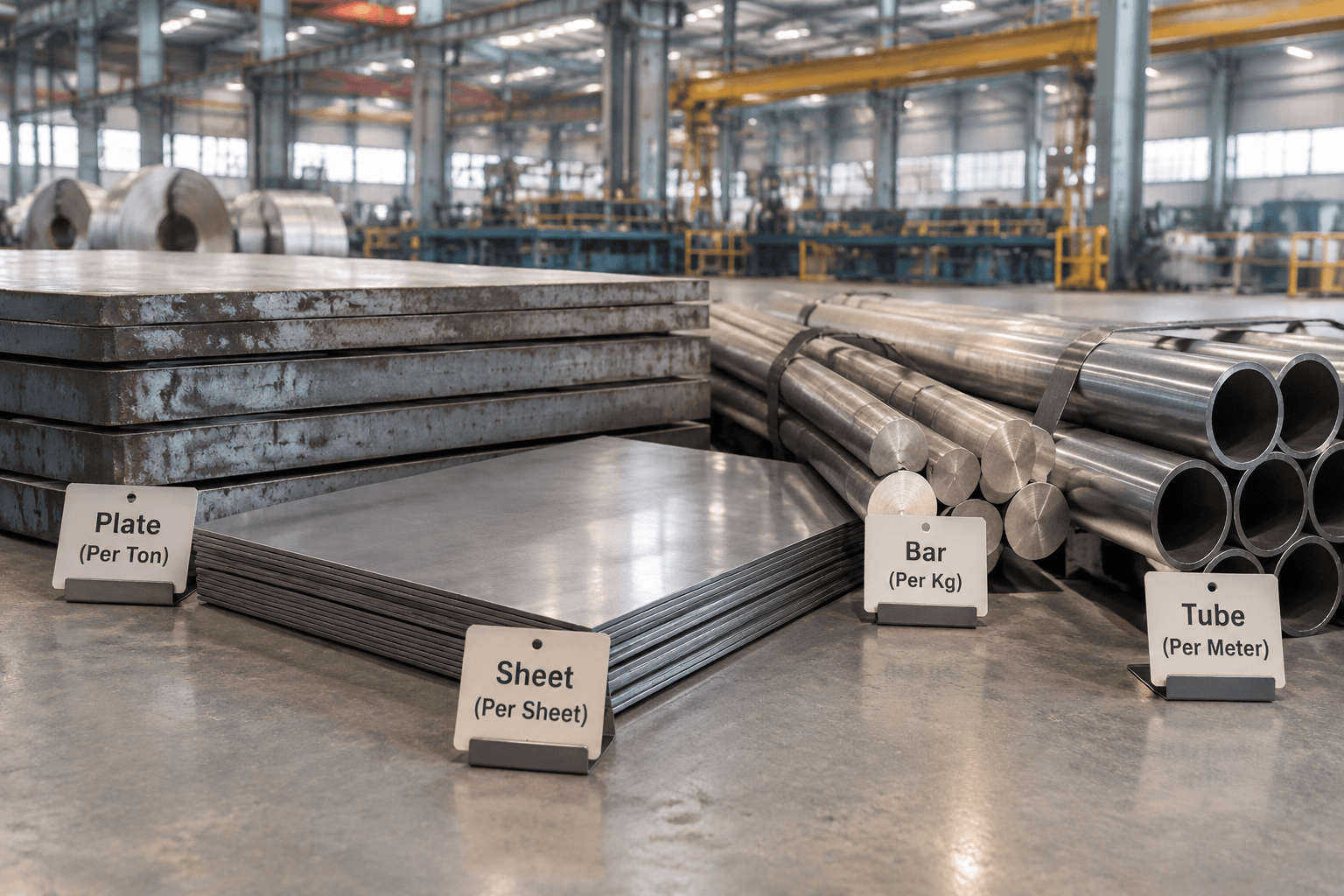
There is no single alloy steel price that buyers can apply to every purchase. A usable figure must identify the alloy grade, material specification, condition, product form, dimensions, quantity, region, currency, and delivery basis.
A supplied market snippet reports an approximate quarterly average of USD 776 per metric ton, but its grade, geography, product form, source, and commercial basis are unknown. It should therefore be treated as general market context, not as a current purchasing price for a specific material or finished component.
What Does an Alloy Steel Price Actually Represent?
An alloy steel price is the value of a defined material in a defined transaction. Without those definitions, a price-per-ton number may create a false benchmark.
For example, a buyer may need alloy steel plate in a specified condition, while a published index may track coil, bar, or a broad group of mill products. Even if both figures use USD per metric ton, they do not necessarily describe interchangeable material. Differences in processing route, dimensions, availability, order volume, and delivery location can materially change the quotation.
The term alloy steel also covers many grades developed for different combinations of strength, hardness, wear resistance, toughness, heat resistance, or other service requirements. A general alloy steel number cannot replace the grade and specification stated on an engineering drawing or purchase order.
Carbon steel may sometimes have a lower raw-material price because it generally has a simpler composition and wider availability, but this is not a universal rule for every form, region, or transaction. More importantly, the lowest material price is not always the lowest finished-part cost. A material that does not meet the required mechanical, forming, welding, machining, or service conditions can cause redesign, processing difficulty, rejection, or premature failure.
Which Details Change the Quoted Price?
Two suppliers can quote different numbers without either quotation being incorrect. The difference often comes from specifications or commercial assumptions that are not visible in the headline price.
| Pricing variable | What the buyer should define | How it affects comparison |
|---|---|---|
| Grade and specification | Exact grade, applicable material specification, and any required chemistry or mechanical-property conditions | A general grade name may cover alternatives that are not technically or commercially equivalent. |
| Material condition | As-rolled, annealed, normalized, quenched and tempered, pre-hardened, or another specified condition when applicable | Heat treatment and condition affect material sourcing, processing, and price. |
| Product form | Sheet, plate, coil, bar, tube, profile, or another required form | Prices for different forms should not be compared as though they represent the same supply route. |
| Thickness and dimensions | Thickness, width, length, diameter, wall thickness, and dimensional tolerances as relevant | Nonstandard dimensions, tight tolerances, cutting allowances, or limited availability may create premiums. |
| Quantity and frequency | Prototype quantity, batch quantity, annual demand, release schedule, and order frequency | Mill quantities, distributor quantities, and small cut-piece orders have different cost structures. |
| Availability | Whether substitutes are permitted and when the material is required | Stock position, production schedules, and sourcing options can affect both price and delivery. |
| Geography and currency | Supplier location, delivery country, quotation currency, and exchange-rate basis | Regional market conditions and currency movements can make nominal prices difficult to compare. |
| Logistics and duties | Freight basis, delivery point, packaging, insurance, duties, and taxes | An ex-works number excludes costs that may already be included in a delivered quotation. |
| Purchasing channel | Mill, service center, stockholder, distributor, or fabricator | Each channel may include different services, minimum quantities, inventory costs, and processing. |
| Commercial timing | Spot or contract basis, quotation date, validity period, and price-adjustment mechanism | A short-validity spot quotation should not be compared directly with a longer contract price without reviewing the terms. |
Thickness and dimensions matter because the supplier may need to purchase a larger stock size than the net weight shown in the part model. Quantity matters because a mill-scale order, a distributor order, and a small project requiring cut blanks are different transactions. A quote may also reflect minimum order quantities or full-sheet, full-plate, full-bar, or full-bundle purchasing requirements.
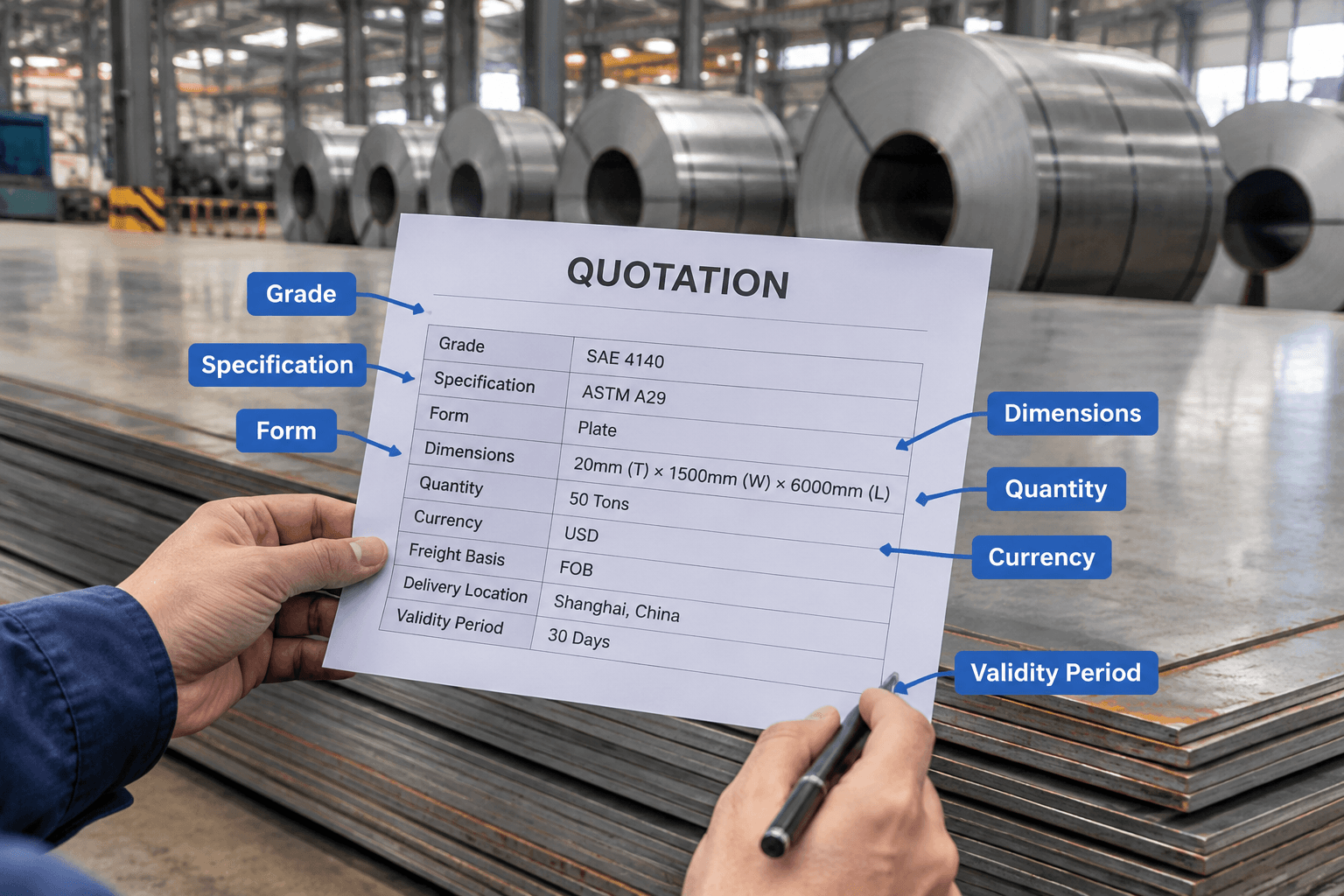
How to Convert Price per Ton, Kilogram, and Pound
Unit conversion is straightforward, but buyers must first confirm what the word ton means. A metric ton is 1,000 kilograms, or approximately 2,204.62 pounds. A US short ton is 2,000 pounds, or approximately 907.185 kilograms. Confusing these units creates a difference even before freight, duties, or processing are considered.
- Price per kilogram: price per metric ton divided by 1,000.
- Price per pound: price per metric ton divided by approximately 2,204.62.
- Price per metric ton from kilograms: price per kilogram multiplied by 1,000.
- Price per short ton from pounds: price per pound multiplied by 2,000.
These formulas convert only the unit. They do not normalize the underlying commercial basis. A USD-per-kilogram distributor quote for small cut pieces may include handling and cutting, while a USD-per-metric-ton mill quote may require a much larger quantity and exclude inland transportation.
Commercial terms require the same attention. Ex-works pricing generally places transportation responsibility at the supplier’s facility, while a delivered price includes transportation to a stated destination according to the quotation terms. Freight-inclusive does not automatically mean that duties, taxes, unloading, insurance, or local delivery are included.
Before comparing figures, confirm the currency, unit, product form, minimum quantity, packaging basis, taxes, delivery location, and quotation validity date. If exchange rates are involved, record the rate or conversion date used in the comparison. Otherwise, a movement in currency can appear to be a change in the alloy steel market.
Why Raw Alloy Steel Is Only One Part of a Component Price
A raw alloy steel benchmark can help with purchasing analysis, but it does not equal the price of a custom metal component. Finished-part quotations include the material that must be purchased and the manufacturing work required to convert it into an acceptable, documented product.
The first adjustment is material utilization. A part may weigh only a fraction of the sheet, plate, bar, or tube purchased for production. Nesting efficiency, edge allowances, grain direction where relevant, defect avoidance, remnants, kerf, test coupons, and scrap treatment affect the effective material cost per usable part. Suppliers may also handle reusable remnants differently, so buyers should not assume that net part weight multiplied by a market price will reproduce the quotation.
Manufacturing costs then depend on the process route defined by the drawing. Each required operation should be priced separately, and processes that do not apply to the component should not be included. Material cost, fabrication, machining, finishing, assembly, and inspection are distinct cost components rather than interchangeable items.
Additional cost layers can include fixtures, production setup, welding consumables, surface preparation, coating or plating, purchased hardware, assembly, inspection, packaging, and documentation. Tight tolerances, complex geometry, difficult access, distortion control, cosmetic requirements, or low production quantities can increase processing time independently of the raw alloy steel price.
This is why drawing-based products such as custom metal brackets cannot be priced accurately from material weight alone. The same principle applies to custom sheet metal enclosures, where forming sequence, joining, hardware, finish, assembly fit, and inspection requirements may be commercially significant.
Compare Alloy Steel Quotations on the Same Basis
A quote-normalization table helps expose assumptions that otherwise remain hidden. Complete one row for each supplier before deciding which offer is lower.
| Comparison field | Supplier A | Supplier B | Supplier C |
|---|---|---|---|
| Grade and material specification | |||
| Condition or heat-treatment state | |||
| Product form and dimensions | |||
| Quoted quantity and minimum order | |||
| Price unit and currency | |||
| Mill, distributor, or other supply basis | |||
| Spot or contract basis | |||
| Ex-works, freight-inclusive, or delivered basis | |||
| Delivery destination | |||
| Duties, taxes, packaging, and insurance | |||
| Included cutting or processing | |||
| Quotation validity | |||
| Material-price adjustment terms |
For a finished component RFQ, add the drawing revision, tolerance requirements, production quantity, finish, assembly scope, inspection plan, material documentation, packaging, and required delivery date. If the application has sector-specific repeatability or documentation expectations, state them rather than assuming they are included.
A useful RFQ input matrix separates material requirements from manufacturing requirements:
- Material definition: grade, specification, condition, and permitted substitutions.
- Supply form: sheet, plate, bar, tube, thickness, stock dimensions, and required cut size.
- Commercial quantity: prototype quantity, batch quantity, annual estimate, and release pattern.
- Finished-part data: drawing, revision, 3D model where applicable, tolerances, and critical characteristics.
- Secondary requirements: finish, welding, assembly, purchased hardware, inspection, certification, and documentation.
- Delivery basis: destination, currency, freight or Incoterm basis, required date, and desired quote-validity period.
For B2B OEM or ODM sourcing, a project review should separate the material pricing basis from the manufacturing, inspection, and documentation requirements defined by the drawing and RFQ.
For a project-specific review, provide the material grade or applicable specification, product form and dimensions, quantity, delivery destination, and required date. If you need a finished component quotation, also include the drawing, tolerances, finish, assembly, inspection, and documentation requirements. This allows material assumptions and manufacturing costs to be evaluated separately.

Frequently Asked Questions
What is the cheapest type of steel?
Common carbon steel is often less expensive than many alloy steels in comparable forms and purchasing conditions, but there is no universally cheapest option. Region, form, dimensions, quantity, and availability affect the result. The lowest raw-material price may also produce a higher finished cost if the material requires redesign, extra processing, more inspection, or does not satisfy the service requirement.
How do alloy steel price per ton, per kilogram, and per pound convert?
Divide a price per metric ton by 1,000 to obtain the price per kilogram, or by approximately 2,204.62 to obtain the price per pound. Confirm whether a quotation uses a 1,000-kilogram metric ton or a 2,000-pound US short ton. Unit conversion does not account for differences in grade, product form, quantity, freight, duties, or included processing.
Are alloy steel prices likely to rise?
A reliable direction cannot be stated without current, sourced market evidence for the relevant grade, product form, and region. Buyers should monitor mill announcements, raw-material and energy conditions, regional demand, inventory, import availability, freight, currency movements, and supplier quote-validity periods. For active projects, request a dated quotation and clarify how material-price changes will be handled.
Why can two suppliers quote different prices for the same alloy grade?
The named grade may be the same while the condition, specification, source, dimensions, order quantity, availability, currency, freight basis, or included services differ. One supplier may quote full stock lengths or mill quantities, while another supplies cut pieces from inventory. Normalize these terms and confirm any included testing, processing, packaging, or documentation before comparing totals.