
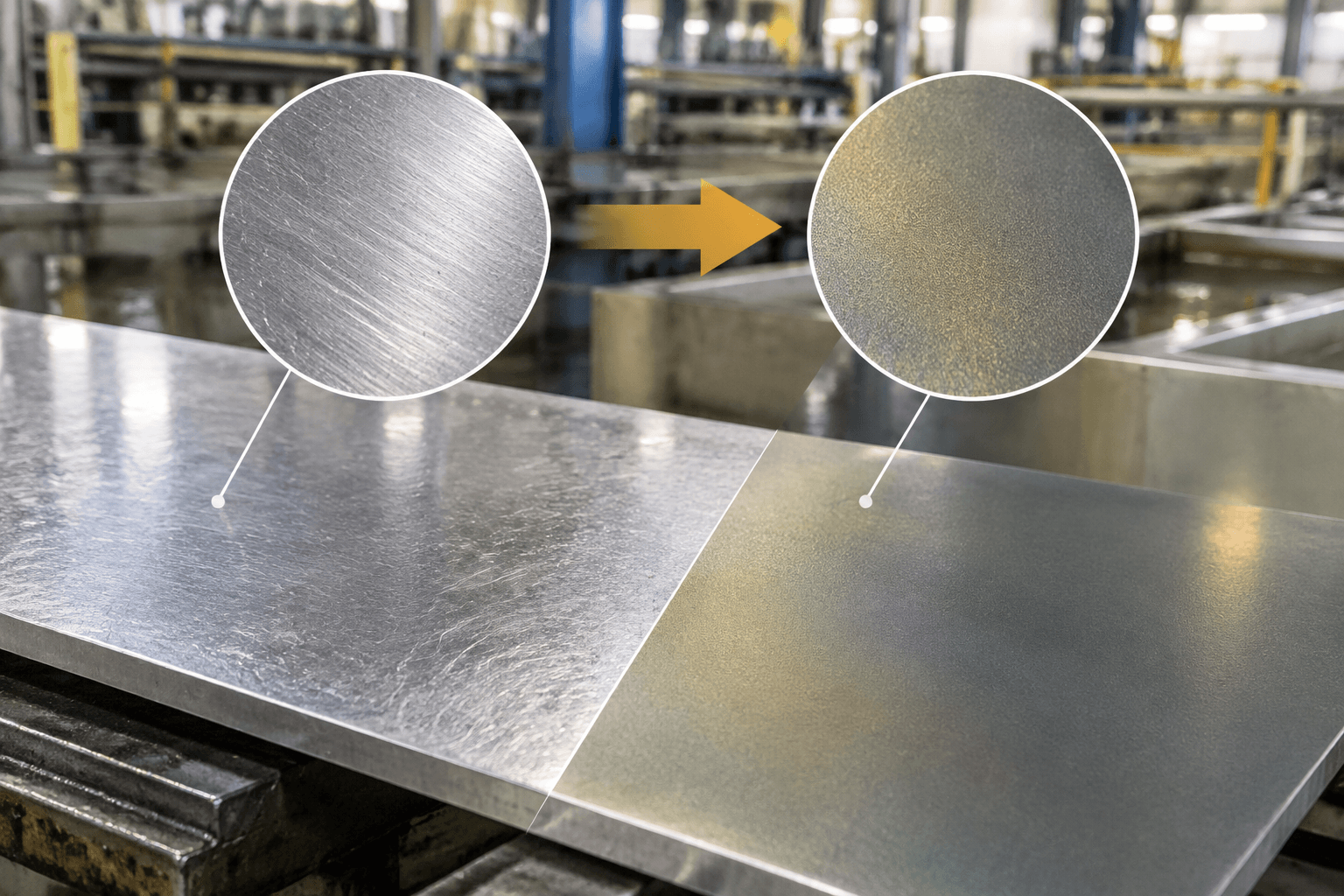
Alodine conversion coating is a chemical surface treatment used mainly on aluminum to improve corrosion resistance, support paint adhesion, and preserve electrical contact with minimal dimensional change. It creates a very thin converted surface, but it is not a wear-resistant substitute for anodizing in abrasive or sliding applications.
The formal process term is chromate conversion coating, while chem film is common industry shorthand. Alodine is a Henkel brand name that is often used generically, even though products described this way may use different chemistries, produce different appearances, and meet different coating requirements.
Performance therefore cannot be determined from the word “Alodine” alone. The aluminum alloy, surface preparation, conversion chemistry, bath control, rinsing, handling, and governing drawing or specification all affect the finished surface.
What the Conversion Reaction Creates
Alodine conversion coating is not paint, and it is not a conventional electroplated deposit. The treatment chemically reacts with the aluminum surface and forms a conversion layer containing compounds produced by that reaction. Military specification MIL-DTL-5541 describes these coatings as being formed by the reaction of chemical conversion materials with aluminum and aluminum-alloy surfaces. ([quicksearch.dla.mil](https://quicksearch.dla.mil/qaDocDetails.aspx?ident_number=5499&utm_source=openai))
Because the layer develops through surface conversion rather than the buildup of a thick applied film, it generally has limited effect on part dimensions. This is useful around fitted joints, fastener holes, conductive seams, threaded interfaces, and other features where a thicker finish could affect assembly. However, “limited” does not mean that dimensional impact should be ignored when tolerances are exceptionally tight. The drawing and selected process still control acceptance.
Chromium-containing systems may use hexavalent or trivalent chemistry, but these categories should not be treated as interchangeable. In MIL-DTL-5541 terminology, Type I compositions contain hexavalent chromium, while Type II compositions contain no hexavalent chromium. A non-hexavalent product could use trivalent chromium or another chemistry, depending on the approved material and specification.
Neither option is universally superior. The appropriate choice depends on corrosion requirements, electrical performance, environmental and customer restrictions, qualified materials, process control, and the required acceptance tests. A drawing should state the applicable designation instead of assuming that a particular color or trade name defines the chemistry.
How Each Process Stage Shapes the Surface
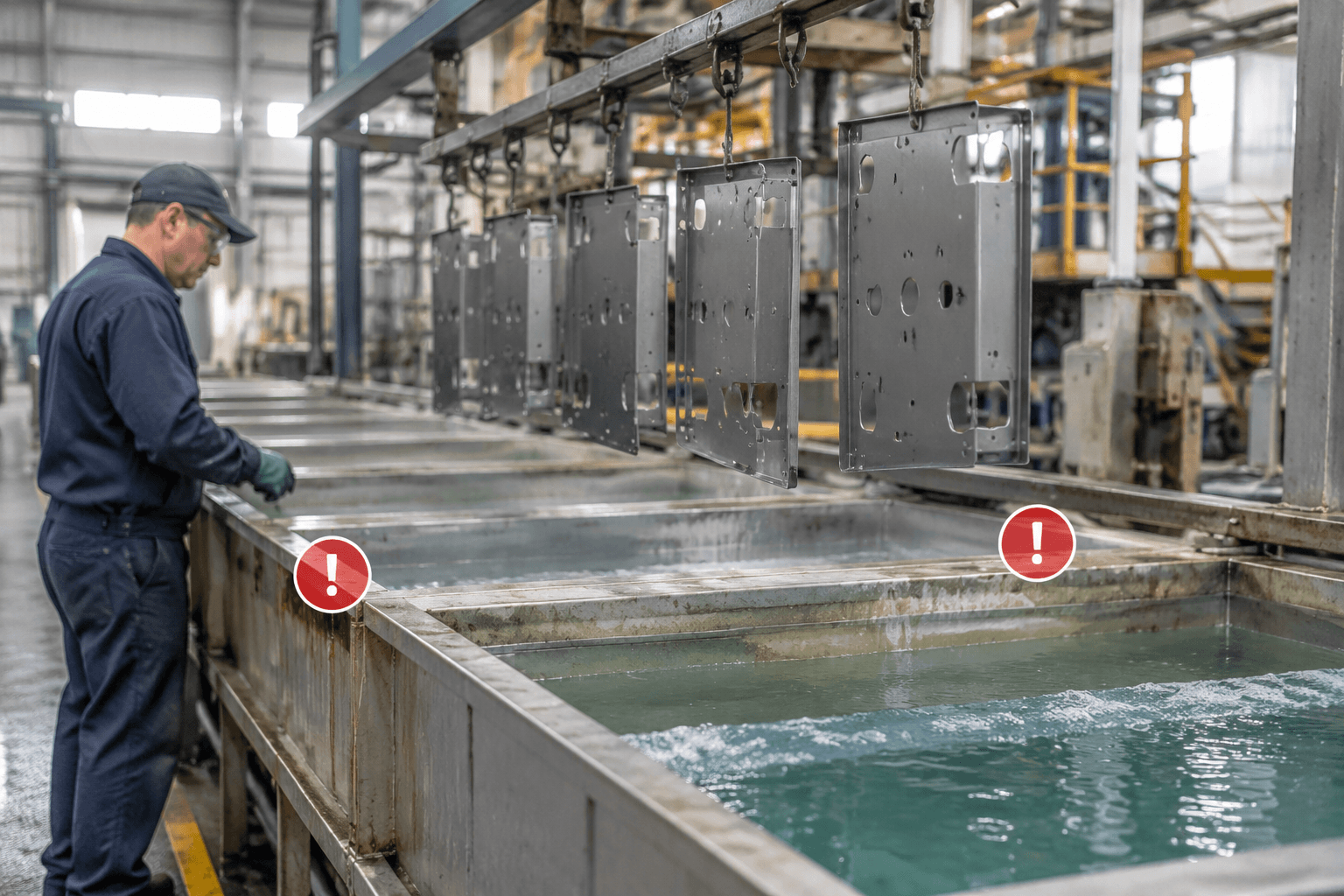
A conversion bath cannot reliably compensate for oil, oxide, embedded shop residue, or inconsistent rinsing. The treatment sequence must expose a chemically suitable aluminum surface and prevent contamination from being carried into later stages.
- Cleaning removes manufacturing contamination. Forming lubricant, machining coolant, fingerprints, polishing compound, adhesive residue, and storage soils can block the reaction. The cleaner must be suitable for the alloy and contamination rather than aggressive enough to unnecessarily attack the substrate.
- Rinsing limits chemical carryover. Residual cleaner can change the next bath, create stains, or leave sections that convert differently. Water quality, rinse condition, drainage, and part orientation can all influence the result.
- Deoxidizing or desmutting prepares the alloy surface when required. Aluminum naturally forms oxide, while alloying elements can leave residues after alkaline cleaning or etching. A controlled pretreatment may remove oxide and smut so the conversion reaction can occur more uniformly. The required step varies with alloy, existing surface condition, and the selected chemical system.
- The conversion treatment reacts with the exposed surface. Concentration, pH, temperature, contact time, loading, agitation, and contamination must remain within the process supplier’s controls. Spray, immersion, brush, or localized application may be possible for particular approved systems, but the governing instructions determine what is acceptable.
- Final rinsing removes residual process chemicals. Poor rinsing can leave deposits, streaking, or contamination that interferes with painting and inspection. Some systems have specific final-rinse requirements, so a generic rinse sequence should not replace the product instructions.
- Drying and handling protect the fresh surface. Excessive heat, dirty racks, wet nesting, fingerprints, and uncontrolled storage can affect the coating or contaminate it before painting and assembly.
Henkel’s published aluminum chromate process overview similarly identifies cleaning, rinsing, conversion treatment, rinsing, and drying as typical stages, while noting that products are selected for different alloys and functional finishes. ([next.henkel-adhesives.com](https://next.henkel-adhesives.com/us/en/articles/chrome-based-conversion-coatings.html?utm_source=openai)) The exact production sequence should still be based on the approved chemistry, substrate, part geometry, and contractual requirement.
What the Conversion Layer Can—and Cannot—Do
Corrosion protection
The conversion layer can delay corrosion initiation on aluminum, particularly where a thin protective finish is needed or where it serves as pretreatment beneath paint. Performance varies with alloy, coating designation, surface preparation, exposure, damage, and testing conditions. A universal salt-spray duration or service life should not be assigned without a cited specification and defined test method.
Electrical contact and grounding
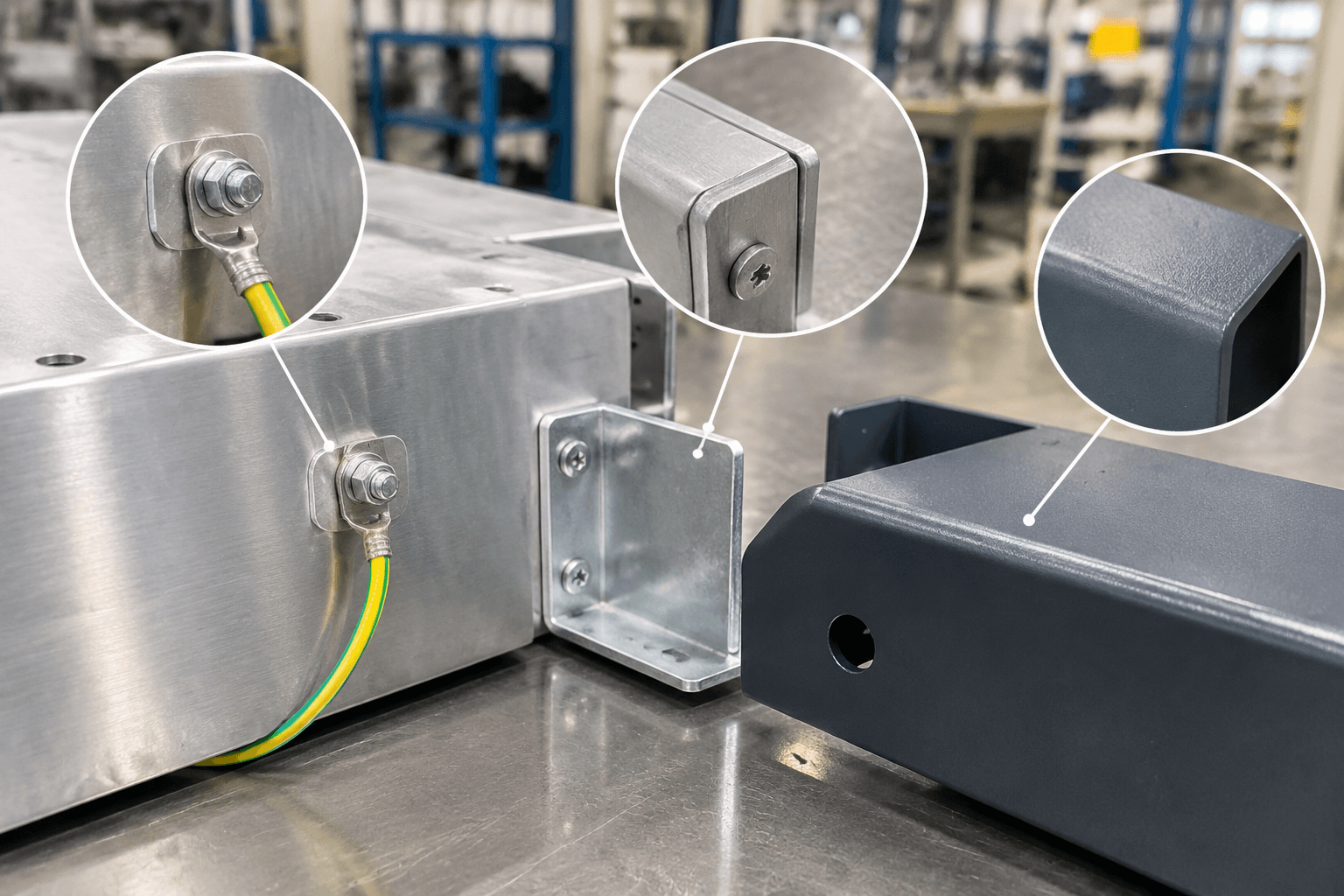
Chem film may be selected where an aluminum surface requires both corrosion protection and relatively low electrical resistance. This can matter at grounding locations, enclosure seams, bonding points, and fastener interfaces. MIL-DTL-5541, for example, distinguishes a class intended for corrosion protection where low electrical resistance is required. ([quicksearch.dla.mil](https://quicksearch.dla.mil/Transient/C2DC8261558345B898F9626EA82C731C.pdf?utm_source=openai))
That does not make conductivity automatic. Contact resistance can be influenced by chemistry, coating designation, alloy, surface cleanliness, contact pressure, hardware, storage, and the acceptance method. Critical grounding interfaces should be identified on the drawing and verified using the specified electrical requirement.
Paint and powder-coating pretreatment
Conversion coating can improve the bond between aluminum and a subsequent organic coating. It also provides protection if small areas of paint are damaged, subject to the selected system and exposure conditions. The pretreatment must be compatible with the primer, liquid paint, powder coating, adhesive, or sealant that follows.
For a painted aluminum enclosure, the finishing plan may need to distinguish external painted faces from conductive seams, grounding studs, or masked contact pads. Treating every surface identically can either interrupt electrical continuity or leave exposed aluminum without the intended protection.
Dimensional sensitivity
The thin converted surface is often useful on close-fitting components. An aluminum bracket built to a drawing, for example, may have locating holes, slots, fastener seats, or mating faces where finish selection must be coordinated with tolerances. Chem film can reduce the dimensional concern associated with thicker finishes, but masking and post-finish measurement may still be necessary.
Wear and appearance
Chem film is not intended to provide the hard, abrasion-resistant surface associated with anodizing. Sliding interfaces, frequently handled surfaces, wear tracks, or parts exposed to erosion may require anodizing or another engineered finish. Conversion coating can also vary in color from nearly clear to iridescent or darker tones, depending on chemistry and processing. Color variation alone does not prove failure, and visual similarity does not prove compliance.
Match the Surface Requirement to the Finish Behavior
| Engineering requirement | Alodine or chem film | Anodizing | Paint or powder coating |
|---|---|---|---|
| Electrical grounding | Can support conductive contact when the correct designation and controls are specified | Oxide layer is generally electrically insulating; contact areas may require masking or removal | Normally insulates contact areas unless they are masked |
| Dimensional sensitivity | Usually selected for minimal dimensional effect, subject to the process and tolerance | Produces a more substantial oxide layer that must be considered in fits and threads | Film build can affect close fits, holes, edges, and threaded features |
| Corrosion protection | Useful as a final thin treatment or as pretreatment, with performance tied to specification and exposure | Offers stronger barrier and surface durability in many conditions, depending on type and sealing | Provides a barrier finish but depends on pretreatment, coverage, edge condition, and damage |
| Abrasion or sliding contact | Limited resistance; not a replacement for a wear finish | Usually better suited to wear, especially when the anodizing type is selected for that purpose | May scratch, chip, or polish through under repeated contact |
| Decorative appearance | Color and uniformity may vary; normally selected for function rather than exact cosmetics | Can provide controlled decorative colors, although alloy and process still affect appearance | Offers broad color and gloss options when cosmetic coverage is required |
| Use beneath paint | Commonly considered as aluminum pretreatment when compatible with the paint system | Possible in defined systems, but not automatically the preferred paint pretreatment | This is the final organic layer rather than the conversion pretreatment |
The table is a screening tool, not a substitute for drawing requirements. A conductive enclosure may use chem film at electrical interfaces and paint elsewhere. A wear component may need anodizing, while an aluminum extrusion could require masking of fitted or conductive areas before its final finish. For custom aluminum extrusion components, the finish sequence should be reviewed together with cut features, machining, assembly interfaces, and critical dimensions.
Define Acceptance Without Relying on Color
“Apply Alodine” is usually incomplete as a production instruction. Buyers and engineers should communicate the functional requirement and the governing finish designation so the processor knows what must be controlled and verified.
Information to place on the drawing or finishing specification
- Substrate: State the aluminum alloy, temper, and any clad or cast condition that affects processing.
- Finish designation: Identify the governing customer, industry, or product specification and the required type, class, or approved material where applicable.
- Chemistry restrictions: State whether hexavalent chromium is required, prohibited, or subject to customer approval. Do not assume that “clear” means trivalent or that “yellow” proves hexavalent chemistry.
- Functional areas: Mark electrical contacts, grounding points, sealing surfaces, adhesive zones, threads, and tight-tolerance interfaces.
- Masking: Define which areas must remain uncoated, retain conductivity, or receive a different final finish.
- Downstream coating: Identify primer, paint, powder coating, adhesive, or sealant compatibility requirements.
- Appearance: Separate functional acceptance from cosmetic expectations, especially when color variation or rack marks could be visible.
- Testing: Tie visual inspection, electrical measurements, adhesion evaluation, and corrosion testing to the governing requirement and stated sampling plan.
A part can have an apparently uniform golden or clear finish and still fail a required electrical, adhesion, or corrosion test. Conversely, moderate color variation may be acceptable if the specification allows it and the required performance criteria are met. Inspection should confirm the drawing requirement, not judge compliance from photographs or color alone.
Review the finish together with the part design
Before releasing an aluminum part for production, provide the material specification, drawing, critical tolerance areas, electrical contact locations, corrosion environment, downstream paint requirements, and applicable finish designation. Yishang supports B2B OEM and ODM custom manufacturing and can review how part geometry, fabrication steps, assembly interfaces, and finishing notes should be coordinated for clear supplier communication. This review should confirm requirements without assuming that one unspecified Alodine process is suitable for every part.
Frequently Asked Questions
Can Alodine conversion coating be used on steel?
The aluminum conversion process commonly called Alodine should not be specified for steel as if the substrates were interchangeable. Steel may receive phosphate, zirconium-based, or other conversion and pretreatment systems selected for ferrous material. Some multi-metal products exist, but their chemistry and approval must be identified separately rather than treated as standard aluminum chem film.
What materials can receive chromate conversion coatings?
Chromate conversion treatments exist for aluminum, magnesium, zinc, and certain plated surfaces, but they are substrate-specific systems. A product intended for aluminum should not automatically be applied to magnesium or zinc. The material, alloy, surface condition, approved chemistry, and governing specification must all agree.
How is chem film removed from aluminum?
Chem film should be removed through a controlled rework process approved for the alloy and required finish. The processor may use a compatible chemical stripping or preparation sequence, followed by rinsing, inspection, and recoating. Aggressive abrasion or uncontrolled chemical treatment can change dimensions, round edges, alter surface texture, or attack the substrate, so rework instructions should define acceptable material removal and final verification.
Can Alodine preserve grounding while providing corrosion protection?
Yes, an appropriately specified conversion coating can support corrosion protection while maintaining electrical contact better than insulating finishes. However, grounding performance depends on the coating designation, alloy, process control, contact design, hardware, pressure, and acceptance test. Mark critical contact areas and state the electrical requirement instead of relying only on the word “Alodine.”