
Direct answer: “Luxury cutting machines for industrial use” is not a standardized technical equipment category. It is a commercial positioning phrase that must be translated into measurable requirements: material compatibility, feed method, usable cutting area, layer count, dimensional performance, software, validation evidence, service, and lifecycle cost.
This matters when an OEM is comparing equipment for premium apparel, decorative textiles, upholstery, vinyl, canvas, coated materials, or other flexible products. The cutting-equipment supplier must confirm compatibility through documented testing. This guide covers industrial textile and flexible-material cutting systems, not metal sheet laser-cutting or other metal-fabrication machines.
What does “luxury cutting machine” actually mean?
A procurement team may encounter the word luxury in an RFQ, sales presentation, or project brief for a premium product line. One supplier may use it to describe a higher-end machine configuration; another may mean equipment intended for a luxury-sector application. Neither interpretation proves precision, speed, reliability, or material suitability.
Begin with a material and product-mix record. Define the material family and composition, usable width, thickness, roll or flat format, intended layer count, coating, softness, hardness, extensibility, and sensitivity to pressure or heat. If the process must seal a synthetic edge, treat that as a separate requirement. The correct shortlisting question is whether a specific configuration can process the intended material and profile mix under production-representative conditions.
Which cutting architecture fits the material and feed method?
Architecture should be selected before brand comparison. A roll-fed line for repeated single-layer work creates different requirements from a static table for flat loading, a thermal laser process, or a higher-ply application. The following routes are not interchangeable grades of “premium” equipment.
| Configuration | Application route | Points to validate |
|---|---|---|
| Continuous conveyor | Roll material with continuous feeding, commonly for single-layer or low-ply work where automated movement is important | Effective width, feed tracking, roll handling, nesting continuity, loading, unloading, and long-run stability |
| Static cutting | Flat material or controlled sections of single-layer or low-ply material loaded on a defined table | Usable area, hold-down method, tool options, loading steps, unloading steps, and changeover |
| Non-contact laser | A thermal process that may cut and edge-seal some synthetic materials when the exact material is validated | Heat-affected area, edge sealing, discoloration, deformation, fumes, extraction, coating response, and dimensions |
| Electric cradle-feed | Controlled unwinding for heavy, delicate, or fine rolls where tension consistency and smooth feeding matter | Supported roll width and load, tension control, alignment, marking risk, and feed synchronization |
| Higher-ply configuration | Some medium- or higher-layer vinyl, canvas, and decorative-fabric applications with simple or complex contours | Validated layer range, compression, top-to-bottom consistency, tool wear, contour quality, and material movement |
A quoted system may combine several functions. The supplier should identify which are standard, optional, material-limited, or unavailable. Compatibility with vinyl, canvas, coated textiles, decorative fabrics, or advanced materials should be supported by a documented application test rather than a broad product-family statement.
Which specifications separate a premium machine from a premium-sounding brochure?
When two offers are compared, every value needs a definition and a test condition. A headline speed is not comparable if one figure describes tool movement while another includes nested parts, complex contours, different layer counts, or operator handling.
| Comparison item | What to request | Why it matters |
|---|---|---|
| Working dimensions | Nominal bed or conveyor size versus effective usable cutting width and area, including restricted zones | The advertised envelope may not equal the area available for patterns |
| Knife and tool data | Knife or tool width, supported tools, kerf where relevant, tool-change method, and process to which the data applies | Tool selection affects profile access and edge results |
| Material limits | Thickness, roll-width limits, supported layer range, compression conditions, and feed restrictions | Flexible material behaves differently when flat, rolled, compressed, or stacked |
| Speed and output | Material, thickness, layer count, contour complexity, acceleration, nesting, loading, unloading, and operator assumptions | Motion speed is not validated production output |
| Dimensional performance | Definitions and measurement methods for positioning accuracy, repeatability, and finished-part tolerance | Material stretch, compression, shifting, and relaxation affect the finished result |
| Load and feeding | Whether load refers to the table, conveyor, cradle, loading equipment, or complete machine; also request tracking and tension conditions | The feed route may be the limiting component |
| Changeover and waste | Setup steps, tool changes, material changes, operator actions, nesting assumptions, remnants, edge waste, and calculation method | Short or varied orders can make changeover and waste major cost variables |
Record each value beside its process condition. Knife-cutting data should not be presented as laser-cutting data, and machine positioning data should not substitute for a measured flexible-material result.
How should an industrial buyer validate performance before purchase?
High-performance fibers, bio-based fibers, nanomaterial-containing products, and composite or coated materials require controlled sample testing. Construction, finish, thickness, surface condition, and storage history can change the result, so a generic compatibility statement is not enough.
- Identify the sample. Record composition, supplier reference, width, thickness, layer count, coating, surface condition, softness, hardness, extensibility, and relevant storage information.
- Reproduce the feed format. Use roll feeding or flat loading as intended, with representative layers and material handling.
- Use realistic profiles. Include straight sections, curves, corners, small features, and complex contours from the planned product mix.
- Inspect blade results. Check edge quality, dimensions, tool wear, layer consistency, material movement, and marks from hold-down or compression.
- Inspect laser results. Check thermal impact, edge sealing where applicable, discoloration, deformation, fumes, residue, coating response, and dimensional result.
- Record operating behavior. Document feed stability, repeatability, waste, setup, changeover, interruptions, loading, unloading, and operator steps under stated conditions.
- Review software. Test file import, pattern editing, finalization, nesting, job release, and production-data handling. InMotion or patternPRO should be considered only when included in the quoted system and supported by supplier documentation.
- Close implementation responsibilities. Confirm site preparation, installation, training, acceptance criteria, maintenance, spare parts, warranty terms, support process, software updates, integration ownership, and lead time.
One-page comparison sheet for premium industrial cutting machines
- Material composition, coating, format, width, thickness, layer count, softness, hardness, and extensibility
- Effective cutting area, roll path, feed method, supported tool, hold-down method, and load definition
- Measured speed, repeatability, dimensional result, edge quality, waste, setup time, changeover time, and operator steps
- File formats, pattern editing, nesting scope, software terms, and integration responsibilities
- Test evidence, installation, training, warranty, spare parts, maintenance, support, and lead time
What belongs in the total cost of ownership?
Compare lifecycle cost rather than purchase price alone. Each supplier should state the assumptions behind capacity, uptime, waste, and labor-saving estimates.
| Cost group | Items to include |
|---|---|
| Acquisition | Machine, options, freight, site preparation, installation, commissioning, training, and integration |
| Software | Licenses or subscriptions, nesting modules, updates, interfaces, additional users, and data-management requirements |
| Operation | Labor, energy, knives, tools, consumables, extraction where required, setup, and changeover |
| Maintenance and support | Preventive maintenance, spare parts, downtime exposure, warranty coverage, and technical support |
| Production effects | Material waste, product mix, rework, operator involvement, feed interruptions, and validated output |
A payback calculation is credible only when it uses the buyer’s workload, material cost, labor cost, shift pattern, product mix, downtime assumptions, and validated output. Unsupported capacity or generic waste percentages should not justify the investment.
When does a cutting-machine project need custom metal fabrication?
Once the cutting route is shortlisted, an OEM project often separates into two workstreams. The equipment supplier remains responsible for machine selection, cutting performance, software compatibility, material validation, installation, instructions, and service. A separate metal supplier may produce physical components around or inside the system, but those parts do not establish machine performance.
| Equipment scope | Possible custom metal scope |
|---|---|
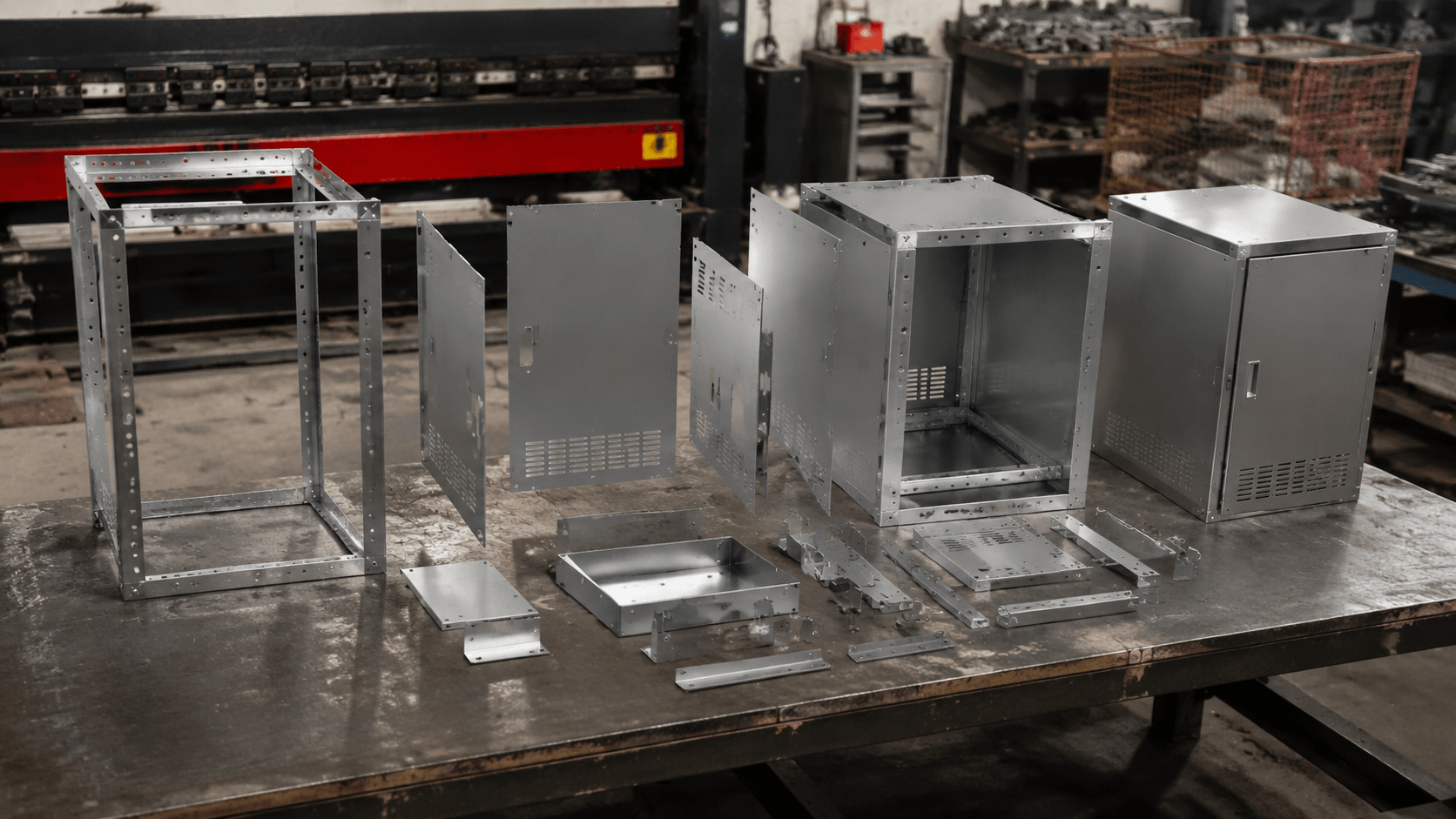
| Architecture, motion, feed, tools, controls, software, material compatibility, and operating performance | Frames, cabinets, housings, access panels, guards, covers, brackets, and enclosures made to supplied drawings or files |
| Application testing, commissioning, training, maintenance instructions, and support | Metal laser cutting or CNC punching for flat parts, followed by bending or forming as specified |
| Machine integration and final acceptance | Welding, powder coating or polishing, hardware installation, and subassembly |
| Material-cutting approval | Inspection against drawings or BOMs, protective packaging, and shipment of finished components |
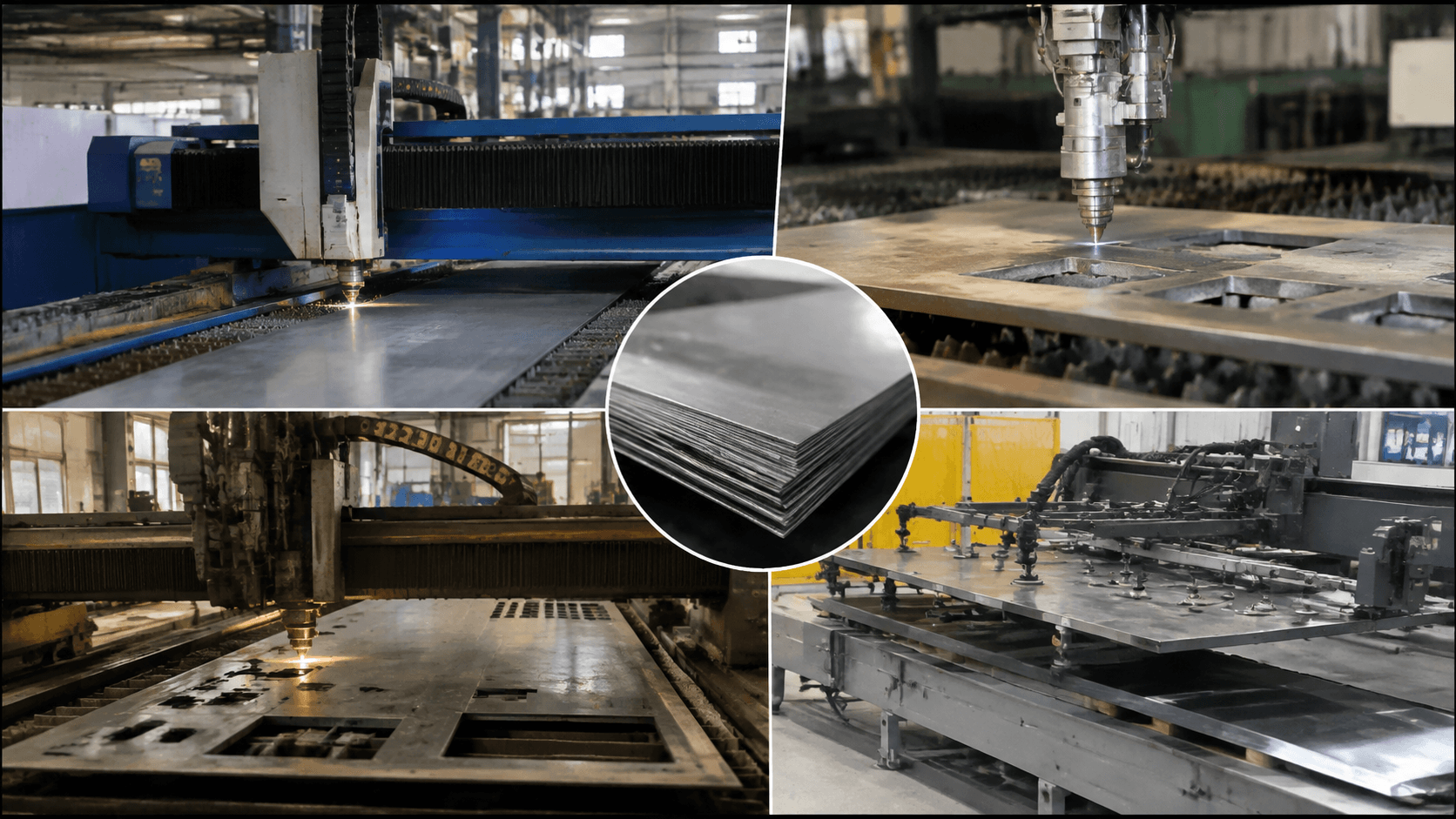
These processes remain distinct: fabrication creates formed parts, machining creates defined features, welding joins parts, finishing changes the specified surface, assembly combines approved components, and inspection checks stated requirements. For equipment structures and housings, review custom sheet metal enclosures for machine housings, guards, and control-system protection or custom metal frames for equipment structures. The metal laser-cutting process is for fabricating machine components, not for cutting textile production material.
Yishang supports OEM and ODM custom metal projects, including prototype review and batch production, with more than 26 years of custom metal manufacturing experience, exports to more than 50 countries, and ISO and RoHS certifications. Its relevant role is the custom metal portion of the project, not supply or service of the cutting machine.
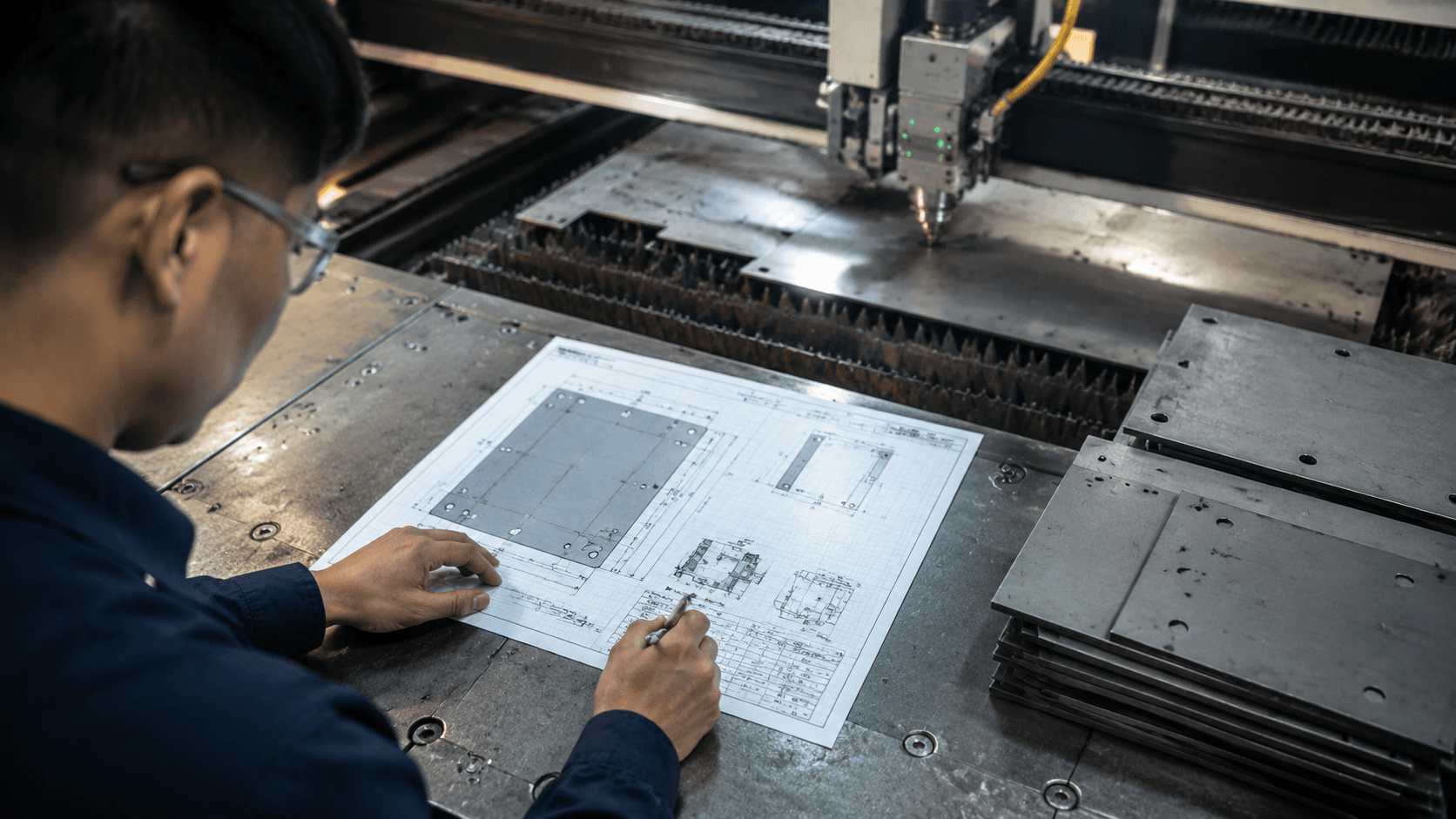
For a component-only RFQ or manufacturability review, send machine enclosure, frame, cabinet, panel, or assembly drawings; 3D files, 2D drawings, or BOMs; material, thickness, finish, appearance, and tolerance requirements; prototype or batch quantity; welding, assembly, inspection, packaging, and shipping requirements; target delivery region; and required documentation. The equipment supplier must handle machine selection and material-cutting validation.
A premium label is only a starting point. Select the cutting system from production-representative evidence, then request a separate metal-component review when the OEM project requires frames, enclosures, cabinets, panels, or assemblies. Send the released drawings or BOM with material, finish, tolerances, quantity, inspection, packaging, shipping, and documentation requirements for review of the custom metal scope.
Frequently Asked Questions
Use these answers when separating the equipment RFQ from a downstream component RFQ.
Is “luxury cutting machine” an official industrial equipment category?
No. It is generally a premium marketing or positioning term. Compare documented material compatibility, usable dimensions, layer range, measured results, workflow, service, and lifecycle cost.
Are industrial textile cutting machines the same as metal sheet laser-cutting machines?
No. Textile systems use tools and feed arrangements suited to pliable materials. Metal sheet laser cutting is a separate route for producing panels, guards, brackets, and enclosures.
When should a buyer compare a conveyor system with a static system?
Compare conveyor feeding when continuous roll movement is part of the intended process. Compare static cutting when flat loading or controlled sections better match the material and order mix.
Can a laser system process coated or advanced materials without thermal risks?
Do not assume it can. Test the exact material for heat effects, coating response, discoloration, deformation, fumes, residue, edge sealing where applicable, and dimensions.
What belongs in a supplier quote and sample-test report?
Include configuration, options, material conditions, test profiles, measured results, software scope, exclusions, lead time, installation, training, warranty, maintenance, spare parts, support, and commercial assumptions.
Does Yishang supply the cutting machine itself?
No. Its relevant scope is custom metal parts and assemblies such as frames, enclosures, cabinets, panels, and welded structures. The equipment supplier remains responsible for machine selection, software, cutting performance, and material validation.