
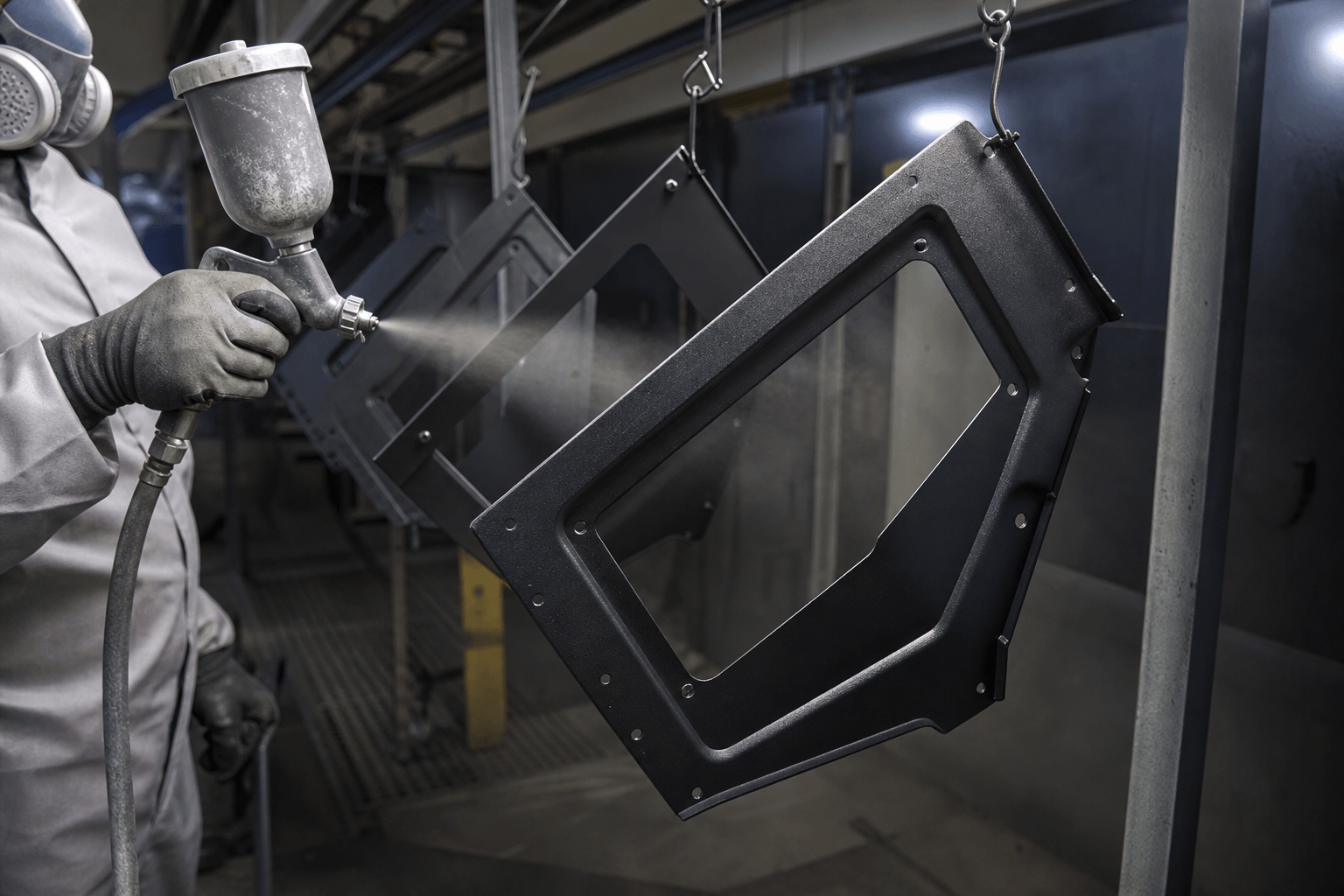
Quick answer: Steel coating is a surface layer applied or deposited on steel to provide corrosion protection, appearance, wear resistance, or a combination of these functions. It is separate from the steel grade and any pretreatment. Galvanizing is a zinc-based metallic route; liquid paint and powder coating are organic systems; conversion treatments such as phosphate generally prepare steel for a later finish; and duplex systems combine coordinated layers. No single four-family classification is universally correct. For an OEM enclosure, cabinet, frame, rack, or welded component, select the route against humidity, salt or industrial exposure, abrasion, impact, maintenance access, appearance, geometry, dimensional control, inspection, cost, and lead time.
Keep the steel grade, pretreatment, and coating separate
On an OEM project, these decisions can become confused when a drawing names only a steel grade or requests a corrosion-resistant finish. The steel grade and sheet or wall thickness define the substrate, so they remain material decisions after a finish is selected. The coating is the layer above that substrate; it can change surface protection and appearance without changing the specified base grade.
A plated or galvanized layer is a coating created through a deposition process, not a different steel grade. Galvanizing is a zinc-based coating family that can be produced by hot dipping or electrochemical deposition. Galvanising is simply the alternate spelling of galvanizing, not a separate technology. A conversion pretreatment, such as phosphate treatment, chemically changes the steel surface to support adhesion and corrosion performance. It is commonly used below paint or powder rather than treated as the complete long-term protective system.
| Practical family | What it includes | Typical role |
|---|---|---|
| Metallic | Zinc or aluminum deposited by hot dipping, electrochemical deposition, or thermal spray. | Sacrificial protection, barrier protection, or both, depending on the metal and process. |
| Organic | Liquid paint and cured powder coating. | Primarily a barrier finish with appearance and color control. |
| Conversion | Phosphate and other chemical surface treatments. | Pretreatment for adhesion and additional corrosion support under a later finish. |
| Duplex or composite | A zinc-based metallic layer combined with an organic topcoat or another coordinated system. | Combines protection mechanisms and appearance when the two layers are compatible and properly specified. |
This grouping is a practical selection framework, not a universal technical taxonomy. Technical sources may classify finishes differently. On an OEM drawing or purchase specification, state the steel substrate, coating route, pretreatment, and any topcoat as separate requirements.
How the main steel coating processes differ
When a buyer compares routes for a welded frame or sheet-metal cabinet, the key question is not simply which finish looks right. Each process creates a different layer, bond, surface condition, thermal history, and set of design constraints; those differences affect threads, mating faces, weld preparation, dimensional control, inspection, and the quotation basis.
| Process | How it works | Boundary for fabricated steel parts |
|---|---|---|
| Hot-dip galvanizing | After cleaning, acid pickling, and fluxing, the steel is immersed in molten zinc at approximately 450°C. Zinc-iron alloy layers form with outer zinc layers, creating a metallurgical bond. | The zinc provides sacrificial protection, including around small exposed steel areas, but immersion, heat, buildup, threads, dimensions, distortion, and appearance must be reviewed during design. |
| Thermal spray zinc or aluminum | Zinc or aluminum wire or powder is melted by a flame or electric arc and projected onto an appropriately blasted steel surface. | The coating primarily relies on mechanical bonding to the blasted surface, unlike the metallurgical layer formed during hot-dip galvanizing. Sprayed zinc emphasizes sacrificial action, while sprayed aluminum is more barrier-oriented. |
| Electrogalvanizing | Zinc is deposited electrochemically onto the steel, allowing close attention to coating buildup and surface finish. | Corrosion performance and required thickness need project-specific validation. Coverage in recesses, holes, and around threads also requires review. |
| Liquid paint | A liquid coating system is applied over prepared steel and air-dried or force-cured as specified. | Performance depends on preparation, primer and topcoat compatibility, film continuity, edge coverage, curing, handling, and repair control. |
| Powder coating | Dry organic powder is applied to prepared steel and cured into a continuous film. | It is an organic barrier finish, not a substitute for galvanizing or thermal spray. Pretreatment, recesses, edges, cure, rack marks, handling, and post-coating fit require control. |
| Conversion treatment | The chemical treatment reacts with the steel surface and creates a conversion layer. | It normally supports a later liquid or powder finish. It should not be specified as though it were interchangeable with a complete metallic or organic coating. |
Hot-dip galvanizing can use zinc’s sacrificial behavior to protect a small exposed steel area, but that benefit does not eliminate the need for correct preparation and part design. Organic coatings mainly depend on remaining continuous and well bonded. Sprayed systems depend strongly on blast quality, spray access, coverage, and any specified sealer or topcoat. A duplex system therefore needs a defined layer sequence and compatibility review rather than a general instruction to apply two finishes.
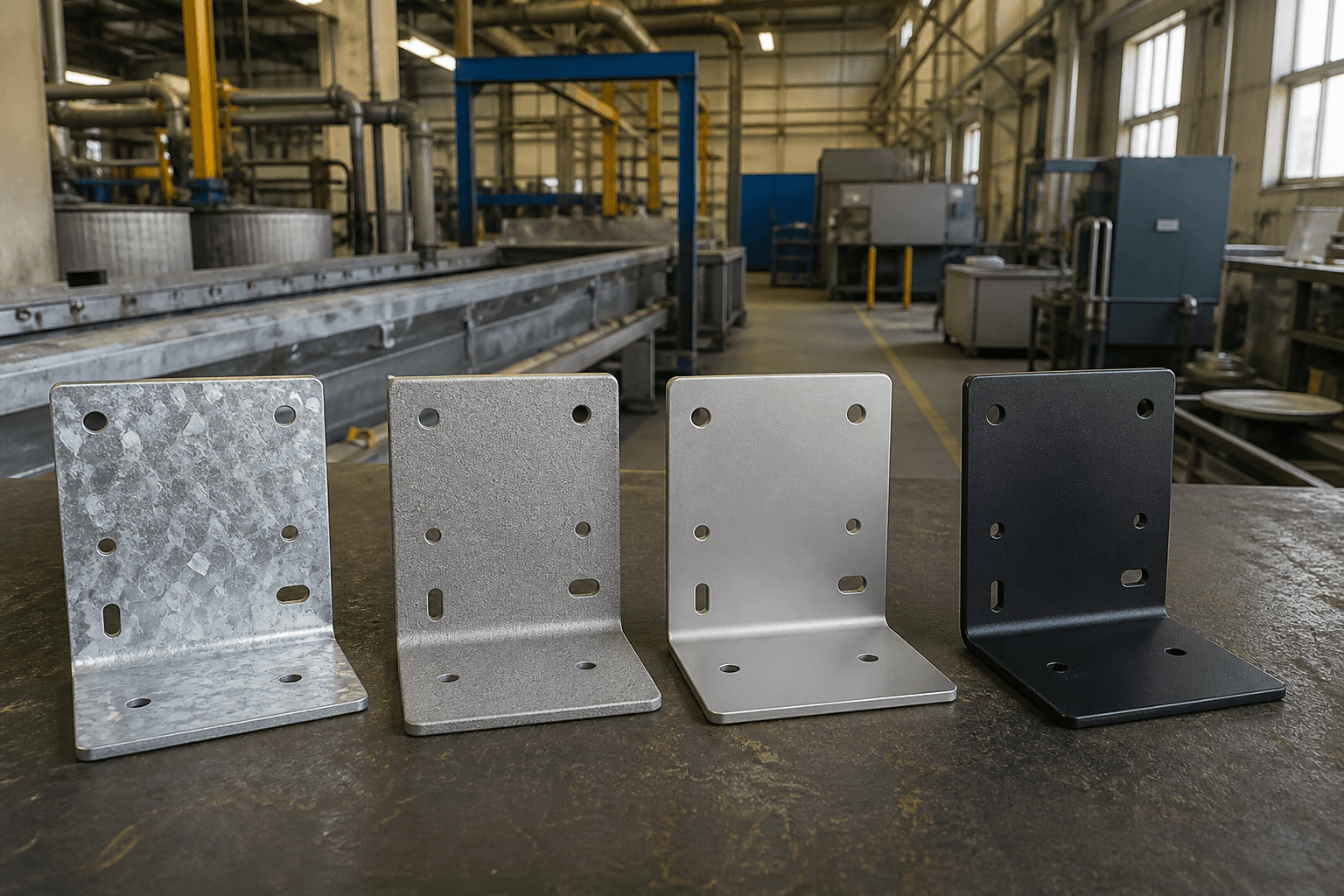
Steel coating selection matrix: environment, geometry, appearance, and inspection
For a quoted enclosure, frame, rack, or welded assembly, begin with the conditions the finished part will actually face—not with a familiar finish name. Review humidity, wet and dry cycling, salt exposure, industrial pollution, abrasion, impact, cleaning conditions, appearance, and access for maintenance. The matrix below identifies routes to investigate; it does not rank one system as universally best.
| Route to investigate | Protection mechanism and possible fit | Geometry, appearance, and quotation questions |
|---|---|---|
| Hot-dip galvanizing | Zinc-based sacrificial protection. Investigate for outdoor or wet fabricated steel when an immersion route fits the target service conditions. | Can the part fit the bath and be safely vented and drained? Review buildup, threads, distortion, double-dip seams, visual variation, coverage, thickness measurement, and repair method. |
| Thermal spray zinc or aluminum | A sprayed metallic layer. Investigate when blasted access, part handling, equipment limits, or the specified heat and size approach make spraying worth evaluating. Zinc and aluminum should be compared against the exposure. | Check blast and spray access, edge coverage, roughness, masking, sealing or topcoat requirements, measurement locations, and repair control. |
| Electrogalvanizing | Electrochemically deposited zinc with attention to controlled buildup and finish. Investigate where those characteristics matter, subject to corrosion and thickness validation. | Review coverage in holes and recesses, thread usability, thickness control, appearance, and the test evidence required by the project. |
| Liquid paint or powder coating | Organic barrier systems that may suit indoor equipment, cabinets, display structures, and appearance-led parts. Outdoor use requires evaluation of the complete system against the environment. | Define preparation, pretreatment, color, coverage, edges, cure, rack marks, handling damage, visual defects, relevant adhesion checks, and post-coating fit. |
| Duplex system | A zinc-based layer combined with an organic barrier or appearance layer. Investigate when both protection mechanisms and a specified appearance are needed. | Specify layer sequence, preparation between layers, cumulative buildup, masking, repair compatibility, and inspection of each stage. |
For example, an outdoor welded frame may justify comparing hot-dip galvanizing, thermal spray, or a duplex route, while a sealed indoor cabinet may place greater emphasis on appearance, film continuity, masking, and fit. A retail display rack may be appearance-led but still require review of handling damage and contact points. These are application scenarios, not universal recommendations or customer cases.
When abrasion or impact is important, compare edge coverage, continuity, repairability, and maintenance access instead of choosing by coating family alone. A part that cannot be easily inspected or repaired may have a different lifecycle-cost profile from a frequently serviced component. Include preparation, fixtures, coating, inspection, transport, repair, maintenance, and the cost of premature rework in the comparison.
For enclosure projects, review seams, gasket lands, internal faces, and fastening features alongside the finish; the custom sheet metal enclosures resource provides relevant assembly context. For exposed supports, apply the same logic to custom metal frames. If the coating route is not yet fixed, an early drawing review can compare these options before a coating line, fixture plan, or quotation basis is assumed.
Resolve DFM risks before coating
A coating decision can expose a design issue that was invisible in the fabrication drawing. Hollow or enclosed sections need an early process review because immersion and some wet pretreatment routes require coordinated venting, drainage, and access. This reduces risks from trapped air, liquid, or accumulated zinc, but the requirements depend on the route, section geometry, wall thickness, and orientation; there is no universal vent-hole dimension suitable for every part. Thermal spray and organic finishes have different access requirements, yet inaccessible internal faces can still remain unprepared or uncoated.
Part size and orientation also affect the process. Tank or equipment dimensions, lifting capacity, available fixtures, and transport limits may restrict the route. For hot-dip galvanizing, an oversized component may require a coordinated double-dip approach that introduces a visible seam or appearance variation. Select lifting points and hanging orientation so critical faces remain accessible and rack marks occur on acceptable surfaces.
Identify threaded holes, close-fitting interfaces, bearing or sliding faces, precision holes, and mating surfaces on the drawing. These features may need masking, a post-coating operation, or a dimensional and fit check. Coating buildup can reduce clearance, while process heat and handling can affect dimensions or distort thin sheet assemblies. Do not assign a universal allowance; establish the fit plan for the selected route and tolerance scheme. Any thread chasing or post-coating machining also needs approval because it can expose the substrate and require an agreed repair method.
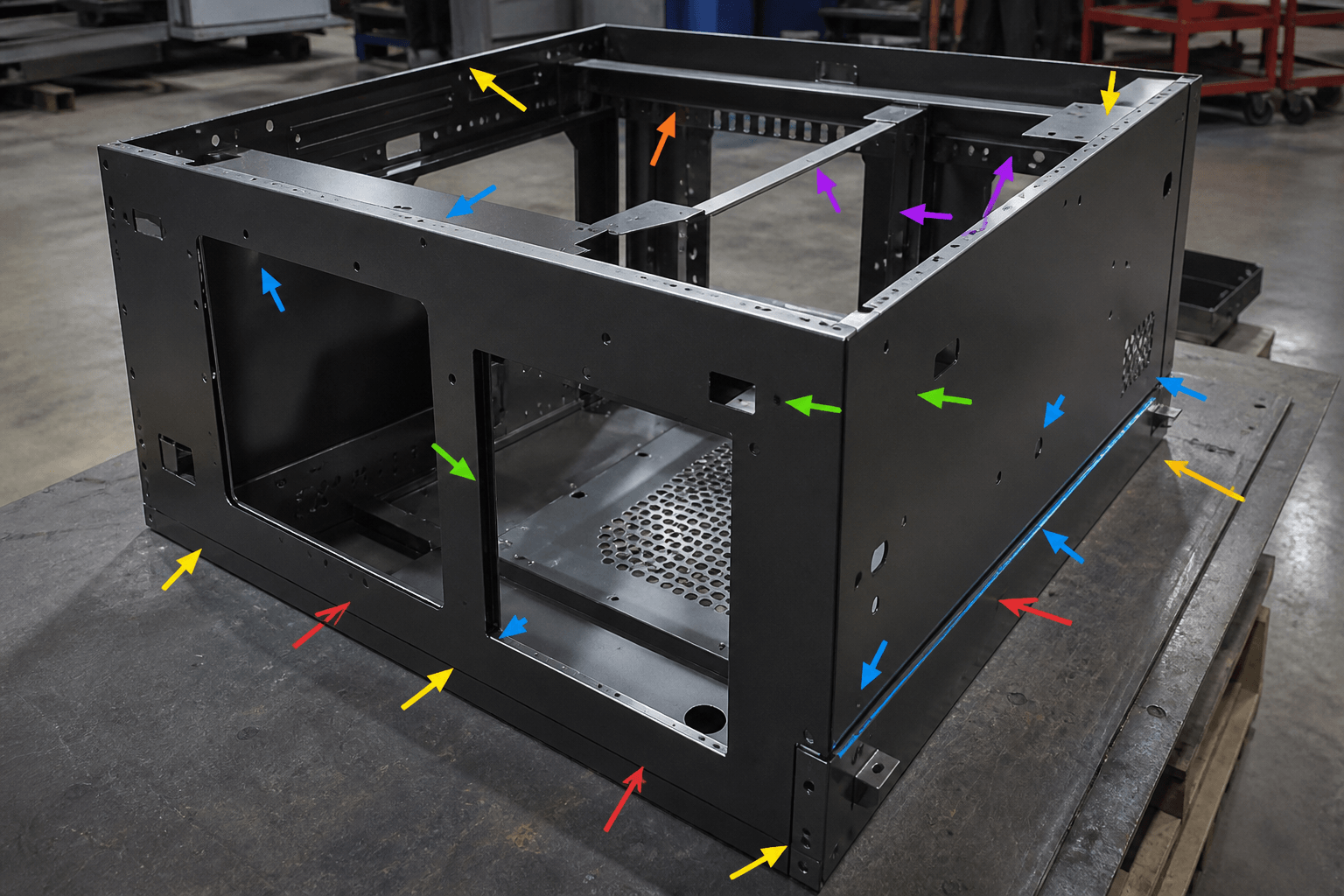
Weld seams, crevices, spatter, contaminated areas, and inaccessible faces can undermine surface preparation or produce uneven coverage. Edge condition matters for both metallic and organic systems. Define which faces are cosmetic, functional, or intentionally uncoated, and identify acceptable repair zones before production. For drawing-led fabrication context, see custom sheet metal fabrication built to your drawings.
- Mark cosmetic, functional, and intentionally uncoated surfaces.
- Show internal cavities, drainage paths, threads, precision holes, and mating faces.
- Define acceptable rack-contact, lifting, and repair zones.
- Review weld sequence, crevices, spatter removal, and access for preparation.
- Confirm whether post-coating fastening, thread work, or fit checks are required.
Write an inspection-ready coating requirement
An OEM drawing can show a coating name and still leave the supplier unsure how to prepare, measure, or accept the part. The specification becomes useful only when its requirements can be observed and agreed. Avoid a general instruction such as coat all surfaces without identifying the system, coverage, measurement locations, and acceptance basis.
| Specification field | State in the drawing or purchase order | Agree the acceptance check |
|---|---|---|
| Substrate | Steel grade, sheet or wall thickness, overall dimensions, approximate weight, and relevant weld condition. | Verify against the approved drawing and material documentation. |
| Coating system | Metallic, organic, conversion, or duplex route, including layer sequence when more than one finish is required. | Confirm the process route and sequence before production. |
| Preparation | Required cleaning, blasting, pickling, weld-spatter removal, surface condition, primer, or conversion treatment as applicable. | Define the required condition and any process record or visual check. |
| Coverage and masking | External and internal surfaces to be coated; masked threads, mating faces, holes, bearing areas, and allowed bare or repaired zones. | Inspect internal faces, edges, holes, functional features, and masking boundaries, not only broad exterior panels. |
| Thickness | Required thickness criterion and agreed measurement locations or sampling basis. Do not leave a nominal value undefined. | Use a measurement method appropriate to the coating system and compare readings with the project requirement. |
| Appearance | Color, gloss or texture if relevant, reference samples, and the description of acceptable runs, bare spots, blisters, inclusions, roughness, variation, and rack marks. | Use the agreed visual reference and acceptance description under consistent inspection conditions. |
| Functional fit | Thread usability, hole condition, mating faces, bearing or sliding surfaces, and any post-coating fit requirement. | Perform dimensional, thread, and fit checks on the features identified as functional. |
| Inspection and testing | Appropriate thickness, visual coverage, dimensional, thread, and adhesion checks where relevant, with methods and limits identified in project documentation. | Define the inspection responsibility, sample basis, test method, and acceptance limit before production. |
| Repair and packaging | Approved repair materials and visibility limits, contact separators, moisture protection, stacking rules, and transport protection. | Check repaired zones and packaging before dispatch so finished surfaces are not damaged in handling or transit. |
Visual inspection should cover welds, edges, internal faces, holes, and repaired zones rather than only broad accessible surfaces. Thickness requirements should be agreed with the supplier before production because geometry and process affect where readings are meaningful. If adhesion or corrosion testing is required, identify the method, sample basis, and acceptance limit in the project documents. A salt-spray result, where specified, is a comparative test under defined laboratory conditions, not a direct prediction of field service life. Broader manufacturing checks can be aligned with the supplier’s quality-control practices.
Why coating cost and lead time vary
Two OEM parts with similar dimensions and the same requested color can receive different quotations because the coating operation prices preparation, handling, inspection, and process risk as well as coating material. For that reason, compare the included work and assumptions, not just the finish name or unit price.
- Preparation: Degreasing, blasting, pickling, weld and edge cleanup, pretreatment, and additional rework affect both cost and queue time.
- Part geometry: Enclosed sections, difficult access, part weight, overall dimensions, tank limits, masking, lifting fixtures, and rack density change the operation.
- Batch scale: Prototype quantity, production quantity, setup effort, fixture utilization, and coating queue affect the price basis and schedule.
- Route and quality: Coating material, curing or immersion, thickness mapping, visual approval, dimensional checks, testing, repair, sorting, and rework add process time.
- Logistics: Transport to or from the coating operation, packaging, moisture protection, and destination requirements can extend lead time and add cost.
Lead time can change when fabrication finishes in one location and coating is scheduled through a separate operation. Part-size constraints, fixture preparation, inspection approval, coating defects, rework, and transport add further variables. A low coating price may exclude masking, fit checks, repair, packaging, or a defined acceptance process, creating a higher total cost after delivery.
Information to include in a coating request
- 2D drawings, 3D files, or marked-up photos, plus steel grade, sheet or wall thickness, dimensions, and approximate weight.
- Indoor or outdoor exposure, humidity, salt, industrial pollutants, abrasion, impact, cleaning conditions, and maintenance access.
- Requested coating family, color or appearance, target thickness if already specified, and referenced acceptance criteria.
- Threads, mating faces, precision features, masked surfaces, internal cavities, venting, and drainage requirements.
- Prototype and batch quantity, destination, packaging needs, and required delivery window.
Yishang supports OEM and ODM custom metal manufacturing, prototype review, and batch production. Powder coating and the listed sheet-metal manufacturing work are verified scope items; hot-dip galvanizing, thermal spray, electrogalvanizing, and other finishes must be confirmed for the specific project rather than assumed to be in-house. A drawing-led review can identify coating, geometry, masking, fit, inspection, and packaging risks before pricing.
Frequently Asked Questions
For an RFQ, these questions usually follow a review of the drawing, service environment, and finish requirements. The answers below focus on process boundaries, fit control, and the evidence needed before prototype or batch approval.
Is galvanizing a type of steel coating, and how does it differ from paint or powder coating?
Yes. Galvanizing applies a zinc-based metallic layer to steel, while liquid paint and powder coating create organic barrier films. Hot-dip galvanizing and organic coating also differ in preparation, bonding, buildup, appearance, repair, and the way they protect exposed steel. They should not be specified as interchangeable finishes.
What is the practical difference between hot-dip galvanizing and thermal spray zinc or aluminum?
Hot-dip galvanizing immerses prepared steel in molten zinc and forms zinc-iron alloy and outer zinc layers with a metallurgical bond. Thermal spray melts zinc or aluminum and projects it onto blasted steel, where the bond is primarily mechanical. Sprayed zinc emphasizes sacrificial action, while sprayed aluminum is more barrier-oriented; the suitable choice depends on the exposure, geometry, access, and specification.
How should a buyer investigate coating options for a steel enclosure, cabinet, frame, or display rack?
Define the environment, moisture and salt exposure, pollutants, abrasion, impact, appearance, maintenance access, dimensions, wall thickness, welds, threads, mating faces, and allowable distortion. Then compare metallic, organic, conversion, and duplex routes against coverage, inspection, repair, packaging, and lifecycle-cost requirements.
How should coating thickness, threaded holes, mating faces, masked areas, and visual defects be specified?
Identify the coating system, preparation, coverage, masking, thickness criterion, measurement locations, appearance reference, repair method, and inspection limits. Mark functional features on the drawing and require dimensional, thread, visual, and relevant adhesion checks rather than inspecting only flat exterior faces. Any tolerance or acceptance limit should come from the applicable project documentation.
Do salt-spray test results predict the actual service life of a steel coating?
No. Salt-spray testing can compare systems under a defined laboratory method, but it does not directly reproduce every field condition or predict service life. Use the specified environment, part design, maintenance plan, inspection evidence, and agreed acceptance criteria together.
Preparing an RFQ? Share the 2D drawings, 3D files, or marked-up photos; steel grade, sheet or wall thickness, dimensions, and approximate weight; service environment; functional and cosmetic surfaces; requested coating route, color, and target thickness if specified; tolerances and acceptance criteria; prototype and batch quantities; packaging needs; destination; and delivery window. A technical coating-and-fabrication review can then identify route, masking, fit, inspection, and packaging risks before the quotation is finalized, while confirming whether the requested route aligns with the manufacturer’s verified production scope.