
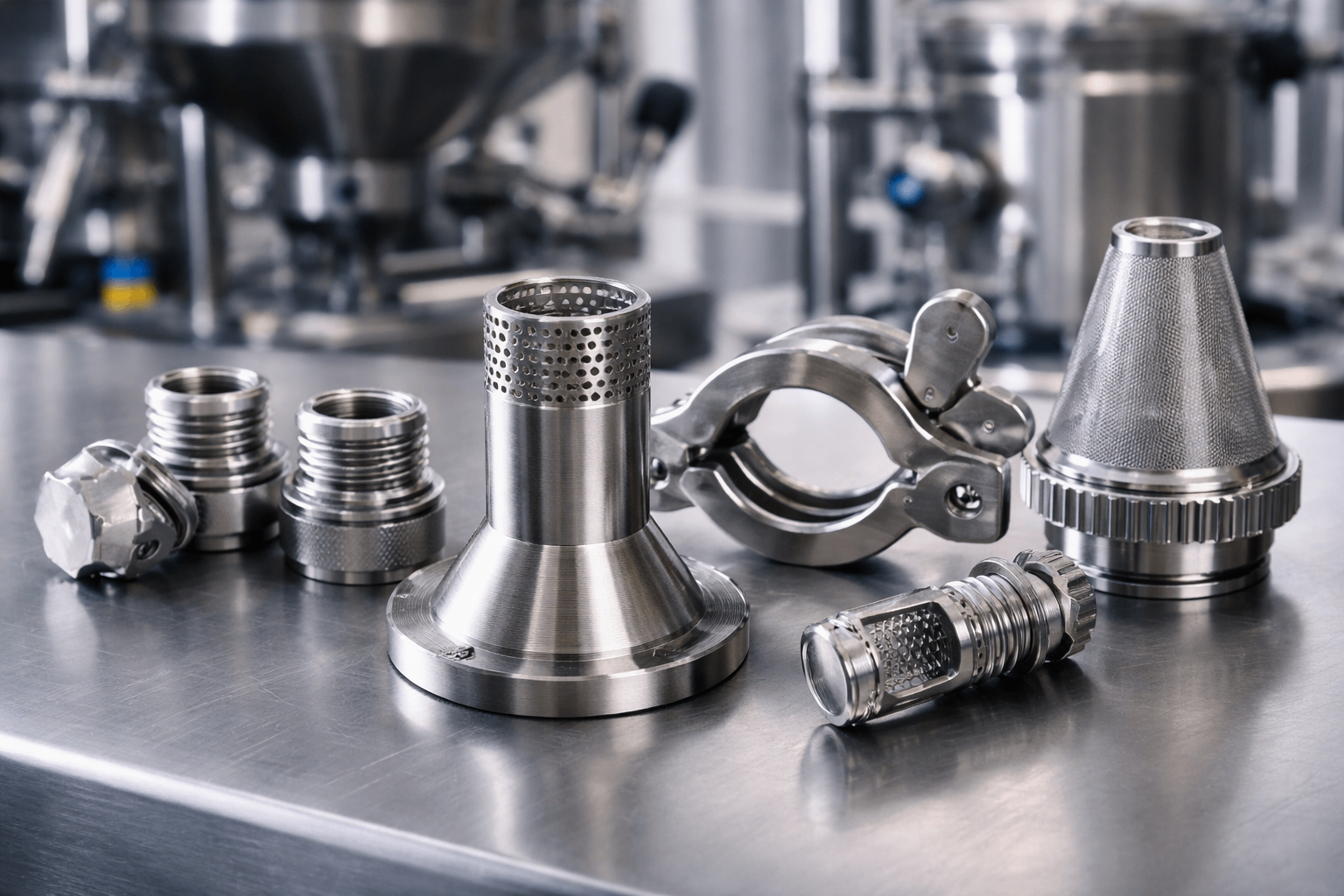
I. Introduction — Food-Safe 3D Printing for Industrial Procurement
For overseas bulk procurement professionals, sourcing metal components that comply with food safety standards represents a critical priority. Therefore, YISHANG provides industrial-grade solutions, including electrical enclosures, junction boxes, and control station components, designed to deliver reliable and consistent performance in food-contact applications. To guarantee hygiene and compliance across large production volumes, companies must manage certified materials, precise processes, post-processing, and workflow control.
This guide presents a detailed perspective on industrial food-safe 3D printing. It covers material selection, manufacturing processes, post-processing strategies, and quality assurance workflows, focusing on high-volume production and procurement efficiency. Each section connects challenges to solutions and practical industrial applications, offering actionable insights for bulk buyers. For additional reference, see FDA Food Contact Materials Guidance for regulatory considerations.
II. Core Challenges in Industrial Food-Safe 3D Printing
A. Microstructural Risks and Surface Porosity
Even corrosion-resistant metals such as stainless steel 304 and 316 may develop micro-crevices or layer seams during selective laser melting (SLM) or direct metal laser sintering (DMLS). Consequently, bacteria can trap in these features and compromise cleanability, affecting food safety in industrial applications. YISHANG applies advanced post-processing measures, including electropolishing and passivation, ensuring surfaces remain smooth, sealed, and suitable for repeated food contact.
B. Chemical Exposure and Alloy Considerations
Trace elements from alloying, residual flux from welding, or handling contamination may create chemical risks. Although stainless steel 304/316 inherently resists corrosion, surface and process control must prevent migration of nickel, copper, or other elements. YISHANG implements strict verification and inspection protocols, guaranteeing compliance with RoHS, ISO 9001, and food safety regulations, providing procurement teams with confidence in material safety.
C. Production Environment and Cross-Contamination
Processing multiple materials in the same facility can increase cross-contamination risks. YISHANG maintains dedicated production lines for food-contact components, such as push button enclosures, electrical meter boxes, and solar battery enclosures. This approach ensures bulk production consistently achieves hygiene standards, regulatory compliance, and repeatable quality for industrial buyers.
III. Material Selection: Industrial Perspective
A. Optimal Food-Contact Metal Alloys
Stainless steel 304 and 316 offer durability, corrosion resistance, and cleanability. Aluminum provides lightweight construction and thermal conductivity but requires anodization or certified food-safe coatings. Copper alloys offer excellent thermal performance but typically serve indirect food-contact applications or require treated surfaces. For bulk procurement, materials must balance performance, compliance, and production repeatability. YISHANG verifies all materials for batch consistency, ensuring enclosures, junction boxes, and control station components remain safe for high-volume food-contact operations.
B. Limitations of Certification Labels
Certification alone cannot guarantee finished-part safety. Micro-porosity, layer seams, and residual powders may compromise hygiene without proper post-processing. Therefore, YISHANG mitigates these risks through surface finishing, smoothing, sealing, and certified coating procedures, ensuring industrial-grade safety and reliability.
C. Comparative Table of Industrial Metals for Food Contact
| Material | Advantages | Limitations | Food-Safety Considerations |
|---|---|---|---|
| Stainless Steel 304 | Durable, corrosion-resistant, cleanable | Layer seams from printing | Electropolishing and passivation recommended |
| Stainless Steel 316 | Superior chemical resistance | Higher cost | Smooth surface essential for acidic foods |
| Aluminum | Lightweight, high thermal conductivity | Oxidation prone | Requires anodization or food-safe coating |
| Copper/Alloys | Excellent thermal properties | Potential leaching | Use for indirect contact or coated surfaces |
IV. Industrial 3D Printing Methods and Their Implications
A. Selective Laser Melting (SLM)
SLM allows complex geometries for enclosures and junction boxes, but residual powder can remain in micro-crevices. Therefore, YISHANG implements thorough post-processing and cleaning to remove potential contamination and maintain food safety in bulk production. For further technical details, see Selective Laser Melting Overview.
B. Direct Metal Laser Sintering (DMLS)
DMLS produces dense components suitable for electrical meter boxes and control station enclosures. YISHANG standardizes process parameters and monitors production to prevent micro-cracking, maintaining surface integrity for repeated food contact applications. More information is available at DMLS Technology Guide.
C. CNC Machining and Hybrid Methods
CNC finishing and sheet metal processing complement additive manufacturing by producing smooth surfaces and precise tolerances. These hybrid methods support hygienic design and enable bulk production of electrical enclosures, solar battery enclosures, and push button components that remain easy to clean and sterilize.
V. Post-Processing for Food Safety
Post-processing transforms printed metal parts into components safe for food contact. YISHANG applies electropolishing to reduce surface roughness, mechanical deburring to remove residual particles, and passivation to enhance corrosion resistance. When necessary, certified food-safe coatings or sealants are applied to maintain hygienic surfaces throughout high-volume operations. For additional guidance, see Post-Processing Methods for Food-Safe Metals.
VI. Safety Workflows and Quality Assurance
Food safety depends on integrated workflows. YISHANG verifies material certification, monitors fabrication parameters, inspects surface roughness and micro-cracks, and validates cleaning procedures. ISO 9001 quality management ensures batch consistency, while RoHS and other certifications confirm regulatory compliance. This structured approach provides procurement teams with reliable, high-volume food-contact metal components.
VII. Common Misconceptions
Material certification alone does not ensure finished-part safety. Post-processing is essential, and even corrosion-resistant metals may harbor defects if workflows remain uncontrolled. Therefore, procurement decisions should focus on hygiene as a process, including surface finishing, inspection, and verified cleaning protocols.
VIII. Trends and Innovations
Emerging innovations include antimicrobial coatings, multi-material industrial printing, real-time surface integrity monitoring, and traceable certification workflows. These advancements enhance batch consistency, safety, and compliance, giving procurement teams confidence in long-term performance and reliability.
IX. Frequently Asked Questions
Which metals are most suitable for bulk food-contact components? Stainless steel 304/316 with proper finishing provides the best combination of durability and hygiene. Aluminum may serve applications with anodization or food-safe coatings, while copper alloys generally require indirect contact or treated surfaces.
How should industrial 3D-printed metal parts be sanitized? Validate cleaning cycles, use autoclaving, or apply compatible chemical sanitizers appropriate for high-volume operations. See FDA Food Contact Materials for regulatory guidance.
Can 3D-printed metal parts be reused? Yes, provided finishing, inspection, and hygiene workflows are consistently applied.
X. Conclusion
YISHANG delivers industrial food-safe 3D printing solutions by integrating material selection, controlled manufacturing, post-processing, and quality verification. Bulk orders of electrical enclosures, junction boxes, and control station components meet rigorous safety standards and ensure reliability. Procurement teams may contact YISHANG to discuss customized solutions for high-volume food-safe metal components.