
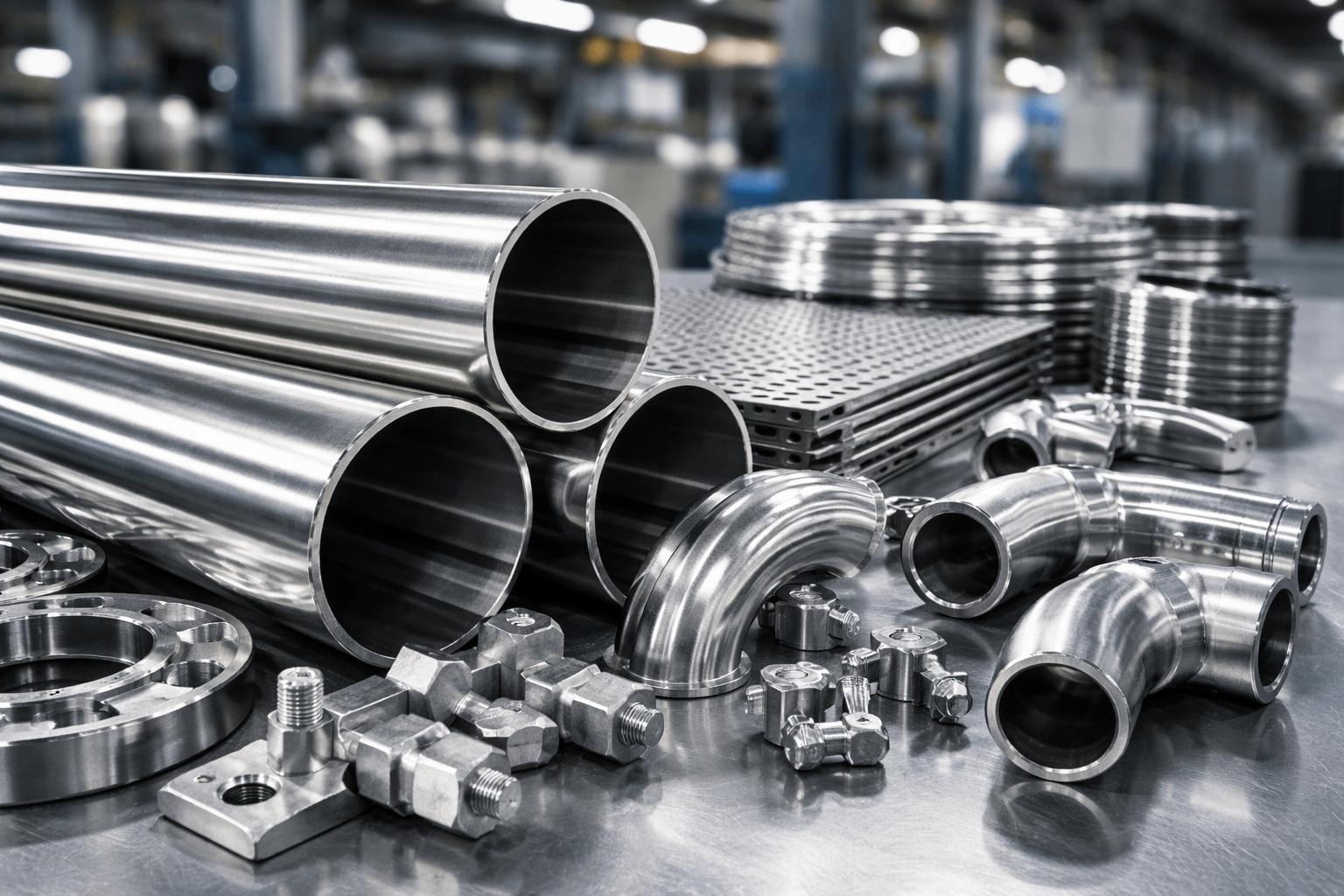
1. Introduction: Meeting Bulk Buyers’ Needs in High-Temperature and Corrosive Environments
Wholesale buyers of metal products, including mount electrical enclosures, junction box NEMA systems, and solar battery enclosures, require consistent material performance, batch reliability, and international compliance. YISHANG’s 309 stainless steel provides a solution that balances oxidation resistance, mechanical stability, and fabrication versatility, ensuring reliable performance across large-scale industrial orders. For more details on stainless steel grades and their properties, refer to the authoritative guide on industry standards.
Bulk purchasers focus on predictable behavior across all units, verified supply chains, and material certifications. 309 stainless steel maintains structural integrity and oxidation resistance under extreme temperature and chemical exposure, reducing maintenance costs and ensuring operational reliability for electrical meter boxes, control station enclosures, and push button panels. Learn more about YISHANG fabrication capabilities for large-scale industrial orders.
2. Metallurgical Identity: Why 309 Stainless Steel Matters for Wholesale Buyers
309 stainless steel is an austenitic alloy with a face-centered cubic structure, offering toughness, ductility, and thermal stability. Its chromium (22–24%) and nickel (12–15%) contents allow it to withstand temperatures up to ~1038°C without degradation, outperforming standard grades like 304 and 316. For more technical reference, see the ASTM A240 specification.
Variants
309S (low carbon) enhances weldability and minimizes sensitization, ideal for fabricated enclosures and push button systems. 309H (high carbon) offers improved high-temperature tensile strength and creep resistance, suitable for furnace components, heat exchangers, and solar battery enclosures. Proper variant selection ensures consistent performance and operational efficiency for bulk procurement.
Industry Standards
309 stainless steel conforms to ASTM A240/A276, ASME SA240/SA276, UNS S30900/S30908, EN 1.4828, and JIS SUS 309, providing assurance of material consistency and quality for international buyers. (steelprogroup.com)
3. Composition and Its Impact on Bulk Application Performance
309 stainless steel contains chromium, nickel, carbon, manganese, silicon, phosphorus, and sulfur. Each element enhances oxidation resistance, mechanical strength, and fabrication consistency across production batches.
Key Element Roles
- Chromium: Forms a passive oxide layer, protecting junction boxes, push button panels, and control enclosures from scaling.
- Nickel: Maintains the austenitic structure for ductility and toughness.
- Carbon: Low in 309S for weldability, high in 309H for high-temperature strength.
- Manganese & Silicon: Enhance hardness and oxidation resistance.
- Phosphorus & Sulfur: Improve machinability without compromising durability.
Table: Chemical Composition
| Element | Content (%) | Function |
|---|---|---|
| Chromium (Cr) | 22–24 | Oxidation & corrosion resistance |
| Nickel (Ni) | 12–15 | Austenitic stability & ductility |
| Carbon (C) | 0.08–0.12 | Strength & creep resistance |
| Manganese (Mn) | 1–2 | Hardness & workability |
| Silicon (Si) | 0.8–1.5 | Oxidation resistance |
| Phosphorus (P) | ≤0.045 | Minimizes brittleness |
| Sulfur (S) | ≤0.03 | Enhances machinability |
| Iron (Fe) | Balance | Base matrix |
For further technical guidance on stainless steel composition, consult industry resources for material selection.
4. Mechanical and Thermal Properties: Supporting Bulk Reliability
309 stainless steel provides tensile strength of 515–690 MPa, yield strength of 205–310 MPa, and elongation of 40–50%, balancing ductility and formability. Hardness ranges from 95–160 HRB, suitable for fabricated enclosures.
Thermal stability up to 1000–1100°C, with a thermal expansion coefficient of ~15.9 µm/m·K, ensures dimensional stability under thermal cycling. This reliability is critical for junction boxes, push button enclosures, and solar battery enclosures produced in bulk.
Extended Performance Table
| Property | Metric | Value | Notes |
|---|---|---|---|
| Density | g/cm³ | ~7.89 | Typical at 20°C (elgiloy.com) |
| Melting Point | °C | ~1400–1455 | Alloy melting range (stainless-structurals.com) |
| Thermal Conductivity | W/m·K | ~15.6 | Heat management (steelprogroup.com) |
| Coefficient of Expansion | µm/m·K | ~14.9–15.9 | Tolerance planning (elgiloy.com) |
5. Selection Considerations for Wholesale Procurement
Selecting the appropriate 309 variant depends on service temperature, corrosion environment, fabrication, and mechanical load. 309H is optimal for high-temperature load-bearing parts, while 309S is preferred for welded assemblies. For oxidizing environments, 309S offers better stability near weld zones.
Following this framework ensures batch consistency, minimizes material underperformance, and aligns with procurement requirements for large-scale orders. Additional reference: YISHANG Materials Knowledge Center.
6. Fabrication and Machining for Bulk Quality
309 stainless steel work-hardens quickly, requiring controlled welding, forming, and machining. TIG, MIG, or resistance welding with 309S reduces carbide precipitation, preserving corrosion resistance in fabricated assemblies. Cold and hot forming should account for springback and work-hardening tendencies.
Machining requires quality tooling and appropriate cooling to maintain precision. Surface treatments like pickling, passivation, and electropolishing enhance corrosion resistance, ensuring consistency across junction boxes, push button panels, and control station enclosures. For additional guidance, see Fabrication Best Practices for 309 SS.
7. Industrial Applications: Case-Oriented Examples
Furnaces and Heat Treatment: Burners and radiant tubes operate at high temperatures; 309 stainless steel minimizes scaling and maintains integrity across production batches.
Petrochemical and Energy Equipment: Heat exchangers, boiler tubes, and reformer components benefit from 309 SS’s creep resistance and oxidation protection, providing reliability for bulk orders.
Chemical Processing and Storage: Piping and vessels handling hot fluids utilize 309 SS for mechanical and corrosion stability. YISHANG ensures consistent quality for bulk procurement. Learn more about industrial applications of stainless steel.
8. Practical Tips and Clarifications
309 SS maintains strength and oxidation resistance above 900°C. 309H enhances creep resistance, whereas 309S improves weldability. Buyers should specify variants, verify batch quality, and apply proper fabrication practices for predictable long-term performance.
9. FAQs for Wholesale Procurement
Q1: Why choose 309 stainless steel for high-temperature applications?
A1: Its chromium and nickel composition ensures structural stability and oxidation resistance up to ~1038°C.
Q2: How do 309S and 309H differ?
A2: 309S is low-carbon for weldable, corrosion-resistant assemblies; 309H is high-carbon for enhanced high-temperature strength.
Q3: Maximum continuous operating temperatures?
A3: 1000–1100°C, suitable for electrical enclosures, junction boxes, and solar battery enclosures.
Q4: Can 309 SS be machined and formed efficiently?
A4: Yes, with proper tooling and process control to maintain consistency across bulk batches.
Q5: Is 309 suitable for chemical processing enclosures?
A5: Yes, for oxidizing or high-temperature fluids; for chloride-rich media, consider alternative alloys.
10. Conclusion and Takeaways for Wholesale Buyers
YISHANG’s 309 stainless steel combines composition, mechanical strength, thermal stability, and fabrication versatility for reliable bulk procurement. Proper variant selection, adherence to fabrication best practices, and understanding application requirements ensure predictable performance for electrical enclosures, junction boxes, push button systems, and solar battery enclosures. Quick inquiry now to secure bulk supply and technical support for your industrial metal needs.